

Drumroll to Netanyahu’s speeches
The Israeli press anticipates the PM’s appearances with a mix of cynicism, fear of Iran, and concern about the fraught US-Israel relationship
 Add ToI as a Preferred Source on Google
Marissa Newman is The Times of Israel political correspondent.
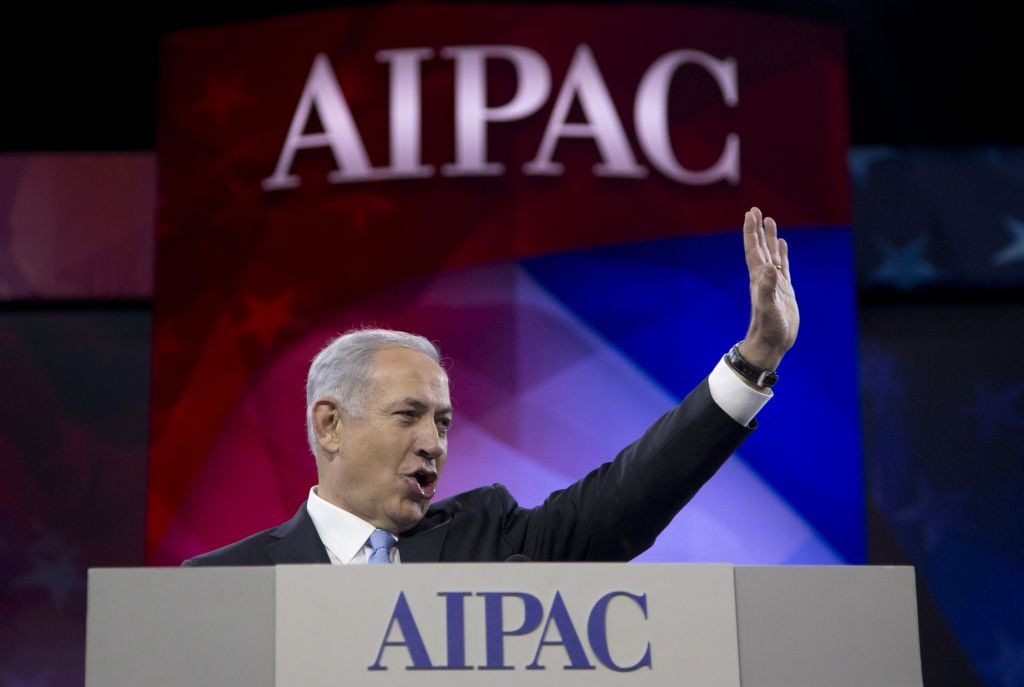
The Hebrew press on Monday drums up the suspense for Prime Minister Benjamin Netanyahu’s speech to AIPAC, and more importantly, his speech Tuesday to Congress on the Iranian nuclear deal, with cover-to-cover coverage. In its reports and numerous op-eds, the dailies offer a mix of disdain for Netanyahu’s timing (15 days before the general election), existential fears about Tehran’s nuclear ambitions, and pressing concerns about the fraught US-Israel relationship.
Yedioth Ahronoth leads its front pages with a column by veteran reporter Nahum Barnea, who was aboard Netanyau’s flight to Washington yesterday, and who cynically anticipates the content of the prime minister’s address. Under the headline “Hysterical, not historic,” in a jab at the prime minister’s remarks yesterday, Barnea maintains that a speech to Congress on Iran is the right move – but the way Netanyahu did it undermined his very goal.
“Unfortunately, Netanyahu is going about this in the wrong way and at wrong time, which destroys that which, seemingly, he is hoping to fix,” he writes. “Instead of convincing the Democrats, he is pushing them into a loyalty test, and the outcome is predetermined – and he does this two weeks before the elections in Israel. Most members of Congress don’t know much about foreign policy, but politics they understand. Netanyahu will speak to them about Iran, but they will assume that is isn’t Iran that brought him here right now, but the polls.”
Barnea proceeds to outline “evidence that supports this cynical interpretation.” First he notes that Netanyahu’s AIPAC speech will be at 10 a.m., 5 p.m. Israel time, since it will primarily be directed at Israeli voters. “To the best of my memory, all the speeches [of world leaders at AIPAC] were at night, as befits their standing,” he writes (neglecting to mention that Netanyahu’s speech at AIPAC last year, when he was not up for reelection, was at the same time). Moreover, he adds, Netanyahu’s stop at the Western Wall over the weekend, and release of a photo of him writing his speech, smacks of electioneering.
“It’s not difficult to guess what he’ll say there,” Barnea writes. First Netanyahu will praise the US-Israel alliance, he writes. “Then he’ll move on to Iran, will quote all of Iran’s threats to destroy Israel , and all those menacing statements Iranians have made in past years about America. Twice the US saved the world, he is likely to say, in World War I and World War II. Only it [America] can save it a third time. He’ll do some gimmick, something for social media, and top it off with a biblical quote.”
Alongside Barnea’s smackdown of Netanyahu, Yedioth features a column by Noah Kliger in defense of the speech, which amplifies the nuclear threat, and downplays the spat between the prime minister and the Obama administration.
“First of all, some semantics: The prime minister doesn’t need to speak before Congress in Washington. He must speak there,” he writes.
“The fact that the speech – which was initiated and organized by the Republican leaders of Congress – was not coordinated with President Obama and the White House has nothing to do with our prime minister. It’s an internal American spat, which unfortunately led to the worsening of the relationship between President Obama and the prime minister, a relationship that was never optimal to begin with, to say the least. Still, this is risk Netanyahu must take,” Kliger adds.
He also downplays the choice by some Democrats to not attend the speech, saying they will be watching it intently at home, and criticizes Israeli MKs for failing to go to Washington with Netanyahu to illustrate that Iran is not a partisan issue.
Over in Israel Hayom, Shlomo Cesana, on board Netanyahu’s plane, spotlights remarks by an unnamed senior official, who maintains – contrary to the White House’s repeated protestations – that Israel is informed on the details of the negotiations.
“We know the details of the agreement that is forming. It is a bad deal. The agreement, as it stands now, would leave Iran with dangerous capabilities,” the official says, adding that Israel is not opposed to a diplomatic deal with Tehran, but only one that would strip it entirely of its nuclear capabilities. The official adds that the March 24 deadline is not set in stone and calls for an extension of the talks.
The daily also highlights an article in The Atlantic by Jeffrey Goldberg on Netanyahu’s speech, who writes that the prime minister has a “credible case to make,” and a Washington Post article terming it “the most important speech of his life.”
Meanwhile, in Haaretz, Chemi Shalev notes that Obama is planning his counter-maneuver to Netanyahu, which will most likely come through an interview with Reuters set to be published later today. Most likely, Obama “will come to the interview with a resolute and effective message that may not completely neutralize Netanyahu’s address, but could at least blunt its impact,” he writes.
Shalev quotes an unnamed official, who casts doubt on whether Netanyahu’s speech will effectively stop a deal with Iran.
“’In matters of national security, facing a resolute president, the lobby will fail, as they have in the past in similar circumstances,” according to one official, who spoke on condition of anonymity. “And I’m saying this even if Netanyahu delivers the speech of his life to Congress on Tuesday: the president can give a hundred speeches, and he’s no less an accomplished orator than Bibi.”







The Times of Israel Community.