

Happy new year? Not unless Israel takes Abbas’s threats seriously
Seeing no Israeli partner and wary of Hamas’s popularity, PA president decides on aggressive new tack; Netanyahu isn’t exactly heartbroken

 Add ToI as a Preferred Source on Google
Avi Issacharoff, The Times of Israel's Middle East analyst, fills the same role for Walla, the leading portal in Israel. He is also a guest commentator on many different radio shows and current affairs programs on television. Until 2012, he was a reporter and commentator on Arab affairs for the Haaretz newspaper. He also lectures on modern Palestinian history at Tel Aviv University, and is currently writing a script for an action-drama series for the Israeli satellite Television "YES." Born in Jerusalem, he graduated cum laude from Ben Gurion University with a B.A. in Middle Eastern studies and then earned his M.A. from Tel Aviv University on the same subject, also cum laude. A fluent Arabic speaker, Avi was the Middle East Affairs correspondent for Israeli Public Radio covering the Israeli-Palestinian conflict, the war in Iraq and the Arab countries between the years 2003-2006. Avi directed and edited short documentary films on Israeli television programs dealing with the Middle East. In 2002 he won the "best reporter" award for the "Israel Radio” for his coverage of the second intifada. In 2004, together with Amos Harel, he wrote "The Seventh War - How we won and why we lost the war with the Palestinians." A year later the book won an award from the Institute for Strategic Studies for containing the best research on security affairs in Israel. In 2008, Issacharoff and Harel published their second book, entitled "34 Days - The Story of the Second Lebanon War," which won the same prize.
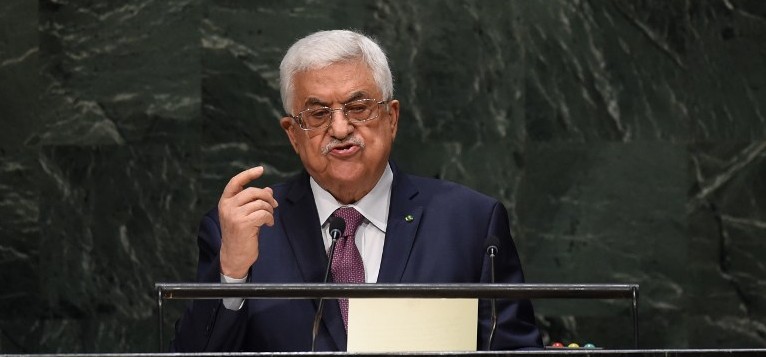
A year has passed since the two leaders, Israeli and Palestinian, spoke at the previous UN General Assembly. A year and nothing has changed.
Prime Minister Benjamin Netanyahu keeps waving pictures and diagrams, and Palestinian Authority President Mahmoud Abbas threatens, as he has for two years, to turn to the UN and international bodies. This year, as ever, Netanyahu didn’t present a vision for peace or a real political plan, while Abbas let loose one of his most aggressive speeches against Israel, including accusations of genocide.
Netanyahu’s government reacted harshly, of course, to Abbas’s speech. But Netanyahu’s office also owes Abbas some gratitude.
Without the serious allegations Abbas raised against Israel, what could Netanyahu have focused on in his speech? For several years he’s talked about the Iranian threat, without doing anything. The US is finally dealing with the Islamic State. And it’s certainly nice to compare Hamas to IS, but the Israeli public and especially the media understand that Netanyahu wants to keep Hamas in power in Gaza, and wouldn’t show much interest in a speech arguing that Hamas is a terror organization.
But along came Abbas and enabled Netanyahu to portray his trip to New York as a mission to save Israel from the PA president.
Netanyahu’s associates explained to us that Abbas — the same man who gave Israel information on the three kidnapped and killed teens in June, and who helped bring about Hamas’s capitulation in the summer ceasefire negotiations — is the very same leader who represents a strategic threat to the State of Israel.
Foreign Minister Avigdor Liberman joined Netanyahu’s hasbara (PR) efforts (via a separate flight, of course). He was ready with “Abu Mazen has lost his connection to reality, he doesn’t really represent anyone.” But Liberman didn’t stop there: “He has no legitimacy to speak in the name of the Palestinian nation.”
Liberman was able to give the impression that he knows of a Palestinian leader — or leaders — somewhere out there, more moderate and popular than Abbas, who are willing to make far-reaching compromises. It would be interesting to know who is advising Liberman on Palestinian (or Middle Eastern) matters, where their information comes from, and how they decide to word messages that are meant to weaken as much as possible the only person who is still willing to talk to Israel and not use violence.
If Liberman and Netanyahu still haven’t internalized this reality, then perhaps it’s time for those same advisers to inform them that the alternative to Abbas (and again, assuming that Liberman is not hiding, in his Nokdim home, a Palestinian leader we don’t know of yet) is Hamas.
The most recent polls in the territories show this, residents of the West Bank and Gaza say this, but the triumvirate leading Israel’s government isn’t interested. For them, Abbas is the real enemy. Hamas? Quite the opposite. Working (indirectly) with the terror group in Gaza, Israel’s leaders are eager to shape the situation and allow the rebuilding of Gaza as soon as is feasible.
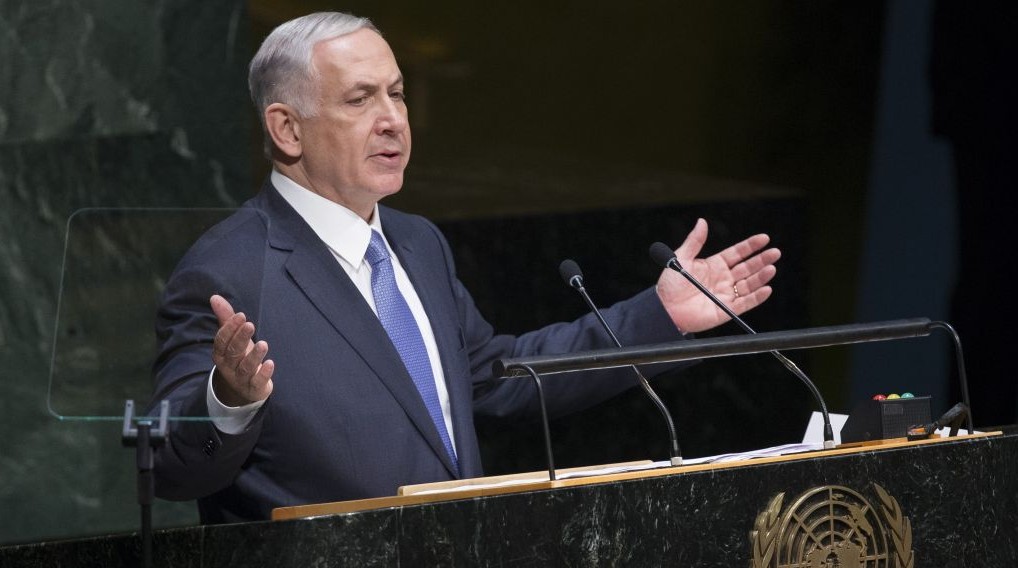
Still, why did Abbas go so far and say what he said last week? There are two main reasons for his fiery speech, which, to be fair, really did have little to do with reality. The knows that Israel didn’t commit genocide in Gaza.
The first reason is Palestinian public opinion. Recent polls (including Monday’s from Khalil Shikaki) do point to a weakening of support for Hamas since the end of the fighting in Gaza. But if elections were held today, Hamas’s Ismail Haniyeh would defeat Abbas. Likewise the struggle between Hamas and Fatah: Abbas knows the numbers and the public’s tilt toward Abbas since the fighting started.
He also knows another figure from Shikaki’s poll: Hamas is more popular in the West Bank than in Gaza. It sounds like a sad joke, but according to the poll, more people in the West Bank than in Gaza support firing rockets at Israel from population centers. That is, Ramallah and Bethlehem residents who celebrated Eid al-Fitr in their homes in relative comfort (despite the occupation) and will celebrate Eid al-Adha this weekend, are far more extreme in their approach to Israel.
West Bank residents who did not personally suffer the consequences of the war, and certainly did not lose their homes in Israeli bombings, are eager to enlist their Gazan brethren to continue the fight against Israel. Abbas’s extreme words were meant to prevent a further drift of public opinion, which does not look kindly upon Abbas’s security cooperation with Israel.
Another statistic the poll pointed to was that the further we get from the end of Operation Protective Edge, the more support for Hamas drops… as long as the blockade remains in force. That is, the interest of Egypt and the PA is in some ways the opposite of that of Israel and Hamas. While the latter want to see a quick rehabilitation — Hamas to show its accomplishments in the fighting and Israel to prevent another war — Egypt and the PA want to see Hamas weakened, and to delay rebuilding as long as possible.
The second reason for Abbas’s speech is disappointment in Israel’s government. It hard to imagine blunter words than those Abbas used before the Arab League against Hamas after the kidnapping of the three teens. It’s hard to imagine a Palestinian leader so committed to finding the kidnappers and transferring relevant information about them.
But the reaction in Israel was, as always, dismissive and offensive. Abbas understands that this time, too, there is no one to speak with, and Netanyahu, who is no less rattled by the polls, is not planning any dramatic steps to save the peace process. Quite the opposite. The declaration, shortly after the ceasefire, that land in Gush Etzion was public land was proof for Abbas that there is no one on the Israeli side interested in negotiations.
Israel’s problem is that its leadership is detached from the reality now taking shape in the West Bank, especially in the president’s office in Ramallah, and not just in Gaza. True, the population in the West Bank is not rushing to launch a third intifada, and the best evidence for that was the relative quiet during Operation Protective Edge. But one of the reasons the Palestinian masses in the West Bank remain in their homes, even after the death of 2,150 Gazans, is due to the Palestinian Authority and its security forces.
What has not yet been internalized in Jerusalem and in Tel Aviv’s Kirya is the fact that the Muqata’a has truly changed its tone, and Abbas is no longer spreading false threats. He has decided to undertake a significant diplomatic move against Israel, one which was partly seen this week at the UN Security Council (a draft of a proposal to end the Israeli occupation has been distributed among some of the Security Council members, one of whom will present it formally to the Council).
The more critical meaning for Israel lies in the time frame of the next 6-12 months, at the end of which the Authority plans to turn to international organizations and declare Palestine as “a country under occupation.” The PA’s West Bank security coordination will be terminated at that time as well.
This is no longer an empty threat. Abbas believes that, in light of the absence of a partner, he has no other options. Whether the scenario takes place, the potential for a violent outbreak in the West Bank is different from what we have known until now.









The Times of Israel Community.