

In doleful West Bank, UN vote brings little cheer to Palestinians
Measure unlikely to have meaningful impact on daily life in West Bank, and growing despondency may give way to violence or other drastic actions

 Add ToI as a Preferred Source on Google
Avi Issacharoff, The Times of Israel's Middle East analyst, fills the same role for Walla, the leading portal in Israel. He is also a guest commentator on many different radio shows and current affairs programs on television. Until 2012, he was a reporter and commentator on Arab affairs for the Haaretz newspaper. He also lectures on modern Palestinian history at Tel Aviv University, and is currently writing a script for an action-drama series for the Israeli satellite Television "YES." Born in Jerusalem, he graduated cum laude from Ben Gurion University with a B.A. in Middle Eastern studies and then earned his M.A. from Tel Aviv University on the same subject, also cum laude. A fluent Arabic speaker, Avi was the Middle East Affairs correspondent for Israeli Public Radio covering the Israeli-Palestinian conflict, the war in Iraq and the Arab countries between the years 2003-2006. Avi directed and edited short documentary films on Israeli television programs dealing with the Middle East. In 2002 he won the "best reporter" award for the "Israel Radio” for his coverage of the second intifada. In 2004, together with Amos Harel, he wrote "The Seventh War - How we won and why we lost the war with the Palestinians." A year later the book won an award from the Institute for Strategic Studies for containing the best research on security affairs in Israel. In 2008, Issacharoff and Harel published their second book, entitled "34 Days - The Story of the Second Lebanon War," which won the same prize.
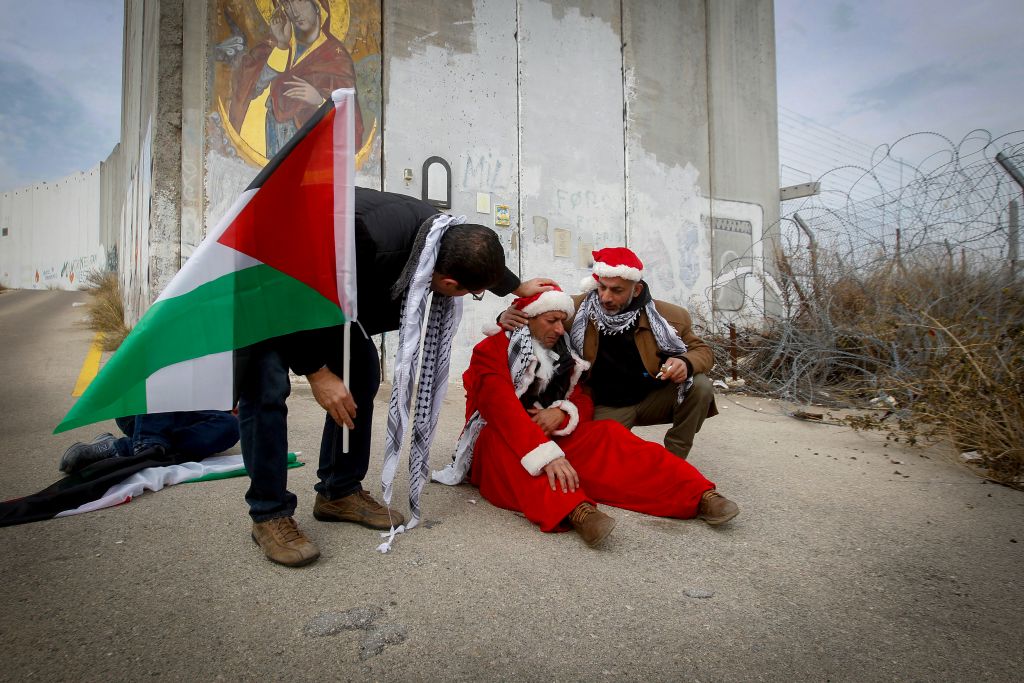
The passage of a UN Security Council Resolution condemning Israeli settlements on Friday has not seen masses of Palestinians taking to the streets in the West Bank to celebrate Israel’s diplomatic failure.
Not even handfuls of Palestinians have come out to show their support.
While senior Palestinian leaders have talked up the passage of the UN measure as a historic achievement — an unprecedented Palestinian victory — they know that the resolution is toothless and limited in scope.
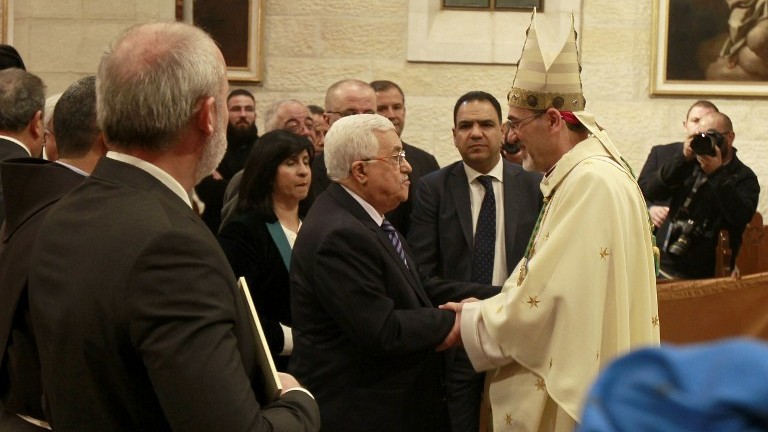
In their remarks, senior Palestinian officials, among them Palestinian Authority President Mahmoud Abbas, have emphasized their desire to return to the negotiation table with Israel, while also stressing that the measure is not anti-Israel but rather anti-occupation.
But most Palestinians in the West Bank fear the so-called victory in the Security Council will likely pass them by without any noticeable impact on the ground. From the perspective of the average Palestinian (or Jewish settler), the Security Council resolution has no immediate or practical ramifications, and there is therefore not much to get excited about.
In theory, the lack of enthusiasm shown by most Palestinians should bring a sense of relief to the Israeli government: The UN’s bark has no bite and in a few weeks, a president who appears to be cut from the same cloth as the Israeli right will enter the White House, enabling Israel to do whatever it pleases.
The great threat of “two states for two peoples” has essentially disappeared, while the possibility of the annexation of portions of the West Bank has become more and more of a reality.
But the Israeli right should not count its chickens yet, for as Palestinian despair grows, so too does the possibility of a fresh outbreak of violence in the West Bank.
According to opinion polls recently carried out in the West Bank, the majority of Palestinians no longer believe in the two-state solution (65 percent said such a solution is not relevant) and many Palestinians support a return to armed struggle against Israel.
Last week, the Shin Bet security service said it had uncovered a Hamas cell that was planning a series of terror attacks inside the Green Line, while on Sunday morning there was another attempted shooting attack near a West Bank settlement.
An Israeli annexation of Area C, where most of the settlements are located, would almost certainly make things worse.
As if all this were not enough, Army Radio reported Sunday morning that Defense Minister Avigdor Liberman ordered the Coordinator of Government Activities in the Territories to end all meetings with civilian and political officials from the Palestinian Authority, though security coordination will continue.
Liberman, who until now had sat on the sidelines while the rest of Israel’s ministers fell over themselves calling for the most incendiary form of retaliation to be taken following the Security Council resolution, outdid the rest of them instantly.
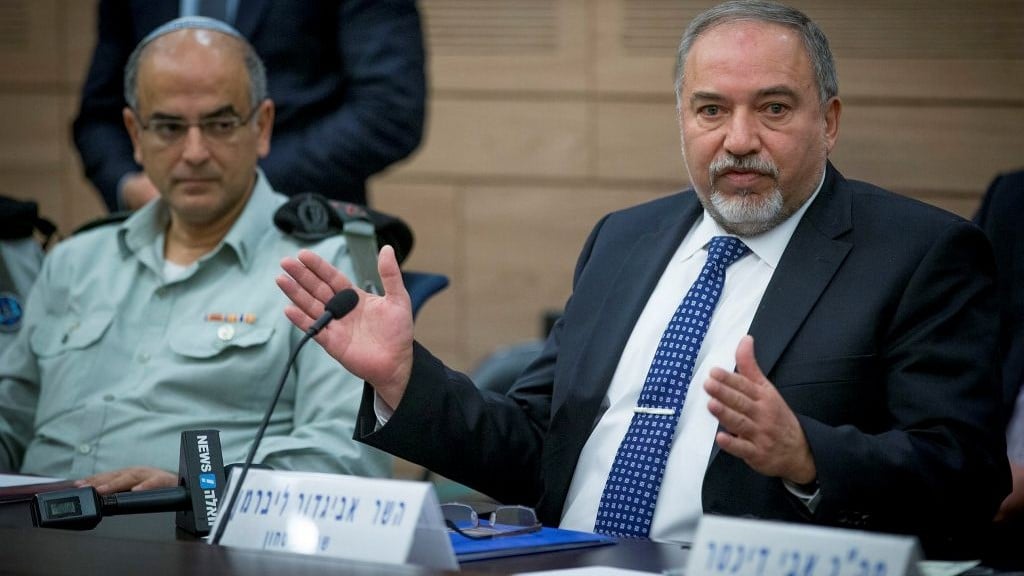
In contrast to Friday’s passage of the resolution in New York, Liberman’s order has implications on the day-to-day life of every Palestinian in the West Bank.
While the cessation of political contacts has no relevance to COGAT — since it does not deal with political issues — it will have an effect on civilian matters, including on projects such as electricity, water, sewage, environmental protection, trash collection, currency, work permits and numerous other fields, where coordination with Israel is needed.
Liberman seems to think that that ending civilian contacts will teach the Palestinians a lesson, but the lesson they may learn is likely not the one he’s hoping for.
For the time being, Liberman is not planning to undermine security cooperation with the Palestinian security services, which is critical to the security of Israelis on both sides of the Green Line, as well as Palestinians.
But Palestinians could respond by cutting it off on their own, responding to a Palestinian street that has found little to hope for, Security Council resolution notwithstanding.



The Times of Israel Community.