

In relentlessly battered Gaza, envying the normalcy of Tel Aviv
A Palestinian journalist gives his account of life in the Strip during the conflict, and over the awful years that preceded it

 Add ToI as a Preferred Source on Google
Avi Issacharoff, The Times of Israel's Middle East analyst, fills the same role for Walla, the leading portal in Israel. He is also a guest commentator on many different radio shows and current affairs programs on television. Until 2012, he was a reporter and commentator on Arab affairs for the Haaretz newspaper. He also lectures on modern Palestinian history at Tel Aviv University, and is currently writing a script for an action-drama series for the Israeli satellite Television "YES." Born in Jerusalem, he graduated cum laude from Ben Gurion University with a B.A. in Middle Eastern studies and then earned his M.A. from Tel Aviv University on the same subject, also cum laude. A fluent Arabic speaker, Avi was the Middle East Affairs correspondent for Israeli Public Radio covering the Israeli-Palestinian conflict, the war in Iraq and the Arab countries between the years 2003-2006. Avi directed and edited short documentary films on Israeli television programs dealing with the Middle East. In 2002 he won the "best reporter" award for the "Israel Radio” for his coverage of the second intifada. In 2004, together with Amos Harel, he wrote "The Seventh War - How we won and why we lost the war with the Palestinians." A year later the book won an award from the Institute for Strategic Studies for containing the best research on security affairs in Israel. In 2008, Issacharoff and Harel published their second book, entitled "34 Days - The Story of the Second Lebanon War," which won the same prize.
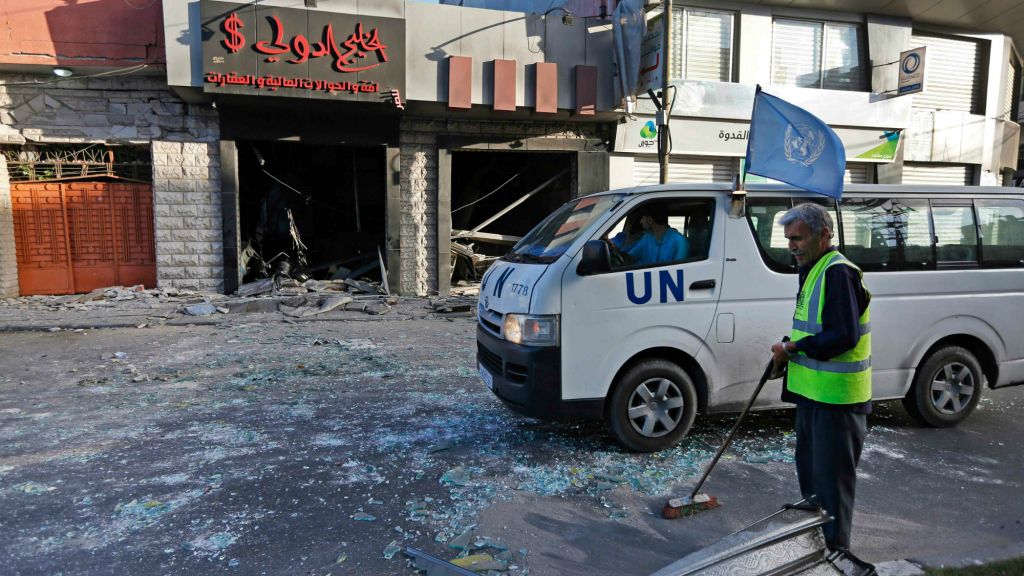
‘At a certain point, it’s hard for me to say exactly when, the fear becomes routine,” A., a Gaza journalist, told The Times of Israel, a day before Israel Defense Forces troops kicked off their ground operation Thursday night.
“Maybe it’s the despair. But I stopped thinking about the fear of death and started leaving the house. I go shopping, I visit the supermarket and outdoor market, sometimes I go to friends or relatives. And don’t think that I’m the only madman here. Everyone is like that here. Going out, buying, meeting, and returning home in the evening.”
“Maybe we’re jealous of all your stories about the ‘ongoing routine’ in Tel Aviv. It’s just that here, a missile lands every four minutes, not once a day. The restaurants are closed during the day because of Ramadan, and at night no one dares open them. Even Ma’atok — one of Gaza’s most famous restaurants — is closed at night. You know what nights are usually like during Ramadan. The coffee shops on the beach, which are jam-packed during a normal summer, are closed.”
“You talk to me, and I have no water or electricity. Undrinkable salt water flows from my tap. Before the war, there were tanks between the houses that provided drinking water. But because of the war, they stopped working. So we need to bring water from the outside. Same with the electricity shortages. Eight hours a day there is electricity, then for eight hours there is none. I didn’t see the World Cup final because of this crap,” he continued.
A. and his family are in relatively good shape. He lives in the Sheikh Radwan neighborhood in the center of Gaza City and, as opposed to residents of the Sajaiya or Zeitoun neighborhoods in eastern Gaza, or Beit Lahiya in the north, he didn’t receive an evacuation order. The IDF didn’t demand that he leave his home. Hamas hasn’t been firing rockets from between the houses in his neighborhood, so around his home things are relatively bearable. Relatively.
“And listen to this. There have been no banks open for nine days now. I can’t go to the bank and take out money. No one goes to work. Imagine how we’re living,” he said.
I tried to get him to explain why the banks are closed, but he dodged the question. It turns out that Hamas closed the banks intentionally — in order to prevent Fatah members who used to work for the Palestinian Authority from collecting their monthly salaries, as long as 44,000 former Hamas government clerks are not receiving their money from the PA.
Commerce has basically ground to a halt. Only someone with cash at home can continue to buy goods, or those who can get to one of the few places where you can use a credit card.
“For eight years now, I only sleep two or three hours a night. The kids are afraid, shivering at night, mostly when the big explosions come that shake Gaza. But you are mistaken about one thing. Yes, most people here want a ceasefire. But you have to understand that there are quite a few voices here who are speaking out against a temporary ceasefire, because they want real change,” A. went on.
“We have been under siege for years, with no way to leave the Strip, with a real crisis in supplying goods. To this point, 230 people have been killed and more than 1,690 have been injured. So many people here, it’s not acceptable that we receive ‘quiet for quiet.’ We want more than that. We want to live normal lives — where we can receive goods, where we can leave here once in a while.”
At one point in the conversation, he proceeded to unleash a critique of Prime Minister Benjamin Netanyahu who “complicated things for you, and will only make things more complicated.”
I asked him what he wanted Netanyahu to do. The prime minister had, after all, agreed to a ceasefire. A. laughed. “Fine, maybe you’re right, I would also do the same thing.”
Almost 500 homes have been totally destroyed across the Strip, and 500 families became refugees, while a few hundred more homes were partially destroyed and thousands more were damaged. Seventy thousand people were left without a water supply, another 150,000 without electricity at all, A. said. Government offices are not working, and public transportation has stopped almost entirely.
But the biggest problem might be the one that A. didn’t want to talk about — the banks. If the branches remain closed, it means that it will not be possible to carry out bank transfers, to withdraw cash, or to order goods (by transferring money). Which means that a Gazan merchant who wants to order goods from Israel will not be able to transfer money to his suppliers on the other side of the border.
And one doesn’t need to be a fortune teller to understand that in another week, more or less, the inventory of goods in Gaza will be drained. However you want to put it, Hamas is intentionally trying to create a humanitarian crisis. It wants to intensify the distress in order to bring international pressure on Israel.
This shouldn’t surprise anyone. This is the same organization that ordered residents of neighborhoods close to the border not to leave their homes, despite Israel’s warnings that the air force would bomb in those areas.
In Beit Lahiya, the residents didn’t listen to Hamas; 17,000 people left their homes for 20 sites, mostly UNRWA schools in Jabaliya and Beit Lahiya. In Sajaiya and Zeitoun, the population displayed greater discipline; only a few of the locals left their homes, perhaps because they saw that Beit Lahiya wasn’t immediately targeted. Of course, that might change. These could be early days.






The Times of Israel Community.