

Israeli economy pays price of elusive peace, World Bank official says
The Jewish state has done well economically, says Augusto Lopez-Claros. ‘But my point is, how much more could Israel do?’
 Add ToI as a Preferred Source on Google
Shoshanna Solomon was The Times of Israel's Startups and Business reporter

Israel’s economy is paying a price as its government fails to reach a permanent peace deal with its neighbors, a senior World Bank group official said in an interview this week with The Times of Israel.
“There is a cost associated with an unresolved security situation,” Augusto Lopez-Claros, senior adviser, Development Economics at the World Bank Group said, speaking at the sidelines of a business conference in Jerusalem. “If one were to resolve on a permanent basis the security situation, there could be a potential driver of economic growth through increased trade and investment with the region.”
The possibilities of greater regional trade and investment following a permanent resolution of the security situation are significant, he said, as Israel is geographically located in a region where there are large potential markets, which have potentially a high demand for its products including technology, agriculture and natural gas, he said. This potential is not taken into account at the moment.
“There is a potential there that needs to be explored and exploited,” he said. Nations globally tend to trade and invest with their neighbors. “Geography is still important. You cannot completely neglect it. And you are disconnected. You are like an island.”
For lack of peace with its Arab neighbors and amid the Palestinian conflict, Israel’s main trading partners are the US, the European Union and Asia.
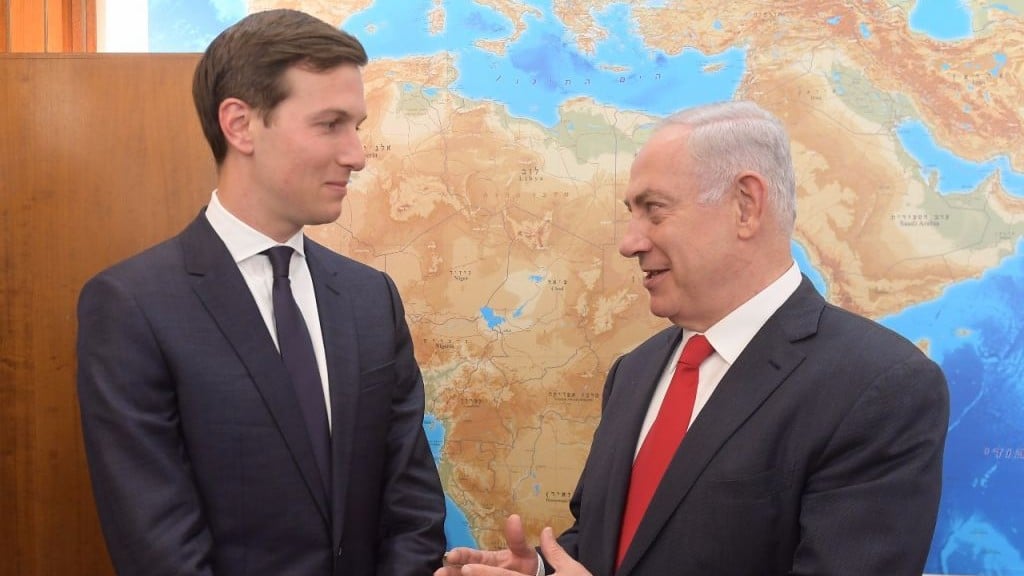
Lopez-Claros’s comments come amid a renewed push for peace between Israel and the Palestinians by the US administration. US President Donald Trump’s son-in-law and chief Middle East adviser, Jared Kushner, met with Palestinian Authority President Mahmoud Abbas Wednesday night as part of a 24-hour visit to the region in an effort to advance the administration’s ongoing push for peace negotiations. Kushner has been tasked by the president with advancing peace efforts.
Israel’s economy grew 4 percent in 2016, buoyed mainly by increased consumer spending, a rise in exports, and investments. Even so, the nation’s productivity is among the lowest of OECD countries and the high-tech sector has stopped being the growth engine of the economy.
Policy makers and business leaders that gathered at the Eli Hurvitz Conference on Economy and Society in Jerusalem earlier this week talked about two diverging economies developing in Israel — the innovation economy and the traditional economy, in which 90% of the population is employed. This divergence, in terms of wages, leads to an increase in economic inequality which must be halted, the speakers said. One of the keys to that aim is through increased education and vocational training.

“If one were to resolve on a permanent basis the security situation, there could be a potential driver of economic growth through increased trade and investment with the region,” said Lopez-Claros, who has been with the World Bank for the past six years. This “doesn’t mean you trade less with Europe or Asia, or the US. Those will continue to remain important markets, but you can do more in the region. And that is something that cannot be neglected.”
Israel is doing well, but could be doing more
“Israel has done well — it is a much more prosperous country today than it was 20-25 years ago, it has managed to improve its infrastructure and has become a technological powerhouse. But my point is, how much more could Israel do? I think that that potential is somewhat being undermined by the unresolved security situation.”
Peace could lead to lower defense spending, and those funds could be diverted to boosting education, he said. In a world that is undergoing digitization and automation, governments globally must channel more funds to education.
“There is a gap between what the universities are delivering and what is needed,” he said. “This is a global problem. Some countries are doing it better than others: Scandinavian countries, for example. Israel does it well too, but it could do even better.”
There must be more collaboration and feedback between universities and industries so that students attain the tools they need in a changing job landscape. “As they go through the various stages of education, students should spend every summer in Israeli companies so they can get a close look at what are the skills necessary in the marketplace.” This is already happening, Lopez-Claros said, but more is needed.
‘Disappointing’ ranking for Israel
Regulation in Israel should be cut back too, Lopez-Claros. Israel ranks 52 out of 190 in the Doing Business 2017 report of the World Bank.
“For a country that is a high-income country — that has done so much already in other areas — this is a bit of a disappointment,” he said. “You would expect Israel to be in the top 10-15. It should be easily there” along with the other countries, such as New Zealand, Singapore, Sweden and Norway, that top the rank. They, like Israel have developed economies and top universities and are important tech powerhouses, he said. “So why the gap?”
“One of the reasons is that business regulation, the kind of environment that regulation has created to encourage entrepreneurship, is lagging behind,” he said. “Entrepreneurs could actually operate in an environment that is friendlier – not so bureaucratic and not so costly. This whole area of business regulation has not been given the importance it deserves and the importance other countries are giving it.”








The Times of Israel Community.