

Kerry won’t achieve much here, but it’s not his fault
As the US seeks limited and symbolic achievements with Iran, Syria, and Israel, it is not clear that there is a better option

 Add ToI as a Preferred Source on Google
Avi Issacharoff, The Times of Israel's Middle East analyst, fills the same role for Walla, the leading portal in Israel. He is also a guest commentator on many different radio shows and current affairs programs on television. Until 2012, he was a reporter and commentator on Arab affairs for the Haaretz newspaper. He also lectures on modern Palestinian history at Tel Aviv University, and is currently writing a script for an action-drama series for the Israeli satellite Television "YES." Born in Jerusalem, he graduated cum laude from Ben Gurion University with a B.A. in Middle Eastern studies and then earned his M.A. from Tel Aviv University on the same subject, also cum laude. A fluent Arabic speaker, Avi was the Middle East Affairs correspondent for Israeli Public Radio covering the Israeli-Palestinian conflict, the war in Iraq and the Arab countries between the years 2003-2006. Avi directed and edited short documentary films on Israeli television programs dealing with the Middle East. In 2002 he won the "best reporter" award for the "Israel Radio” for his coverage of the second intifada. In 2004, together with Amos Harel, he wrote "The Seventh War - How we won and why we lost the war with the Palestinians." A year later the book won an award from the Institute for Strategic Studies for containing the best research on security affairs in Israel. In 2008, Issacharoff and Harel published their second book, entitled "34 Days - The Story of the Second Lebanon War," which won the same prize.
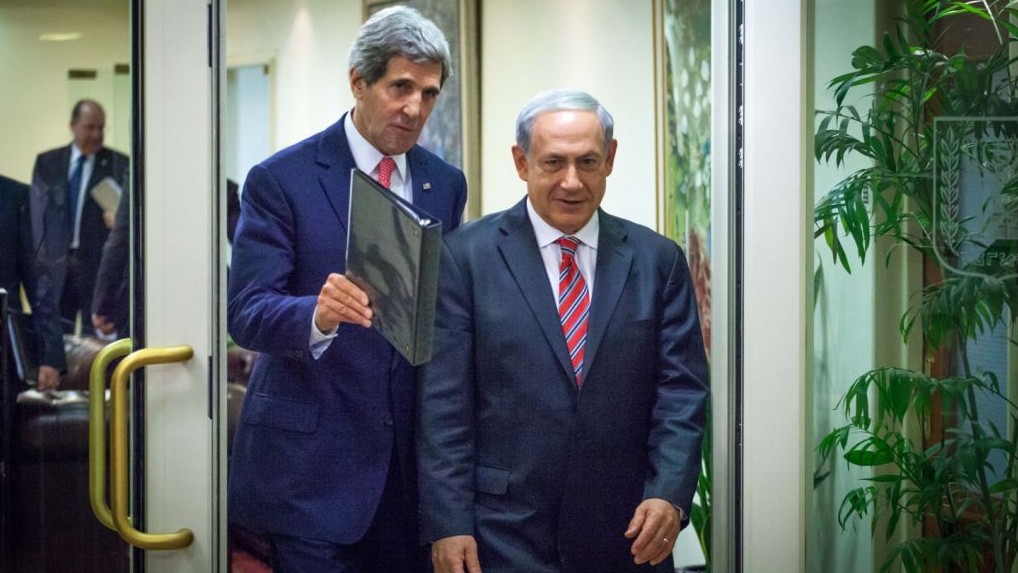
It finally happened this week. A leak from the US government to The New York Times revealed the contents of the framework agreement that US Secretary of State John Kerry is piecing together. After so much praise for the Israeli and Palestinian sides, who managed to maintain relative secrecy on the talks, it was symbolic that the significant leak came in the end from the government itself.
There likely won’t be any big surprises there — according to The New York Times, at least — and Martin Indyk said the same thing in his subsequent phone call with Jewish leaders on Thursday. The framework agreement will call for an end to the conflict and demands on the parties; there will be no right of return for Palestinian refugees; and the agreement will also include a reference to the Palestinian capital that will be established in Arab East Jerusalem.
Balance, you see.
These principles are more or less known to every Palestinian and Israeli child who has heard about two states for two peoples. In the past, the two sides also largely agreed on these arrangements, and much more. Yet, now, they needed months of work in order to reach Kerry’s new version.
This is to the credit and discredit of both sides: For a long time, the US government stopped trying to get the sides to sign a peace treaty, and instead focused entirely on an attempt to get the two camps to agree on the principles they were already familiar with. It follows, then, that the framework agreement is not really aiming for a peace treaty for now, but rather a change of government in Israel and the prevention of another intifada.
The problem with the framework agreement, according to The New York Times version, is the lack of detail it will include. If there is no clear statement determining the fate of Jerusalem, and the Temple Mount in particular, or the amount of land to be swapped between the sides, then the framework hasn’t solved anything.
But we need to be fair to Kerry. It could be that the secretary and his staff are simply realists. They, too, understand that, given the current composition of the Palestinian and Israeli leaderships, the chances of a significant breakthrough are nil. The two sides do not believe the other really wants to go all the way to an agreement. It is possible that this is why the US is willing to make do with a framework agreement with no real meaning (again, unless the current coalition in Israel changes), but with at least symbolic value.
One can already imagine the ceremony the State Department is planning, with the two leaders greeting each other and (perhaps) signing the agreement (though it’s not clear they’ll even be required to do that), and immediately afterward entering accelerated negotiations, though only God knows how long those would last.
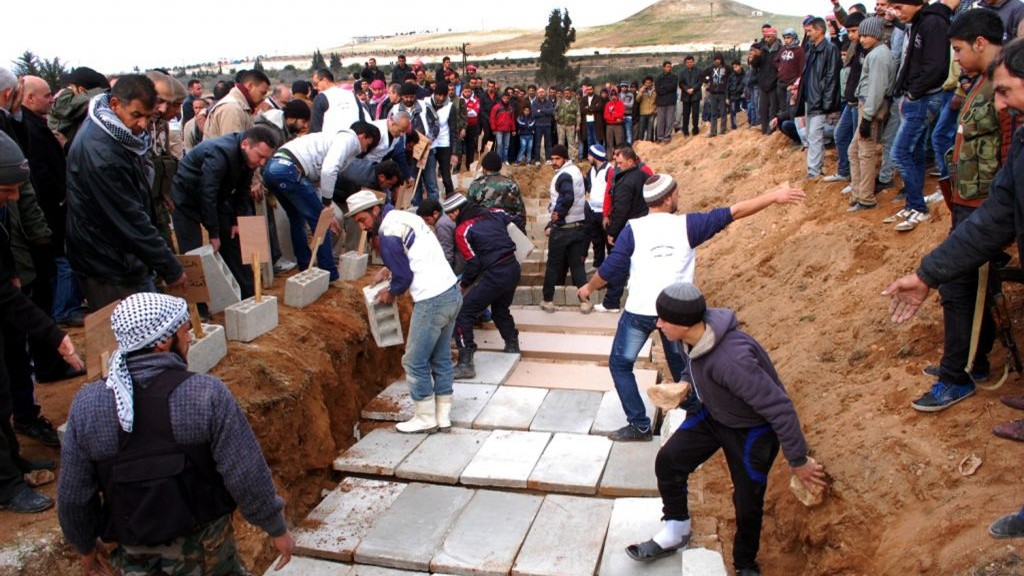
Unfortunately, this pattern has become a hallmark of American policy in the Middle East. A lot of talks, visits, and symbolic achievements. The Geneva II summit was convened last week, designed to bring about a ceasefire in Syria, but its achievements so far have been strictly limited. It is true that the chemical weapons threat to Israel has been temporarily removed, but for the 120,000 dead Syrian civilians, chemical weapons aren’t especially relevant. So far, the greatest achievement of the summit was the agreement to provide humanitarian relief to Homs.
As in the Israeli-Palestinian conflict, the administration decided to go all out on something theoretical, not practical.
And nothing practical is possible without Iran, of course. The negotiations between the US and Tehran led to one achievement: the halting of uranium enrichment to 20%. The problem is that the possibility remains of Iran achieving nuclear weapons.
Could the Obama Administration go about all this differently? Maybe. But several factors keep it from doing so. One, the trauma of the wars in Iraq and Afghanistan pushed the administration to a foreign policy that seeks to avoid military conflict at any cost. This has led to a surplus of carrots and a dearth of sticks in the various negotiations the administration is handling in the area, including with Israel. The problem is that, as long as this remains the guiding principle, US achievements in the Middle East will remain largely symbolic.
The second factor is, of course, the complexity of the problems the US government is trying to tackle.
Syria, for example. If, God forbid, Assad should fall, it means that the tens of thousands of al-Qaeda members already operating there will seek to take control of the country. In Iran, the alternative to negotiations is a military conflict that will likely only strengthen the conservative camp. Despite the criticisms of Kerry, he’s probably right. Without at least symbolic progress in the various talks, the possibility of escalating violence will become more likely.
Quite a few Israeli “sources” have criticized Kerry’s comments that a stalemate in talks with the Palestinians could lead to violence, or even an intifada. Officials are trying to explain that the Palestinian public does not want a violent conflict.
This is true, but only partly. Not all the Palestinian public wants to maintain the status quo or continue the calm, and figures released this week by the Shin Bet say it all: a sharp rise in the number of attacks and attempted attacks that have come out of the West Bank in 2013 compared to the previous year. This is not a good sign for 2014 and the possibility the talks will run up on the shoals.
And so we come to the third factor preventing Kerry from achieving anything significant in the region: the lack of courageous leadership. Benjamin Netanyahu and Mahmoud Abbas continue to view each other as enemies, and the crisis of confidence between them is one of the most significant factors crippling the negotiations. Netanyahu, Avigdor Liberman, and Moshe Ya’alon often refer to the PA president as a national enemy, while taking a more lenient line with Hamas. The problem is that, if Abbas leaves, any Palestinian leader with authority who would replace him in the West Bank will be more radical than Abbas. It is doubtful such a leader would succeed in preventing, or even want to prevent, another outbreak of violence.
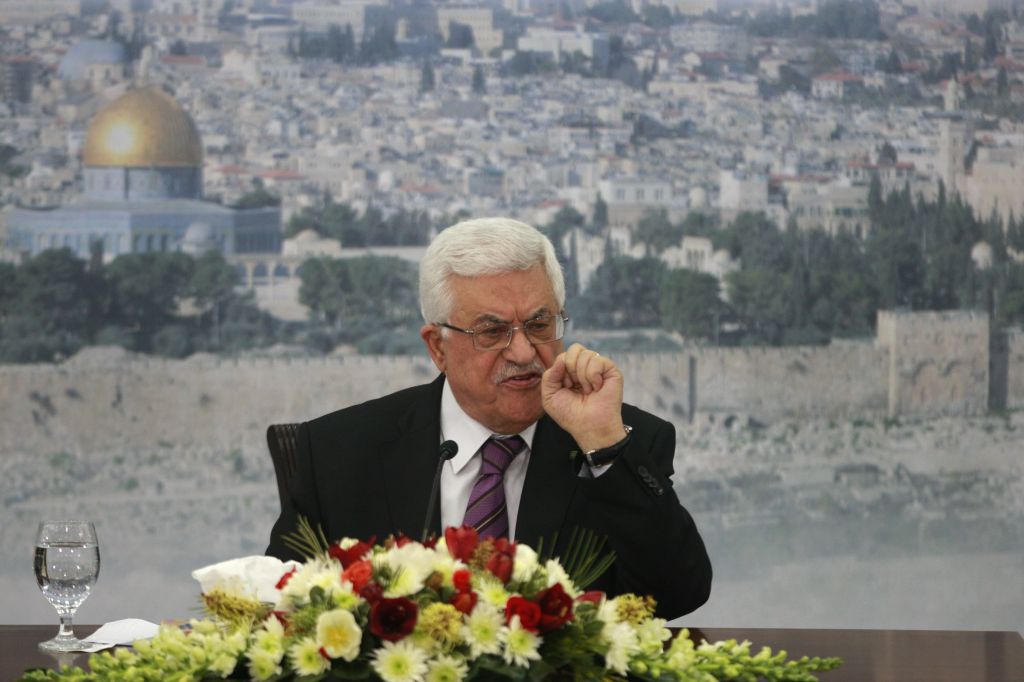
In many ways, Abbas and the Palestinian security forces are those keeping the area from erupting (while at the same time, his Fatah colleagues are also inciting against Israel. This week, for example, Jibril Rajoub visited Tehran and stated that “armed struggle is still a possible course of action for Fatah”). But Abbas understands that, at this stage, there is no other leader in Israel except Netanyahu who could advance a peace agreement that would include dramatic compromises with the Palestinians.
So where is this all leading? It reminds me of that song by the Talking Heads: “We’re on a road to nowhere, come on inside.”




The Times of Israel Community.