

Poll: 10% in US ‘less likely’ to vote for a Jew for president
Half of respondents in survey say they are less likely to choose a candidate who doesn’t believe in God
 Add ToI as a Preferred Source on Google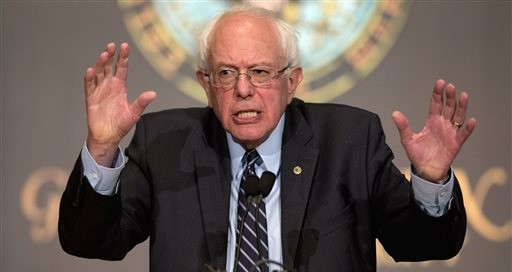
Being an evangelical Christian candidate for president is twice as great a liability as being a Jewish candidate, according to a new poll.
The Pew Research Center survey on faith in the 2016 presidential campaign found that only a small percentage of Americans are less likely to vote for a presidential candidate because he is Jewish, but half of all respondents said they are less likely to vote for a candidate who doesn’t believe in God.
Eighty percent of respondents said a candidate being Jewish makes them no more or less likely to vote for him. Ten percent said they were less likely to vote for a Jew for president, and 8% said they were more likely.
Sen. Bernie Sanders, the independent from Vermont, is the only Jewish candidate currently in the 2016 presidential race.
By contrast, twice as many respondents – 20% – said they would be less likely to vote for a candidate who is an evangelical Christian. Some 22% said they would be more likely to vote for such a candidate.
Among the other traits the poll found as liabilities for presidential candidates: being Muslim (42% said they would be less likely to vote for such a candidate), having personal financial troubles (41% less likely), had an extramarital affair (37% less likely), has longtime Washington experience (31% less likely), is gay or lesbian (26% less likely).
While 51% of respondents said they would be less likely to vote for an atheist for president, the number is down from 63% in 2007.
On the Jewish question, among Republicans and those leaning Republican, 10% said they were more likely to vote for a candidate who is Jewish, 7% said less likely, and 81% said it made no difference. Among Democrats and those leaning Democratic, 5% said they were more likely to vote for a Jewish candidate, 10% said they were less likely, and 84% said it made no difference.
The telephone poll of 2,009 American adults was conducted Jan. 7-14 and had a margin of error of plus/minus 2.5 percentage points.









The Times of Israel Community.