

Repentance and remembrance
The Israeli press ushers in Yom Kippur with memories of the ’73 war and the 2014 campaign, as an IDF soldier is promoted on his deathbed
 Add ToI as a Preferred Source on Google
Marissa Newman is The Times of Israel political correspondent.
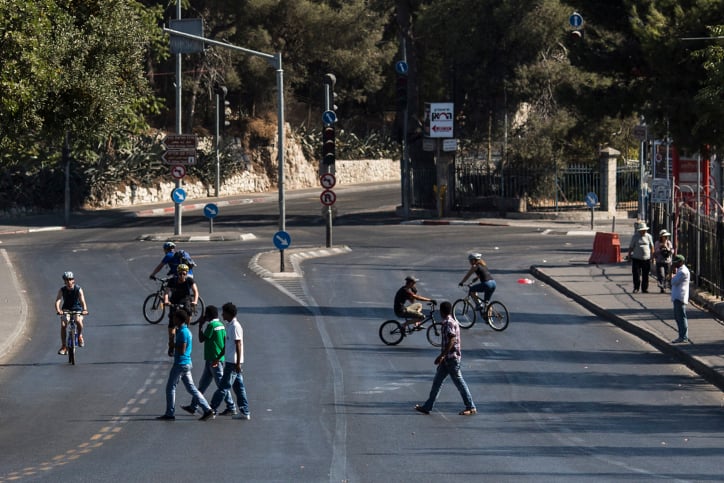
On the eve of the Jewish holiday of Yom Kippur, the Friday Hebrew newspapers (with the exception of Haaretz) strike a somber note, taking stock once again of the summer Gaza campaign, recalling the ’73 war, and gearing up — hopefully — for the one day a year when the Jewish state comes to a reflective standstill.
“Tonight, with the sunset, a rare quiet will engulf the streets,” Yedioth Ahronoth writes in its front-page story, headlined “This Is the Time to Forgive.”
“Yom Kippur, the holiest day in Judaism, will begin — and the bustle and routine will make way, for 25 hours, for fasting and prayer (and cycling),” it reports.
The paper writes that some 140,000 secular Israelis are expected to take part in prayer services organized by the Chabad Hasidic movement catering to the non-observant public. A Chabad rabbi interviewed by the paper says that the demand for prayer services, including in areas that do not have synagogues, has risen dramatically by “dozens of percent” in the aftermath of the difficult summer conflict.
Both Yedioth and Israel Hayom point to the heightened police presence in the cities that are home to a mixed Jewish-Arab population, as the Muslim Eid al-Adha holiday and Yom Kippur coincide. That both holidays fall on the same day “is a situation that will force its Jewish and Muslim residents to show tolerance and consideration,” according to Israel Hayom.
The holiday also brings up memories of Israel’s most psychologically devastating war, which pundits swiftly tie to the most recent conflict. In Israel Hayom, columnist Haim Shain writes: “Until our dying day, we will not forget the siren that tore through the skies at the height of Yom Kippur…. The holy day received another [layer of] meaning following that war.
“The veteran heroes of the Yom Kippur War and the youngsters this past summer proved that the people of Israel are willing to pay the price for independence and freedom, to sacrifice lives to ensure the return home after a long journey… Yom Kippur is not just a time for personal introspection that we are all commanded to do, to request forgiveness and atonement for our wrongdoings. This day also requires a national reckoning with this question at its heart: Are we, as a society, worthy of the sacrifice of the fallen, and is the state of Israel realizing the values and the vision from which it rose?”
Over in Yedioth, columnist Eitan Haber also recalls that fateful war: “A short while after the Yom Kippur War, the state distributed a white booklet. At the time, it was Israel’s way to inform its 2.8 million citizens of the names of the 2,559 of its fallen.
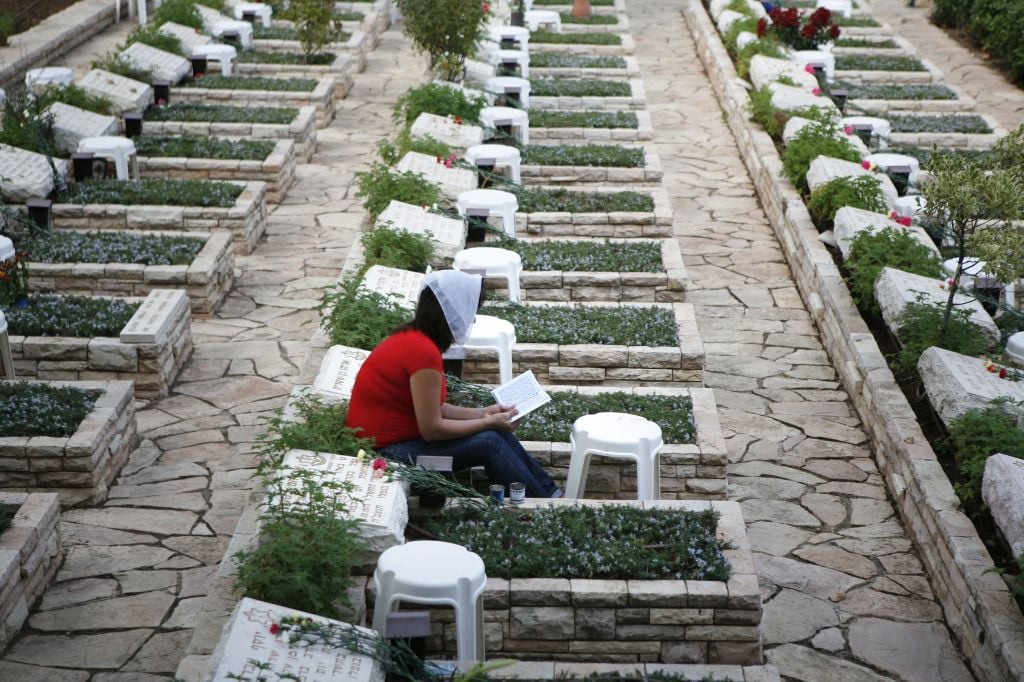
“In the state that is hurting from, and moved by, the killings of 72 soldiers and civilians during ‘Operation Protective Edge,’ and rightfully so, one can understand what the knowledge of the deaths of 2,559 did.”
He continues: “41 years. We’ve been shell-shocked since then. As if it was yesterday.”
Both papers also feature the story of the military promotion of an Israel Defense Forces paratropper — critically wounded in the summer conflict — on his hospital bed. Hagai Ben-Ari, 29, was supposed to be formally promoted before the operation, Yedioth reports, but the ceremony was delayed due to the conflict, in which Ben-Ari — a father of three — was critically hurt.
This week, military personnel arrived at the Petah Tikva hospital — where Ben-Ari lies unconscious — to bestow the designation. The ceremony was set to take place on Friday, but on Tuesday the doctors informed the army to come quickly, as the soldier may not have more than a few more hours to live.
Ben-Ari’s wife, Moriah, told the paper that the family had already said its goodbyes, but still held out hope that he would recover.
“It’s possible he’ll stay this way, and it’s possible he’ll fully recover, and you don’t know what to believe or what to hope for,” she said. “We didn’t want to delude ourselves, because we know that the injury is very severe and that the doctors are very pessimistic. On the other hand, as a family, we can’t live with this terrible pessimism all the time.”
Meanwhile, Haaretz leads with the US affirmation that it was aware of the situation on the ground in East Jerusalem, as Israel approved its 2,610 housing units in the Givat Hamatos neighborhood, and was not — as Prime Minister Benjamin Netanyahu had accused — issuing a condemnation based on hearsay.
In its editorial, the paper criticizes the prime minister for what it says is his feigned commitment to the two-state solution while approving East Jerusalem construction, and the damage it incurs in its international standing.
“One after the other, the masks are being torn off. Netanyahu is not (and apparently never was) aiming for a two-state solution; his actions prove it. And the world, including the United States, is losing patience in the face of Israel’s policy of deception and its failure to propose any alternative.
“Granted, America continues to support Israel automatically, both diplomatically and militarily, but the damage caused by Netanyahu’s policies keep growing and they will ultimately sabotage the practical aspects of Israel’s relationship with Washington as well. A government that is suspected by the UN secretary general of committing war crimes and whose policies are termed poisonous by the White House is a government that is doing enormous harm to Israel.”
The paper also features a large ad sponsored by Peace Now (which published the news of the Givat Hamatos project this week), lashing out at the prime minister’s response. “Netanyahu, you chose to blame Peace Now, but the blame is yours,” it says.







The Times of Israel Community.