

Turkey says it did not know downed jet was Russian
Armed forces claim they made significant efforts to rescue pilots after plane was shot down
 Add ToI as a Preferred Source on Google
ISTANBUL — Turkey’s military said Wednesday it had not known the warplane it downed on the Syrian border was Russian and that it was ready for “all kinds of cooperation” with the Russian military authorities following the incident.
In a statement issued after tension surged between Ankara and Moscow and Turkey’s NATO allies appealed for calm, the Turkish armed forces also said they had made significant efforts to find and rescue the pilots after the jet was shot down.
The surviving pilot of the Su-24 bomber said earlier that no warning had been given in the incident Tuesday and the aircraft did not violate the Turkish air space, although Turkey insists that it gave 10 warnings in five minutes.
“The nationality of the plane was not known… and the rules of engagement were automatically used,” the Turkish military said in its statement.
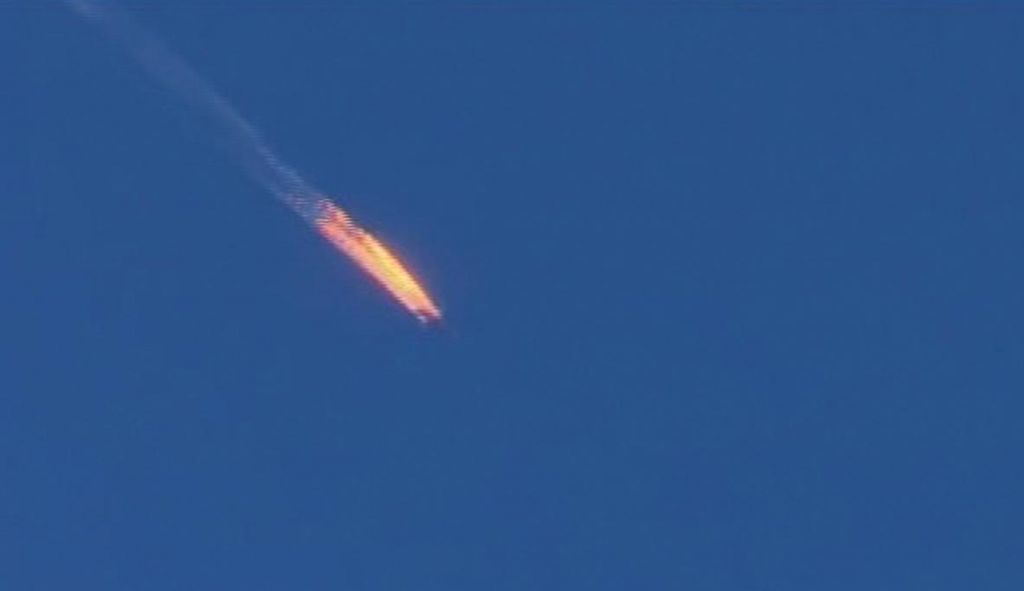
It added that it had invited Russian defense and military attaches to its Ankara headquarters to explain the incident.
It also informed Moscow’s military authorities of its readiness for “all kinds of cooperation,” the statement added.
Both Ankara and Moscow are rival players in the Syrian war and the downing of the jet stoked fears it could escalate into a wider geopolitical conflict.
President Vladimir Putin on Tuesday branded the incident a “stab in the back committed by accomplices of terrorists.”
In a move raising the potential threat of a Russia-NATO conflict, Russia said it would deploy long-range air defense missiles to its base in Syria and destroy any target that may threaten its warplanes.
The incident was the first time in half a century that a NATO member shot down a Russian plane. If Russia responds by downing a Turkish plane, NATO member Turkey could proclaim itself under attack and ask the alliance for military assistance.
Most observers believe that a direct military confrontation is unlikely, but that the shooting down of the plane will further fuel the Syrian conflict and complicate international peace efforts.
The situation is also alarming because the Russian and Turkish presidents both pose as strong leaders and would be reluctant to back down and seek a compromise.
The S-400 missiles, which Putin ordered sent to the Hemeimeem air base in Syria’s coastal province of Latakia, just 50 kilometers (30 miles) away from the border with Turkey, are capable of striking targets within a 400-kilometer (250-mile) range with deadly precision. The military also moved the navy missile cruiser Moskva closer to the shore to help protect Russian warplanes with its long-range Fort air defense system.
“It will be ready to destroy any aerial target posing a potential danger to our aircraft,” Russian Defense Minister Sergei Shoigu said at a meeting with military officials. He also announced the severance of all military ties with Turkey and said that from now on, Russian bombers will always be escorted by fighters on combat missions over Syria.
Ozgur Unluhisarcikli, director of the German Marshall Fund in Ankara, said it is possible Russia could down a Turkish plane.
“Turkish planes violate the Syrian border daily, either for reconnaissance flights or for anti-IS operations,” he said. “In the same way that Turkey argues it has rules of engagement, Russia could also declare its own rules of engagement, saying it has the right to protect the skies of its ally.”
The Russian plane’s downing marked a dramatic turnaround in relations between Russia and Turkey, who have proclaimed themselves to be “strategic partners” in the past and developed booming economic ties despite differences over Syria.





The Times of Israel Community.