

Vote on public broadcaster changes delayed till after Passover
Coalition puts off meeting to get more time to write up new bill; employees expected to petition court to stop move
 Add ToI as a Preferred Source on Google
Jacob Magid is The Times of Israel's US bureau chief
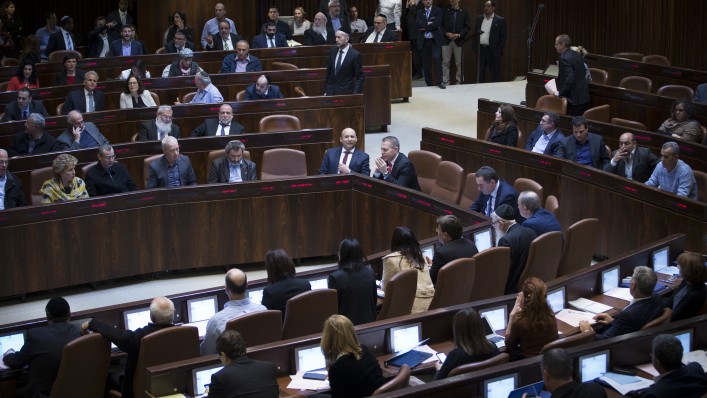
The coalition decided on Sunday to postpone a vote on the implementation of a compromise agreement regarding the new public broadcaster until after the Passover holiday.
The vote had originally been set for a special session on Wednesday, but was delayed after the Likud-led coalition realized the bill would not be ready in time.
Members of the new broadcaster — formally called “Kan” and widely known as Hata’agid (the corporation) — are expected to petition the High Court of Justice, demanding an annulment of the agreement reached by Prime Minister Benjamin Netanyahu and Finance Minister Moshe Kahlon last Thursday that dismantled the news division of the yet-to-air network.
Under the deal — which ended a coalition standoff that threatened new elections — Kan will lose its centerpiece news division, for which staff had been hired ahead of the intended launch on April 30, and the old Israel Broadcasting Authority’s staffers are instead to provide the station’s news in the coming months before a new news department is set up.
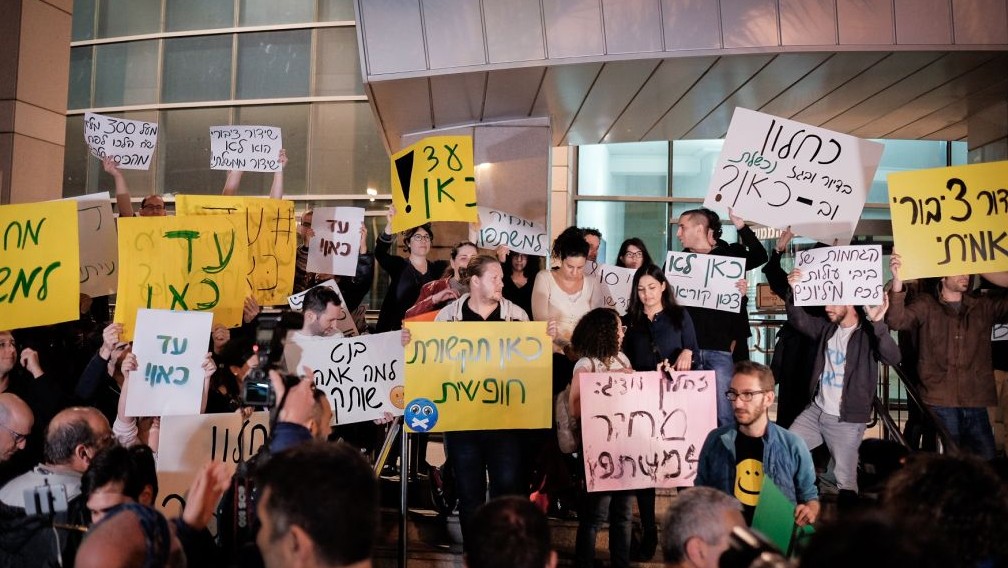
On Saturday evening, hundreds of Kan employees demonstrated in Tel Aviv against the agreement, blocking a major junction and clashing with police as they accused Netanyahu of engaging in the authoritarian practices reminiscent of the regimes in Turkey, Iran and North Korea.
Netanyahu is widely believed to have been opposed to the new body because he perceived it as being too left-wing and difficult to control, despite asserting that his primary concern was saving jobs at the IBA. Netanyahu has long complained of a media hostile to him.
At a Thursday press conference, Kahlon defended the deal reached, saying, “it ensures freedom of the press, freedom of speech and it is keeping with the budget.”
Raoul Wootliff contributed to this report.









The Times of Israel Community.