

37 years on, 90-year-old mother of murdered girl clings to hopes of justice
Police exhume body of Nava Elimelech, 12, as new developments emerge in cold case
 Add ToI as a Preferred Source on Google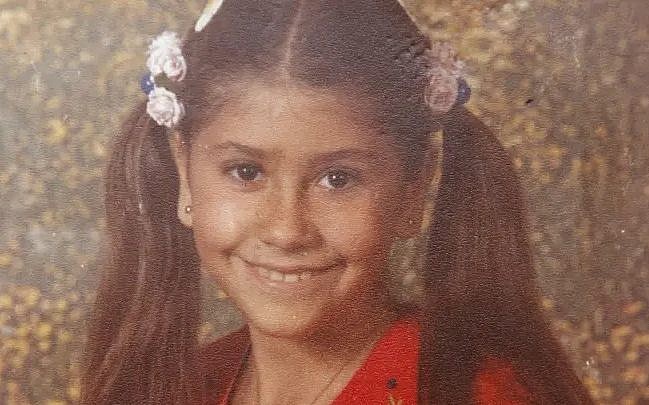
The 90-year-old mother of young girl whose shocking murder nearly four decades ago remains unsolved expressed hope on Monday that police would soon unmask her daughter’s killer.
“I’m ready to do anything to get to the truth,” Mazal Elimelech declared, a day after the body of her daughter, Nava, was exhumed, 37 years after she was killed in one of Israel’s highest-profile unsolved murder cases.
Citing unspecified new developments in the case, police investigators brought the remains of Elimelech, who was violently murdered and dismembered at the age of 12 in 1982, to the Abu Kabir forensic institute for testing on Sunday. Police did not elaborate on the nature of the new evidence and a gag order has been imposed on the case.
Elimelech’s family approved the move.
“I’ve been praying for 40 years. I hope we will learn what happened. I constantly light candles in the hope that justice for my daughter will come. It isn’t easy for us,” Mazal Elimelech told the Ynet news site.
“We are ready to do anything to arrive at the truth,” she continued. “We agreed to do everything just so we could know who the murderer is, who perpetrated this wrong. I’ll give my life, my family’s life, our joy, anything to so we can get to the person who did it. This is what we need to know. We are ready to do anything to get to whoever did this.”
תיעוד: שוטרי לה"ב 433 בבית העלמין חולון מוציאים את שרידי גופתה של נאווה אלימלך@daniel_elazar pic.twitter.com/Kk7UCxvf1N
— כאן חדשות (@kann_news) August 4, 2019
The girl, the youngest of four siblings, went missing on March 20, 1982, after leaving her parents’ home in the central city of Bat Yam to visit a friend, who lived 300 meters (less than two-tenths of a mile) away.
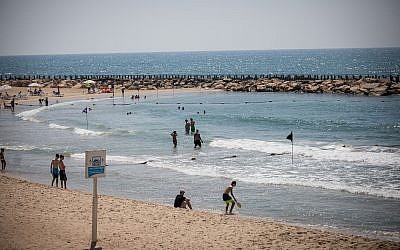
After 10 days of searching, Elimelech’s head and other body parts washed up on various beaches in central Israel, wrapped inside plastic bags, horrifying bathers and the country. A pathologist determined that the murder took place on the day she went missing.
The murderer was never apprehended, despite the Israel Police assembling what was described at the time as the biggest investigation team in the country’s history, with some 40 members.
Elimelech’s body parts were sent at the time for examinations in a London lab in an attempt to determine the murder weapon. Several suspects were arrested over the years, but were released over lack of evidence.
In 1983, a Gazan man was arrested and then released. Shortly afterward, IDF chief of staff Rafael Eitan claimed the murder was nationally motivated and had been an entrance test for joining a Palestinian terror group.
הותר לפרסום: 37 שנים לאחר הרצח המזעזע של נאוה אלימלך בת ה-12, שגופתה נמצאה מפוזרת, גופתה הוצאה מקברה היום בניסיון לאתר את זהות הרוצח. pic.twitter.com/Gf3up5rOO9
— שמחה חסיד (@Simcha_Cohen4) August 4, 2019
In 2001, a member of the original investigation team told Army Radio that the Shin Bet security agency had found evidence to support that allegation. An Israeli Arab prisoner had provided information that his former cellmate, a Palestinian jailed for terror offenses, had confessed to killing Elimelech. However, between 1983 and 2001 the man was released, moved to Jordan, and died. He was never questioned in the case.
The breakthrough in the investigation happened several months ago. Reports said the new development was related to recent technological breakthroughs in DNA identification.
Elimelech’s brother Yaakov, in comments to Hebrew-language media Sunday, said that he had “mixed feelings, great pain mixed with hope that perhaps with the advanced technological abilities it will be possible to shed light on a contemptible murder case that wasn’t solved for years.”
The family is in the dark regarding the nature of the development, he added.
The news of the exhumation was “not easy” for Nava’s mother and the family, Yaakov said. “Over the years there were suspects, but there was never something this serious.”
Speaking with Ynet, Mazal Elimelech said that she believed that the mother of the friend that Nava had gone to visit when she disappeared knew something about the murder but Azaria Zamir, who was chief of the Bat Yam police station at the time of the murder, said that he did not believe this to be the case. Initially, he added, investigators “thought that Nava Elimelech’s murder was committed in an act of revenge against her family” but no proof was found to support such a hypothesis.
He recalled that Nava’s mother fainted when she was told, while identifying her daughter, that the police had not managed to recover her entire body.
“When we reached the pathological institute, we stood there with a doctor, a youth-squad officer and a social worker, and they brought the bed in and revealed the head. Mazal Elimelech said, ‘yes, this is my Nava’ and then all of a sudden said, ‘I want to see her whole body. I washed the girl, I know about every spot and everything.’ We all stood there shocked,” he told Ynet.
“I had to respond quickly and solve the matter, so I said ‘Mazal, we have a problem. We don’t have all of it,’ and then she collapsed.”




The Times of Israel Community.