

‘A wounded landscape’: New photo exhibit captures life in Israel’s south, then and now
Historian and photographer Dana Arieli created ‘The Photographer of Things — Southern Album,’ a new exhibit at Petah Tikva Museum of Art that tells the story of the south
 Add ToI as a Preferred Source on Google
Jessica Steinberg, The Times of Israel's culture and lifestyles editor, covers the Sabra scene from south to north and back to the center
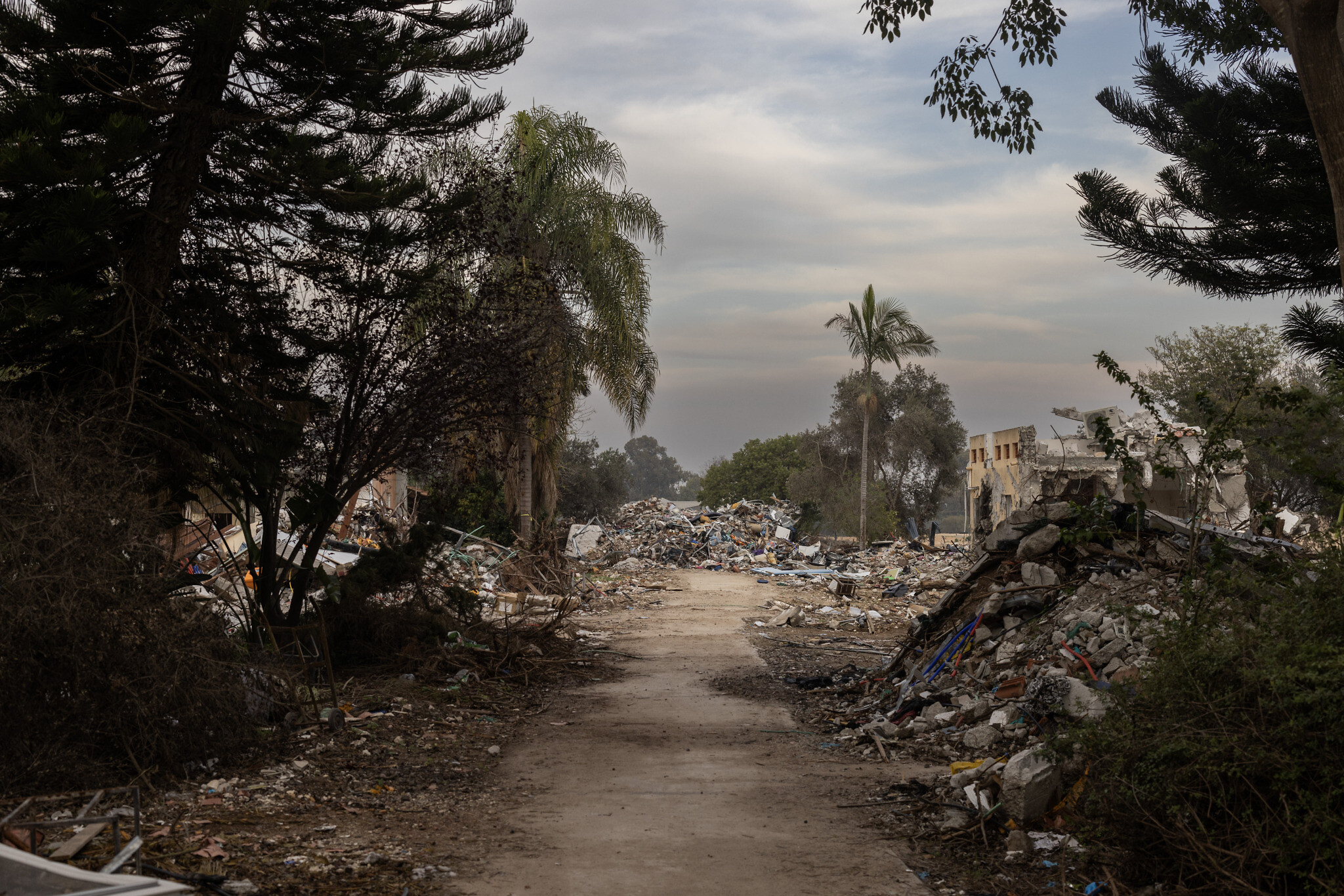
In the weeks after the Hamas attack of October 7, as Israelis attempted to process the enormity of the disaster, historian and photographer Dana Arieli began uploading a different photo to her Facebook account each day.
Many of her Facebook friends were photographers with work linked to the western Negev, the region devastated by the Hamas-led onslaught.
Now a good number of those photographs that Arieli gathered are part of “The Photographer of Things — Southern Album,” a new exhibit that opened June 21 at the Petah Tikva Museum of Art.
The exhibit includes works by more than 100 photographers, a handful no longer living, with images from the past and present, capturing the distinctive views, people and places of Israel’s south.
“It was meant to be a telling of the history of the south,” said Arieli, during a tour of the exhibit before it opened.
While there are some images in the exhibit from the earlier years of the south, as people settled the Gaza envelope region in the 1950s and 1960s, much of the photos are from the last 20 years, “when the south became a wounded landscape, and then the whole ongoing trauma of October 7,” said Arieli.
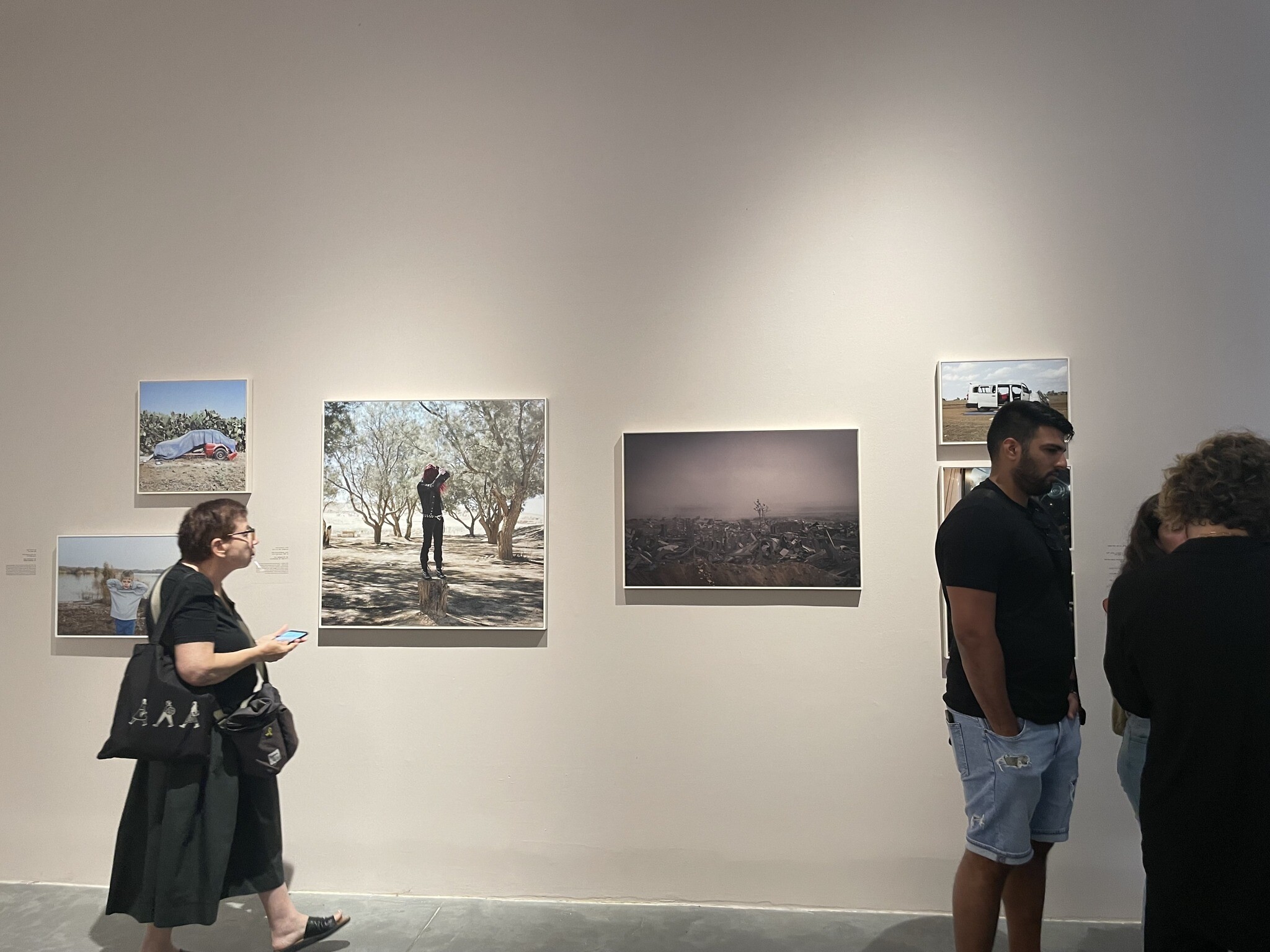
One of the very first images is of a small boy peering out the fence of Kibbutz Nahal Oz looking toward the Gaza Strip, a powerful and painful precursor of the October 7 attack.
Another early image shows the intersection signpost near Kibbutz Sa’ad, with signs pointing to the now-familiar names of the nearby villages and communities, many of them destroyed and pillaged on October 7, harkening to how this entire region has been wrapped up in one painful package for many decades.
Arieli, a Bezalel Academy professor who specializes in the history of trauma, often as it is witnessed in photographs, has spent much of her career looking at the imagery of the Holocaust and its aftermath.
After the Hamas attack on October 7, she reached out to her network of photographers, and told them to send her their work files, which quickly grew to nearly 200 portfolios, not including the research she herself was doing in other photo archives.
Arieli made a decision early not to include any graphic photos, images of the wounded and killed, and instead includes works that offer other types of views into the region and what happened there on that black Shabbat.
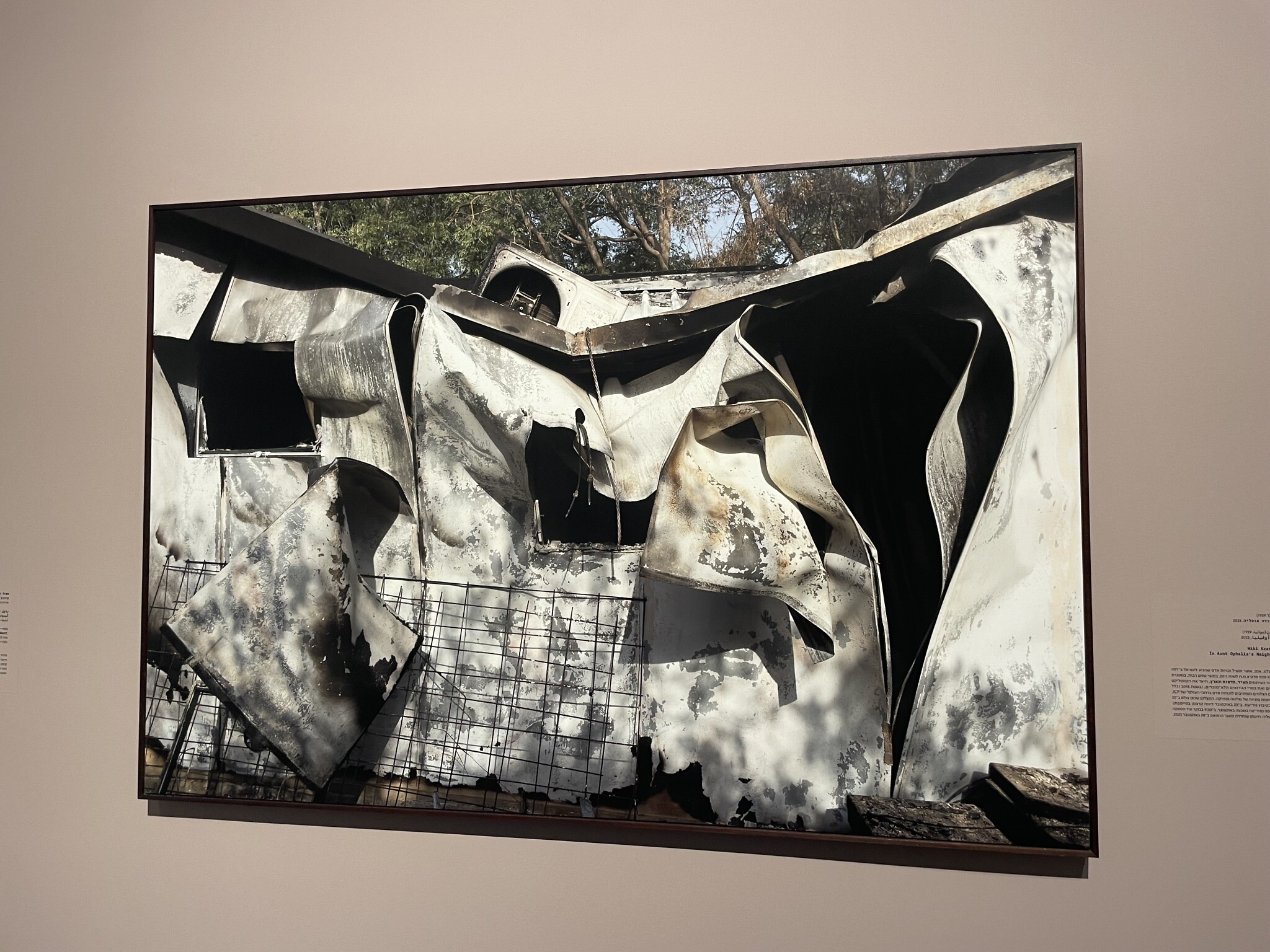
During the tour of the exhibit before its official opening, Arieli began with a photo by photographer Miki Kratsman, chair of left-wing veteran soldiers’ watchdog Breaking the Silence.
His image is of his Aunt Ofelia Roitman‘s burned and destroyed home in Kibbutz Nir Oz, from where she was taken hostage. Roitman was released at the end of November during a temporary ceasefire.
“A moment in time quickly puts you into what happened there,” said Arieli.
So it is with many of the photos taken in the days and weeks after the Hamas attack and featured in the exhibit.
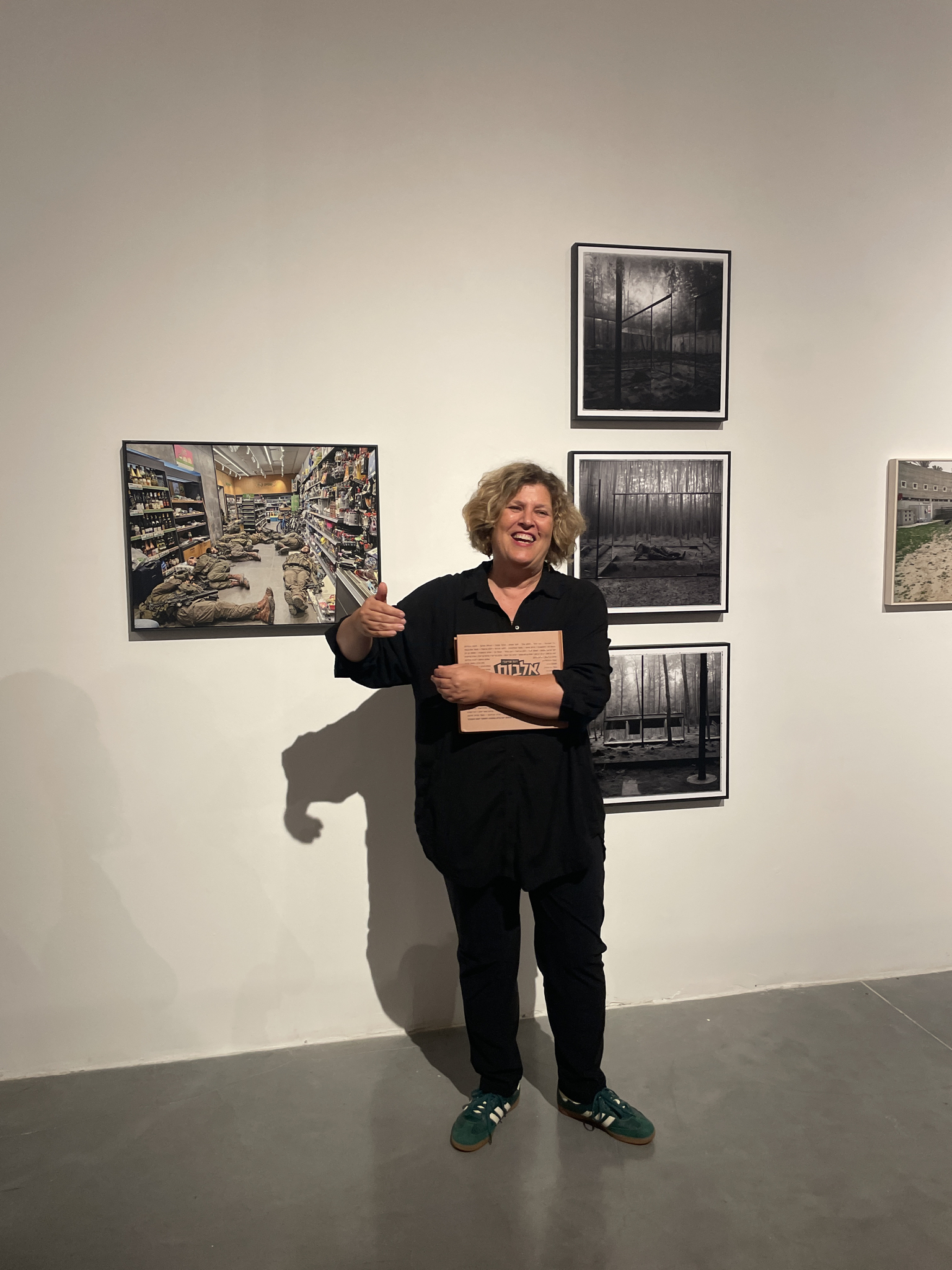
Another wall features Batya Holland’s photo of soldiers sleeping on the floor of a gas station convenience store in the wee hours between October 7 and 8, catching some shut-eye between battles, using packages of toilet paper as pillows.
Once again utilizing social media, Arieli published a post asking if anyone could identify any of the soldiers, in order to gain permission to put the photo of them, in uniform, in the exhibit.
Another photographer, Avishag Shaar-Yashuv, went south on October 8, searching for friends of hers from Kibbutz Kfar Aza, only to find out that the entire family, Livnat and Aviv Kutz, and their three children, were all murdered together by Hamas terrorists, huddled in the parents’ bed.
Her photograph of their funeral, a heartbreaking, vivid portrait of five coffins draped in Israeli flags, family members sobbing above, was used as a front page photo for The New York Times, who then asked Shaar-Yashuv to write an accompanying piece about it.
One of the exhibit galleries includes two photos by amateur photographers, both residents of southern communities, whom Arieli asked to describe their experiences on October 7 in greater detail.
One of them, Sholi Strauss, used a photo of himself and his two young sons in their sealed room on October 7, while his wife, a doctor, was on shift at Beersheba’s Soroka Hospital. He achingly described the many long hours the three spent in the sealed room, not sure if they would emerge alive.
The neighboring photo by Shahar Vahab tells of his own harrowing hours spent in a field shelter in Kibbutz Nir Oz, where he hid behind old hulking farming equipment after going for an early morning walk as the terrorists attacked.
He hid as his mother frantically sent Whatsapp messages from their nearby house on the kibbutz, where his father was killed by Hamas terrorists.
He, his French wife and their young child are currently in France.
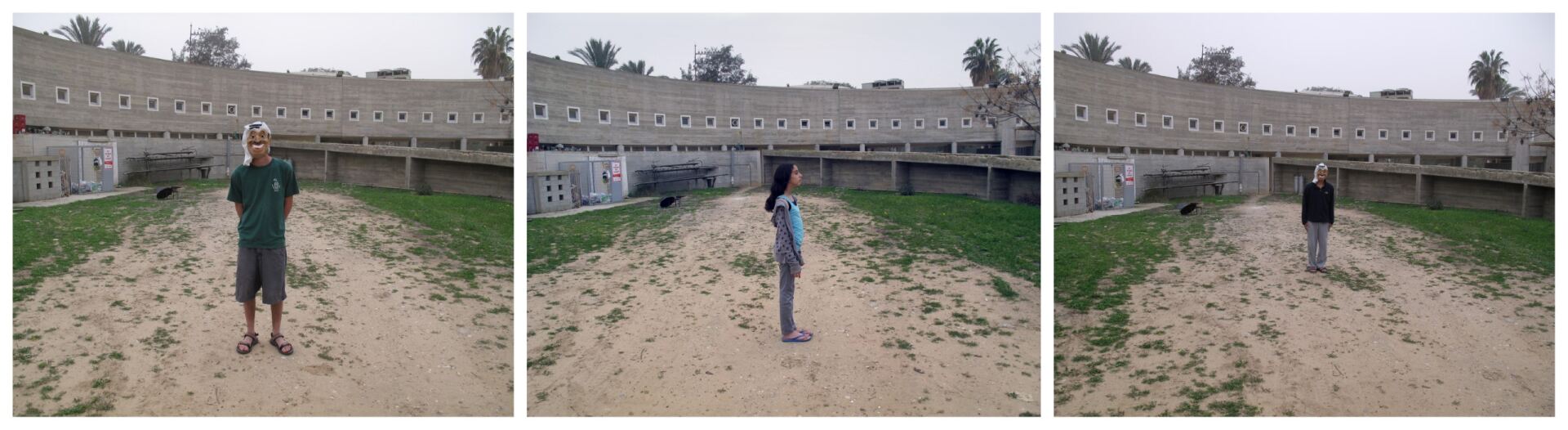
Across the way is one of the now-familiar staged photographs by Be’eri Gallery director and kibbutz resident Sophie Berzon Mackie, one of her series of works created in her Be’eri living room, to which she hasn’t returned to since October 7, as she and her family continue living in a Dead Sea hotel.
One of Berzon Mackie’s artists, Osnat Ben Dov, who was meant to have an exhibit at the Be’eri gallery last fall. Now her starkly vivid video portrait of an artichoke flower is in the exhibit as well, a reminder of what grows in the south and what no longer exists there.
There are photos of foreign workers planting potatoes, one of the region’s major crops, a kind of foreshadowing to the many Thai, Tanzanian and Nepalese workers and agricultural students killed or taken hostage by the terrorists.
The images include Israeli soldiers undergoing rehabilitation after being badly injured on October 7, and of the fields of the Supernova desert rave strewn with partygoer’s abandoned belongings.
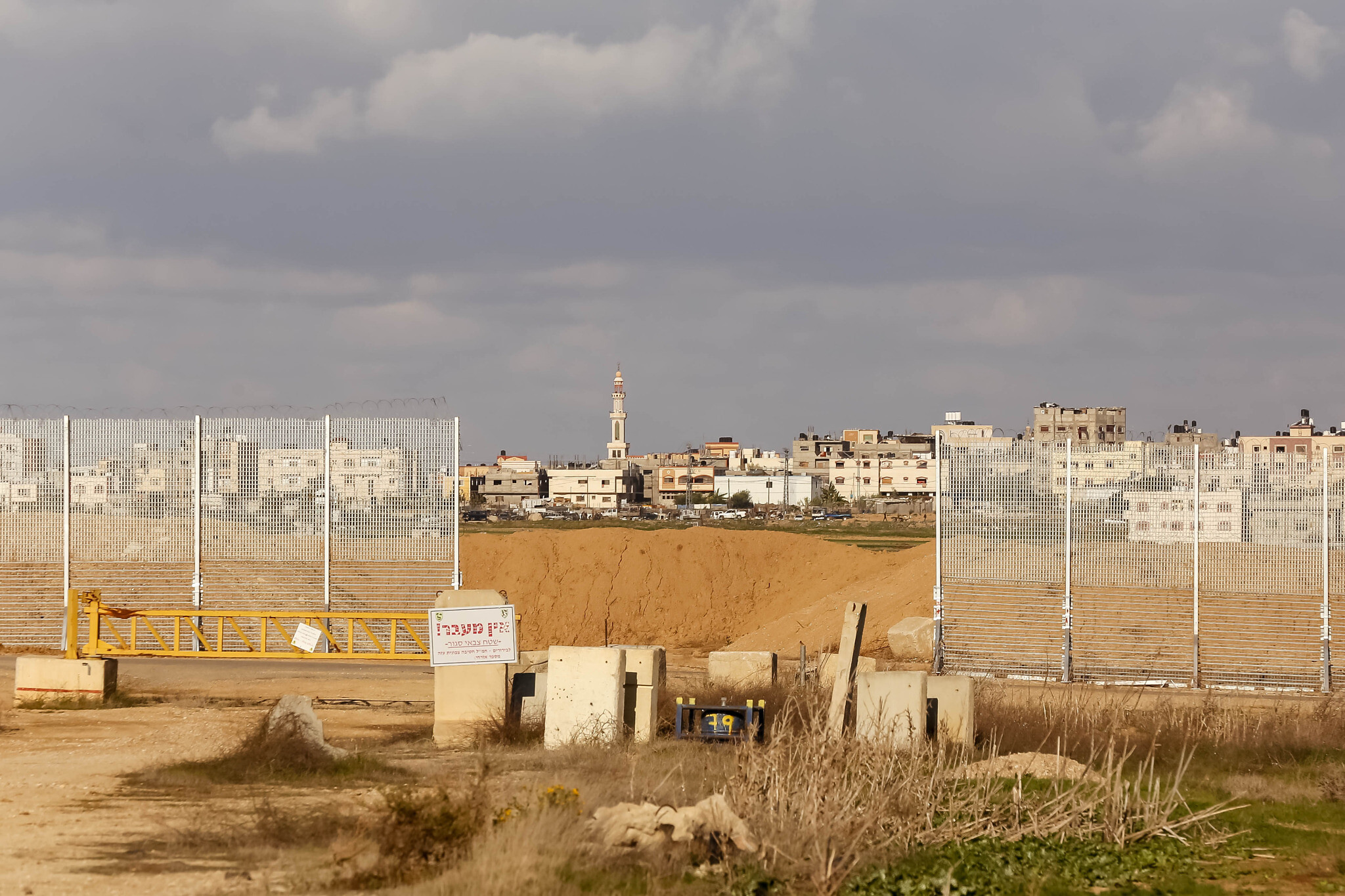
And there are the reminders that the south has often been a region left to deal with its proximity to the Gaza Strip, as shown in a 1956 photo following the Egyptian bombardment of the area.
Arieli is now compiling photographs for an album of the north, detailing what is taking place on Israel’s second front, where tens of thousands of Israelis have been evacuated since Hezbollah began attacking the region on October 8.
“What’s happening there isn’t the same,” said Arieli. “It’s been eight months of war, but there’s huge amounts of damage and this can be a kind of echo to that, to tell the story.”
As for “Southern Album,” she wants to be sure this group of photos isn’t yet another museum exhibition, but one that corresponds to what’s happening, as a way for the wider public to view and be exposed to what the south looks like, then and now.
“You don’t know what can touch someone,” she said. “My concept was to make this happen, to narrow the gap.”
“Southern Album” will close on December 31, 2024, Petah Tikva Museum of Art, 30 Arlozorov Street, Petah Tikva.




The Times of Israel Community.