

Abandoned ‘Turkish restaurant’ becomes a landmark in Iraq protests
One-time commercial center in Baghdad now a gathering place for anti-government demonstrators to eat, play dominoes, keep an eye on the security forces
 Add ToI as a Preferred Source on Google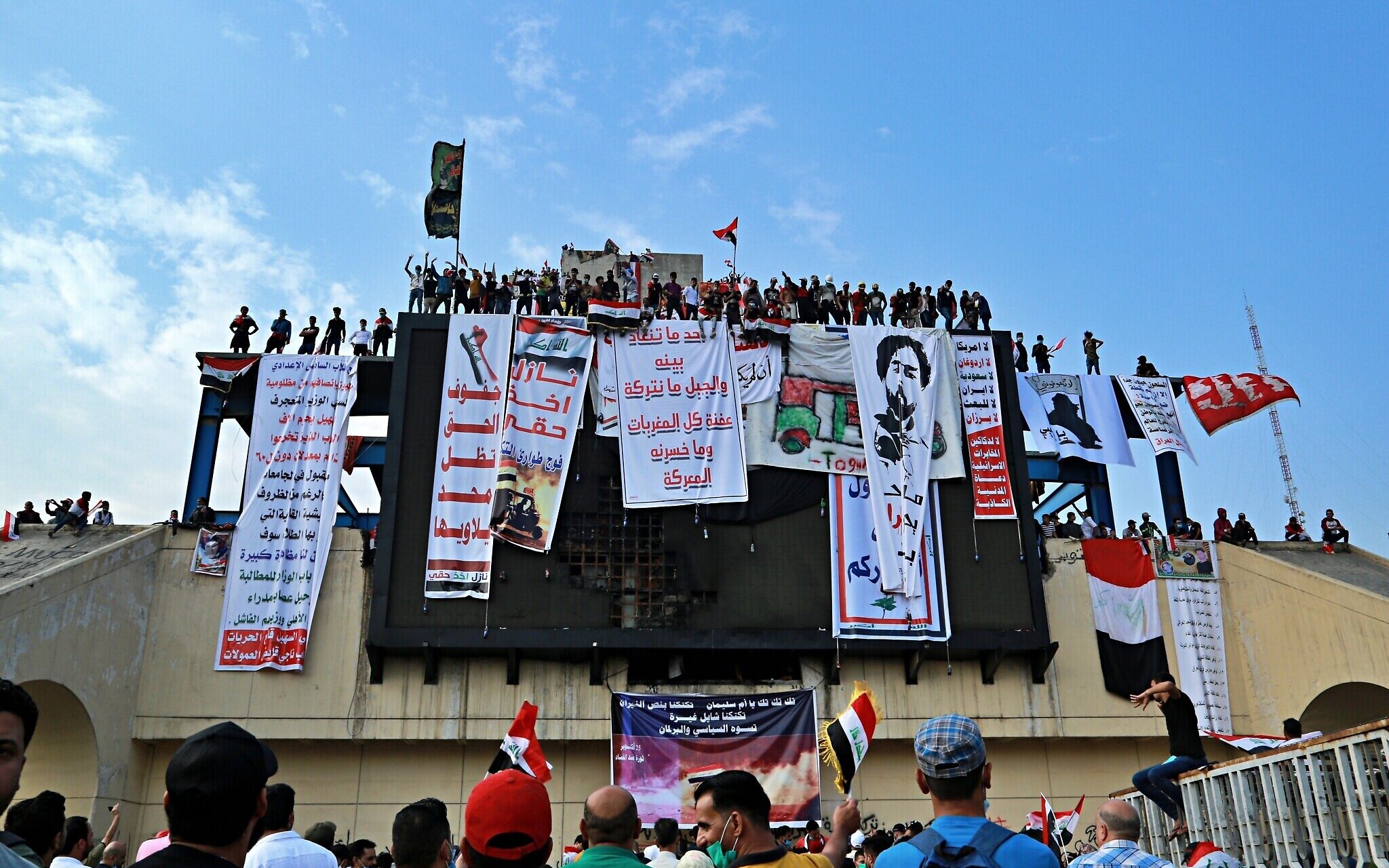
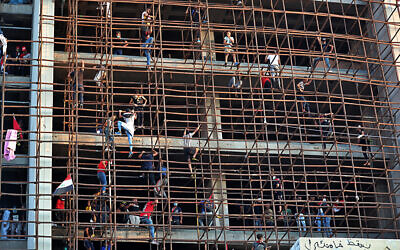
BAGHDAD (AP) — The protesters stand by the thousands on the abandoned building’s open floors, waving Iraqi flags and cheering. Some sit on the edge, feet dangling in the air from high floors as they sway to blasting music. They have a bird’s-eye view of Baghdad — and the tens of thousands of demonstrators below.
At night, they wave the lights on their mobile phones at comrades on the ground. Then they move inside the building, dine together, play dominoes and sing patriotic songs until the early hours of the morning. They also are able to watch the security forces battling the protesters.
The 14-story, Saddam Hussein-era building on the Tigris River has emerged as a landmark in the anti-government protests gripping Iraq. The structure has been abandoned since 2003, when it was bombed by the US-led forces in their invasion, but has now been taken over from security forces by demonstrators since October 25. They have sworn not to leave it.
A one-time commercial center, the building was nicknamed the “Turkish Restaurant” because of a famous dining spot on the top floor that was a tourist attraction in the 1980s with panoramic views. Today it is called other names — the “Stalingrad Baghdad,” the “Hanging Gardens” and “Jabal Uhud,” a reference to a mountain north of Medina, Saudi Arabia, that was the site of a historic battle between Muslim and Meccan forces.
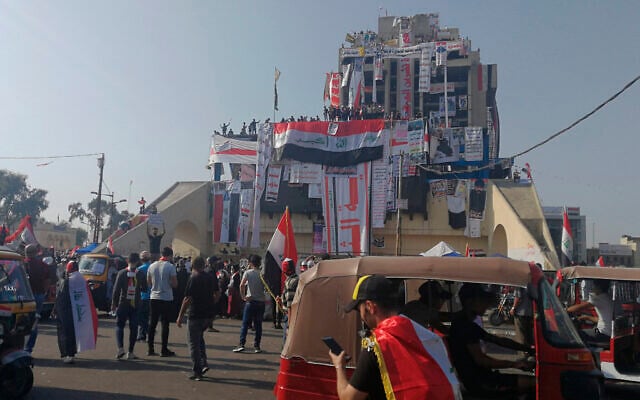
The building has clear views of Tahrir Square, nearby bridges and the Green Zone, home to government offices and Western embassies. That makes it a strategic location, and it was previously used by security forces and riot police, according to an Iraqi general.
“The protesters were very smart when they occupied it. They now can monitor the movements of security forces and it’s difficult to get it back because of the crowds,” said the general, who spoke on condition of anonymity because he was not authorized to talk about security measures.
The tower is routinely packed with young men and women, and has become the embodiment of the free spirit unleashed by unprecedented protests that began on October 1 in Baghdad.
Spontaneous and leaderless, the demonstrations were organized on social media over long-standing grievances including government corruption, unemployment and a lack of basic services. They have quickly grown into the largest grassroots protest movement that Iraq has seen.
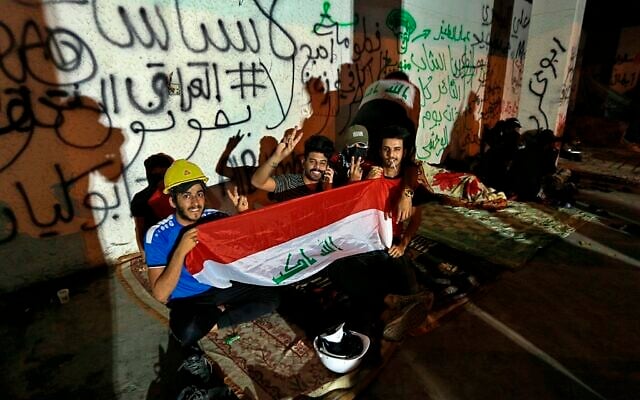
Ali Hashim, a 19-year-old former university student in a black T-shirt and holding an Iraqi flag, was hanging out with friends on the 12th floor of the building.
“I had to stop my studies because I don’t have tuition fees. That’s why I’m here,” he said.
The protests are not directed by any political party. Instead, they take aim at the political establishment that came to power after the US invasion, which many blame for Iraq’s spiraling corruption and poor public services.
Authorities have responded with force, firing live ammunition, rubber bullets and tear gas at unarmed protesters from the first day. During a first round of demonstrations, gunmen and snipers shot at crowds from the building. A government inquiry found that security forces killed at least 149 protesters and injured over 5,000. It concluded that most of the dead were shot in the head and chest.
After a three-week pause, the rallies resumed October 25, and so has the violence, with more than 100 slain.
Far from deterring protesters, the crackdown appears to have energized them.
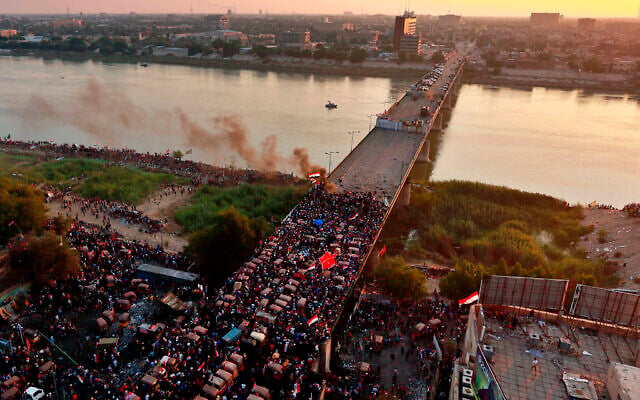
Tahrir Square, Baghdad’s biggest and most central plaza on the eastern banks of the Tigris, has become the epicenter. Thousands have been camped out in the circle with its famous Freedom Monument and palm trees in the middle. Volunteers ferry food and drinks to them. Students have joined the protests, and celebrities, artists and activists also mingle in the square, discussing the future.
Protesters have sought to cross the flashpoint Jumhouriyya and Sanak bridges to get to the heavily fortified Green Zone. They have failed every time as riot police stationed on the bridges confronted them with tear gas and stun grenades.
Inside the building, young Iraqis cheer, dance and take selfies. They hoist baskets of food, water and other supplies, including face masks to use against tear gas. A narrow staircase is crammed with people going up and down.
Cheering groups stand precariously close to the edge of the building’s rooftop, some of them wearing yellow-colored goggles. Tear gas is frequently fired in their direction.
The building is decorated with posters of the dead, as well as giant red, white and black Iraqi flags and banners that stretch across several floors. One reads: “The building of the revolutionaries.”
Women volunteer to clear away the rubbish left behind by the building’s new inhabitants.
“Our presence here is also a revolution of women against the corrupt,” said Ikhlas Saddam, a 42-year-old fashion designer and volunteer.
“We help the protesters by providing food and by cleaning. We support them despite all the tear gas from security forces,” she said.
Many of the young men say they won’t leave until their revolution is complete.
“I have been here since October 25 and I haven’t gone home since,” said Hashim, the former student. “It is now my home.”







The Times of Israel Community.