

Antisemitism now a ‘normal’ part of life in the US, new survey finds
Joint study by ADL and Jewish Federations shows many Jewish Americans have clinical anxiety over rising antisemitism, and one-third are preparing for worst-case scenarios
 Add ToI as a Preferred Source on Google
Zev Stub is the Times of Israel's Diaspora Affairs correspondent.

More than half of Jewish Americans say they experienced antisemitism in the past year, and many now consider such hostility a normal part of Jewish life, according to a study published Monday by the Anti-Defamation League (ADL) and the Jewish Federations of North America (JFNA).
The survey of some 5,000 Jewish adults, conducted in partnership with researchers from Columbia University, found that 55 percent of Jewish Americans reported at least one form of antisemitism in the last 12 months, while 57% said antisemitism has become “a normal Jewish experience.”
Antisemitic incidents have surged nationwide since Hamas launched its attack against Israel on October 7, 2023. ADL recorded more than 9,000 incidents of harassment, vandalism and assault in 2024, the highest number since it began tracking such data in 1979.
The report found that American Jews have significant safety concerns and are experiencing psychological fallout. Some 79% of Jews are concerned about antisemitism, and 48% have taken actions to increase their personal security and sense of safety, including developing worst-case scenario plans (33%), plans to flee the country (14%), and purchasing guns (9%).
About 20% of those who, before October 7, wore visible Jewish symbols such as a Star of David or kippa, said they no longer do so.
“It is so profoundly sad that Jewish Americans are now discussing worst-case scenarios,” said ADL CEO Jonathan Greenblatt. “When American Jews – who have built lives, careers and families here for generations – are making contingency plans to flee, we must recognize this as a five-alarm fire for our entire country. This is not just a Jewish problem, it’s an American problem that demands immediate action from leaders at every level.”
Meanwhile, 18% said they were physically assaulted, threatened or verbally harassed because of their Jewish identity, while 36% witnessed actual or threatened antisemitic violence. Nearly half said they had faced exclusion or minimization of their Jewish identity, such as being blamed for Israel’s actions or feeling unwelcome because of their faith.

Beyond personal experiences, ambient antisemitism is nearly universal, with 60% saying they had seen antisemitic graffiti or flyers in public places, and 88% encountering antisemitic content on social media or other media platforms.
Researchers found links between antisemitism and health, as 41% of respondents who experienced direct harm said it had negatively affected their physical well-being.
Jewish Americans who directly experienced or witnessed antisemitism were twice as likely to score above medical thresholds for anxiety or depression as those who had not. About 32% of victims met the clinical screening threshold for anxiety, and 21% for depression.
Jews also feel a growing sense of isolation from the wider society, with half of respondents saying they believe that most non-Jewish Americans would not stand with Jews if antisemitic violence were to occur. That was six percentage points higher than in similar surveys conducted last year.
That helps explain why few victims reported their experiences. Among those who faced antisemitic discrimination, 74% said they never reported it to any organization or authority. Of those who did, just 7% contacted ADL, 5% the police, and 1% the FBI. Most said they believed nothing would happen or didn’t trust institutions to handle the issue.
Despite this, many remain determined to fight back against hate. Only 30% said they felt there was nothing that could be done to improve the situation, and 68% said they were at least somewhat comfortable speaking out publicly against antisemitism.
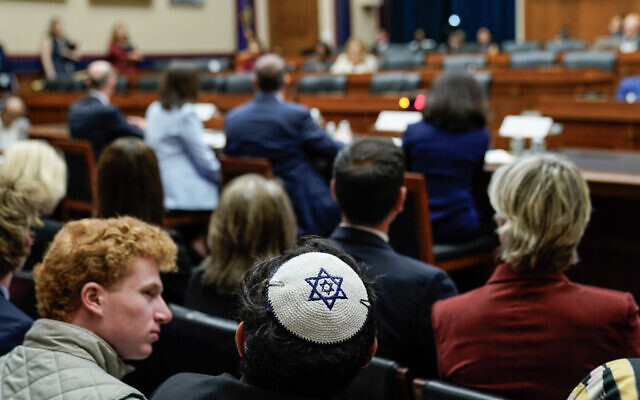
Despite widespread anxiety, 84% of Jews who directly experienced antisemitism said it prompted at least one positive change in their lives, including a deeper connection to Jewish community (62%), renewed spiritual faith (49%), or a reevaluation of life priorities.
The ADL and JFNA urged policymakers, educators and tech companies to take stronger steps to counter antisemitism through improved reporting systems, education, and law enforcement coordination.
“Even in the face of unprecedented levels of antisemitism, we continue to see what Jewish Federations have termed ‘the Surge’ – a remarkable increase in Jewish engagement and connection to community,” said Eric Fingerhut, President and CEO of Jewish Federations of North America. “Rather than retreating in fear, American Jews are choosing to stand together, strengthen their bonds and affirm their identity. This surge in Jewish engagement represents hope and determination in the face of hate.”









The Times of Israel Community.