

As Israeli protests intensify, pols, cops, organizers must steer back from brink
Clip in which protester’s head is snapped back by water cannon fire is just one illustration of potential for confrontation to turn, in an instant, into something devastating

 Add ToI as a Preferred Source on Google
David Horovitz is the founding editor of The Times of Israel. He is the author of "Still Life with Bombers" (2004) and "A Little Too Close to God" (2000), and co-author of "Shalom Friend: The Life and Legacy of Yitzhak Rabin" (1996). He previously edited The Jerusalem Post (2004-2011) and The Jerusalem Report (1998-2004).
The protest mix outside the Prime Minister’s official residence is becoming increasingly combustible.
A largely ignored group of veteran activists who have been encamped for years demanding the resignation of Benjamin Netanyahu have been joined, and then eclipsed, in recent weeks by thousands upon thousands of mainly young Israelis.
The protests — almost a unique opportunity for social contact in a large group, now that other gatherings are restricted or banned — were initially swollen by independent businesspeople, small business owners, striking sectors of the workforce and others profoundly affected by the economic consequences of Israel’s battle against COVID-19, and furious that the government was failing to help them financially.
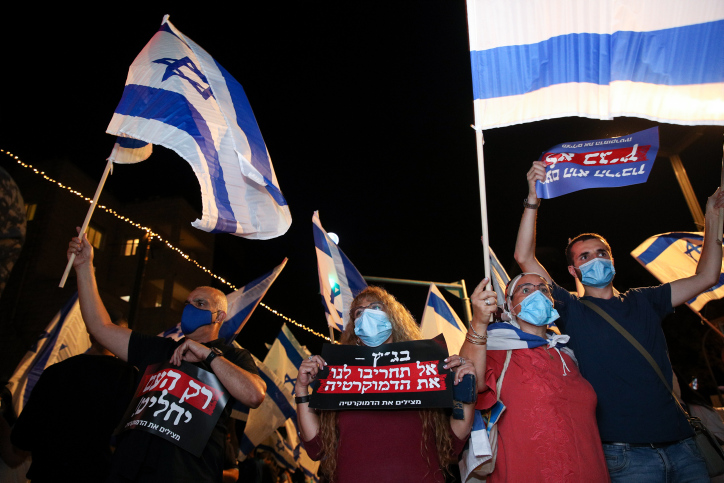
Now though, they have developed into a kind of collective, unfocused expression of frustration and despair, embodied and wailed by thousands of mainly secular Jerusalemites, students and others in their 20s and 30s. The vast majority of the participants, for the overwhelming duration of the rallies, have been good-natured and emphatically peaceable, albeit extremely noisy, with a violent minority and a smattering of far-left political extremists making many of the headlines.
Set against them, and kept apart from them, have been much smaller gatherings of pro-Netanyahu activists, some of them spouting vitriol at the other side — including a group on Thursday chanting praise for Yigal Amir, the assassin of prime minister Yitzhak Rabin — and, in several instances reported at the end of Thursday’s protests, aggressively confronting the dispersing crowds.
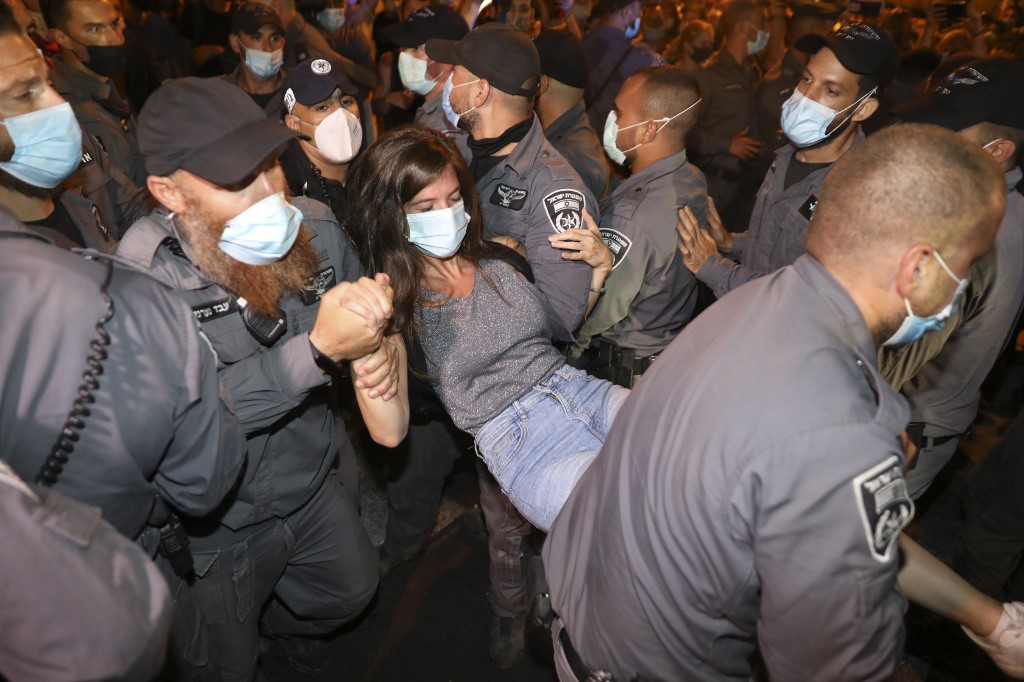
Charged with ensuring the right to demonstrate and maintaining order, the police have been deploying in large numbers, sometimes calling in mounted officers, and, with increasing frequency, deploying water cannon fire. On Thursday night, two Times of Israel journalists at the scene reported that the police tactics actually made it harder for demonstrators to disperse, as they were caught between mounted cops and the increasingly widely used water cannon fire.
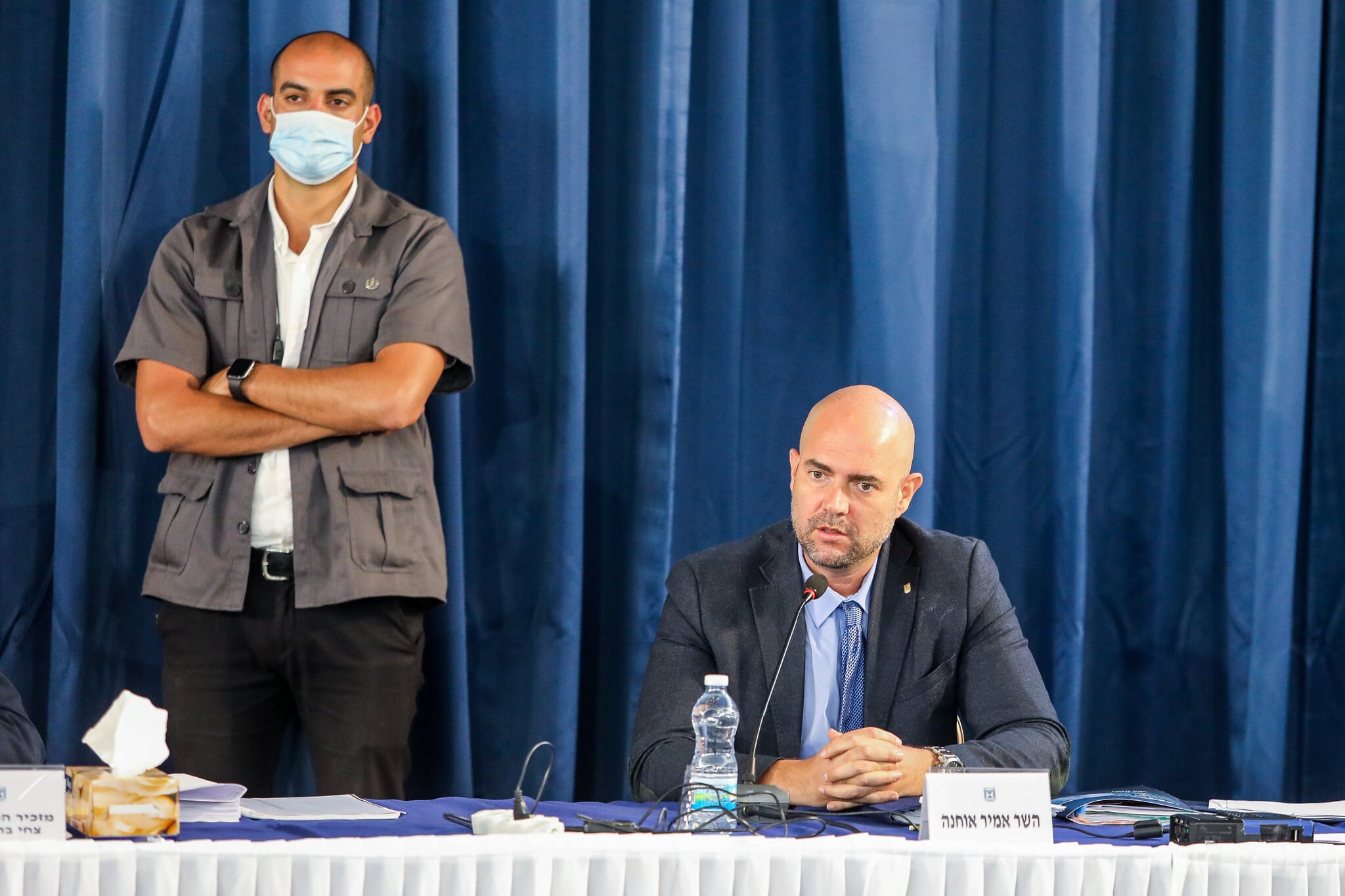
Amir Ohana, Israel’s minister of public security — a staunch loyalist handpicked for the role by Netanyahu — on Wednesday reportedly urged the police top brass to either relocate the protests to a nearby park or shut them down altogether, citing the havoc they were causing for local residents, and was told that this would be illegal.
He also reportedly intimated that the cops were being soft on the protesters, asking acting police commissioner Motti Cohen, “If this was a protest by ultra-Orthodox, Arabs or Ethiopians, would you have acted the same?” Common to the three groups he reportedly cited is the allegation that police have sometimes used excessive force in dispersing their protests.
For his part, Netanyahu on Thursday told the demonstrators: “Don’t drag the state into anarchy, violence, and destruction of property. Don’t drag it into attacks on police; they’re doing their job.”
Israel should know all too well about the challenges and dangers when public passions are elevated at mass events, and security is delinquent. Teacher, peace activist, reserve officer and father Emil Grunzweig was killed by a grenade thrown by a right-wing activist at a Peace Now rally held in Jerusalem on February 10, 1983, as the Israeli cabinet was discussing the conclusions of a commission of inquiry into the Sabra and Shatila massacre during the Lebanon War. Rabin was shot dead at close range by Amir at the conclusion of a November 4, 1995, peace rally in Tel Aviv.
לכל מי שתהו איך קרה שהאנשים ששכבו בצידי המדרכות התעלפו מהמכתזית – הנה התשובה: pic.twitter.com/GODAWYLvGO
— Achiya Schatz (@schatzah) July 24, 2020
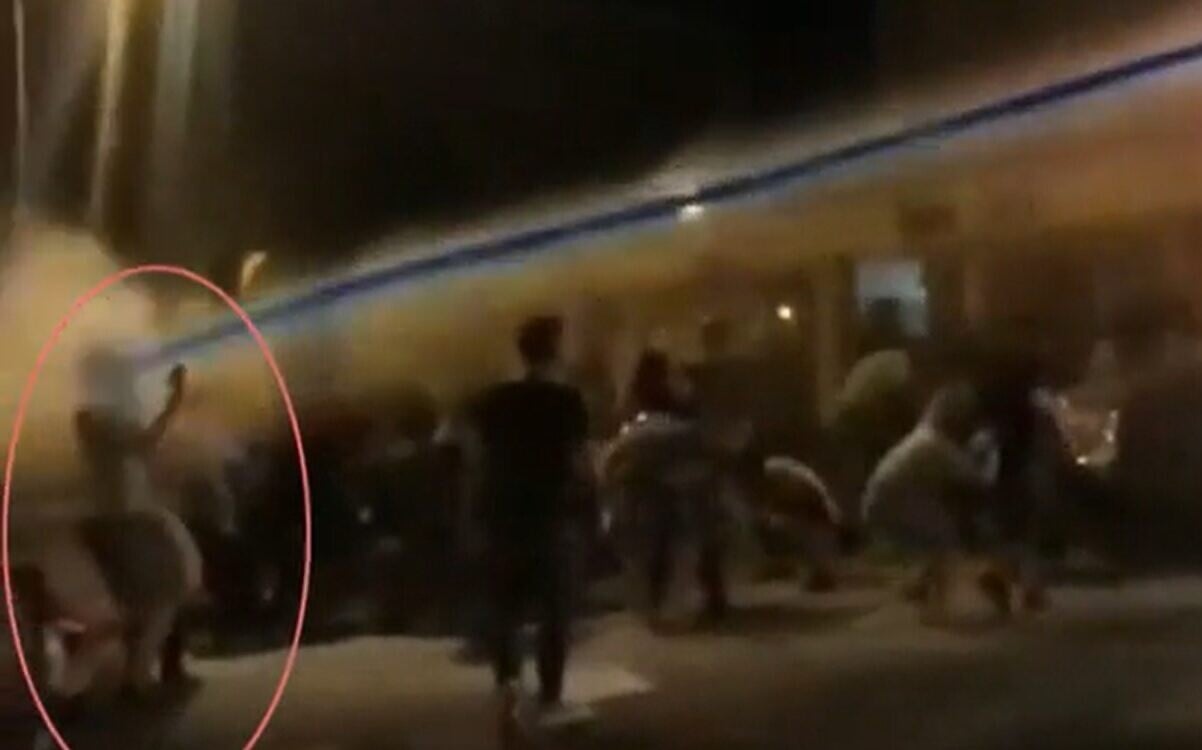
Demonstration by demonstration, the intensity of the Jerusalem protests is growing. A video clip in which one protester’s head is snapped back by the force of the high-pressure water cannon fire this week is just one illustration of the potential for clashes and confrontation to turn, in the blink of an eye, into something far more devastating.
Israel’s elected leaders, its law enforcement authorities, and the organizers of the protests have a shared, urgent responsibility to pull back from the brink.








The Times of Israel Community.