

German Jewish leader, a Holocaust survivor, gets death threat linked to victory of far-right AfD
‘The AfD has won, now we will hang Knobloch’ found scrawled on bench with Star of David; 93-year-old has said she’s ‘frightened’ by party’s success, called for potential ban
 Add ToI as a Preferred Source on Google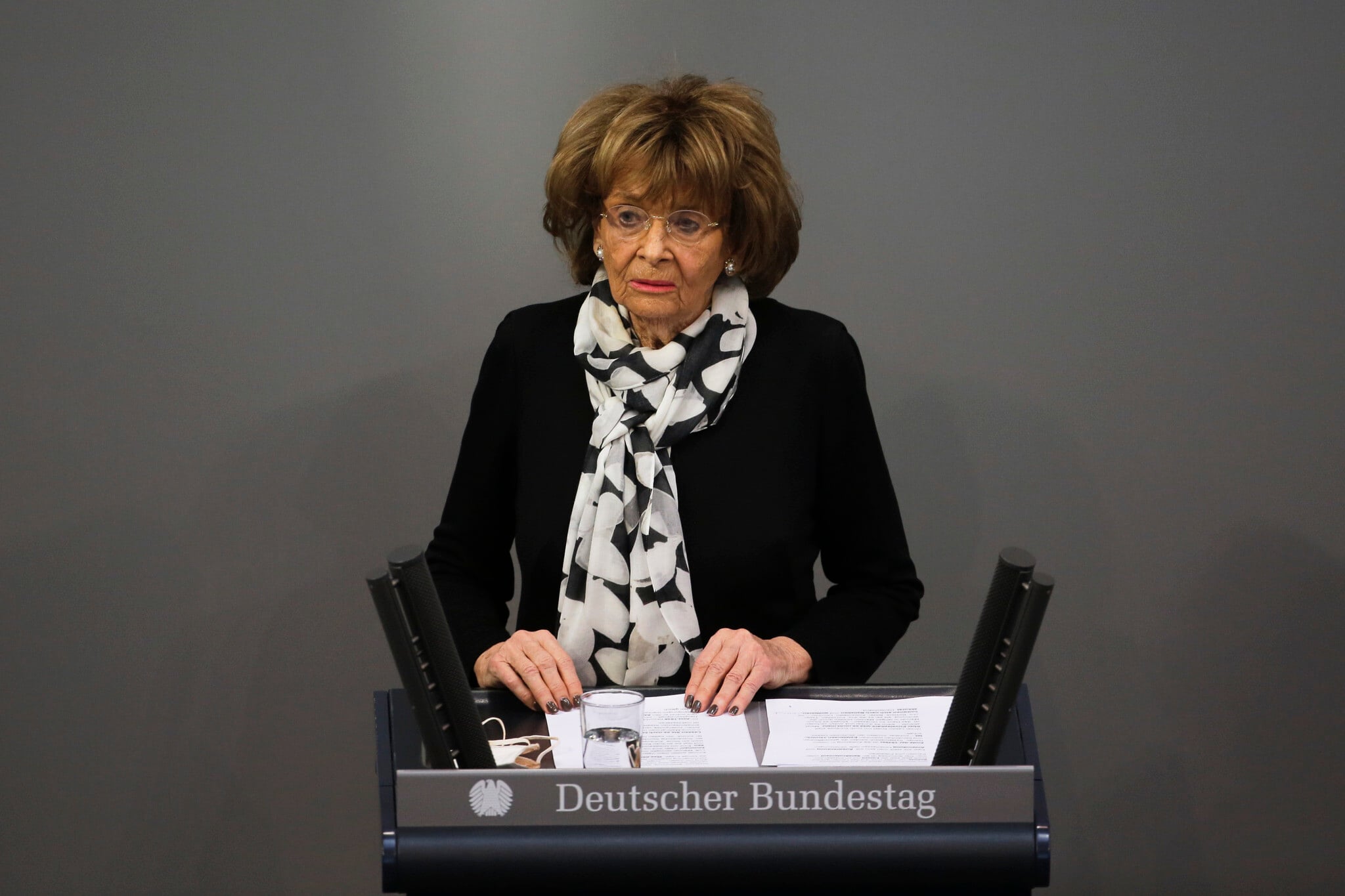
German authorities said Friday that Charlotte Knobloch, a prominent leader of the Jewish community in Munich who has called for the potential banning of Alternative for Germany (AfD), has received a death threat linked to the far-right party’s recent state election victory.
German media reported that the message “the AfD has won, now we will hang Knobloch” was scrawled on a bench and trash can in a park in the city.
Andreas Franck, the antisemitism commissioner at the prosecutor’s office, told DPA that the vandalism had included a Star of David.
The prosecutor’s office told DPA that an investigation has been opened into suspected incitement to hatred, threats and criminal damage.
Knobloch, a 93-year-old Holocaust survivor, is the head of the Jewish community in Munich and Upper Bavaria.
She canceled her planned appearance at an event on Thursday evening in the wake of the threat, DPA reported.

AfD won an election in the eastern region of Saxony-Anhalt last week, and is now seeking to form the first extreme-right state government in Germany since World War II.
“On days like this, I find it hard to recognize my home country,” she said Sunday in the wake of the victory. “And I say quite openly: it frightens me.”
“I never could have imagined in my worst nightmares that right-wing extremists in Germany would again win elections in this manner,” she said, adding that the result was “a sign that the structural integrity of democracy in our country is no longer functioning.”
Voters who chose AfD had “also rejected the principles that made it possible for us in the Jewish community to once again view Germany as our home.”
In August, Knobloch called for a review of whether the AfD could potentially be banned.
“I constantly hear why it shouldn’t be possible to ban this party. But it would be at least as important to understand why it might be necessary,” she said.
“Given much of what AfD politicians say, I ask myself: Where is the justice system? Why is it permissible today to incite hatred against people with impunity? We must resort to radical measures ourselves to combat these radicals. Otherwise, we will not succeed,” she said.
Adolf Hitler’s Nazi party also “started small and tested the limits of what was possible,” said Knobloch.
“That is exactly what is happening with the AfD: their politicians are testing the boundaries of what is considered acceptable. And we see that they are growing as they become increasingly radical,” she said.
Residents in Saxony-Anhalt are waiting to see the ramifications of the AfD’s election victory. Without an outright majority, the party needs partners to join a coalition.
Its nationalist agenda in the region includes teaching children less about Nazi leader Adolf Hitler, banning Pride flags in public buildings and requiring artists and cultural organizations to sign a declaration that they will not “disparage Germany and its culture” if they seek state funding.
The rise of the AfD has unnerved many who feel Germany has a responsibility to atone for its Nazi past, and calls have grown for mainstream parties to seek to ban the group.
But hurdles for a formal ban are high in Germany, and Chancellor Friedrich Merz, of the center-right CDU party, remains skeptical about taking such an approach.
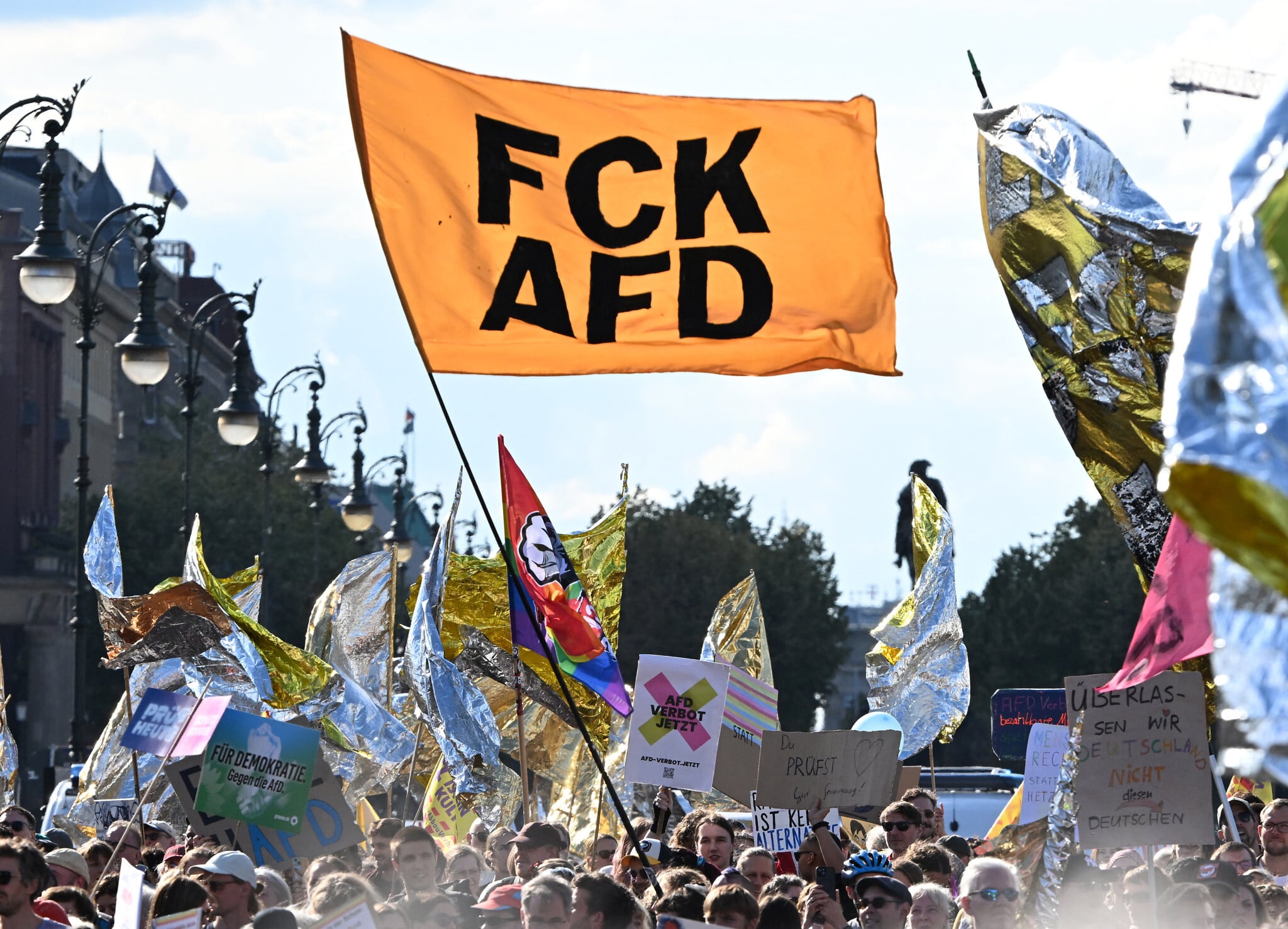
On Saturday, some 150,000 demonstrators took to the streets in around 20 cities nationwide, including Berlin, Hamburg and Munich, in protests that were called by Pruef, which advocates for a ban on the AfD, organizers said.
The AfD held a counter-demonstration in the capital, attended by Kristin Brinker, its lead candidate in next weekend’s regional elections in Berlin.
The first test as to whether AfD can translate its victory into a wider success comes Sunday in municipal elections in the western state of Lower Saxony. A week later, the AfD has its sights on state elections in the capital, Berlin, and the state of Mecklenburg-Western Pomerania.





The Times of Israel Community.