

China tests entire city of 9 million for virus as Europe tightens restrictions
Qingdao checks millions within days of minor outbreak; India sees infection tally begin to wane; UK introduces tiered system, shuts pubs, as case numbers spike around Europe
 Add ToI as a Preferred Source on Google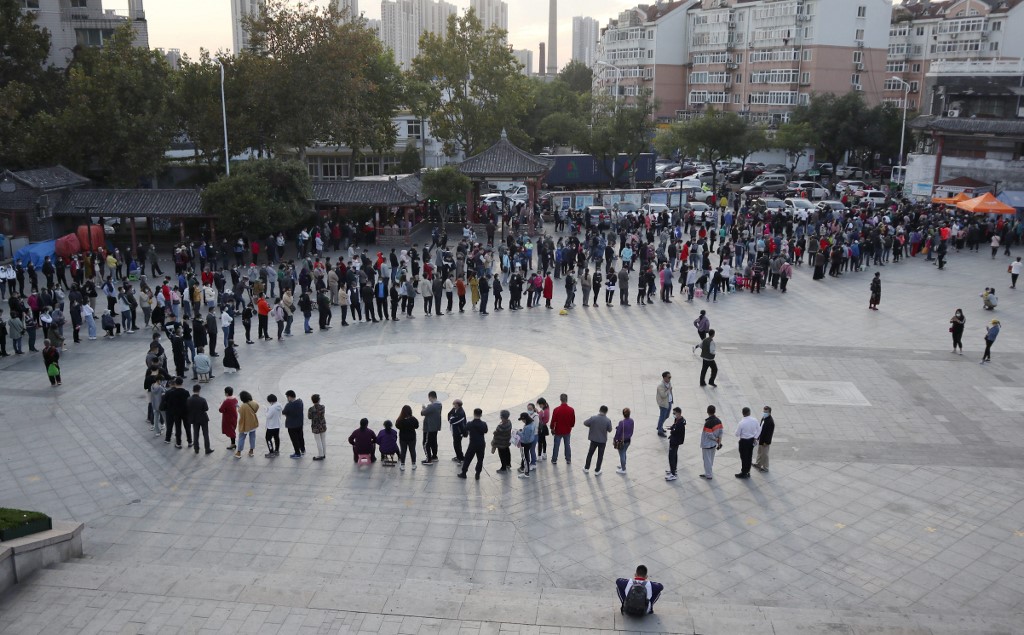
China rushed Tuesday to test an entire city of nine million within days after a minor coronavirus outbreak, as the WHO warned that letting the pathogen run free to achieve herd immunity was “scientifically and ethically problematic,”
The virus is still spreading rapidly around the world, with well over 37 million infections, and nations that had suppressed their first outbreaks are now struggling with fresh surges — especially in some parts of Europe.
In the absence of a vaccine, governments are wary of allowing the virus to spread unchecked, with China launching a sweeping drive to test all residents of Qingdao after a handful of cases were detected on Sunday.
“As of 8 am… our city has taken 3.08 million samples for nucleic testing,” the city’s health commission said Tuesday, adding that no new positive samples were found.
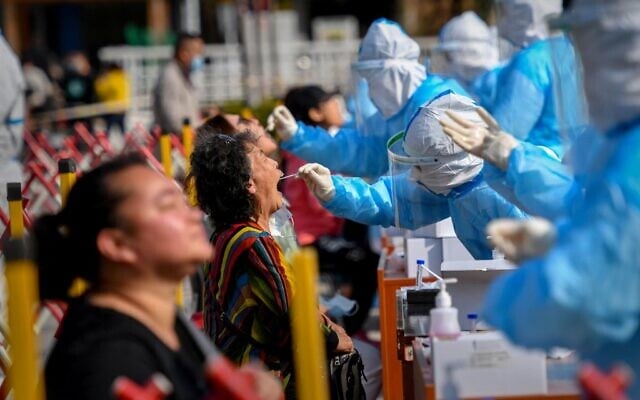
Chinese officials intend to test the entire city — around 9.4 million people — by Thursday.
In scenes contrasting with the fumbled testing efforts of other nations, health workers in protective clothing swiftly set up tents and residents queued deep into Monday night to provide samples.
In opposition to economically painful lockdowns and social distancing, there have been proposals in some countries to let the coronavirus circulate in the population to build up “herd immunity” — where so much of the population has been infected there are insufficient new victims for the virus to jump to.
But the World Health Organization said such plans were unworkable, and required mass vaccinations to work.
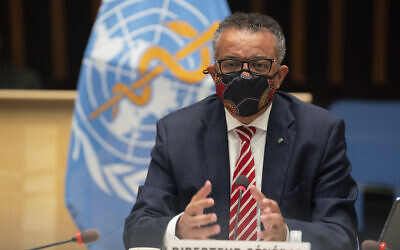
“Herd immunity is achieved by protecting people from a virus, not by exposing them to it,” WHO chief Tedros Adhanom Ghebreyesus said Monday, describing the idea as “scientifically and ethically problematic.”
“Allowing a dangerous virus that we don’t fully understand to run free is simply unethical. It’s not an option.”
Further illustrating the challenge, a study published in The Lancet Infectious Diseases journal indicated that exposure to the virus may not guarantee future immunity — and the second infection could come with even more severe symptoms.
Fighting fresh surges
Several countries have been working to tamp down on new spikes of infections in recent days.
South Korea on Tuesday reported 102 new cases of the coronavirus, its first daily increase over 100 in six days.
The steady rise was a cause of concern as officials have lowered social distancing restrictions this week after concluding that the viral spread was slowing after a spike in mid-August.
But India, which has seen a major surge in virus cases in recent months, said it registered 55,342 new coronavirus cases Tuesday, its lowest single-day tally since mid-August.
The Health Ministry raised India’s confirmed total to more than 7.17 million cases on Tuesday but said the country was showing a trend of declining daily cases over the last five weeks.
The ministry also reported 706 deaths in the past 24 hours, raising the toll to 109,856.
Iran, which saw virus cases wane after becoming one of the first countries with major outbreaks, has seen the pandemic return with a vengeance, smashing single-day records for new deaths and infections for two days in a row.
European nations are also trying to contain new surges in infections, and governments are rolling out tighter restrictions to avoid the devastation of the earlier outbreaks.
Cases have soared in France, Germany, Poland, and the Czech Republic in recent days.
There has also been a spike in Britain, which has the highest death toll in Europe.
The British government carved England into three tiers of coronavirus risk on Monday in a bid to slow a resurgent outbreak, putting the northern city of Liverpool into the highest-risk category and shutting its pubs, gyms and betting shops.
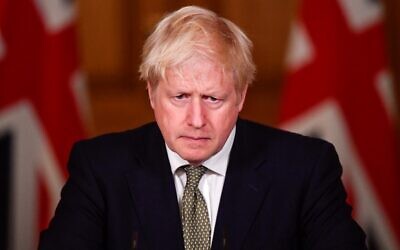
Prime Minister Boris Johnson said the three-level national system was designed to “simplify and standardize” a confusing patchwork of local rules, as the country enters a “crucial phase.” Johnson said hospitals are now filling up with more COVID-19 patients than in March, when he ordered a national lockdown.
“These figures are flashing at us like dashboard warnings in a passenger jet, and we must act now,” he said during a televised news conference.
Some scientists questioned whether the restrictions went far enough. Minutes published Monday from meetings of the government’s Scientific Advisory Group for Emergencies showed the body recommended three weeks ago that the government consider stricter measures including a short “circuit-breaker” lockdown.
The government rejected the idea.
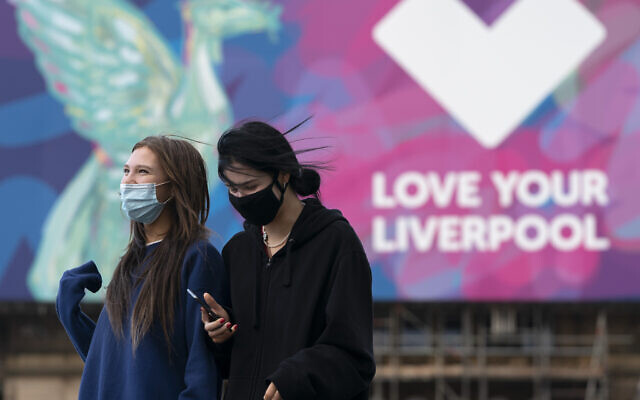
Labour Party leader Keir Starmer said he doubted the new measures would go far enough to “get control of this virus, to protect jobs or retain public trust.”
Health officials say Britain is at a tipping point in the outbreak, with strong action needed to prevent hospitals being overwhelmed at a time when they are already at their busiest with flu and other winter illnesses.
Vaccine setback
The pandemic has claimed more than one million lives worldwide, and spurred breakneck efforts to develop vaccines and effective treatments.
Some have made it to late-stage clinical testing, but the optimism was dented Monday when Johnson & Johnson announced it had temporarily halted its 60,000-patient trial because of an unexplained illness in one participant.
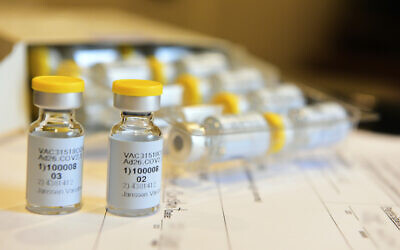
There are ten firms conducting Phase 3 trials of their candidates globally, including Johnson & Johnson.
The pharma giant has been awarded about $1.45 billion in US funding under Operation Warp Speed, championed by US President Donald Trump, who is eager for a political boost ahead of the November election with a coronavirus breakthrough.
Critics have excoriated Trump for his handling of the crisis, with more known infections and deaths in the United States than anywhere else in the world.
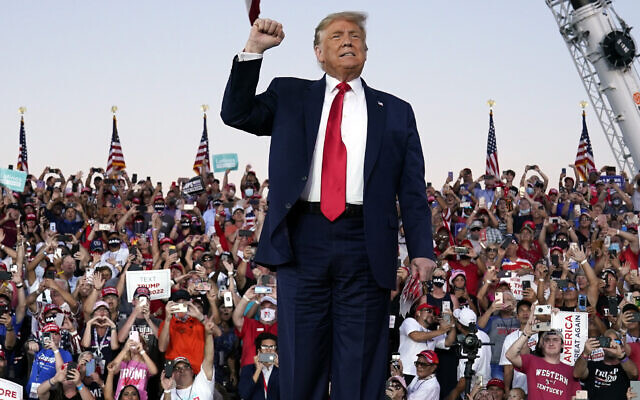
Trump was sidelined from the campaign trail for 10 days after he got COVID-19, but returned to the stage Monday.
“I went through it and now they say I’m immune… I feel so powerful,” Trump told a cheering crowd in Florida, few of whom wore masks.
His claim of immunity is unproven.


The Times of Israel Community.