

Coalition said mulling lowering electoral threshold to save Smotrich in next elections
With far-right Religious Zionism polling too low to enter parliament, Netanyahu is said to be concerned his bloc could see vital votes wasted
 Add ToI as a Preferred Source on Google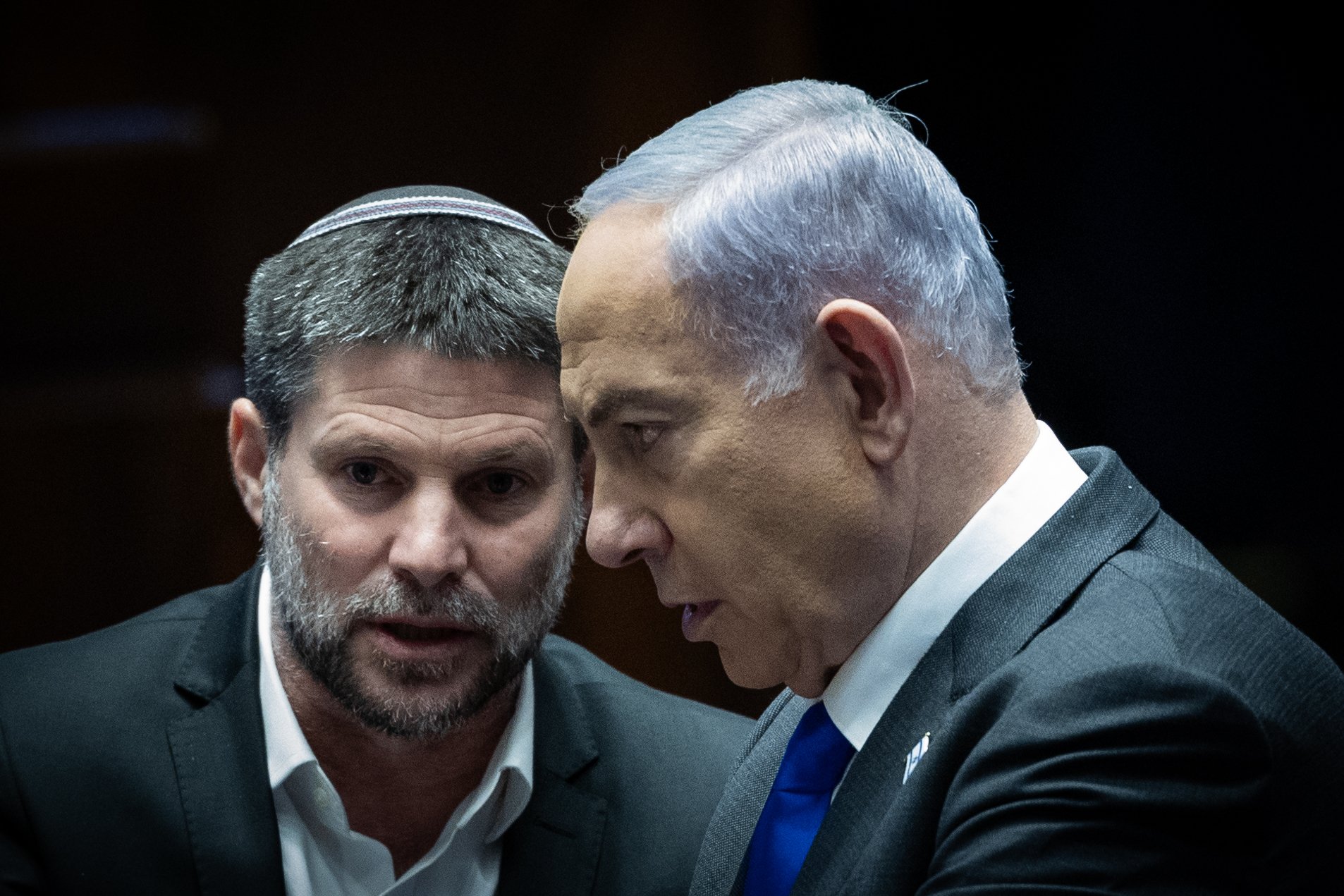
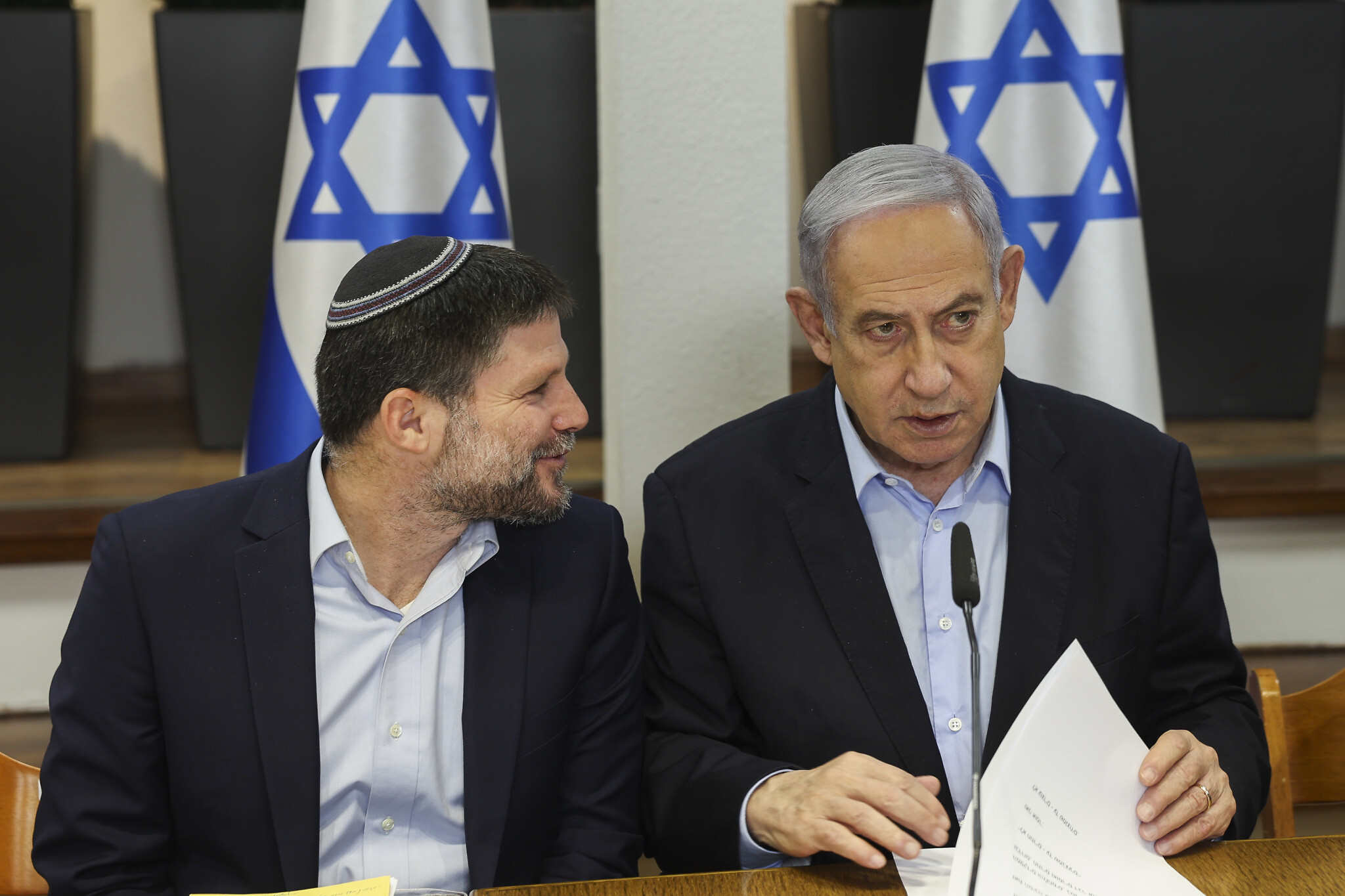
Prime Minister Benjamin Netanyahu’s governing coalition is reportedly considering lowering the threshold for entry into the Knesset amid concerns that Finance Minister Bezalel Smotrich’s far-right Religious Zionism party would not beat the bar in the next elections.
With polls consistently showing a close race between his coalition and the anti-Netanyahu bloc, the premier is said to be worried that Smotrich’s lack of popularity with the public will lead to wasted votes at the next elections, currently scheduled for October 2026.
According to a Channel 12 report on Sunday, the coalition is therefore considering lowering the minimum electoral threshold that a party must cross in order to enter the Knesset.
At present, a party that wishes to enter the 120-seat Knesset must receive at least 3.25% of the nationwide vote. This has been the case since 2014, when the minimum threshold was raised from 2%.
The coalition believes, however, that it has the necessary votes to once again alter the electoral threshold, Channel 12 reported. Any piece of legislation relating to the issue would need to pass three votes in parliament to take effect.
But the ultra-Orthodox Shas party is opposed to the move, the network said, as it fears a lower electoral threshold could also enable the entry of other ultra-Orthodox parties that would sap its power.
Talks are underway to secure Shas’s backing for the proposal, the report said.
The coalition has yet to decide on where to set the new minimum threshold, Channel 12 reported.
It said that MK Simcha Rothman, who chairs the Knesset Constitution, Law and Justice Committee, has been meeting with members of other parties in recent weeks, including with the head of the Arab-majority Hadash-Ta’al party, Ayman Odeh, to hear their position on the matter.
A Channel 12 poll last week found that Netanyahu’s Likud party would receive 27 seats if elections were held today, and would once again be the largest party in the 120-seat Knesset.
The poll indicated that Netanyahu is enjoying increased support in the wake of the ceasefire and hostage release deal in Gaza, as in the previous Channel 12 survey last month, Likud was polling at 24 seats.
Former prime minister Naftali Bennett’s party, Bennett 2026, — seen as Likud’s main rival in the next election — trailed in second place, with 22 seats, according to the poll. This, too, is an increase of three seats compared to the previous survey conducted by the network.
Despite Likud’s lead, the poll found that the parties that make up the current coalition would be trailing behind the anti-Netanyahu Zionist bloc led by Bennett, although both blocs would be short of the 60-seat majority required to form a government.
According to Channel 12, Netanyahu’s bloc, comprised of Likud (27), Shas (9), Otzma Yehudit (8), and United Torah Judaism (7), would be nine seats short of a majority, with 51 seats.
Meanwhile, it found that Bennett’s bloc, comprised of Bennett 2026 (22), The Democrats (11), Yesh Atid (9), Yisrael Beytenu (9), and Gadi Eisenkot’s Yashar (8), would fall just one seat short of 60, with 59 mandates.
Smotrich’s Religious Zionism and Benny Gantz’s Blue and White would fall below the threshold, as would Yoaz Hendel’s HaMiluimnikim (The Reservists), and the Palestinian nationalist party Balad.
As such, Channel 12 found that any bloc wishing to form a government would need to rely on the Islamist Ra’am party or Hadash-Ta’al to do so.
Both those parties would receive five seats.
Bennett’s short-lived “change government” counted Ra’am, led by Mansour Abbas, among its numbers, but it is not clear if he or his allies would be willing to work with the party again in the future.
The poll also found that 46% of the public believes Israel must hold elections as soon as possible, while 44% say it is best to wait until October 2026, when the government’s term ends.
Netanyahu is no stranger to finding workarounds to ensure his allies have their best shot at making it into the Knesset.
Ahead of the last elections in 2022, the premier engineered a technical electoral alliance between three far-right parties, Religious Zionism, Otzma Yehudit, and Noam. The three then split after the election.
In that election, Religious Zionism came away with seven seats and Otzma Yehudit with just six. However, with Otzma Yehudit, led by National Security Minister Itamar Ben Gvir, now polling at eight seats, it is seen as less likely this time to want to hitch itself to the floundering Religious Zionism.








The Times of Israel Community.