

Despite High Court ruling, Palestinian security prisoners say they’re still going hungry
Itamar Ben Gvir has boasted of making conditions worse for terror inmates and a 2025 court decision ordered Israel to give them more food, but reports of malnutrition persist
 Add ToI as a Preferred Source on Google
Five months after Israel’s High Court ruled that its prisons were failing to provide enough food for Palestinian detainees and ordered conditions be improved, emaciated prisoners are still emerging with tales of extreme hunger and abuse.
Samer Khawaireh, 45, told Reuters that all he was given to eat in Israel’s Megiddo and Nafha prisons, which both hold Palestinian security prisoners, was 10 thin pieces of bread over the course of a day, with a bit of hummus and tahini. Twice a week, he got some tuna.
Videos saved on Khawaireh’s phone show him at normal weight before he was detained in the northern West Bank city of Nablus last April, and clearly emaciated upon his release. He says he lost 22 kilograms (49 pounds) during nine months in prison, emerging a month ago covered in scabies sores, and so gaunt and disheveled his 9-year-old son Azadeen didn’t recognize him.
Reuters could not independently determine the total number of prisons where food scarcity prevailed, or the total number of inmates who experienced its toll.
Reuters could likewise not independently verify Khawaireh’s diet during his captivity, the reasons for his extreme weight loss, or exactly how widespread such experiences are among the 9,000 Palestinians held in Israeli jails. A journalist at a Nablus radio station who was held without charge, Khawaireh said he was never told why he was detained in a night raid on his house in April. Israel’s military declined to comment.
But his account was consistent with descriptions in some reports compiled by lawyers after prison visits. Reuters reviewed 13 such reports from December and January, in which 27 prisoners complained of a lack of food, with most saying provisions had not changed since the court order.
The Israel Prison Service declined to comment on Khawaireh’s individual case but said it “rejects allegations of ‘starvation’ or systematic neglect. Nutrition and medical care are provided based on professional standards and operational procedures.”
The service “operates in accordance with the law and court rulings” and all complaints are investigated through official channels, a spokesperson said. “Basic rights, including access to food, medical care, and adequate living conditions, are provided in accordance with the law and applicable procedures, by professionally trained staff.”

Previous reports compiled in 2024 from the Public Defender’s Office of Israel’s Justice Ministry showed that Palestinian security detainees held in Israeli prisons suffered from severe and systematic violence from prison guards, deprivation of food, and medical neglect, while also having been subjected to unsanitary conditions that caused and exacerbated outbreaks of disease in the prisons.
Inspectors from the office who visited four prisons that year documented seeing skeletal prisoners and witnessing physical evidence of beatings and medical neglect on the bodies of prisoners they interviewed. The reports were made public recently after a yearlong legal battle by the Association for Civil Rights in Israel (ACRI).
Far-right National Security Minister Itamar Ben Gvir has repeatedly boasted of making conditions more difficult for security prisoners. One of his first acts in office was to shut prison bakeries where Palestinian detainees had been allowed to make their own food, saying he aimed to cancel “benefits and indulgences.”
In September 2025, the High Court of Justice ruled that the state had failed to fulfill its legal obligations to adequately feed Palestinian security prisoners, and ordered it to take steps to provide such prisoners with enough food “to enable a basic existence.”
Ben Gvir has publicly denounced courts for trying to force prisons to coddle Israel’s enemies. During the court hearings, he called the case “crazy and delusional” in a post on X, mocked the judges for debating “whether the killers’ menu is balanced,” and said he was “here to make sure the terrorists get the bare minimum.”
Ben Gvir did not respond to a request for comment, including on whether the prison service is now in compliance with the court’s ruling, or whether any policies have been changed in response to it.

Independent verification of the treatment of detainees has become more difficult since the start of the war in Gaza following the Hamas-led October 7, 2023, attack, when Israel barred prison visits by the International Committee of the Red Cross, a role the Geneva-based body has played in conflicts around the world for a century.
ACRI, which was also involved in the High Court case, has accused the government of harboring a “policy of starvation” in prisons, and has petitioned the court to allow Red Cross access to Palestinian detainees. It has also applied to the court to have the IPS held in contempt for failing to comply with September’s order that it improve conditions.
“All the indications that we’re getting are that not much has changed” since the court ruling, the group’s executive director Noa Sattath told Reuters.
“The prisoners are not getting more food if they ask for it. There hasn’t been any medical examination of the situation of the prisoners, and the prisoners are still hungry.”
The court did not respond to a request for comment on the case.

The number of detainees held by Israel swelled after the October 7 Hamas attack, with thousands swept up during Israel’s operations in Gaza and a crackdown in the West Bank, though thousands of security prisoners have been freed in exchange for Israeli hostages during three Israel-Hamas ceasefires.
Throughout the war in Gaza, Ben Gvir has compared Israel’s treatment of Palestinians with the conditions faced by Israeli hostages held in Gaza by Hamas, many of whom endured abuse in captivity and were released in a state of near-starvation that shocked Israelis.
Hamas denies starving hostages, but evidence and testimony from the hostages contradict that claim.
Sattath, of ACRI, said the treatment of hostages held by the terror group provides no justification for mistreating Palestinian detainees.
At least 101 Palestinians have died in Israeli custody since the start of the Gaza war, according to the nonprofit Physicians for Human Rights Israel (PHRI).
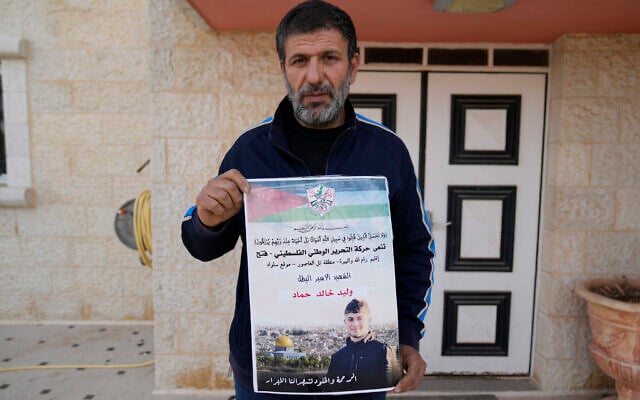
Among them was Walid Ahmed, 17, who died in March last year after collapsing and hitting his head in prison, which his lawyers say was a result of illness due to malnutrition.
“His autopsy showed massive weight loss — loss of muscle mass, fat, weakened immune system. When he got an infection, his body couldn’t fight it,” said Ahmed’s lawyer Nadia Daqqa.
Ahmed’s autopsy, reviewed by Reuters, said he suffered from “prolonged malnutrition” and listed starvation, infection and dehydration as potential causes of death.
The prison service declined to comment on Ahmed’s treatment in custody or the cause of his death.
Naji Abbas, PHRI’s director of the prisoners and detainees department, says chronic hunger has made the overall detainee population dangerously susceptible to other ailments.
“When people are being starved, their immune system is weak. So every medical problem, even the simplest one, can become serious,” he said.
Amani Sarahneh, the director of media and documentation for the Palestinian Prisoners Society advocacy organization, who has reviewed hundreds of cases and is in continuous contact with detainees, said the physical consequences are only part of the impact of hunger.
“When you hear detainees describe food, you see how huge a space it takes in their minds, because the human desire to feel full is so basic. Israel uses this heavily: not only physically but psychologically,” she said.
Khawaireh, who has returned to work since his release on January 7, has put weight back on, though he still looks thin.
While in prison, he said he and other detainees sometimes would save up half their allotment of bread for Saturday, so that once a week they could feel full.
“We want to feel, one day, that we are full,” he said. “Even once a week, we want to feel full. We are never full.”










The Times of Israel Community.