

Despite Palestinian hopes, Russia-style Western sanctions won’t be applied to Israel
Palestinians and their supporters are watching the West’s astounding mobilization for Ukraine and demanding the same against Israel. Here’s why it probably won’t work

 Add ToI as a Preferred Source on Google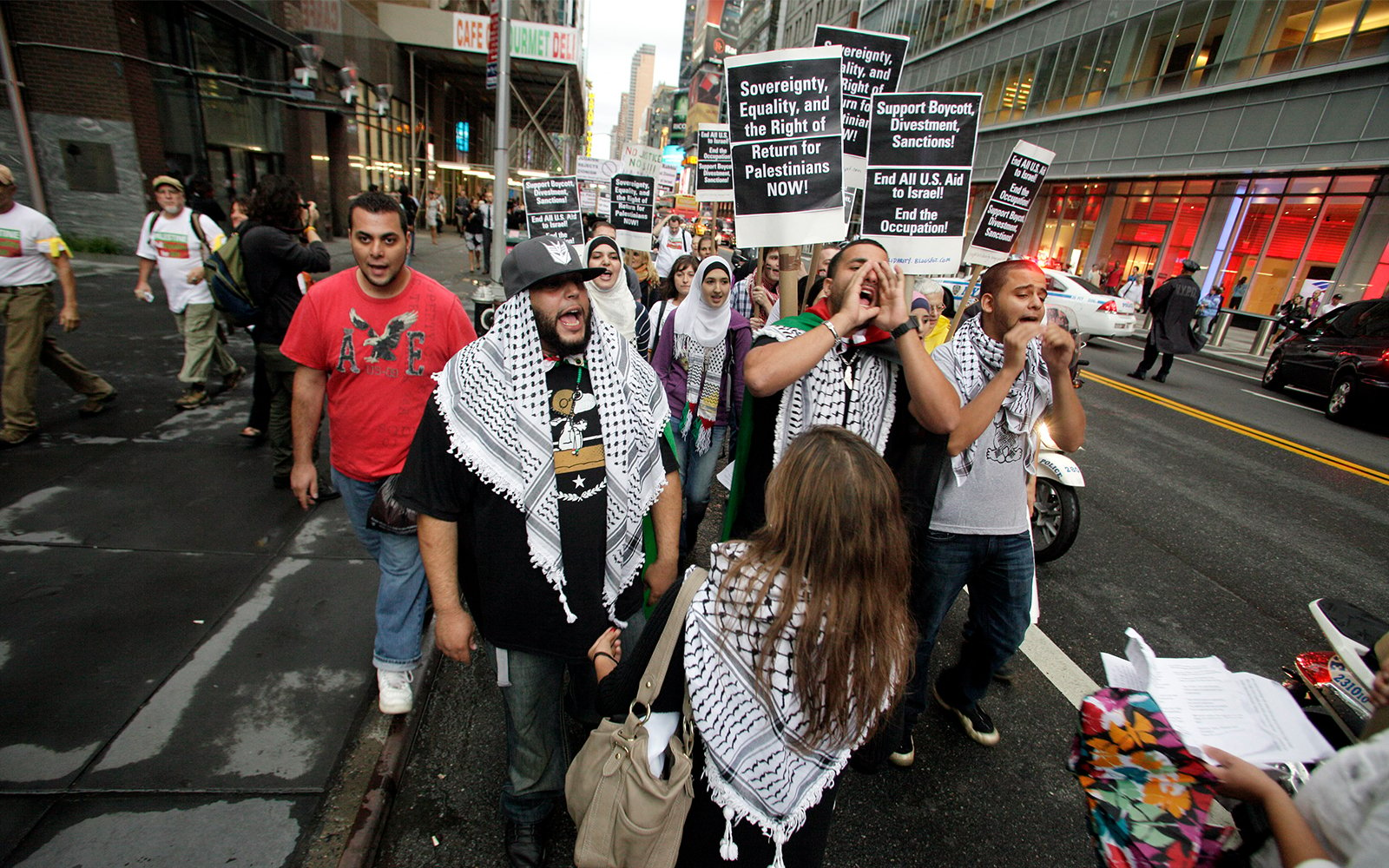
Jamal Zahalka, a former Israeli lawmaker who represented the Palestinian-nationalist Balad party in the Knesset for 17 years, had a message for Israelis earlier this month.
“What’s happening in Ukraine is terrible,” Zahalka declared in a Hebrew-language tweet on March 9.
“The Russian invasion deserves unqualified condemnation. Today it’s being reported that [Ukrainian President Volodymyr] Zelensky announced that 52 children were killed [in Russian shelling], and that’s shocking.”
But denouncing Russian aggression wasn’t the point of his tweet. This was: While Israeli media expressed outrage at the death toll in Ukraine, “they failed to note that in the 2014 war on Gaza (sorry, ‘operation’), Israel killed 530 children. Gaza has 2 million residents and Ukraine 40 million. That is, Israel’s killings were 200-fold.”
Zahalka’s tweet is unusual in the broader Palestinian landscape only in that it was written in Hebrew and addressed to Israeli Jews. Ignore the math for a moment – the 52 children killed in Ukraine were in a single Russian attack. Zahalka’s point represents the prevailing theme among Palestinians and their supporters since the start of Russia’s war against Ukraine on February 24.
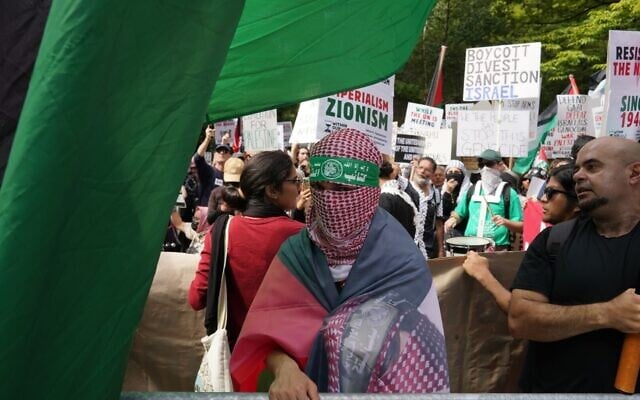
It is this: Israel is belligerent Russia, Palestine is heroic, victimized Ukraine, and if Palestinians were white Europeans, Israel would be subject to the same unified Western resolve to sanction and isolate it.
(It’s worth distinguishing between this activist discourse and the actual views of most Palestinians. Many think Ukraine is at least partly to blame for the war, and a majority want their leaders to remain neutral. That view was reflected in a handful of pro-Russia protests in Palestinian cities and the fact that the majority of Arab MKs decided to boycott Zelensky’s speech to the Knesset last week.)
בבית לחם נערכה היום הפגנת תמיכה ברוסיה בהשתתפות עשרות פלסטינים ורוסים החיים באיו"ש. המפגינים הצדיקו את זכותה של מוסקבה להגן על עצמה, ומחו על מה שתיארו כ"סטנדרטים הכפולים של הקהילה הבינ"ל הממהרת להגן על האוקראינים על לא על הפלסטינים הנרדפים מזה שנים". pic.twitter.com/ubzj4JV4U5
— מיכאל Michael Milshtein/ميخائيل ميلشطاين (@michael_mils) March 6, 2022
So it was that on March 4, Yousef Munayyer, a Palestinian activist and writer in Washington, published an opinion piece in the progressive magazine The Nation that noted with astonishment how, “overnight, international law seemed to matter again. The idea that territory could not be taken by force was suddenly an international norm worth defending.”
Western nations “not only imposed broad sanctions but have initiated a robust series of targeted sanctions to hold powerful actors personally accountable. Meanwhile, not only have Western nations refused to use sanctions to hold Israel to account for its violations, it actively enables them through economic, military, and diplomatic support….
“Remarkably, boycotts, divestment, and sanctions are not controversial when used to hold certain violators accountable. But when it comes to the rights of Palestinians, we are repeatedly told that nonviolent economic measures like boycotts are wrong.”
Where Zahalka told Israelis that Israel was worse than Russia, Munayyer addressed the liberal West with the accusation that only “racism” could explain the different responses to the suffering of Ukrainians and Palestinians. Western governments, he opined, “see some of us as less human than others.”
"It took five days for sanctions against Putin and his thugs but imposing sanctions for 70 years of oppression of the Palestinians would not be ‘helpful’."
Irish lawmaker Richard Boyd Barrett calls on the Irish government to stop “double standards" amid Russia-Ukraine War. pic.twitter.com/hktvtMqAQh— Middle East Eye (@MiddleEastEye) March 5, 2022
Or, as Arab American Institute president James Zogby described the West’s view: “One group is more worthy of support than another; the rights of one group are sacrosanct, while others are expendable; one people cannot be condemned even when engaging in criminal behavior because their security is more important than the rights of those they oppress.”
The argument was carried into the mainstream American debate by Politico, MSNBC and many others.
A dress rehearsal
Are they right? Are Western governments, businesses, universities and even symphony orchestras, in their zeal to punish Russia for its warlike ways, finally forcing into sharp focus a longstanding prejudice toward, as various critics have framed it, Arabs, Muslims or non-whites?
The question carries enormous significance for the Palestinian future. Those making the charge all share a common prescription for resolving the Israeli-Palestinian impasse. The West, it transpires, is capable of massive, coordinated international sanctions and isolation of an economy four times the size of Israel’s by GDP. (That’s not a typo. For all its bluster and 145 million souls, Russia’s nominal GDP is smaller than Canada’s.)
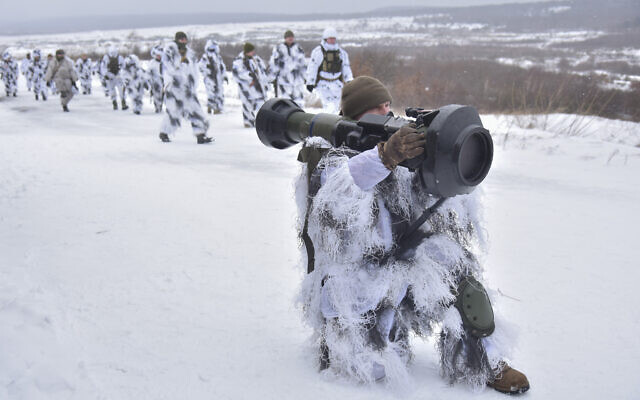
The West is even able and willing to ship vast amounts of weaponry to the victimized party and openly boast about it.
Here is the wildest fantasy of the Israel boycott movement come to vivid life with astonishing speed. Here, in effect, is the unexpected dress rehearsal for Palestine’s redemption.
Some version of this idea has even taken hold on the Israeli activist left. On Wednesday, Israeli and Palestinian activists gathered under the auspices of the Geneva Initiative for a conference titled, tellingly, “From Kyiv to Ramallah.”
The goal was to needle the Israeli body politic out of its complacency with the warning that what is happening to Russia could happen to Israel. “In order not to even come close to the situation in Ukraine and the international steps that followed it – we need a real process that will lead to a two-state solution,” organizers said on Twitter.
קהל גדול בא אתמול, בצל הפיגוע הנורא בב״ש, לכנס ״בין קייב לרמאללה״. השרים הישראלי והפלסטיני והמומחיות בפאנל הסכימו על דבר אחד: כדי לא להתקרב בכלל למצב באוקראינה ולצעדים הבינלאומיים בעקבותיו – אנחנו חייבים תהליך אמיתי שיוביל לפתרון שתי המדינות pic.twitter.com/NVRCsmLz9B
— יוזמת ז'נבה (@YozmatGeneva) March 23, 2022
The most effective way to sustain the West’s newfound militancy and to make it the baseline expectation for other conflicts is to frame the gap between the responses to Russia and Israel as rooted in racism. Western moral emotions are at a fever pitch; you strike while the iron is hot.
Occam’s razor
But to seriously ask the question posed (and immediately answered) by the Palestinian activists, one first needs to examine possible explanations that aren’t racism, even if only as an intellectual exercise. It is not unreasonable to suggest that the world’s apparent reluctance to deal more harshly with Israel than Palestinians wish is at least partly due to latent prejudice. But there are other possible explanations for the gap that have nothing to do with the Palestinians’ ethnicity or religion.
Leave aside the substantive debate about Israel’s moral standing – the belief among Israelis that every Israeli withdrawal since the start of the peace process only brought new rounds of Palestinian-instigated bloodshed, or the Palestinian belief that peace talks were never more than a cover for continued settlement building. These warring narratives place the two sides in radically different moral positions. But Western reluctance to isolate Israel doesn’t flow from that debate. Most Western policymakers one speaks to tend to agree with both sides. Neither Israelis nor Palestinians are seen in most Western capitals as innocent actors in this drama.
But last month, as they prepared to level the first massive set of sanctions on Russia, leaders and policy planners in three dozen capitals asked a few simple questions to try to game out the possible consequences of sanctions: How effective would they be in convincing Russia to stop its invasion, or at least to shorten its duration? How much damage would the sanctions do to Western economies, and would the potential benefit be worth that cost? How would Ukraine react?
One doesn’t need to go very far through these basic cost-benefit questions to begin to discern a gaping divide between the Ukrainian and Palestinian situations, a divide that goes to the heart of the Palestinian predicament.
What Europe talks about when it talks about morality
It’s best to say it bluntly: It wasn’t moral outrage or passionate devotion to international laws that drove the West’s response to the invasion. It was self-interest — the fact that Russia had suddenly become an immediate hard-power threat to a Europe that suddenly noticed it has spent the better part of three decades systematically disarming itself.
Before Putin’s invasion of Ukraine, only three EU countries bordered Russia directly: Finland, Estonia and Latvia. With the invasion and the Russian military presence in Belarus, five new EU states – Lithuania, Poland, Slovakia, Hungary and Romania – suddenly had a direct border with the Russian army.
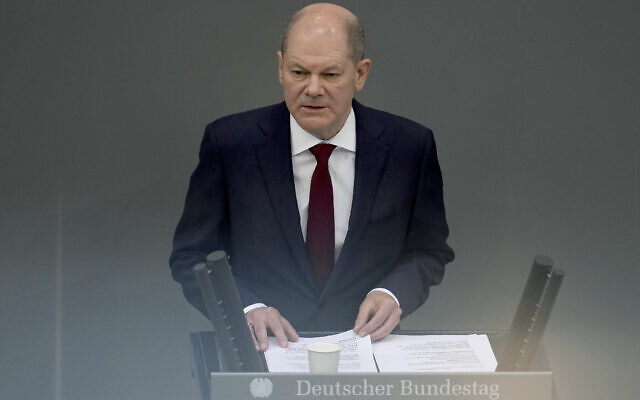
It wasn’t German moral sentiment but rather this hard fact of Russian military encroachment – the sudden threat to Germany itself – that drove German Chancellor Olaf Scholz just two days after the invasion to announce a one-time addition of 100 billion euros ($110 billion) to Germany’s defense budget, more than double Germany’s total 2020 defense spending of $53 billion. Two weeks later, on March 14, German media reported that Berlin had asked the United States about acquiring new F-35 fighter jets.
Many European and NATO nations announced in the wake of the invasion that they too would up defense spending to try to meet NATO’s baseline request of 2% of GDP. Germany and Poland declared they would significantly surpass it.
This new investment didn’t begin over the past month. Russia’s 2014 annexation of Crimea triggered the first modest military build-ups in Germany, Sweden, Poland and other EU countries and led NATO to establish the 2% standard.
The West has a curious post-war habit of framing its geopolitical actions in pristine moral terms. But that moral vocabulary is the veneer, not the substance. No moral indignation is driving three dozen NATO and EU states to suddenly spend hundreds of billions of previously unbudgeted dollars and euros on growing their militaries in the coming years, or to risk the loss of hundreds of billions more by cutting Russia (and possibly its gas output, which supplied 40% of EU gas consumption last year) out of the global economy. It wasn’t moral outrage that drove the sudden unity and flinty determination of Western governments or the realization among the world’s top CEOs that it would be unwise to fall afoul of that steely new resolve by flouting the new sanctions regime.
It is, in fact, hard to find anywhere in the world a sanctions regime rooted solely in the West’s sense of moral outrage. It is a tool used almost exclusively to address perceived hard-power threats – mostly against regimes like North Korea and Iran – and grows more severe as the threat escalates. Russia is now under an international sanctions regime with more actual restrictions than those imposed on either North Korea or Iran – not because it is morally worse in Western eyes, but because it is a closer and more immediate threat.
Ukraine left out in the cold
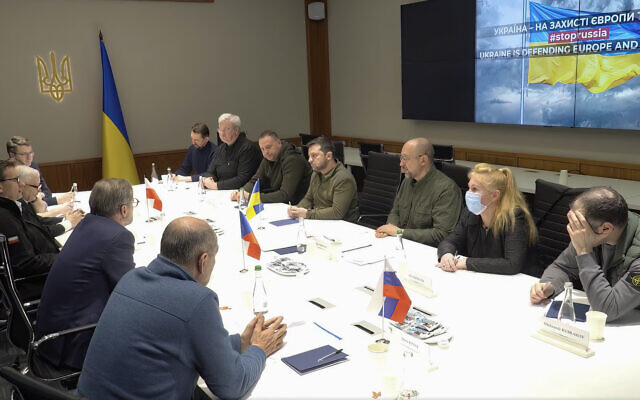
At a March 10 summit at Versailles, European leaders issued a joint statement that declared the Russian invasion of Ukraine a “tectonic shift in European history,” a dawn of a new regional order. At the same conference, however, those same leaders rejected the demand of the most threatened European states – Poland, Lithuania, Latvia, Estonia and Hungary – to fast-track Ukraine’s accession into the EU.
It was an important moment of clarification. Europe was mobilizing against Russia – not, it transpires, for Ukraine. The reasoning is sound, if coldly calculating. The EU requires unanimity among member states to take action. If Ukraine accedes to the union and then becomes by war’s end a Russian client state, Russia will have gained a de facto veto on future EU action.
In advancing their Ukrainian membership proposal, the Eastern European states most threatened by the Russian advance were in effect trying to rope their wealthier Western European counterparts into a more robust defense of Ukrainian territory by raising the costs for the EU of Ukraine’s collapse. Western Europe, however, declined to tie its fate too closely to Ukraine’s battlefield successes. It would offer support from outside, dramatically increase its military spending, and retain its freedom of action if Ukraine falls.
Or put another way, Western Europe drew a line, but not a moral one. Old worries about Poland’s or Hungary’s lurch rightward have evaporated in the face of the urgent need to deploy new NATO forces and Patriot batteries to the wartime frontier. Ukraine would get help, but only insofar as that help doesn’t increase the danger for Western European states.
The West’s fundamentally non-moral analysis of the war is ultimately bad news for Russia. A sanctions regime rooted in immediate, overpowering fear is a sturdier thing than one based on moral feeling.
But it’s also bad news for the pro-Palestinian campaign. The moral discourse they are attempting to deploy against Israel is not the real driver of the Western reaction they hope to reproduce.
The upshot: The moral and legal language with which Europe is now describing its retooling for a less idealistic age is a mirage. The West’s actions are driven not by sentiment but by a hard and immediate threat to Europe — the sort of threat that Israel cannot pose.
The trouble with Palestine
Then there’s the problem of Palestine itself, divided and dysfunctional, riddled with corrupt institutions and warring extremists, without any obvious single faction willing or able to deliver better governance or introduce democratic norms to Palestinian-ruled areas.
Pro-Palestinian activists blame the dilapidated state of Palestinian politics and governance on Israel. It’s the sort of argument that cannot be casually dismissed. Five decades of outsider rule are not a healthy environment in which to create robust political systems. But it also serves as an all-too-convenient way for Palestinians to ignore some knotty problems wholly internal to Palestinian politics. And, more importantly, blaming Israel for the dysfunction once again misunderstands the basic motives that drive Western decision-making.
Whatever the source of political incapacity, the simple fact of it limits Western support in important ways.
A comparison to Ukraine clarifies the point. A great deal of Western aid to Ukraine has come in the form of weapons shipments, including a six-day period in early March that saw 17,000 anti-tank missiles delivered to the embattled nation which appear to have been used to great effect on the battlefield. Such weapons systems can be rushed to Ukraine because the West can feel reasonably confident they will not be used to target Russian civilians in Russia.
Western policymakers can’t assume the same in the Palestinian case.

Funds sent to the Ukrainian government are very likely to be used by Zelensky’s administration either to defend the country or alleviate the war’s humanitarian fallout. But as the EU has discovered countless times over the past three decades, money sent to Gaza or the West Bank often bolsters terrorist infrastructures or disappears altogether. Contributions to the Palestinians are now closely tracked and tightly controlled for that reason.
And what of the sanctions? Here, too, Palestinian capacity matters. Ukraine can be trusted to use the world’s tightening noose on the Russian economy as leverage to negotiate an end to the war. Hamas, which is unchallenged in Gaza and polling at between 40 and 60 percent support in the West Bank, would not use similar pressure on Israel in the same way. Instead of ending the conflict, it is reasonable to assume, based on Hamas officials’ own routine declarations, that it would use any advantage it can muster to expand its warfighting.
Even for the most sympathetic Western policymaker of the sort already inclined to support pressure on Israel, this is no easy problem to overcome. If the West were to choose to expend the enormous political and economic capital involved in imposing a crushing Russia-style sanctions regime on the Jewish state, what would the Palestinians do with that gift? In Zelensky’s case the answer is straightforward. In divided, half-Islamist, deeply corrupt Palestine, it is a mystery even to Palestinians.
Finally, there are the pro-Palestinian activists themselves and the way they have framed their cause. Democratic Ukraine’s advocates in the West are demanding something simple and straightforward: An end to the military invasion. The campaign against Israel has refused to limit itself to demanding an Israeli withdrawal from some specific area or an end to some specific policy. It demands something much more complex and morally ambiguous: the dismantling of Jewish statehood.
No one is forcing the BDS movement to adopt that position. It flows from the movement’s roots in Palestinian activism, representing a century-old Palestinian conviction that the very idea of a Jewish state is an untenable monstrosity. But this subordination of pro-Palestinian activism abroad to Palestinian discourse at home carries a high cost. The boycott movement wants to force a debate about why sanctions are legitimate in one case but not in another – in order to avoid the more difficult debate over whether its demands to fundamentally reshape the enemy’s internal life are actually hurting the Palestinian cause. Even those European or American policymakers who grow weary of the impasse and generally blame it on the Israeli side are loath to ally with a movement that seems bent on demands the Israeli side cannot possibly deliver.
This is no minor hiccup in the Palestinian advocacy strategy. Russia, by ending its invasion, could bring the West’s sanctions to an end quickly and easily, a fact that instills in Western governments the reasonable hope that the pain they are inflicting will expedite Moscow’s timetable for doing so. There is no demand for Russia to dismantle itself or radically reconfigure its social order. The Palestinian campaign, on the other hand, is not instilling in the West a similar hope for success.
Of course, none of these difficulties are evidence that racism doesn’t play a role in Western policymaking. But prejudice alone is not the sole or even primary explanation for the reluctance to rally behind the Palestinians. There are simpler explanations. The biggest obstacle to copying the West’s Ukraine policy to Palestine isn’t Western racism. It’s the Palestinians themselves.





The Times of Israel Community.