

Domestic issues, not Israel, key to pivotal Jewish voters in midterm elections
Despite constituting just 2% of the population, US Jews may have a disproportionate impact on the vote — and Republicans and Democrats alike are aware of it, say analysts
 Add ToI as a Preferred Source on Google
Reporter at The Times of Israel
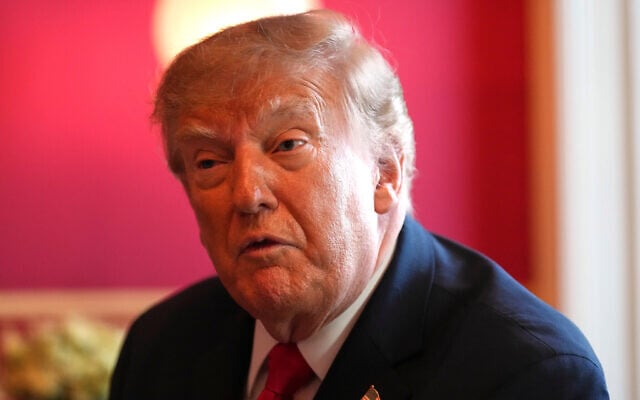
NEW YORK — When Republican candidate for Florida governor Rick DeSantis was asked at an October 21 debate whether President Donald Trump is a role model for kids, he pivoted — to Israel. Rather than answer the question, he touted Trump’s decision to move the United States embassy from Tel Aviv to Jerusalem.
Of course candidates from both parties are masters of answer avoidance, so on that score DeSantis’s silence regarding Trump wasn’t particularly telling. However, his pivot spoke volumes.
American Jews represent just two percent of the US population, yet this campaign season both Republicans and Democrats consider the Jewish vote as vital to their success, particularly in Florida, Pennsylvania and New Jersey. Conversely, the majority of American Jews view the midterms as a referendum on a range of domestic issues. The one thing they aren’t focused on? Israel-US relations.
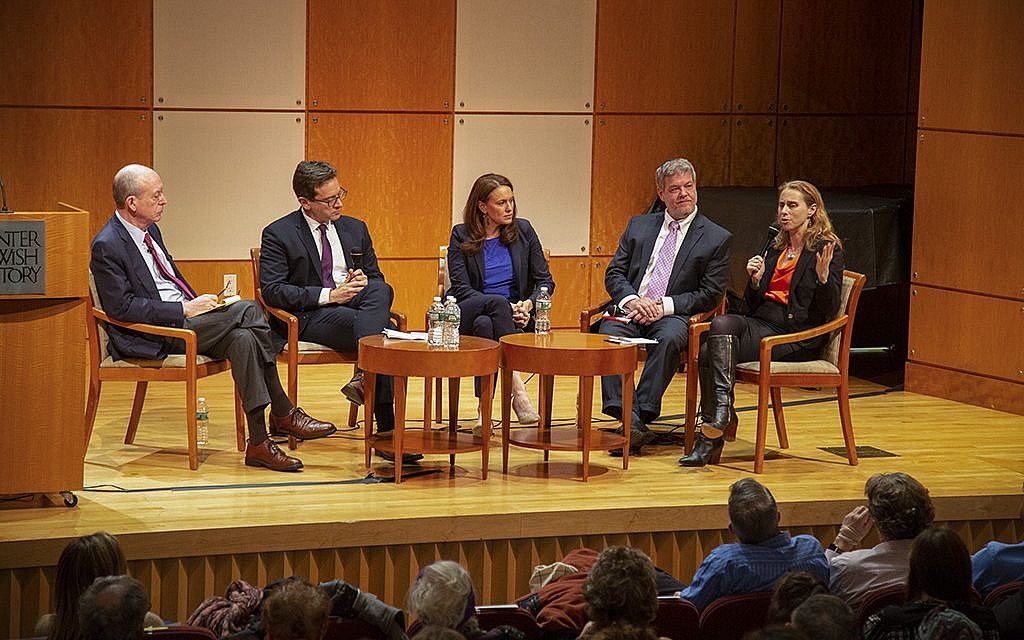
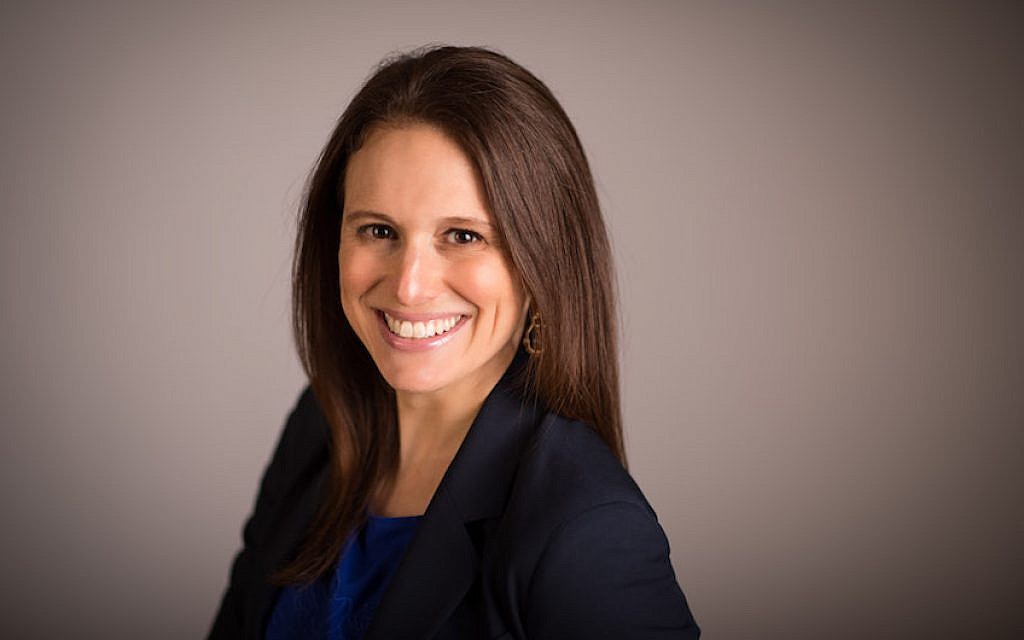
“Jewish voters are about prioritization. Ninety-two percent consider themselves pro-Israel, but Israel is not the top issue,” said Halie Soifer, executive director of the Jewish Democratic Council of America, speaking at a panel discussion on the midterm elections at the Center for Jewish History last week.
“They care about value-driven issues and look at where we’ve [the US has] been, where we’re going and how we see the world. This election will be determined by domestic issues,” Soifer said.
So while Israel is an issue, it is not the issue for the majority of American Jewish voters. Instead the Supreme Court, access to affordable health care, the economy and Medicare rank as top issues.
“My sense is for older Jews, observant Jews, Israel looms much larger as an issue. For younger Jews there is a much weaker connection and it won’t matter so much. So the question is how many votes will get peeled away from the Republicans because of other things Trump did,” said Jeff Jacoby, a conservative opinion columnist for The Boston Globe.
With the 2018 midterm elections looming, Jacoby and Soifer participated in a conversation moderated by veteran New York Times journalist Clyde Haberman. Joining them were Rabbi Jill Jacobs, executive director of T’ruah: The Rabbinic Call for Human Rights, and Julian Zelizer, Princeton University Professor of History & Public Affairs and CNN Political Analyst.
Together, the panel explored the ideological and generational schisms running through the American Jewish electorate and how much weight the Jewish vote will carry on November 6. (The conversation was held prior to Saturday’s mass shooting at Pittsburgh’s Tree of Life synagogue.)
Interest in elections is significantly higher than it was during the 2014 midterm elections, according to a Washington Post-ABC News poll. This interest includes all demographic groups, although younger adults, nonwhite voters and those who say they favor Democrats for the House of Representatives show the largest increases.
In a recent article in The Jerusalem Post, Jack Rosen, president of the American Jewish Congress, claims the Jewish vote could very well tip the balance. For example, in Florida Jews comprise about 5% of the state population and account for about 3.4 % of the electorate.
Since the 1920s American Jews have voted overwhelmingly for the Democratic party. According to a recent survey by the Democratic polling service The Mellman Group, 75% of American Jewish respondents said they intended to vote for Democratic candidates in the midterms.
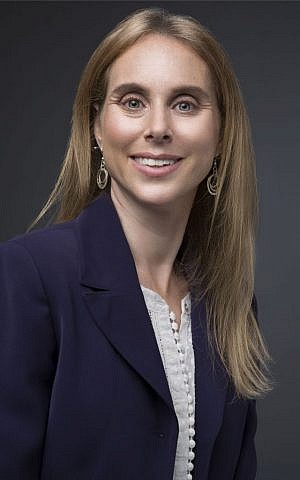
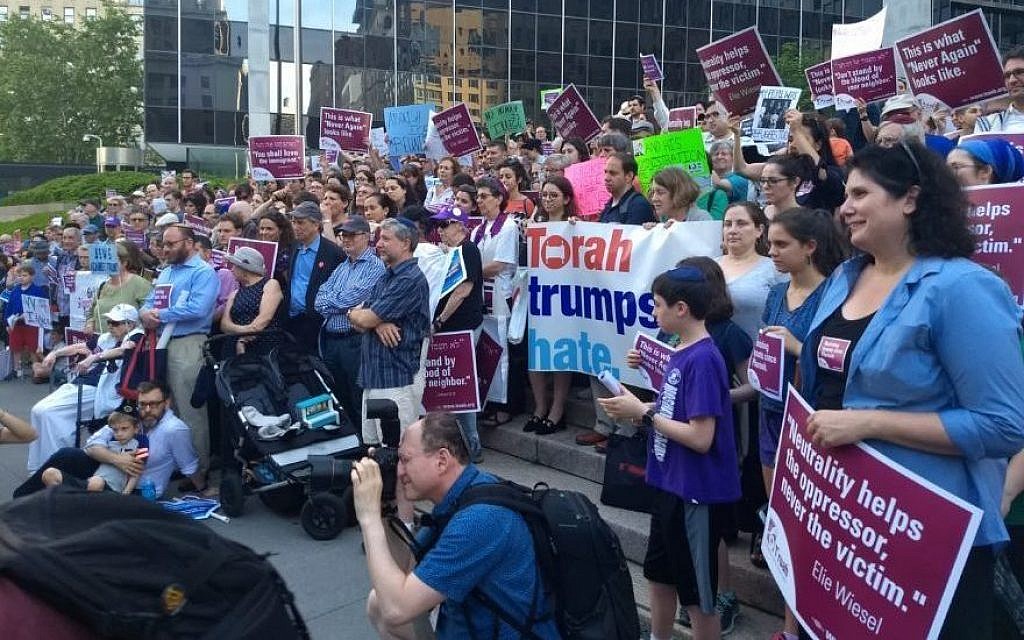
“The Jewish vote matters because Jews are a subject and object in this election. I worry about anti-Semitism from the right to the left. I have spent the last two years dealing with anti-Semitism, and if you asked me five years ago whether I’d be spending so much time on it I would have laughed at you,” T’ruah head Jacobs said.
Jacobs was referring to the accusations by some on the right that Democrats are anti-Israel and anti-Semitic, and the increase in language that says Jewish billionaire philanthropist and Holocaust survivor George Soros is trying to buy the election. She also spoke of those on the left who cross the line from legitimate criticism of Israeli politics into anti-Semitic territory by using classic anti-Semitic imagery and verbiage.
Aside from the rise in anti-Semitism, immigration is another domestic issue on voters’ minds, journalist Haberman said.
“The Book of Exodus, verse 23, talks about welcoming the stranger. Should there be a Jewish view on immigration and if so, what might that position be?” Haberman asked.
Jacoby, the son of a Holocaust survivor, agreed that immigration is an issue of special concern to the majority of Jewish voters.
“For me immigration is not only a Jewish issue, but a deeply personal issue. One of the first columns I wrote for The Boston Globe was in 1994 called ‘Let the Haitians In.’ We are a huge country that grows stronger and healthier and more vibrant. I say the more the merrier. I want there to be the most robust, most open immigration policy possible,” Jacoby said.
Clearly there is concern among Jewish voters about some Democratic positions on Israel, Soifer said. However, many American Jewish voters see the GOP as not only complicit in, but also as actively pushing policies that are anathema to Jewish values, such as family separations of illegal immigrants and health care, Soifer said.
“This election is going to be determined by a very narrow margin. Twenty-three seats will determine control of the House. Polls overwhelmingly show that Jews support Democrats. This administration is advancing policies that are antithetical to Jewish values,” Soifer said.
Zelizer also said he’s not convinced the Jewish vote will swing the midterms, and if it does, it won’t be because of Israel. The academic said he is more interested in seeing how Trump impacts the political identity of voters and whether voters who normally cast ballots for Republican candidates now favor Democrats.
“Specifically are Jews going to switch to the GOP because of Trump’s US-Israel policy? Or are Jewish Republicans going to vote Democrat this time because they don’t like Trump’s attitudes?” Zelizer said.






The Times of Israel Community.