

Estonia is ready to discuss Hormuz mission with US, foreign minister tells ToI
In Israel to discuss growing defense ties, Margus Tsahkna says that his country firmly backs the war against Iran, praises the spirit of the Israeli people

 Add ToI as a Preferred Source on Google
Lazar Berman is The Times of Israel's diplomatic reporter
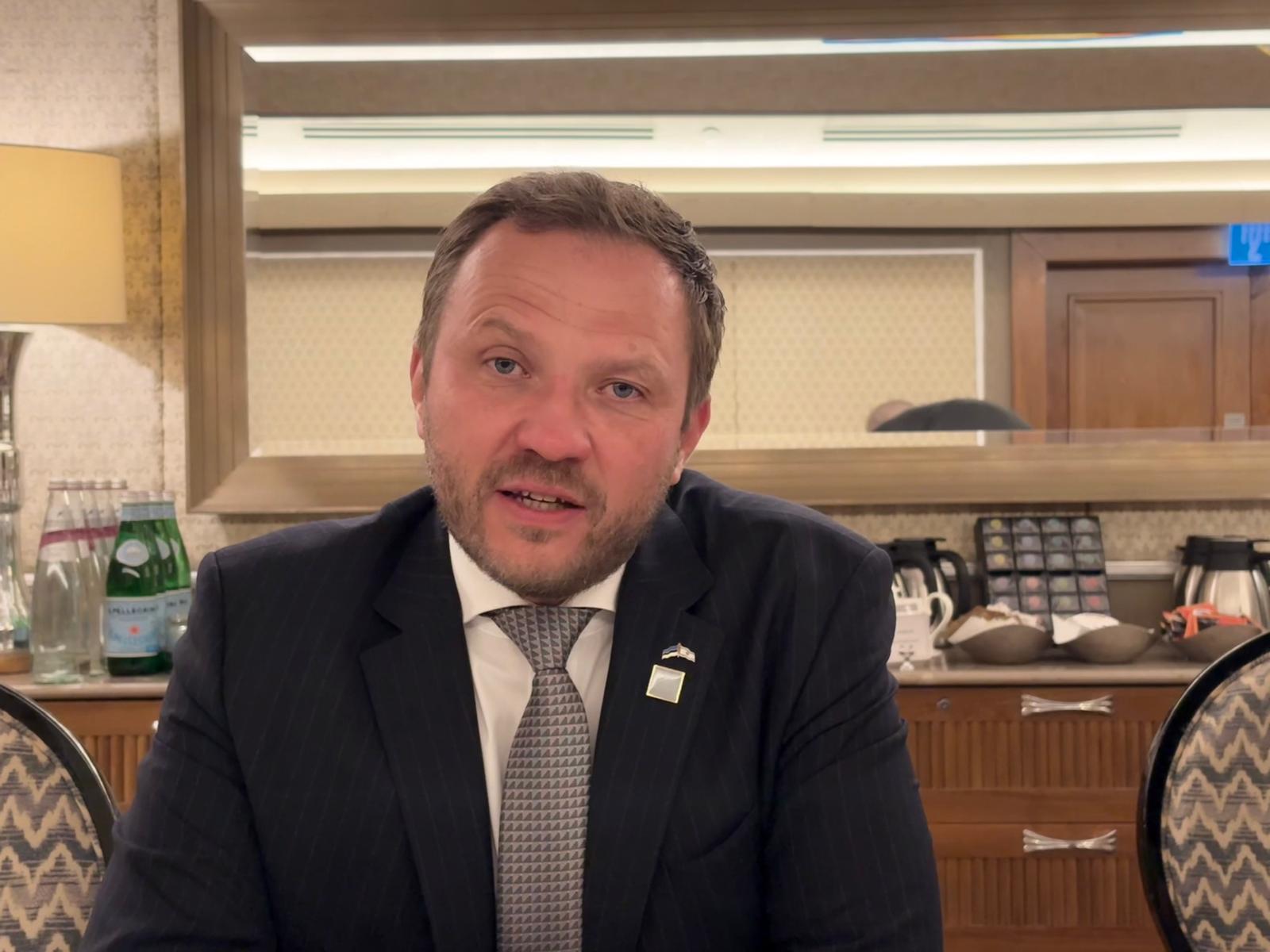
Estonia is open to examining the possibility of joining a US-led mission to restore freedom of navigation in the Strait of Hormuz, Estonia’s foreign minister told The Times of Israel.
“Estonia is always very, very much open to discuss with the US because we have always been a reliable partner for the US,” Margus Tsahkna said in Jerusalem on Tuesday, “but we don’t know exactly what the ask is, what is the goal.”
Multiple European nations have rebuffed US President Donald Trump’s calls to take part in a mission to free up the Strait, a key transit point for oil, gas and other goods now largely blocked by Iran.
European leaders have said they are not willing to put their forces in harm’s way in the middle of a war that they did not start, even though Trump has warned their reluctance could have negative consequences for the NATO alliance.
Estonia, however, has a history of fighting alongside the US. The small Baltic nation deployed to both Afghanistan and Iraq after the September 11, 2001, attacks, and suffered the third-highest losses per capita in Afghanistan.
“The question is finally what kind of military support, if we’re talking about military support, the US really needs,” said Tsahkna, speaking to The Times of Israel after meeting his Israeli counterpart Gideon Sa’ar and President Isaac Herzog. “And we have, of course, limited capabilities.”
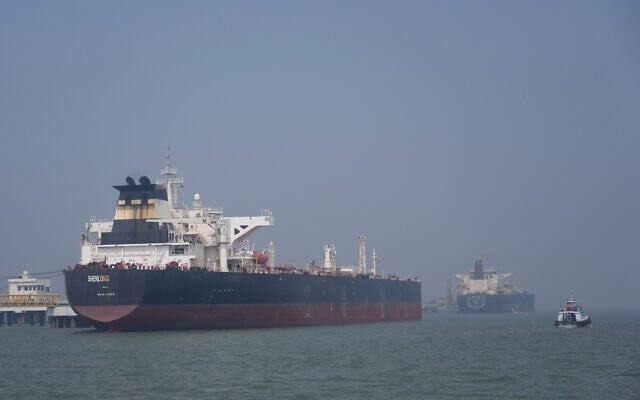
The most tangible contribution Estonia’s small military could make to a US-led naval mission in the Strait of Hormuz is its three minehunter ships.
On Tuesday, Tsahkna joined the other European Union foreign ministers in Brussels to discuss expanding the EU Red Sea mission to include the Strait of Hormuz. The 27 ministers decided not to expand the mission.
Tsahkna said that was unlikely to change in the near future: “I don’t see the consensus among the EU at the moment based on yesterday’s conversation.”
‘A good thing’
Estonia firmly backs the US-Israeli campaign against Iran, said Tsahkna.
“Anything and everything that is weakening this Iran regime is a good thing,” he said. “Israel and the US have our political support because we are taking Iran’s very direct threat to us seriously, not only in the region and also against Europe.”
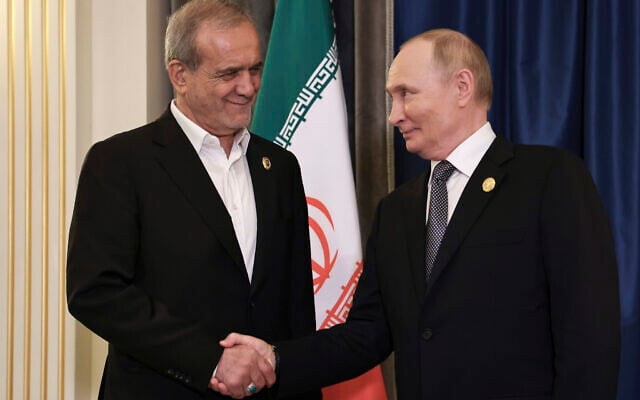
Russia and Iran have long enjoyed close ties, and in January 2025, the two countries signed a strategic partnership agreement to further improve cooperation, including military and defense partnerships.
Russia has deployed thousands of the Iranian-designed Shahed drones against Ukrainian cities and critical infrastructure, including energy facilities. Iran, meanwhile, uses Russian-made fighter jets, armored vehicles, air defenses and many more systems.
In December, Iran signed a secret 500 million euro ($589 million) arms deal with Russia to acquire thousands of advanced shoulder-fired anti-aircraft missiles, according to the Financial Times.
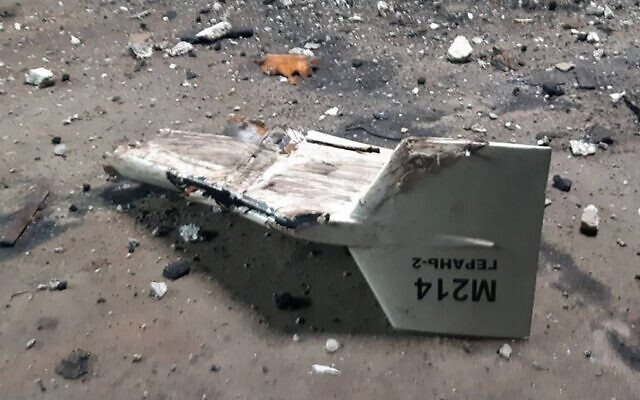
“Iran has been a security threat for Europe for years and years, and now directly as well during the last four years, supporting Russia,” said Tsahkna.
European countries have stepped up their domestic security efforts over rising fears that Iran will try to orchestrate terror attacks on their soil, as the US-Israel war against the Islamic Republic continues to rage in the Middle East.
The Iranian regime has repeatedly orchestrated terror attacks around the world. Since the start of the war on February 28, three Iran-linked attacks have already rocked the United States and Europe.
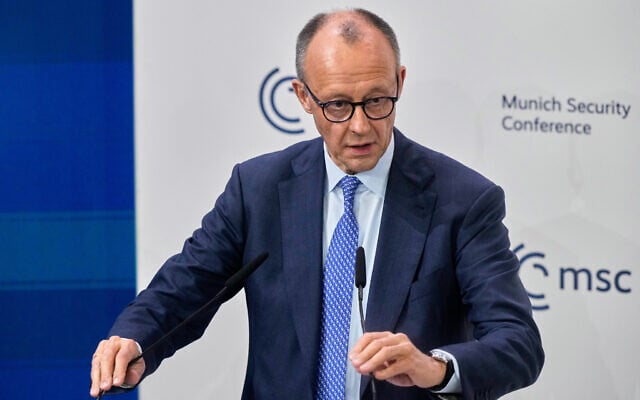
Tsahkna said that he agrees with German Chancellor Friedrich Merz’s position that Israel is doing the “dirty work…for all of us” in its campaigns against Iran.
On March 5, during the first week of the Iran war, Tsahkna joined the other EU foreign ministers in meeting their Gulf counterparts.
“No one blamed Israel during my conversations,” he stressed. “They just said very clearly that they are not part of this war and they are not interested in further military escalation for long term.”
“It was a totally different language from what I saw before,” he said.
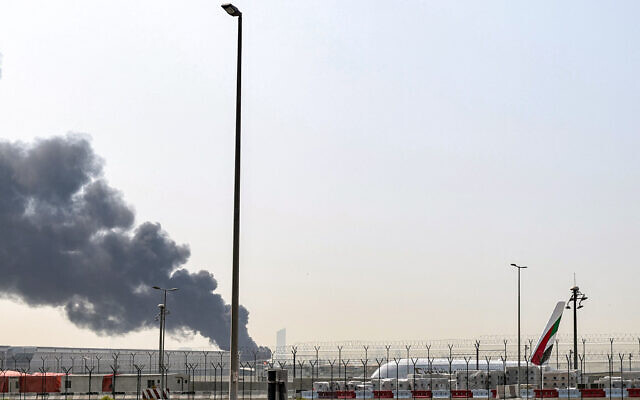
“They blamed Iran very directly because many of them have been in very pragmatic, good relations with Iran and now they’re under heavy bombing.”
Estonia is generally seen as one of the more friendly countries for Israel in the European Union. The country of 1.3 million has about 2,000 Jews. Around 1,000 Estonian citizens live in Israel.
In 2022, Estonia’s then-foreign minister said the Baltic country had changed its policy toward Israel and would no longer vote for UN resolutions condemning Israeli actions in the West Bank and the Gaza Strip.
Instead, the country is looking to align its UN voting position on such matters with Washington, its closest security policy ally.
However, in September 2024, Estonia surprised many observers by supporting a UN General Assembly resolution demanding that Israel entirely pull out of Palestinian areas within a year, and calling for an embargo on arms that Israel might use in those areas.
The Estonia–Israel Parliamentary Friendship Group of the Riigikogu law-making body blasted the vote, calling it “a change of course in Estonia’s foreign policy” and “a threat to Estonia’s national security.”
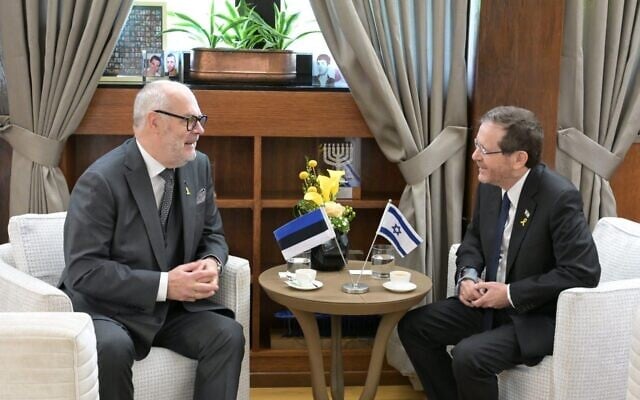
Estonian President Alar Karis told The Times of Israel last year that this was not an anti-Israel vote.
“As a small country,” Karis explained, “it’s important that we still have a rule-based order that accepts international rules and values. It’s getting more difficult, I understand that. But still, for a small country, it’s important we don’t vote against any country.”
In December 2024, an Estonian university cut ties with Shenkar College in Tel Aviv, drawing rebukes from the country’s prime minister and from Tsahkna.
Sa’ar opened Israel’s embassy in Tallinn in November.
The foreign minister said that his current visit was focusing on defense procurement from Israel.
“We are procuring lots of good and heavy stuff from here, the defense industry, air defense systems, many other things,” he said.
Estonia is pursuing an aggressive defense spending program, aiming to spend 5.4% of GDP on defense.
“We are copying as well the concept of Israeli total defense, meaning how we build up in a society,” said Tsahkna. “Everybody knows exactly where to go. We’re learning lots of what Israel is doing as well.”
He also praised Israel’s willingness to fight its enemies.
“You may have all the military equipment and capabilities, you may have military people and personnel well trained, but if you’re running out of spirit and political will in democracies, then you’re doing nothing,” said Tsahkna. “This is exactly what the Israeli people have shown us as well. You come here and you see and feel it.”
Agencies contributed to this report.



The Times of Israel Community.