

Far-right MK Avi Maoz quits coalition, leaving Netanyahu without Knesset majority
Sole Noam party MK notes coalition now only has 60 seats in Knesset, but move, coming after ultra-Orthodox parties also pulling away, won’t bring down government for now
 Add ToI as a Preferred Source on Google
Sam Sokol is a former political correspondent at The Times of Israel. He was previously a reporter for the Jerusalem Post, Jewish Telegraphic Agency and Haaretz. He is the author of "Putin’s Hybrid War and the Jews"

Far-right lawmaker Avi Maoz, the sole MK representing the anti-LGBTQ, misogynistic Noam party, announced Wednesday evening that he no longer considers himself a part of Prime Minister Benjamin Netanyahu’s coalition — leaving it with only 60 out of 120 Knesset seats.
“I am not a member of the coalition. According to my calculation, there are only 60 MKs in the coalition,” Maoz posted on X, days after the ultra-Orthodox United Torah Judaism party had also quit the coalition, reducing it to a bare majority of 61 MKs in the 120-seat Knesset.
Maoz did not give a reason for announcing his decision now, but it came soon after the Sephardic ultra-Orthodox Shas party said it was pulling out of the government — resigning its cabinet seats — while remaining a member of the coalition for the time being. Both Shas and UTJ took their action in protest of the government’s failure to pass a bill exempting yeshiva students from military service.
“The prime minister knows very well what the conditions are for my return to the coalition,” Maoz said.
Repeated resignations
Railing against an alleged “deep state,” which he claimed has taken over the Justice and Education ministries, Maoz quit his position as a deputy minister this March — but he never actually officially left the coalition.
Writing to Netanyahu to announce his resignation, Maoz claimed at the time that an alleged cabal of officials was “instilling a hyper-progressive, anti-Jewish and anti-national worldview into the education and legal system in Israel.”
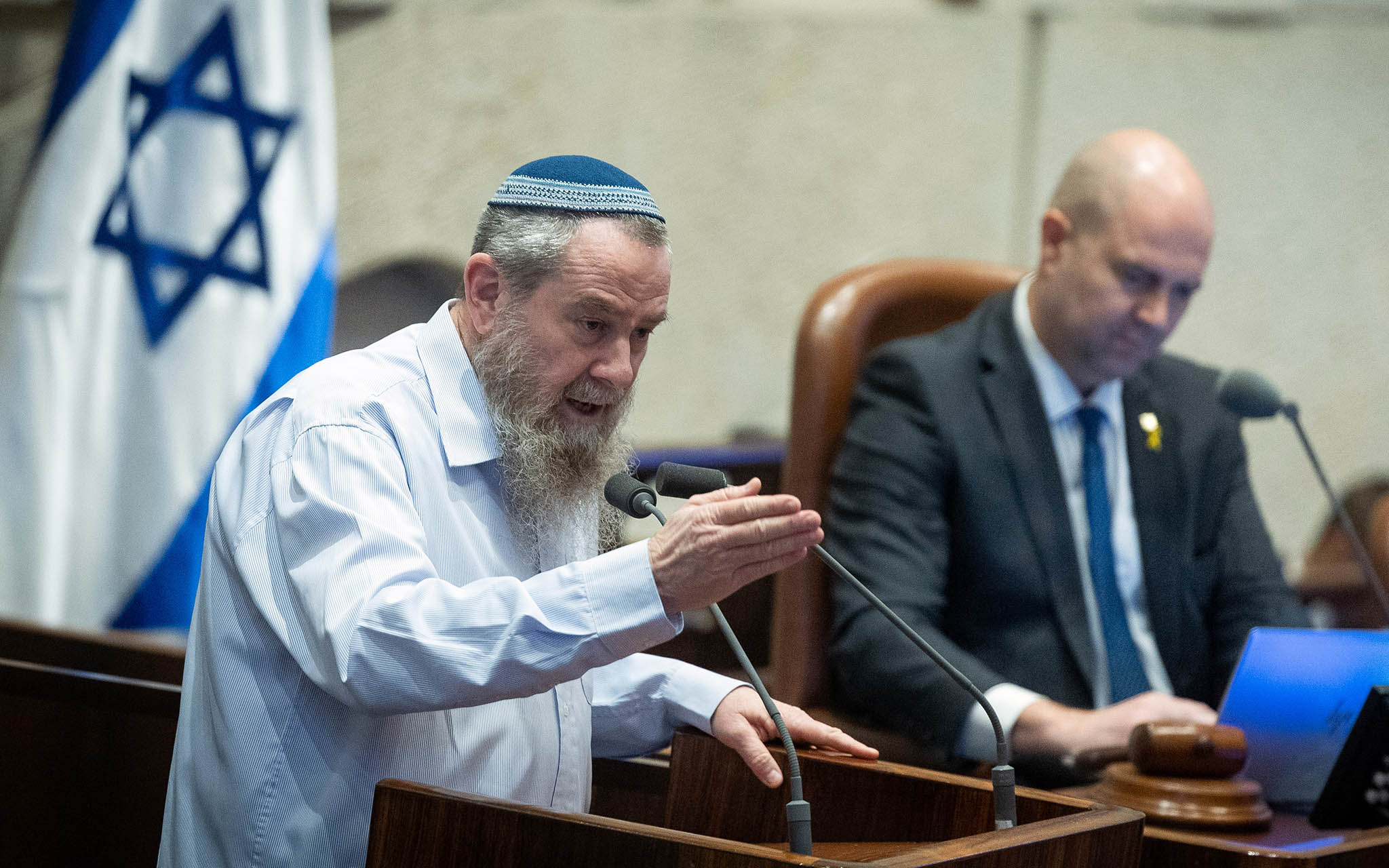
Maoz, who as a deputy minister in the Prime Minister’s Office oversaw educational vendors who supplement curricula in public schools by way of his Jewish National Identity Office, claimed that under pressure from the “deep state,” the Education Ministry had halted collaboration with him.
The ultra-conservative lawmaker also blamed the “deep state” for preventing the allocation of additional funding for national religious schools and the children of reservists, as well as claiming that no part of his coalition agreement with Netanyahu’s Likud had been fulfilled, leaving him a deputy minister in name only.
An outspoken homophobe who has made misogynistic statements about women’s role in society and about non-Orthodox streams of Judaism, Maoz ran in the 2022 election on a joint slate with National Security Minister Itamar Ben Gvir’s Otzma Yehudit and Finance Minister Bezalel Smotrich’s Religious Zionism parties.
He had also resigned from the government in February 2023, stating that he did not believe he would be put in charge of a “Jewish national identity” program as stipulated in his coalition agreement — a promise that was met with outrage by pro-liberal forces.

He returned three months later, after being granted the authority to exercise oversight over educational vendors in public schools following a cabinet decision handing him NIS 285 million ($76 million) in funding for his Jewish National Identity Office.
A minority government
Maoz’s exit from the coalition leaves Netanyahu with a minority government but does not immediately endanger the premier’s hold on power, according to Assaf Shapira, the director of the Israel Democracy Institute’s Political Reform Program.
Neither UTJ, Shas nor Maoz are currently in favor of dissolving the Knesset and will not support early elections, Shapira told The Times of Israel on Thursday.
“On the other hand, there aren’t the 61 votes that are required in order to approve laws. So theoretically the government cannot pass laws,” he said. Still, Maoz and UTJ are likely to consider each bill on its own merits, he said, noting that prior to leaving the government, the Haredi parties had already been boycotting votes on coalition legislation in the Knesset plenum.
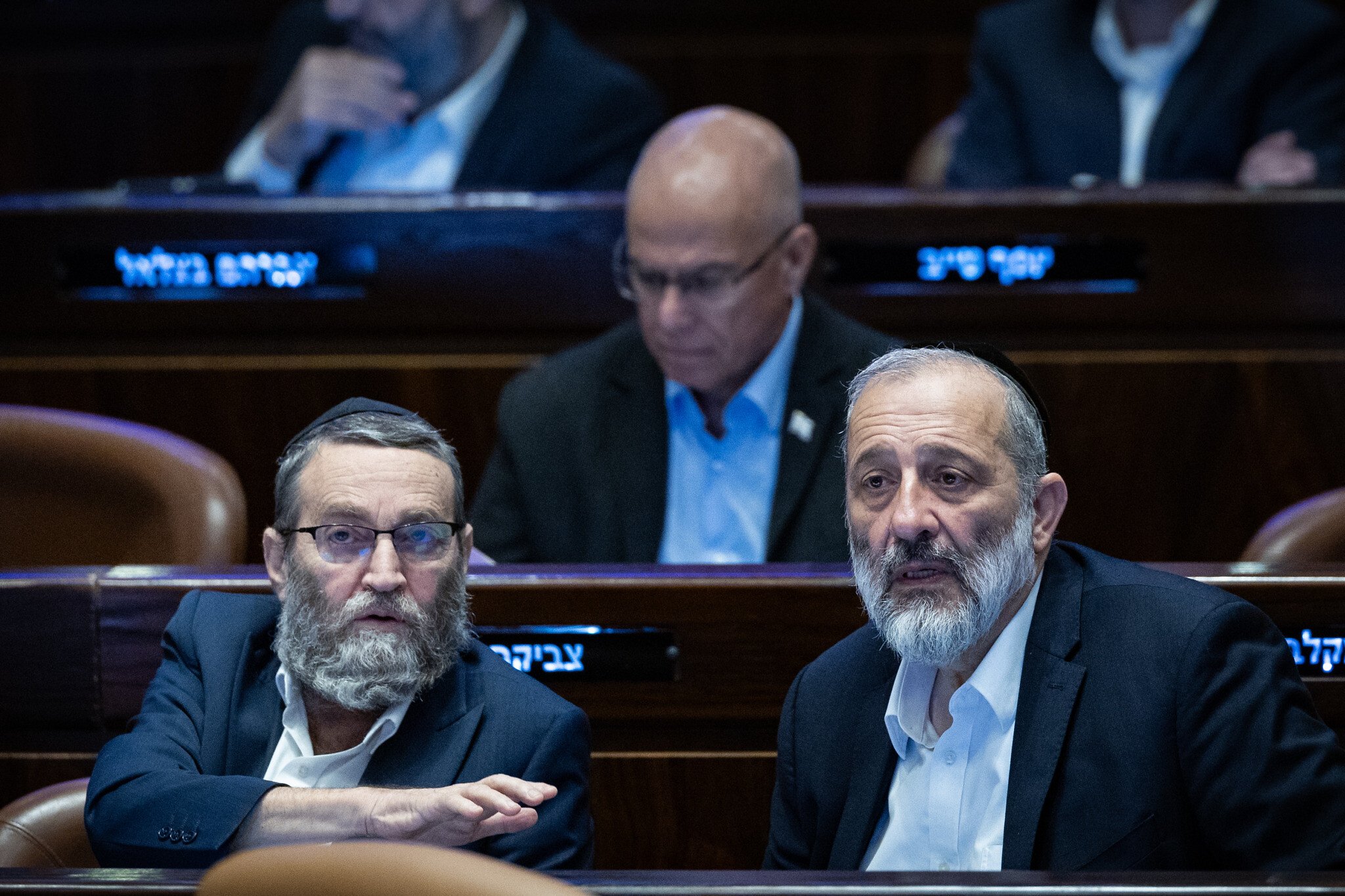
Should the Knesset split 60-60 on a bill, it does not pass.
Despite its current difficulties, the government “will survive as a minority government because there is certainly no alternative government in the framework of a vote of no confidence,” Shapira said. The current situation “will certainly not help the functioning of the government, which is in any case, not very good. But if we’re talking about the survival of the government and the legal status of the government, this is a regular government.”









The Times of Israel Community.