

Festival of archaeology? Five ways to explore Hanukkah history in Jerusalem
From the arrowheads used by a Greek army to menorahs, the city offers antiquities enthusiasts many opportunities to celebrate
 Add ToI as a Preferred Source on Google
Rossella Tercatin is The Times of Israel's archaeology and religions reporter.
Hanukkah, which begins on Sunday night, is a great holiday for those who like to immerse themselves in the tangible remains of Jewish history.
Since the Maccabees’ revolt against the Greek Seleucids occurred relatively recently in archaeological terms — in 164 BCE — and marked the beginning of the Hasmonean dynasty that ruled Israel (albeit amid civil wars and constant external threats) for over a century, artifacts and remains tied to Hanukkah’s history abound across Israel.
For antiquities enthusiasts, many of them can be seen in Jerusalem during the festival of lights.
Hasmonean walls and Greek arrows
Some three decades after the Hanukkah story, Jerusalem was attacked by another Greek king. Antiochus VII Sidetes, a descendant of the Maccabees’ foe Antiochus IV Epiphanes, laid siege to the city, and perhaps nowhere has the evidence of that violent confrontation survived to this day as vividly as in the compound of the Tower of David Jerusalem Museum, devoted to showcasing the history of the city.
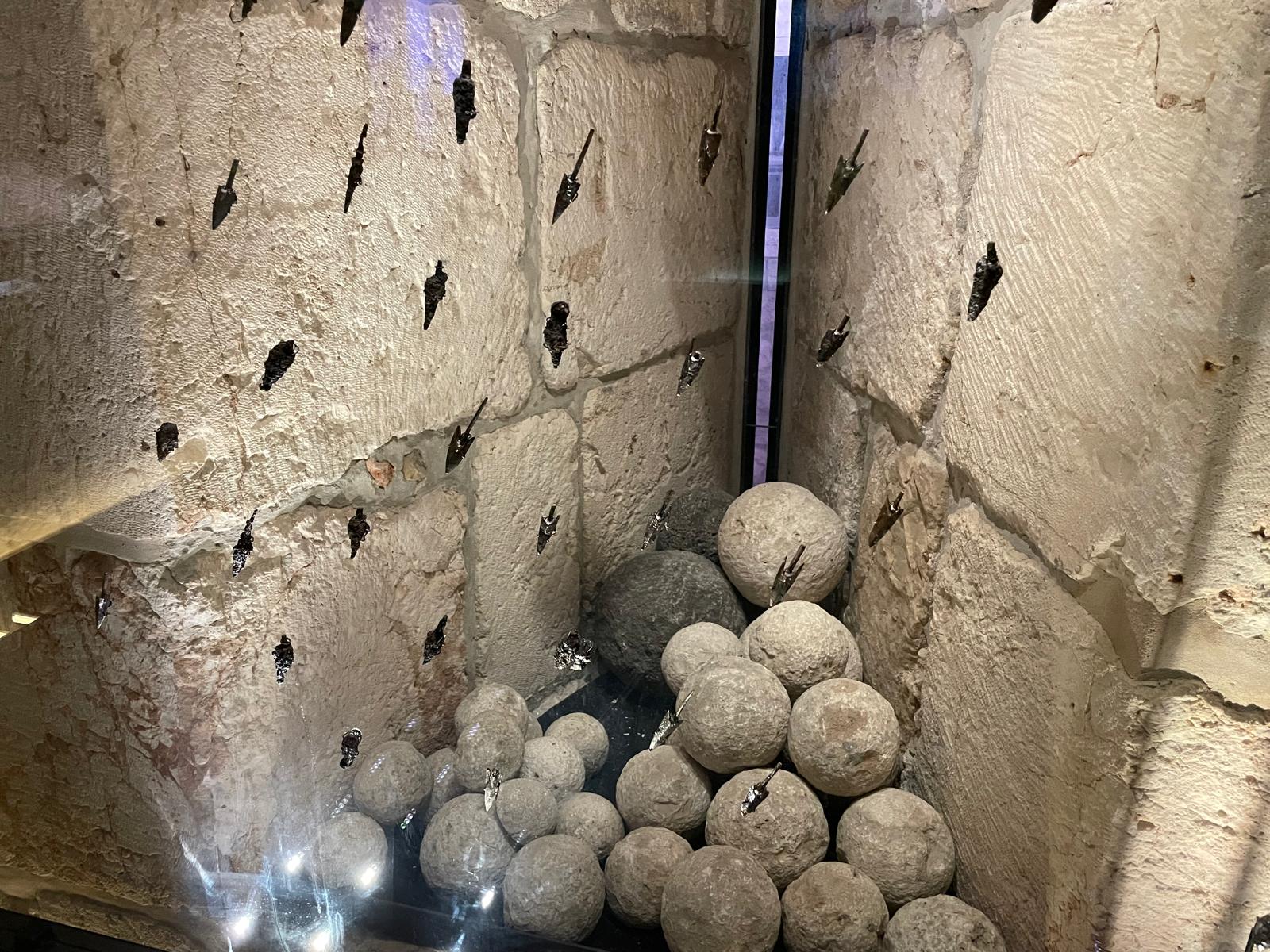
The courtyard of the building incorporates walls and structures built at different periods in Jerusalem’s history, including sections of the Hasmonean wall, which researchers believe was built around 140 BCE. Even more strikingly, over the decades, during archaeological excavations in the area, archaeologists found hundreds of catapult balls, arrowheads, and sling shots used by the Greeks during the siege, which are part of the museum’s permanent exhibition.
Many arrowheads bear the Greek letters Beta and Sigma (the equivalents of the Latin letters B and S). While the exact meaning of the letters remains a mystery, experts believe they might have been a symbol of an elite force deployed against Jerusalem (spoiler: in the end, Hasmonean leader John Hyrcanus I managed to strike a deal with Antiochus and saved the city).
An even more impressive section of the Hasmonean wall has recently been exposed during archaeological excavations in preparation for the future Schulich Wing for Archaeology, Art, and Innovation in another area of the compound. In about two years, visitors will be able to see graffiti left by Jewish prisoners during the British mandate, Crusaders’ installations, the foundation of Herod’s palace, Hasmonean remains, and First Temple Period finds in one incredible hall. Stay tuned!
Oil lamps and mysterious menorahs
While the full permanent exhibition of the Jay and Jeanie Schottenstein National Campus for the Archaeology of Israel in Jerusalem will not be inaugurated until about a year from now, the current exhibit already features some unique Hanukkah-themed artifacts.
For centuries before and after the Hasmonean dynasty reigned, oil lamps were one of the most common forms of artificial lighting.
A clay lamp decorated with symbols from the Temple dating back to the 3rd-5th centuries CE is one of the items on display.
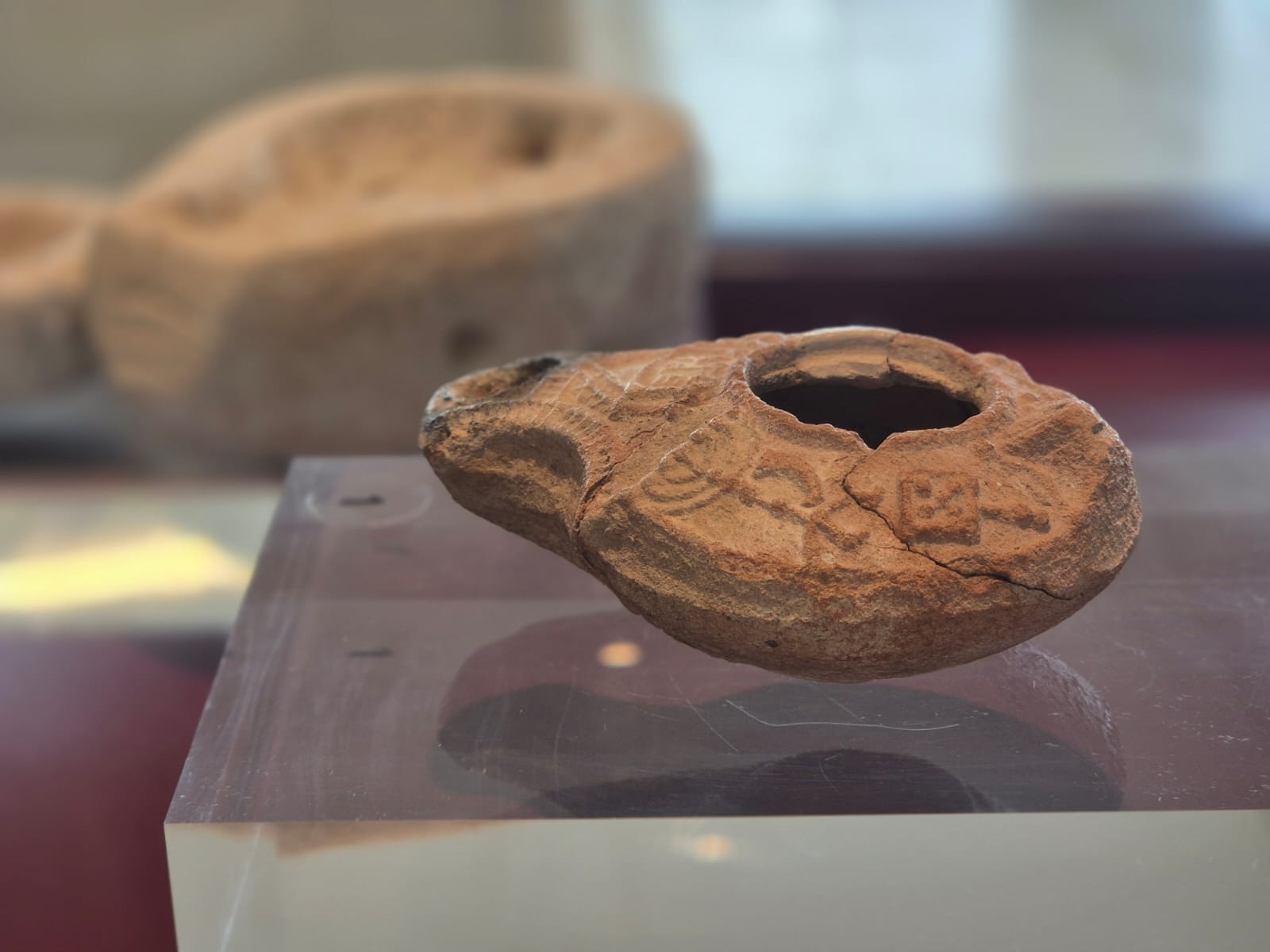
The decorations on the lamp include a seven-branched menorah, a shofar, and pomegranates. Researchers believe that the lamp belonged to a Samaritan community (a sect that, to this day, considers itself descended from the northern tribes of biblical Israel), who lived in the area of Umm Khaled (near modern-day Netanya) during the Roman-Byzantine period.
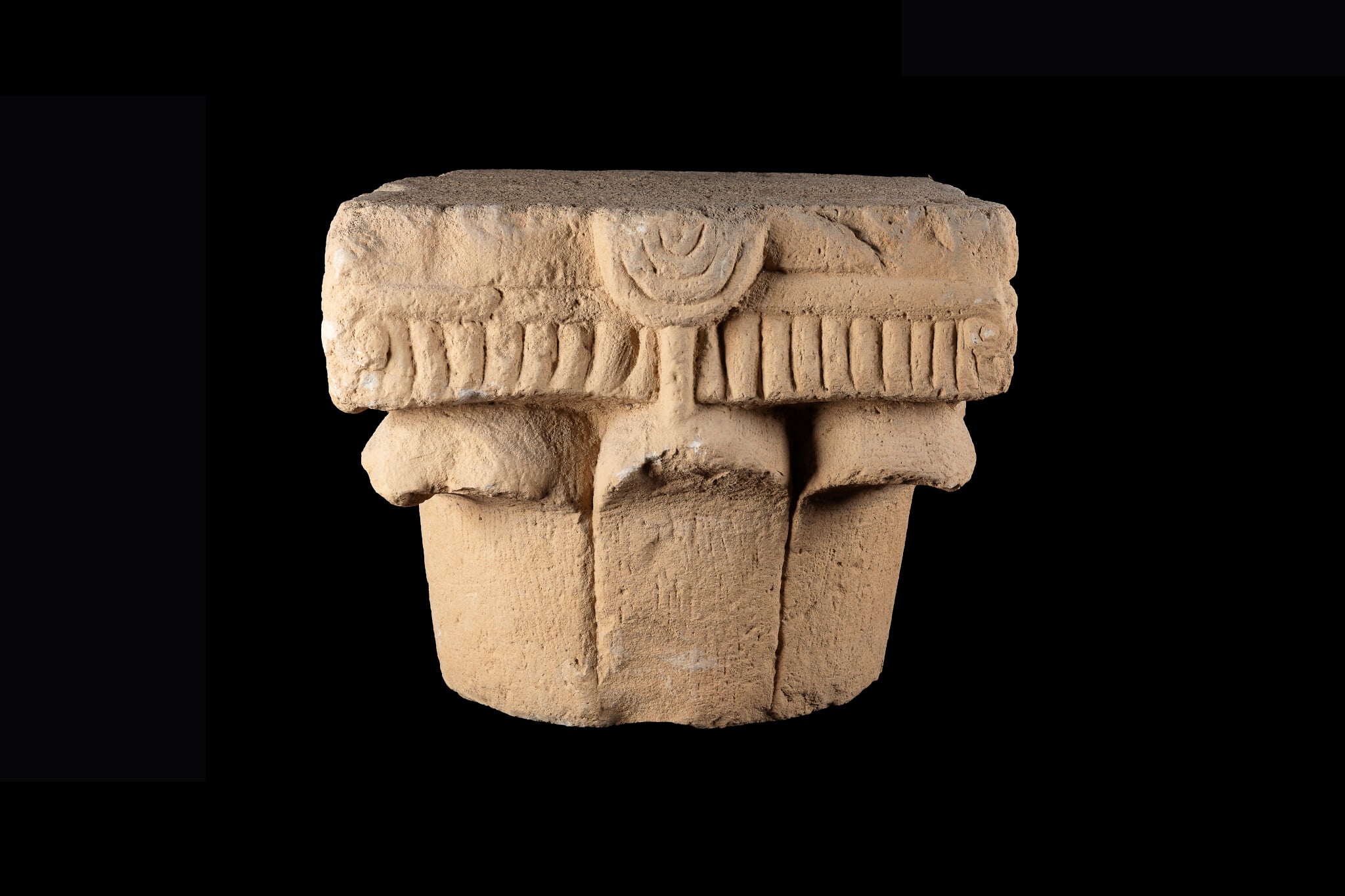
A rare 1500-year-old stone capital featuring an eight-branched menorah, found in Jerusalem at a time when no Jew is believed to have lived in the city, is also part of the exhibition.
The Israel Antiquities Authority organizes tours of the premises in both Hebrew and English, while a special kid-friendly tour, including a workshop to create a menorah, will be offered only in Hebrew on several days during Hanukkah.
Unique manuscripts on display for the first time
To celebrate Hanukkah, the National Library of Israel has introduced new manuscripts in its permanent exhibition “A Treasury of Words.”
The artifacts include an illuminated 14th-century manuscript of Maimonides’ fundamental work Mishneh Torah, which encompasses all aspects of Jewish law, on display for the first time. The manuscript was first copied in Provence between 1300 and 1350, later brought to Spain, and decorated with illustrations and motifs of human figures, animals, and plants by the artist Matteo di Ser Cambio. The Mishne Torah covers the laws of Hanukkah in depth.
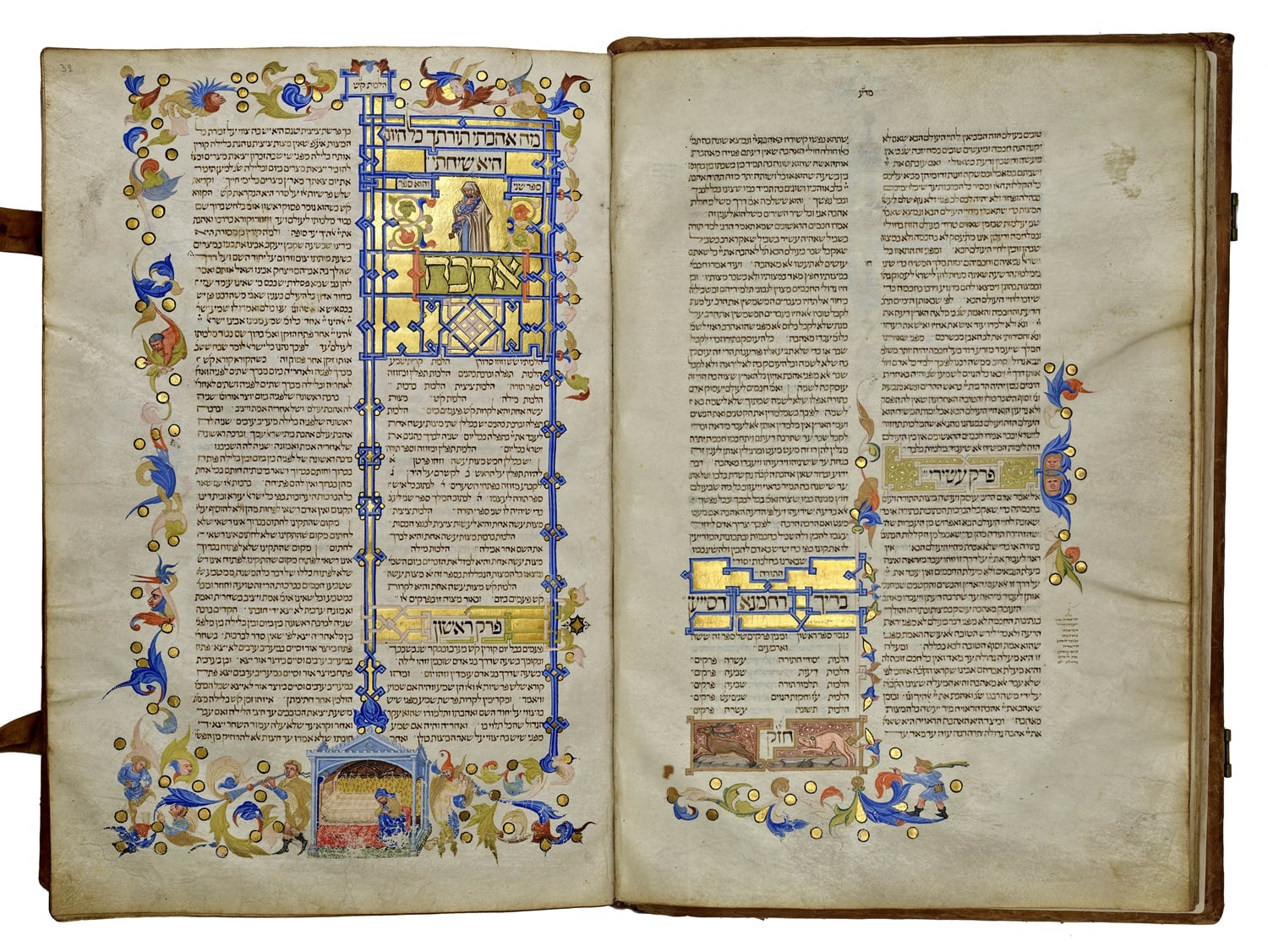
A 15th-century prayer book from Lisbon, decorated with colorful and gold ornaments, and a special 1943 Passover Haggadah from the Libyan city of Benghazi, composed by soldiers of the Jewish Brigade who freed Libya from the Nazis and Fascists. The Haggadah is printed on confiscated telegram forms.
Walls of menorahs
In the Talmud, Tractate Shabbat (21a-24a), the Jewish Sages discuss the laws of Hanukkah and the obligation to light the Hanukkah menorah by the entrance of the house.
Following this tradition, many Jews choose the light menorahs in glass boxes outside of their buildings. Those glass boxes inspire the exhibition featuring menorahs from across the centuries and the Jewish world at the Ticho House in Jerusalem’s city center (part of the Israel Museum).
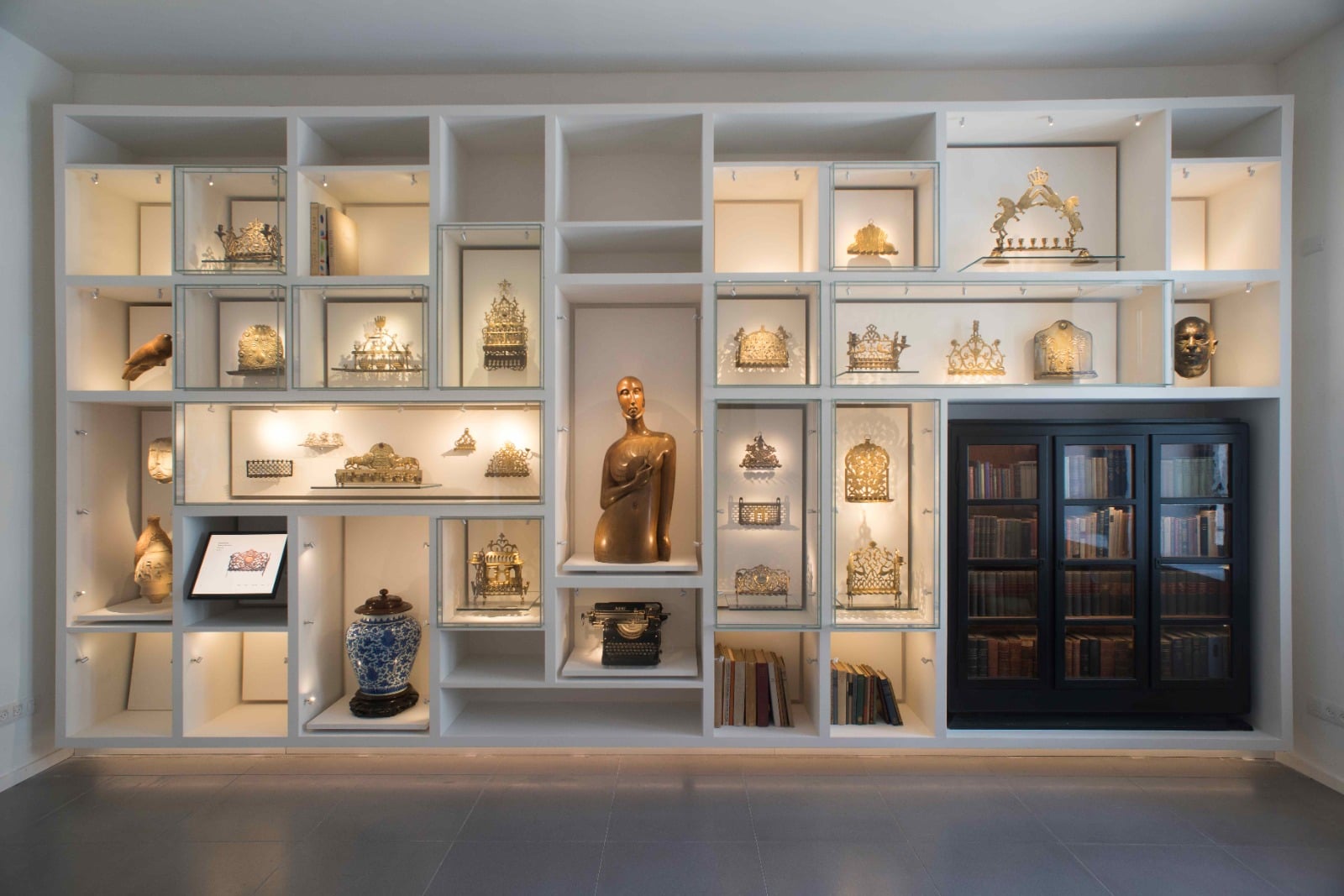
Visitors can check out a selection of the Albert Ticho’s collection of Hanukkah lamps, which include a 1744 brass menorah from North Africa (either Algeria or Tunisia), with an inscription in Hebrew reading, “For the commandment is a lamp and the teaching [Torah] a light” (Proverbs 6:23), and two names Yehoshua son of Zarka – who researchers believe was the owner – and Moshe Cohen, probably the artist, as well as the year. Also on display are an 18th-century menorah from Eastern Europe featuring birds and vegetation, and one created at the Bezalel School of Arts and Crafts in Jerusalem in the first half of the 20th century.
Ticho, a Moravian-born philanthropist and pioneering doctor in pre-state Israel, collected some 150 lamps dating from the 15th to the 20th century, including rare examples from Afghanistan, Russia, and Greece.
The permanent exhibit at Ticho House tells the story of Ticho and his wife, Anna, through the house, their collections, and artworks.
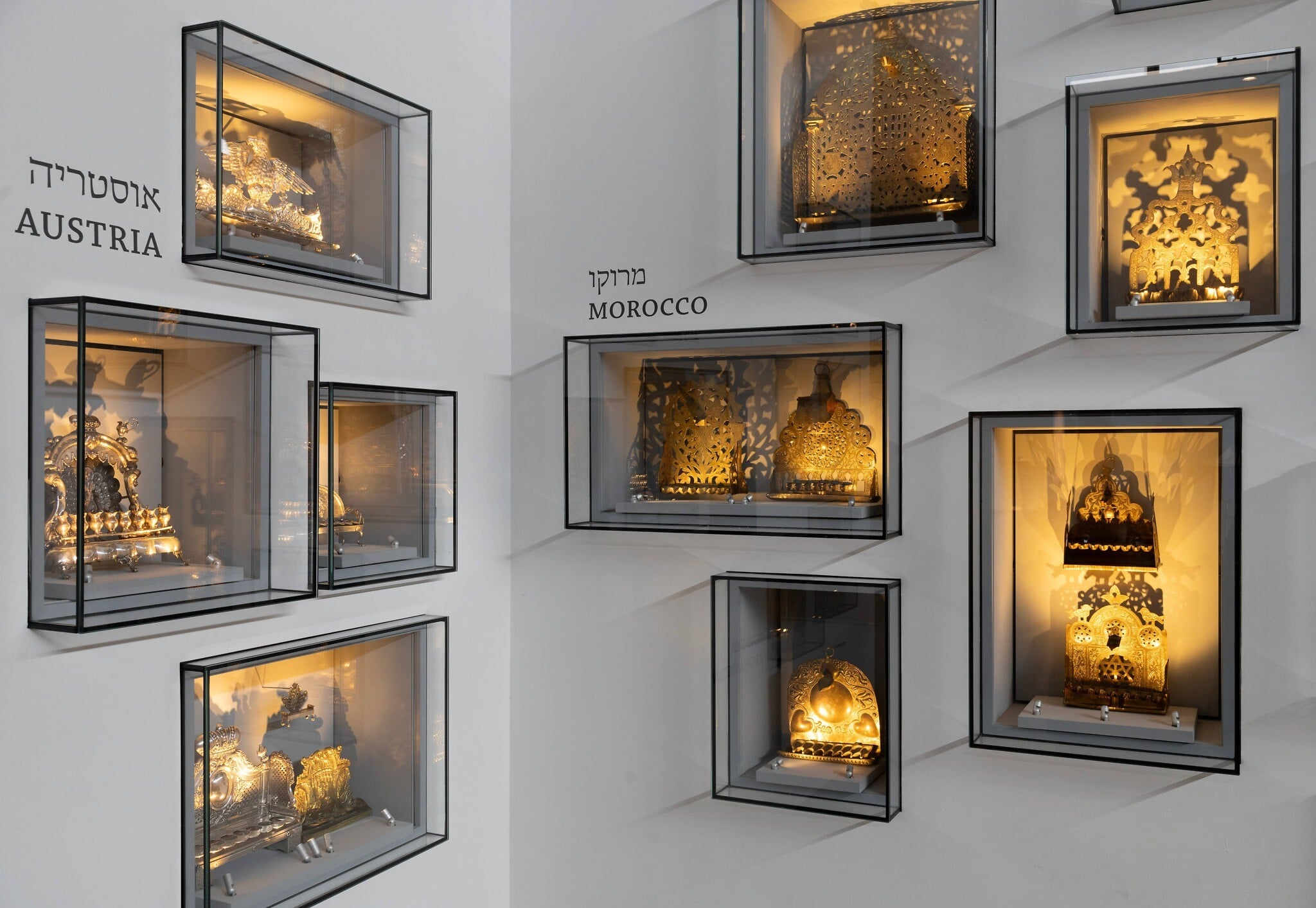
The main campus of the Israel Museum also features a luminous Hanukkah gallery in the Mandel Wing for Jewish Art and Life, featuring lamps dating from the 14th to the 20th centuries.
The Hasmonean aqueduct
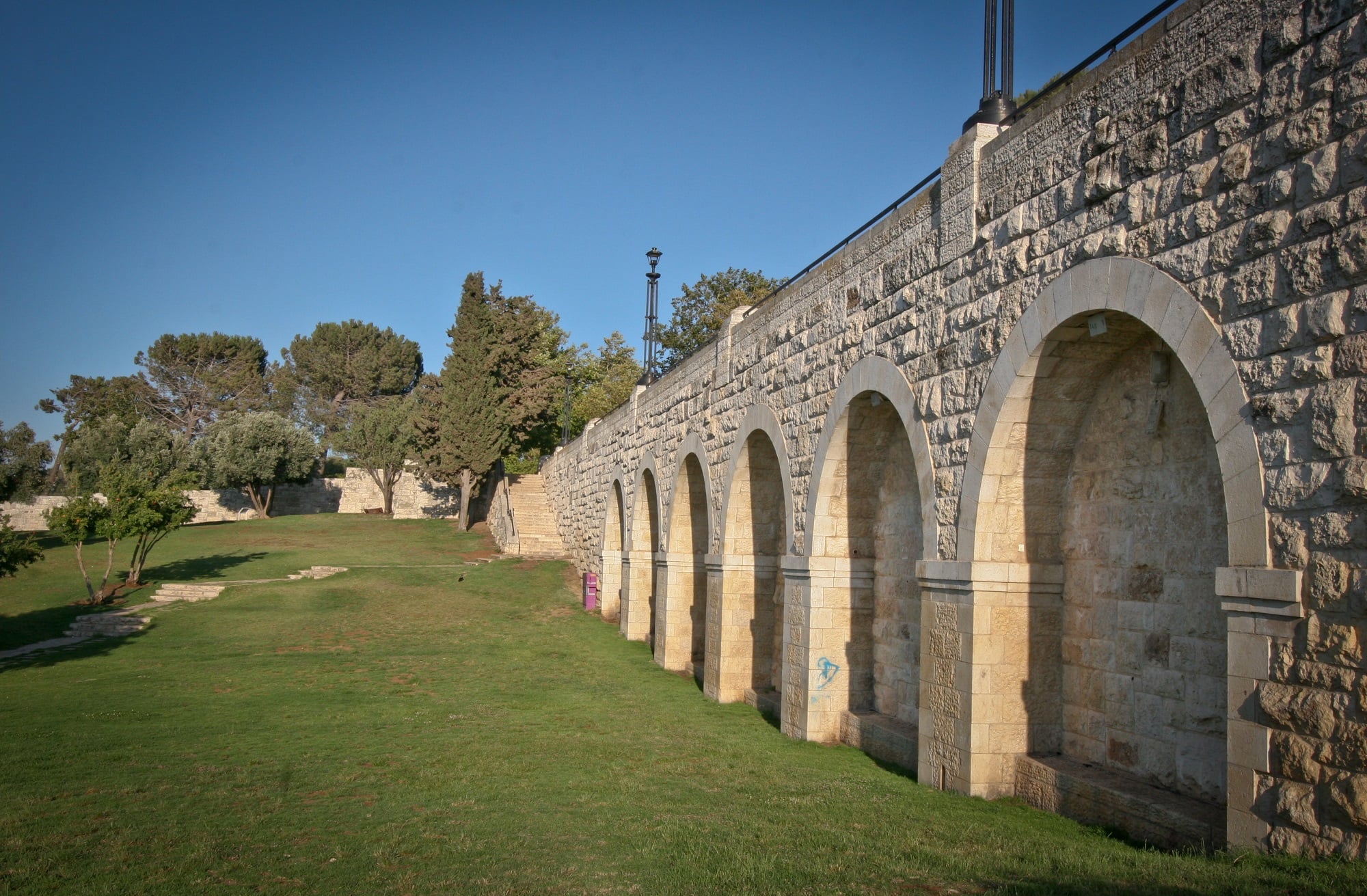
For those inclined to outdoor activities, weather permitting, the promenade in the Armon Hanatziv neighborhood offers a glimpse into Jerusalem’s Hasmonean history.
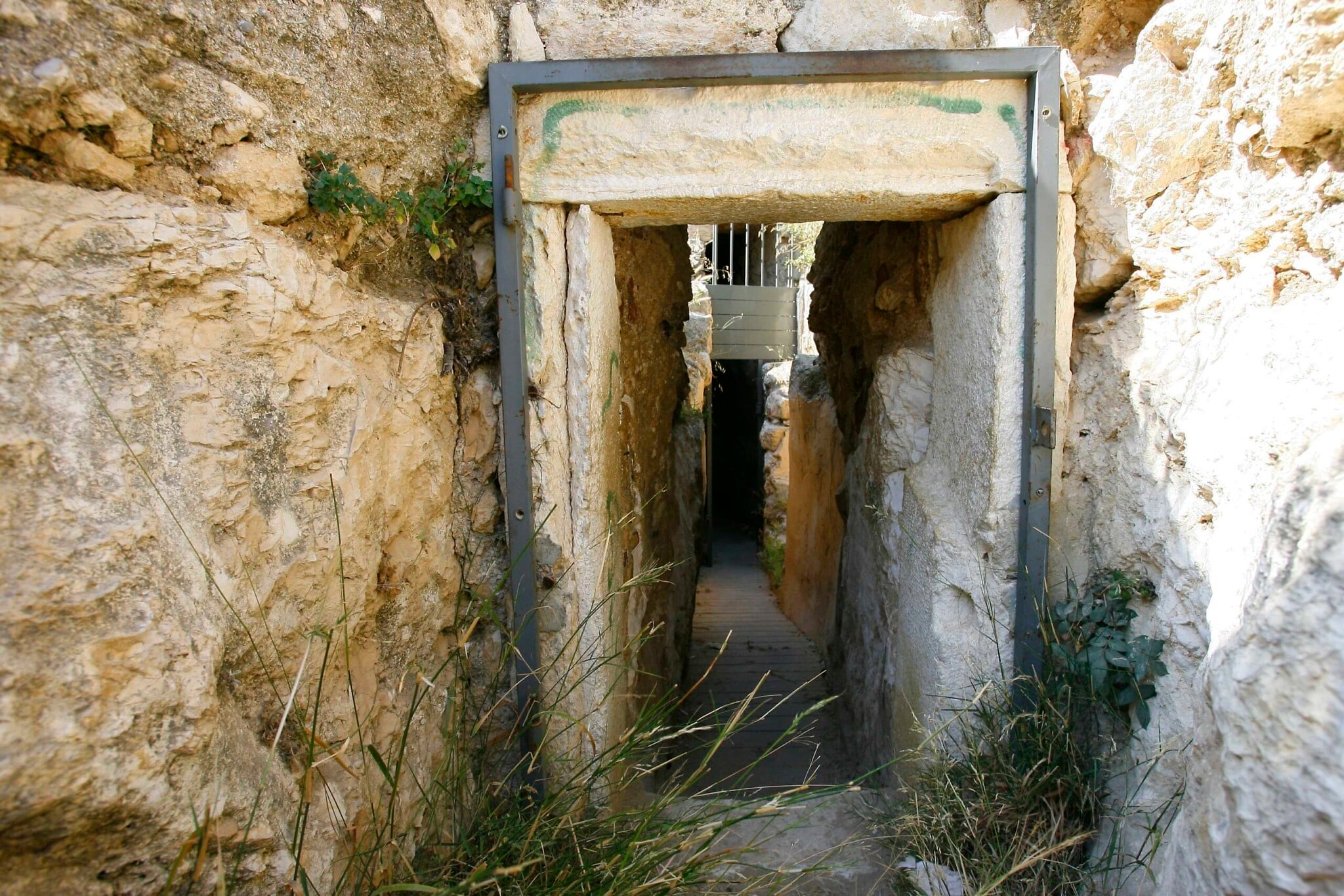
Carved into the mountain, the remains of an impressive aqueduct from the time of the Hasmonean dynasty still stand. According to Ori Ohayon, a tour guide for the City of David National Park, which organizes school and group tours in the area, the aqueduct began in Bethlehem and connected the area’s water sources to the Temple Mount. It was probably built during the reign of Alexander Jannaeus (103–76 BCE).
While the underground aqueduct is currently closed for refurbishment, parts of it and some of its shafts are visible from the park. A modern mosaic also shows an artistic interpretation of the aqueduct’s itinerary.
The structure of the modern promenade was inspired by the aqueduct, blending the city’s history with modern life.
The City of David also organizes special tours and activities for Hanukkah.







The Times of Israel Community.