

French mayoral elections test support for far right ahead of presidential vote
Opinion polls show far-right National Rally could take major cities in Sunday’s nationwide poll thanks to law-and-order messaging, striking chord with voters concerned about security
 Add ToI as a Preferred Source on Google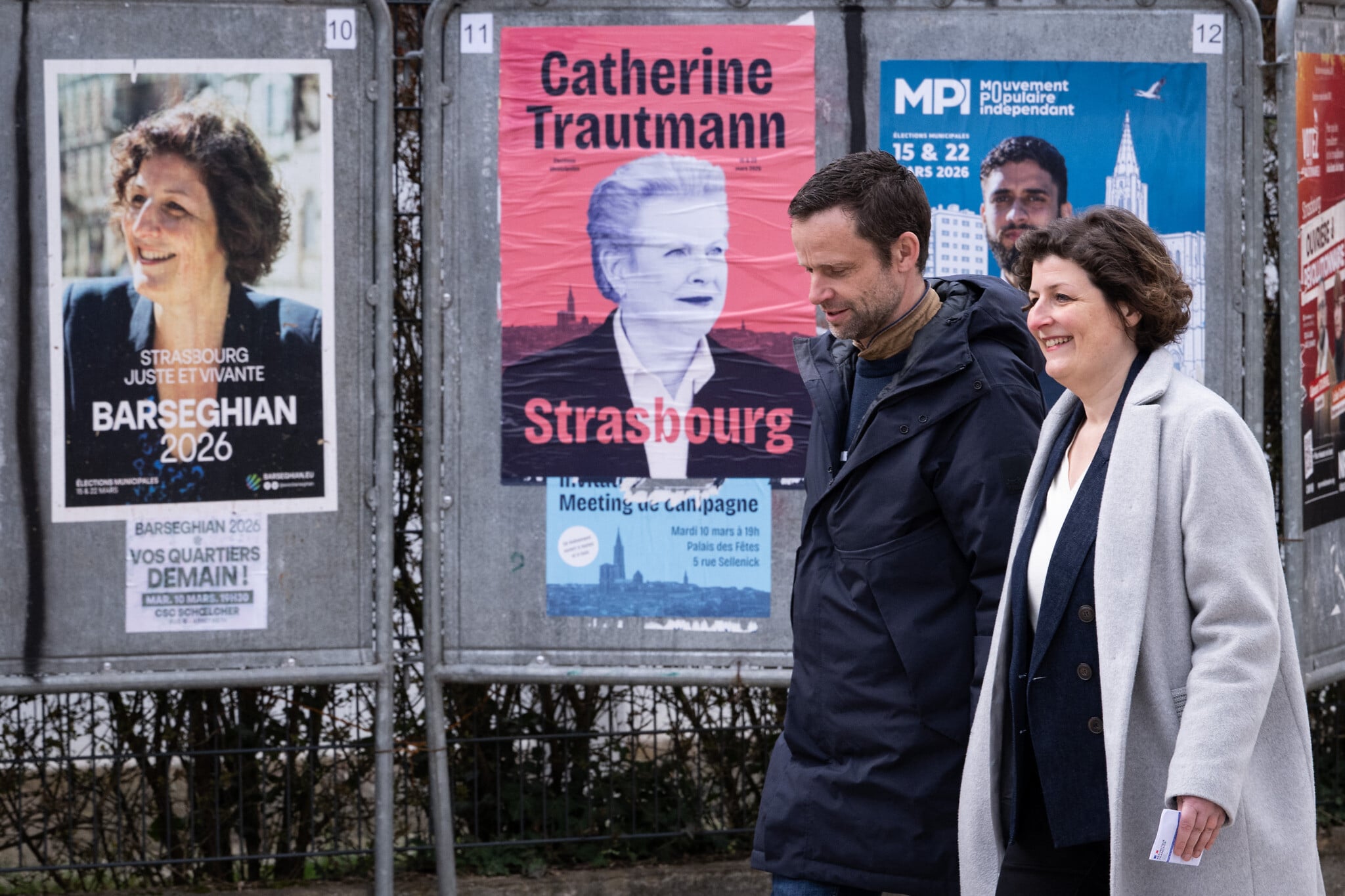
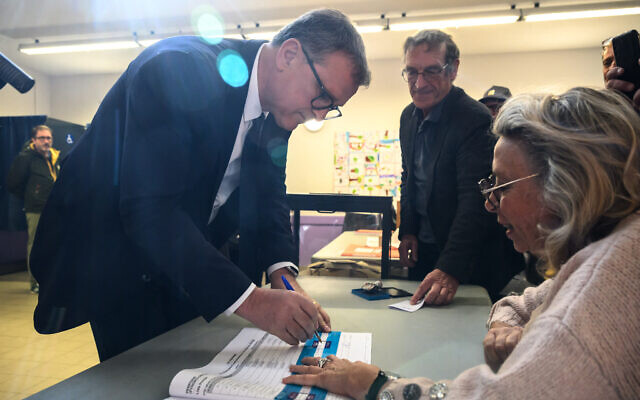
French voters headed to the polls on Sunday to elect their mayors in a closely watched vote seen as a test of the strength of the far right and the resilience of mainstream parties ahead of next year’s presidential election.
Voting started at 8 a.m. and ends at 8 p.m. and preliminary results will be released shortly after.
In many medium to large cities there will be a second round on March 22.
Mayors lead nearly 35,000 municipalities in the country, from major cities to villages with only a few dozen residents. Local results can shape national momentum, especially so close to a presidential election which opinion polls show the far-right National Rally (RN) could potentially win.
The anti-immigration, euroskeptic RN has so far struggled to make meaningful gains in municipal elections.
The party was co-founded by Jean-Marie Le Pen, who died in 2025 and was known for making antisemitic remarks. His daughter, Marine Le Pen, who led the party after him, has moved emphatically to distance the movement from her father’s legacy, but accusations persist.
Despite the party’s history, the RN has sought to present itself as a bulwark against antisemitism, since the October 7, 2023, attack on Israel led by Palestinian terror group Hamas.
With candidates in several hundred municipalities, it hopes to show growing popularity and clinch a few big wins that would further boost its presidential campaign.
The next presidential elections in France are scheduled for April 2027.
“If the people of Marseille make a brave choice… it will embolden and enlighten the French on the choice they will make next year,” Franck Allisio, the RN candidate in France’s second-biggest city, told Reuters.
Allisio is tied in first-round polls with incumbent Socialist Mayor Benoit Payan, providing the RN with a once-unthinkable shot at power in a major French city.
The thousands of separate municipal ballots are often focused on very local issues.
But opinion polls show security is voters’ main priority, in line with the RN’s law-and-order focus.
Among the bigger cities the RN is targeting is the southern Toulon, with a population of 180,000. It could also win in Menton, a Riviera town where former president Nicolas Sarkozy’s son Louis is a candidate backed by centrist parties.
Security concerns motivated Madani Sadaoui, a 70-year-old pensioner, to vote for right-wing candidate Rachida Dati as mayor for Paris. “The right is for security, and there is no security all over France,” he said from a polling station in Paris’ tenth district.
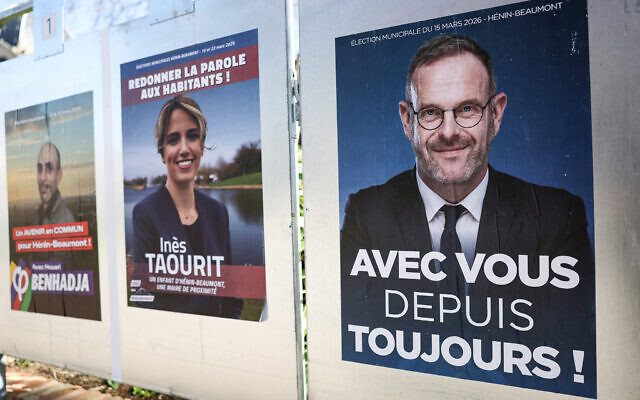
One key question is what alliances the RN will strike with other parties between the two rounds and whether this election will break decades of tradition of shunning the far-right.
The left did well across France in the last municipal elections in 2020. It is now weakened nationally. Whether it can keep Paris, as well as some of the cities it won last time, such as Nantes for the Socialists or Lyon and Strasbourg for the Greens, will be closely watched.
Another key question is whether mainstream left-wing parties will strike alliances between the two rounds with the hard-left France Unbowed (LFI). Parisian resident Maxim Loh, 26, voted for Socialist candidate Emmanuel Gregoire and not LFI because he wanted to avoid a three-way race in the second round.
“I went for continuity, I cycle and there are a lot of green spaces introduced,” he said.
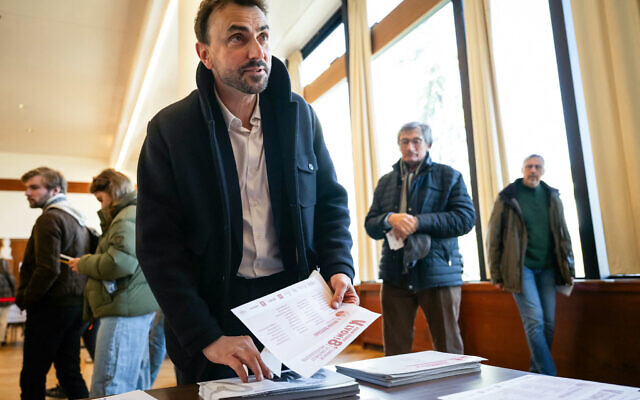
A second round of voting will be held in all cities where no single list wins more than 50 percent of the vote.
“People want to turn the page and they want to turn it with us,” Perpignan’s RN mayor Louis Aliot told Reuters.
Times of Israel staff contributed to this report.






The Times of Israel Community.