

From a walled compound in Sana’a, one of Yemen’s last Jews confides his fears
After Yahya Zandani’s father was murdered by a Muslim extremist, he returned to his ancestral homeland. So far, he tells The Times of Israel, the rebels aren’t targeting them
 Add ToI as a Preferred Source on Google
Elhanan Miller is the former Arab affairs reporter for The Times of Israel
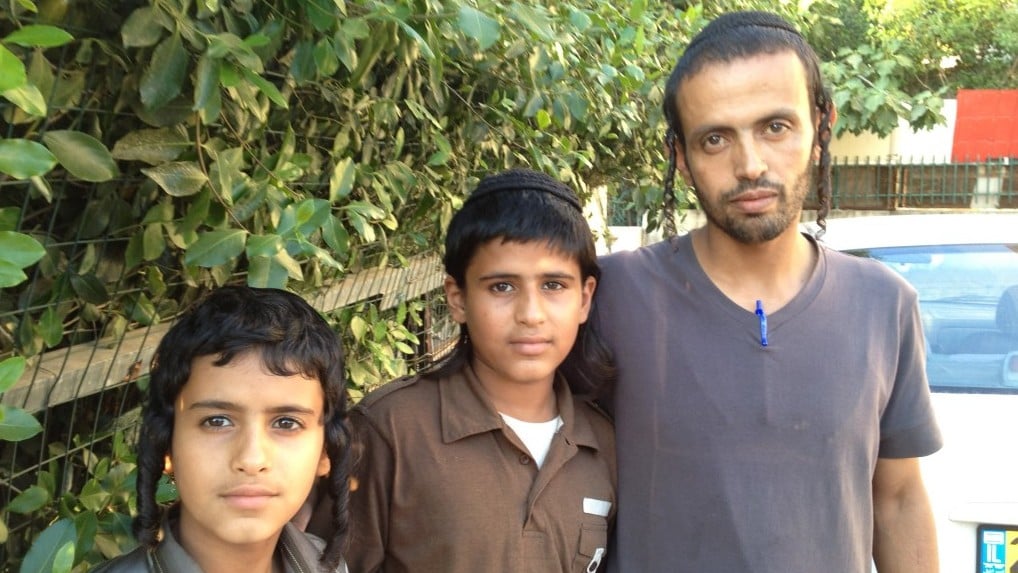
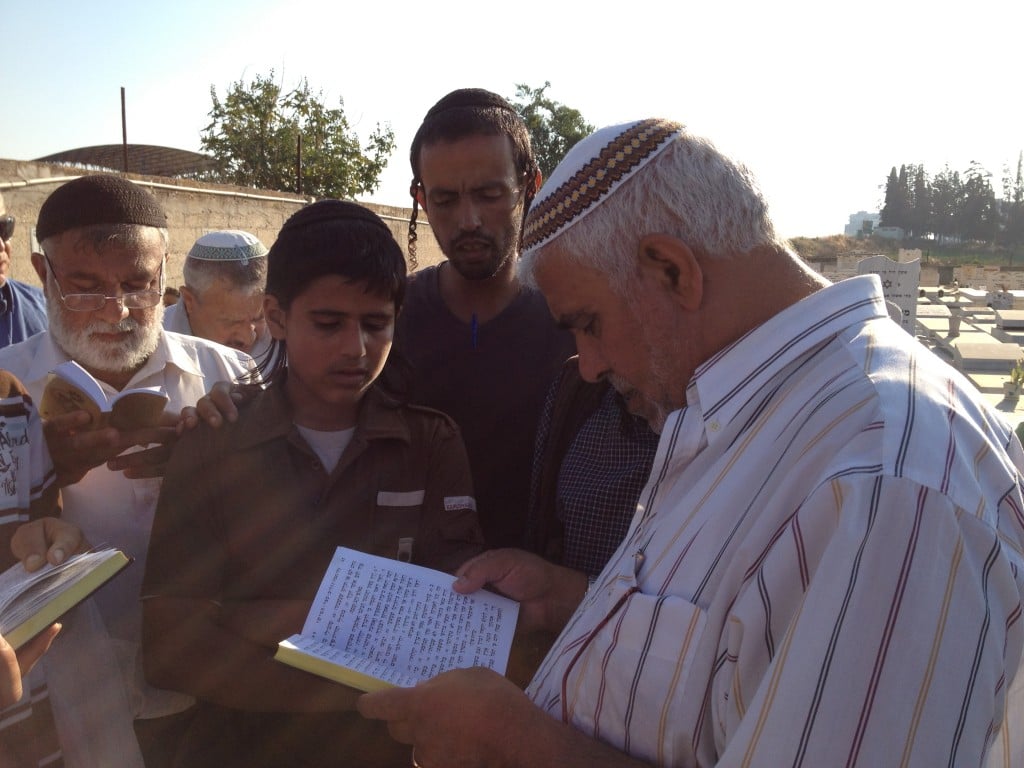
In June 2012, Yahya Zandani’s father, Aharon, was stabbed to death at the main market in Sana’a. His body was brought to Israel for burial. Nevertheless, Yahya returned to Yemen, where his wife’s father and three brothers still live.
Today, the family are among Yemen’s last 60 Jews — 40 of whom are huddled in a gated government compound in the heart of what is now the rebel-controlled capital, Sana’a.
Speaking by phone to The Times of Israel on Tuesday, Zandani, 31, said that despite their avowedly anti-Semitic credo, the Houthi rebels who captured Sana’a last September and have moved south to the port city of Aden, are not threatening the Jews, at least not yet. But he confided deep fears of what may lie in store.
Zandani was speaking from a compound known as the touristic city — where deposed president Ali Abdullah Saleh relocated the community in 2008 after it was driven out of the northern province of Saada by the Houthis. Arab diplomats from Iraq and Egypt have also moved into the compound in recent days, after their embassies were bombed out.
Zandani said that Jews, like other Yemenis, are experiencing nightly aerial bombings by the Saudi-led coalition, but are not being singled out for their religion.
An Arab coalition headed by Saudi Arabia began bombing Houthi strongholds across the country last week after President Abd Rabbo Mansour Hadi fled the country from Aden, which the Shiite rebels captured in March, pleading for foreign assistance.
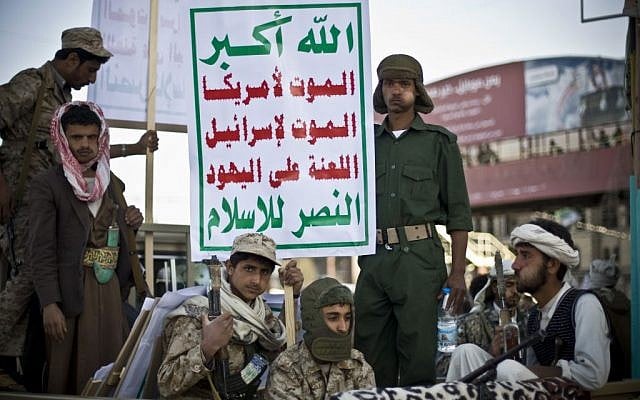
The motto of the Shiite insurgency, which emerged in Saada in 2004, is “death to America, death to Israel, cursed be the Jews, victory to Islam.” Nonetheless, the Jews have not been targeted by the rebels to date, said Zandani.
“The situation is difficult in Yemen with the war and everything, but there’s no [distinct] problem for the Jews,” Zandani said. “It’s all [directed at] the government.”
“The Houthis aren’t speaking with the Jews, but there’s still some fear,” Zandani admitted. “We don’t know who is a Houthi and who isn’t, who’s good and who’s bad… We don’t know what the Arabs are planning.”
Currently, Zandani said, the 40 Jews living in Sana’a only leave their compound to buy necessities, returning home immediately. He said the Arab diplomats now living alongside the Jews “told us they have no work, everything is bombed.”
Yemenis wishing to withdraw money from the country have to ask permission from Houthi officials, who have taken control of all government offices in the capital, Zandani said. “The government can’t do anything, it simply obeys the Houthis,” he added.
‘We used to have two homes in Saada and an electric generator, but there’s nothing we can do; the Houthis already took them. Now we have nothing,’ Zandani said
Why did Zandani — who has spent time living both in Israel and the US, and whose entire family resides in Israel — decline to leave Yemen despite his community’s hardship and his own personal tragedy? The answer may surprise Western observers.
“I liked it here. Since my father was killed, I was dealing with the Arab [who murdered him], making sure he isn’t set free,” Zandandi said. “Now, since there’s no government, there’s nothing more to do here.”
While he said the Jews of Sana’a have faced no hostilities from the new Houthi leaders, the other remaining Jews in Yemen, a tiny community in the northern city of Raida numbering some 20, has reported tension with the city’s Muslim residents over property issues.
“We used to have two homes in Saada and an electric generator, but there’s nothing we can do; the Houthis already took them. Now we have nothing,” Zandani said. “We’ve spoken to the government here, but it didn’t do a thing.”

This weekend, Zandani and his wife will celebrate the Passover Seder in Sana’a. They will bake matzah as they have for at least two millennia, when Jews arrived in the southern Arabian peninsula.
“We grind the flour ourselves, at home,” he said.
Eli Tamim, Zandani’s brother-in-law from Rishon Lezion, said he hoped his relative would finally decide to relocate to Israel.
“They have no business there,” he said. “I’ve begged him to leave, telling him that his children have no future in Yemen. I’m very worried.”







The Times of Israel Community.