

In Israel, top Indonesian cleric calls for ‘compassion’ between Muslims and Jews
Yahya Staquf, who heads world’s largest Muslim organization, says he wants to promote ties with Jerusalem, but stresses he came to affirm ‘Palestine’s sovereignty’
 Add ToI as a Preferred Source on Google
Raphael Ahren is a former diplomatic correspondent at The Times of Israel.
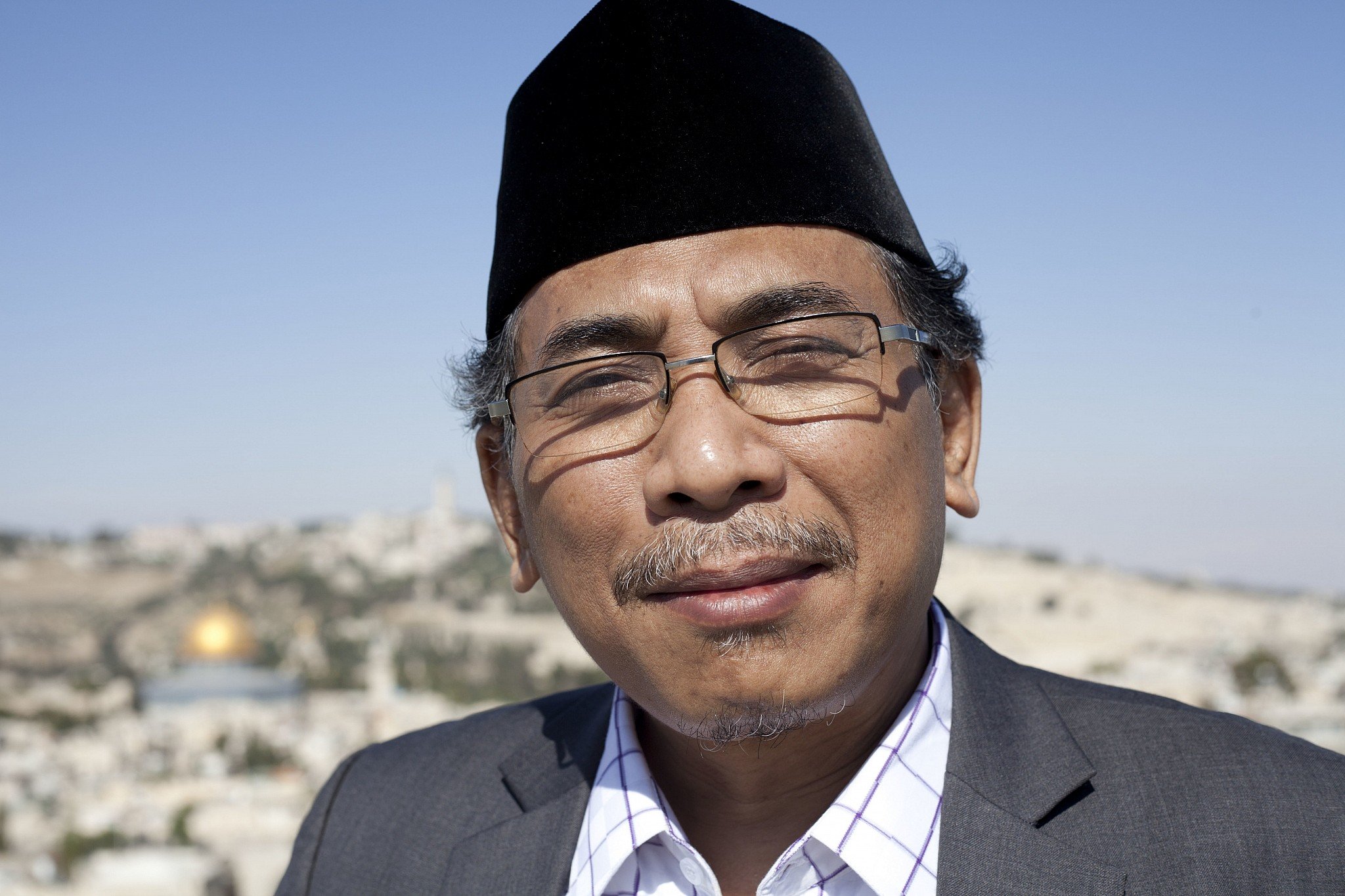
Visiting Israel this week, the secretary-general of the world’s largest Muslim organization appealed for “compassion” between Jews and his coreligionists, which he said could help the Jewish state build ties with Muslim countries around the world, including Indonesia, where he serves as a cleric and government official.
“I want to call the world, the whole world to choose a better future. Let us choose rahma, meaning compassion and caring about others,” Yahya Cholil Staquf, the head of the 60 million member Nahdlatul Ulama (NU), told The Times of Israel during an interview.
“Rahma is the foundation of anything that we could hope for to find a solution to all the conflicts in our current world,” he said. “And rahma doesn’t need a precondition.”
Part of Nahdlatul Ulama’s mission is to advance “world peace, including the independence of the Palestinian people,” Staquf said.
Asked whether, as part of that mission, he is interested in promoting political relations between Jerusalem with Jakarta, Staquf, who is a member of Indonesia’s Presidential Consultative Council, replied: “Yes, of course. See, we are in the middle of complex problems that needs to be dealt comprehensively in a global manner.”
Any process aimed at full normalization between Indonesia — the world’s largest Muslim country — and Israel needs to address “the global context of the problem,” Staquf stressed. “We need to work together, actually, to really find a path to global solutions.”
Indonesia’s president Joko Widodo is aware of his trip to Israel, Staquf said, adding that he does not know whether he supports his mission or not.
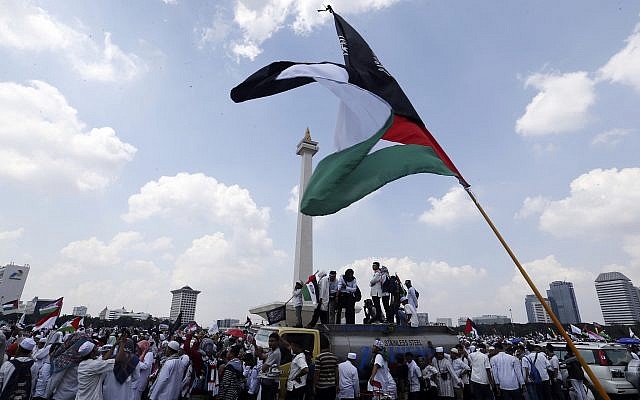
Staquf was heavily criticized in his home country for visiting Israel, a country many Indonesians consider an enemy state.
Responding to the criticism, he reiterated his support for the Palestinian cause, saying his visit to Israel aimed at promoting Palestine’s independence.
“I stand here for Palestine. I stand here on the basis that we all have to honor Palestine’s sovereignty as a free country,” he said in a statement posted his organization’s website.
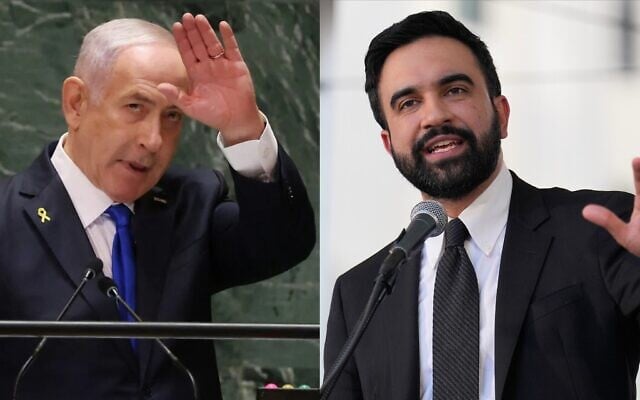
His week-long trip to the Jewish state included an appearance at the American Jewish Committee’s Global Forum Sunday, minutes before Prime Minister Benjamin Netanyahu took the stage (though they did not meet). At the event, he was interviewed by Rabbi David Rosen, a veteran advocate for Jewish-Muslim dialogue, in front of 2,000 delegates.
On Wednesday evening, Staquf is scheduled to deliver an address entitled “Shifting the Geopolitical Calculus: From Conflict to Cooperation” at the Israel Council on Foreign Relations in Jerusalem. His schedule also includes meetings at the Hebrew University in Jerusalem, and talks with local Jewish, Christian and Muslim leaders.
Speaking to the Times of Israel at the sidelines of the AJC Global Forum, he dismissed the criticism on his visit by appealing for people’s compassion.
“People who suffer can choose whether they will be angry or vengeful, or whether they will be forgiving, by having rahma. That’s what we need to offer as a framework,” he said, speaking in English.
But Staquf remains aware of the “magnitude” of the Israeli-Palestinian conflict, he said.
“We are facing a civilizational problem here, and it is related to religions,” Staquf said in an interview with The Associated Press. “As Muslims, we want to do our part related to our religion.”
At the same time, the Israeli-Palestinian conflict is not the sole focus of his trip, the cleric stressed. Instead, he looks at interfaith cooperation as a basis for solving many conflicts, including in Myanmar, where 700,000 Rohingya Muslims have fled persecution by the country’s security forces to Bangladesh.
Staquf says he has identified portions of Islam that he considers problematic, including how Muslims interact with non-Muslims. He says there needs to be “a new discourse” to recognize that Muslims and non-Muslims are equal and should be able to coexist peacefully.
“These elements are problematic because they are not compatible anymore with the current reality of our civilization,” he said.
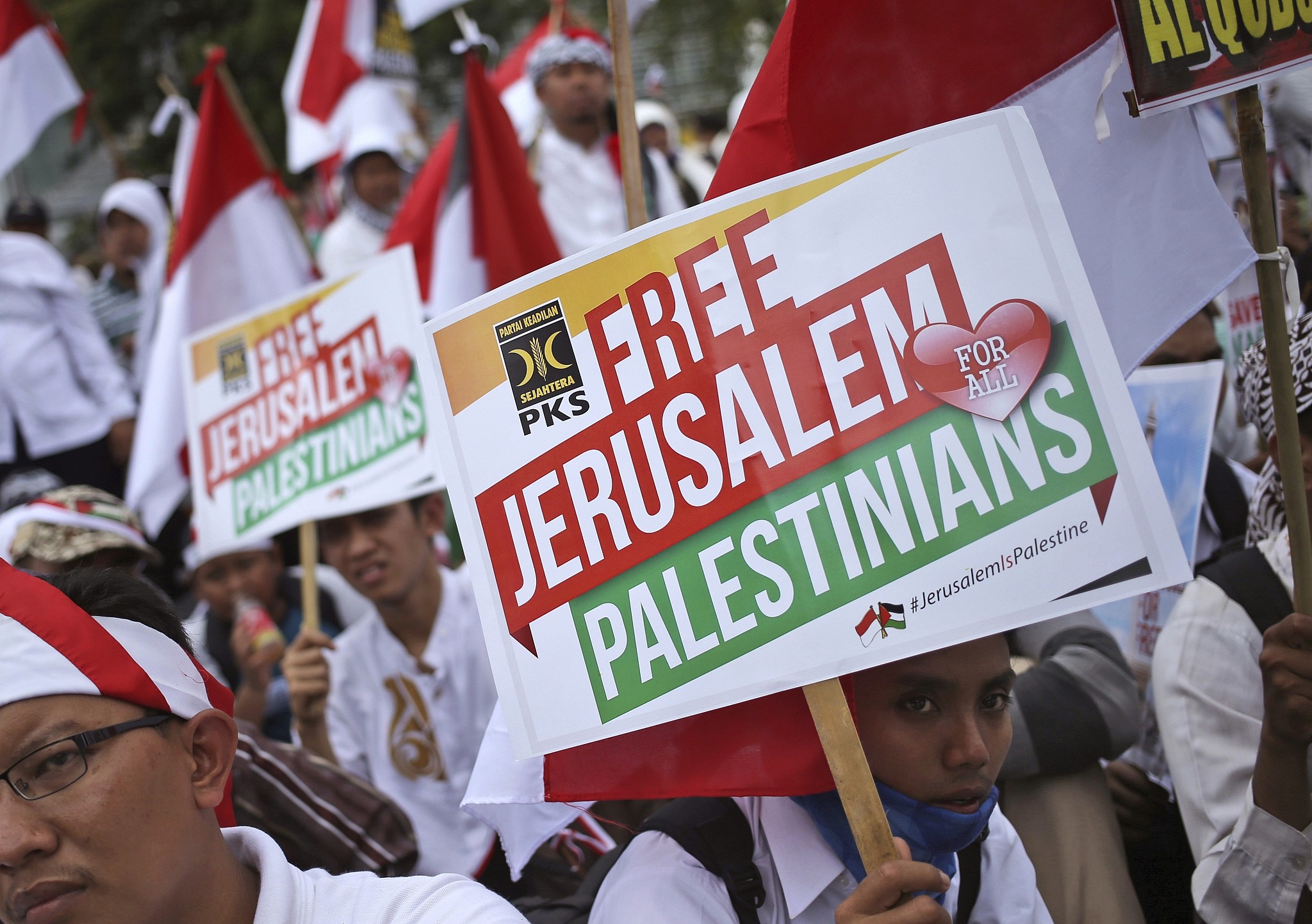
In Indonesia, Twitter and Facebook have been filled with negative comments about the visit. Many are upset about the situation in Gaza, where over 120 Palestinians have been killed during protests along the Israeli border over the past two months.
Israel accuses Hamas, the terrorist organization ruling Gaza, of using demonstrators as human shields while trying to carry out attacks and says it is defending its sovereign border and communities nearby.
Taufiqulhadi, a member of parliament from the National Democratic Party, one of the parties in the government coalition, said “the majority of Indonesians” do not want diplomatic relations with Israel.
In a letter to Indonesia’s foreign minister that was published online, Staquf said the government could “deny” his actions if deemed harmful to state interests. “But if there is a ‘benefit,’ let’s follow it up to be a real advantage.”
AP contributed to this report.








The Times of Israel Community.