

In Nepal’s remote villages, a new challenge for aid workers
Among a patchwork of unnamed villages, Israeli volunteers set up clinics, bringing medical care to the country’s worst-hit areas
 Add ToI as a Preferred Source on Google
Melanie Lidman is an AP reporter and former Times of Israel reporter
KATHMANDU, Nepal — In some parts of this city, you can walk down the street and ask, “What earthquake?” On Thursday, the fifth day since the 7.8-magnitude quake that rocked Nepal and killed more than 5,000 people, normalcy began returning to the streets. Some stores opened for the second day in a row, and the backpackers’ street of Chaksibari Marg was bustling, with almost every store open for business.
Even as you drive out of Kathmandu on the main roads, the homes are mainly intact. And when the main roads deteriorate into potholed, muddy tracks — barely wide enough for the trucks whose drivers barrel up and down the mountains, leaning on their horns — the earthquake seems to have skipped around, demolishing one home while leaving the neighbors untouched.
The resumption of commercial flights to the capital means that it is crawling with aid workers. On my flight Wednesday evening, there were 100 firefighters from places like Spain, Norway, and Turkey, in addition to dozens of Red Cross employees from Europe and the US.
There are so many aid workers, in fact, that the Nepalese Army actually requested that some of them return home, as more than 96 hours after the earthquake the possibility of finding survivors was very low (although not nonexistent, as workers from the Israeli group IsraAID and others proved Thursday evening, when they rescued a woman who had been buried under rubble for five days).
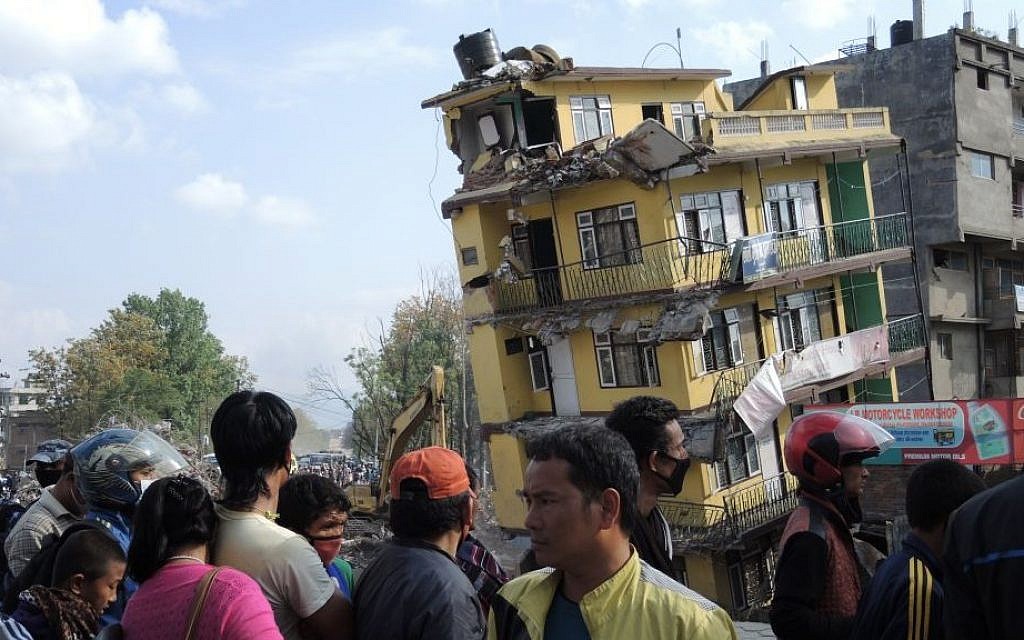
On Thursday, a jaunt through the streets of Kathmandu revealed a number of individual buildings that had collapsed, each attracting a crowd of onlookers and a truck-full of international specialists. The challenge is now to redistribute these resources in a way that ensures that remote villages also get the help they need, especially in places where the earthquake leveled most, if not all, of the buildings.
Kagatiguam, a village an hour’s drive from Kathmandu, is one such place, but the main street looks fairly untouched, belying the tragedies deeper into the village.
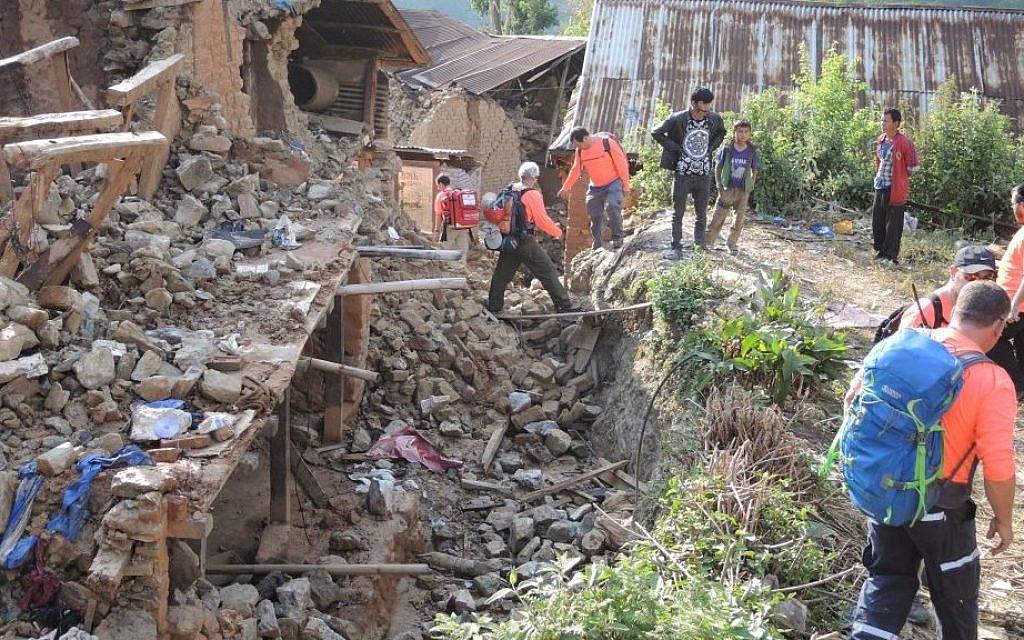
The Joint Israelife Disaster Response team, comprising volunteers from Israel’s paramedic organizations ZAKA, United Hatzolah and F.I.R.S.T., visited Kagatiguam on Thursday as part of an effort to canvas areas farther from Kathmandu to determine the extent of the damage. “The way Nepal is laid out is with so many villages, and we know these villages are totally demolished,” said Mati Goldstein, the director of ZAKA International and a member of the Isralife Disaster Response Team.
Goldstein, who has volunteered at more than a dozen international disasters, said that the death toll in Nepal was actually a lot lower than it could have been, because the earthquake hit at 11:56 a.m., when most people were out of their homes. In contrast, the 2010 quake in Haiti killed some 250,000 people and injured more than a million, because it hit at 4:53 a.m., when most people were still asleep in their homes.
Using the coordinates for the quake’s epicenter, the Israelife team is trying to determine which potentially hard-hit villages have yet to be visited by aid organizations. They have been coordinating their work with the United Nation’s Office for the Coordination of Humanitarian Affairs, and at the end of the day are reporting things like the number and kinds of injuries and deaths, and the extent of the damage.
The sprawling, isolated villages of the countryside make this individual village-by-village approach seem haphazard. In the best of times, it is difficult to coordinate any activity across the interwoven patchwork of unnamed villages and neighborhoods. Then there’s the added challenge of blocked roads, low supplies, and trying to work with at least 32 other teams, from 15 countries, that are here to provide search and medical services. The Isralife team, like many other international teams, is preparing to leave at the beginning of next week.
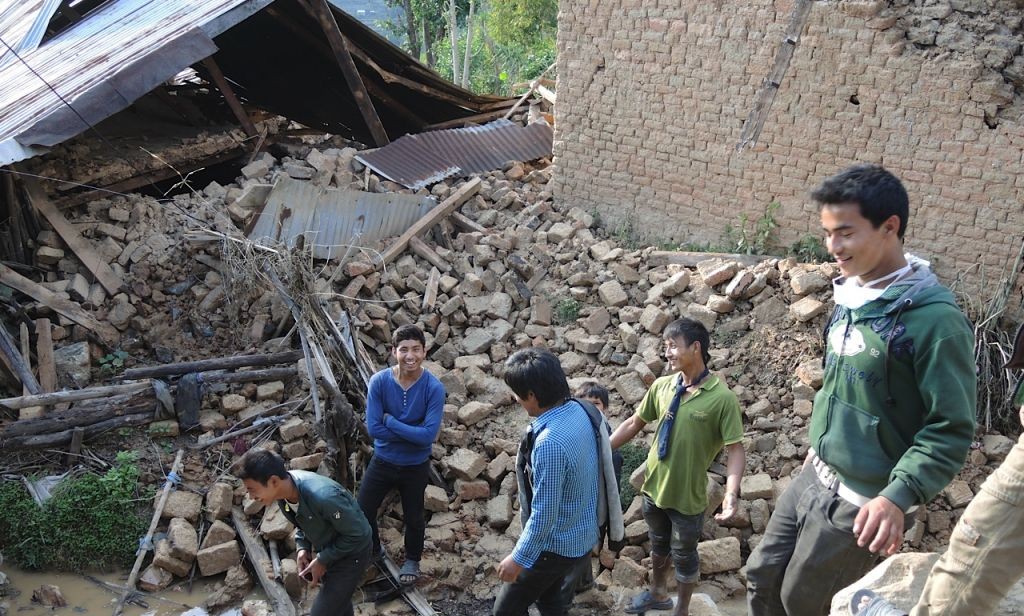
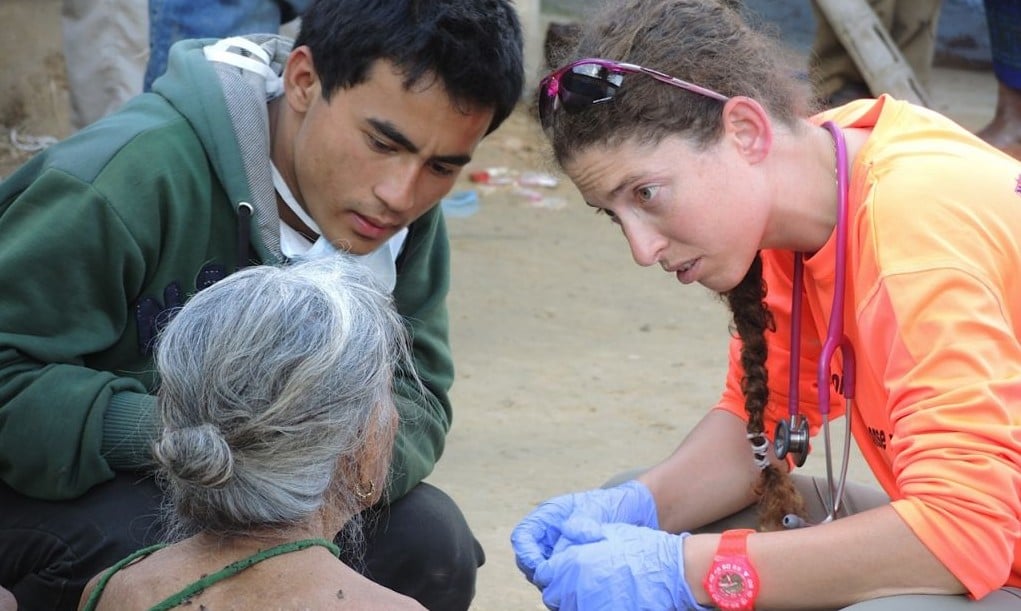
Still, Isralife believes the slow process of going village to village is essential for providing an accurate picture of the earthquake’s affects across the country. They also set up temporary clinics for a few hours to try to treat any light injuries sustained in the quake. One of the challenges of these temporary clinics is that the paramedics are unable to treat chronic problems, like heart issues, which were worsened by the quake. But the superficial care is still beneficial.
“At the end of the day, these people aren’t going to walk five or six hours to get to a clinic,” said Goldstein. “And things like deep cuts or fractures — if you don’t treat them, they will get infected and affect these people for the rest of their lives.”
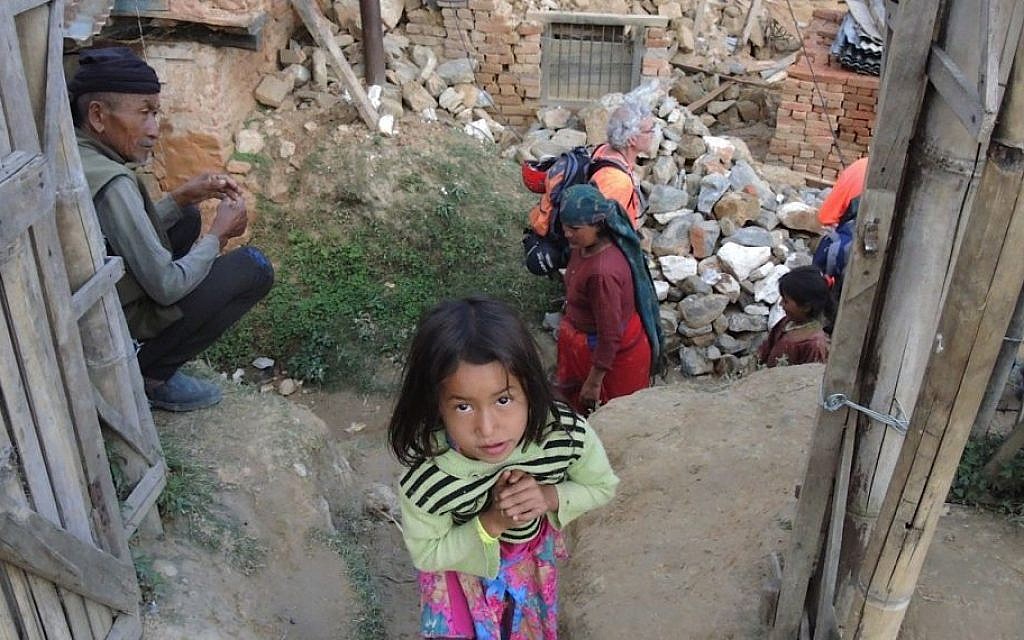
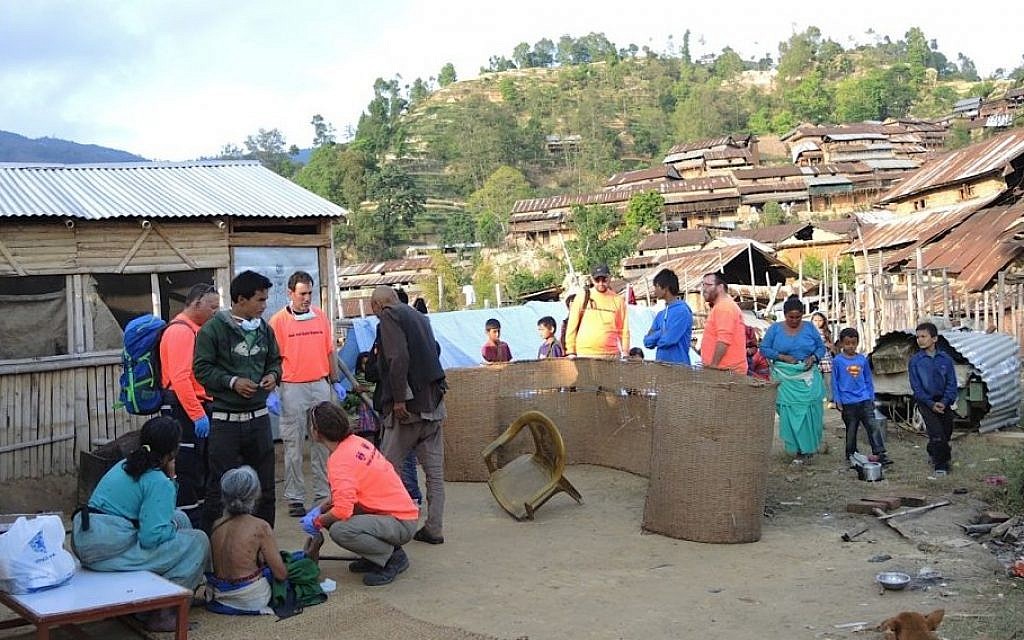
Kagatiguam’s story during the earthquake unfolded slowly, as the villagers gathered. The death toll there rose from two to five to 12, as more and more people arrived and shared their stories. The dozen paramedics with Isralife tried to create a makeshift examination room with a straw mat, on one of the only flat areas in the hilly village. Paramedics treated elderly women complaining of chest pains, and one who was hit in the abdomen with a falling rock during the quake. Her son was killed. A man with a deep cut on his finger also arrived, stepping gingerly over piles of broken bricks on the narrow paths.
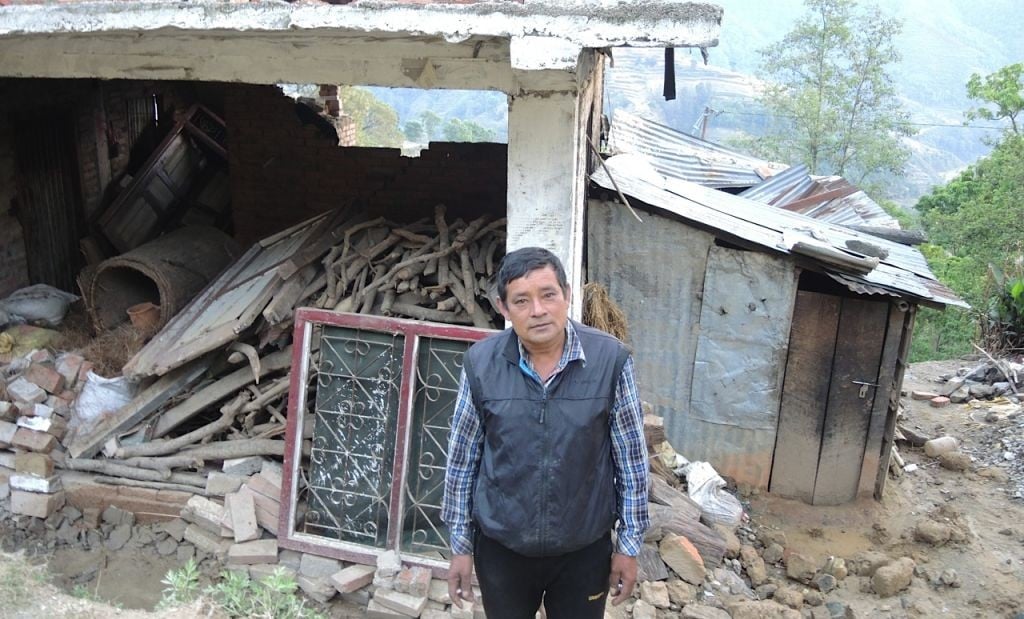
“When we get there, you see that people start trickling out more and more,” said Adam Sela, a 51-year-old volunteer from Kibbutz Sde Boker in the Negev. “You see from the road and it looks okay, but then you climb up and there’s almost no house that’s unaffected.”
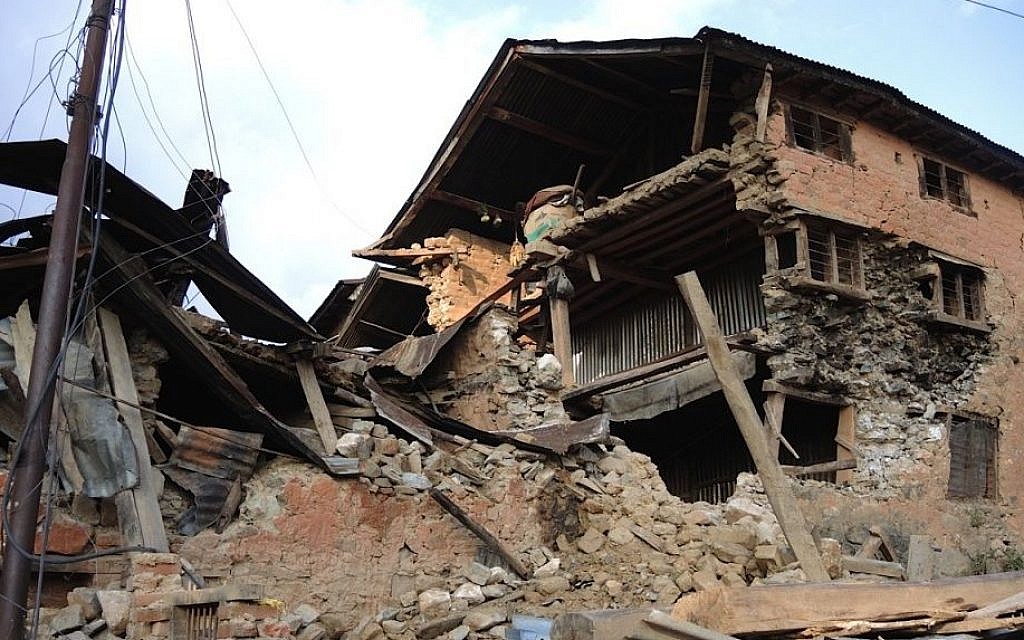
The brick homes had gaping holes, some collapsed entirely. Corrugated tin roofs hung at precarious angles. In one house, an entire wall was shorn away, revealing an unmade bed and a pile of clothes. Even the houses made of cement had giant cracks, wide enough to stick your arm through.
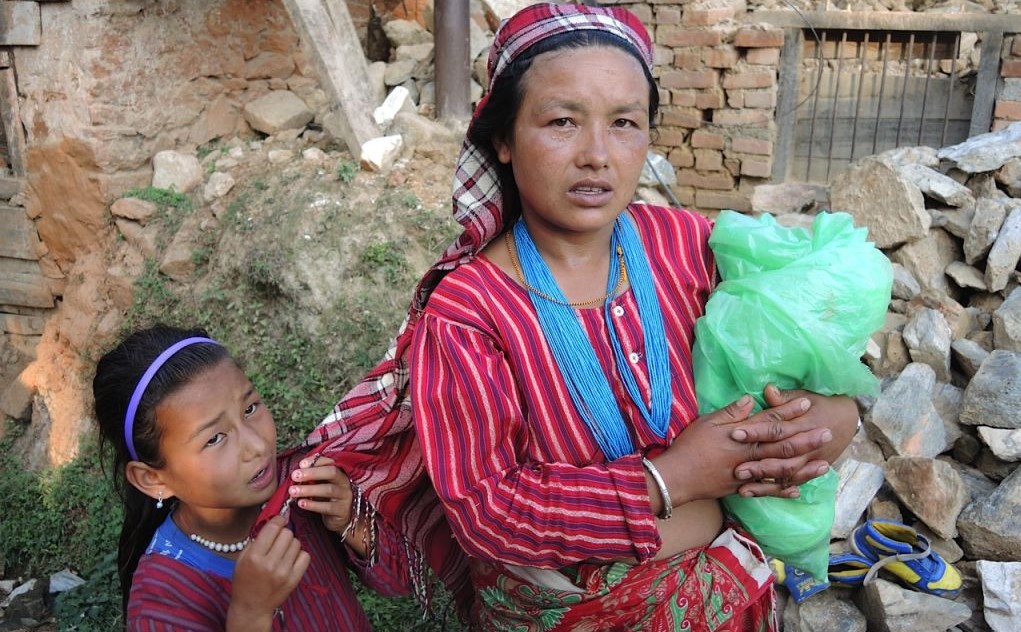
Local farmer Druga Shastanbalame was grateful that his family was safe. But most of his house collapsed onto his animals, two buffalos and about a dozen goats, wiping out his livelihood. The shell of his house is uninhabitable.
Nepal’s monsoon season will come in June and dump torrential downpours on the wounded land. The UN estimates that more than 8 million people in Nepal were affected by the quake — many of them have lost their homes.
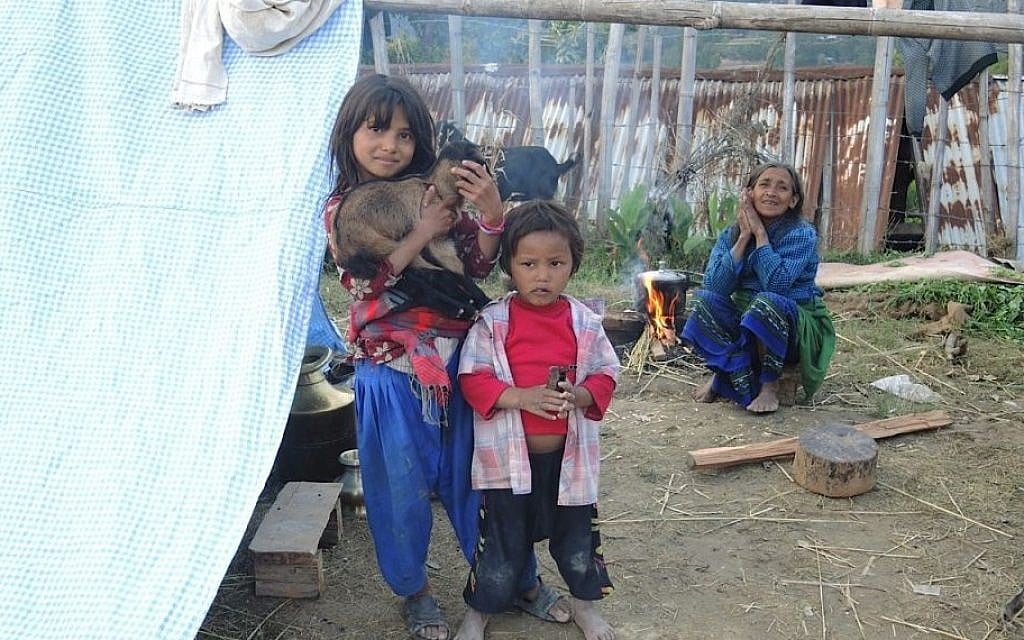
On the way back from Kagatiguam, we took a shortcut through Kathmandu’s back roads. From the street, most of the buildings look like they’re intact. But from the tiny alleyways that open up onto courtyards, you can still see dozens of families huddled under makeshift tents. The fear of aftershocks has mostly subsided, so the people hunkered down outside are the ones who cannot return home. Their temporary tents are hidden from the main streets, but not from the rain.








The Times of Israel Community.