

In new Israeli film, family ties get knotty when dad decides to become a woman
Opening on November 16 in LA and a week later in New York, ‘Family in Transition’ follows a small-town Israeli family through gender reassignment — but that’s not all that changes
 Add ToI as a Preferred Source on Google
Jordan Hoffman, a member of the New York Film Critics Circle, is The Times of Israel's long-time film reviewer and the co-host of The Reel Schmooze.



NEW YORK — No two families are alike, but the Tsuk family at the center of “Family in Transition” is surely among the more unusual ones you’ll meet in a movie this year.
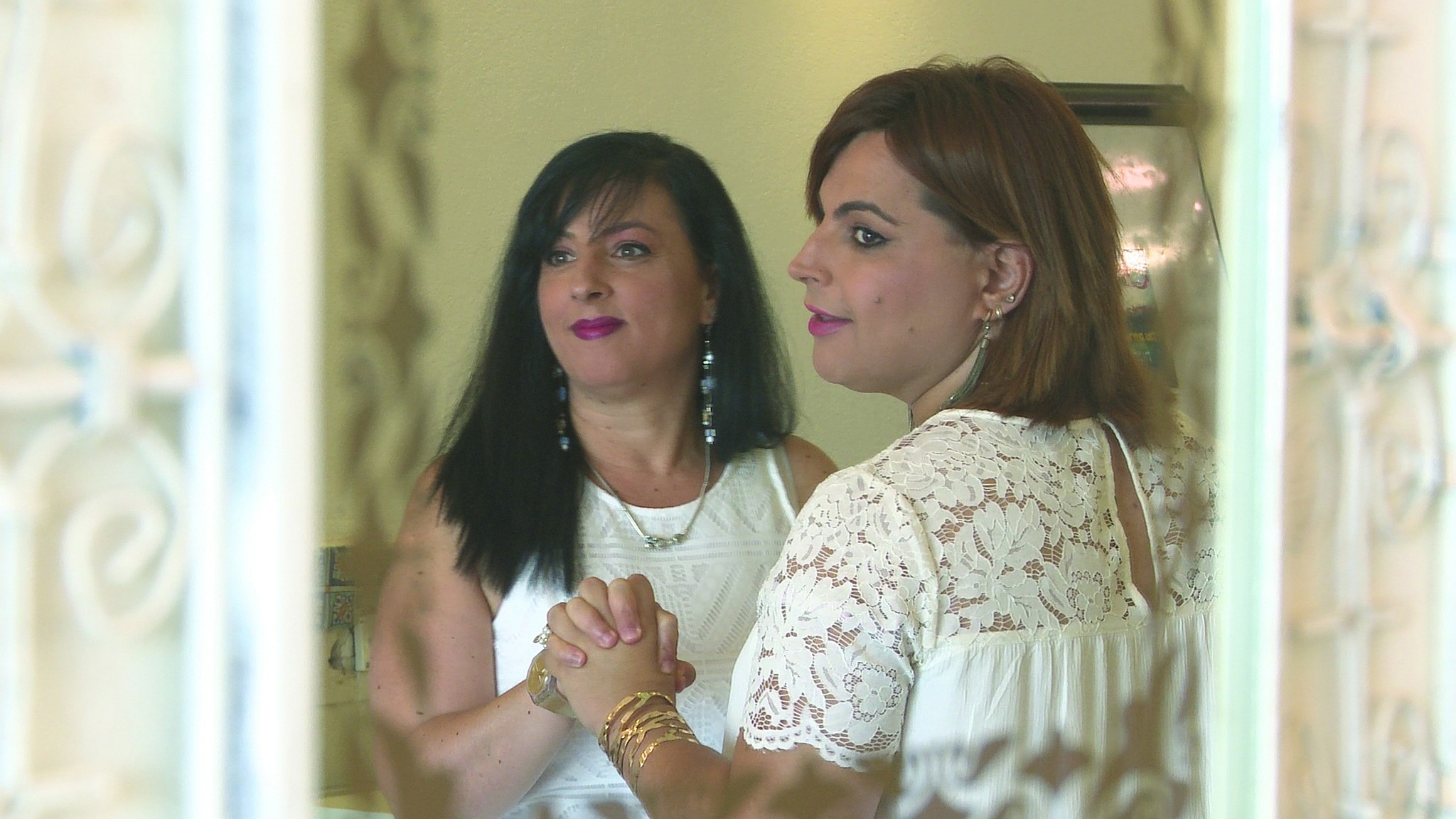
The three-years-in-the-making documentary from director Ofir Trainin begins with old footage of a wedding ceremony. We cut to 20 years later and Amit and Galit Tsuk are still married, have four children, but are about to reveal some startling changes. Amit is in the process of transitioning from male to female, something unheard of in the small northern Israeli town of Nahariya.
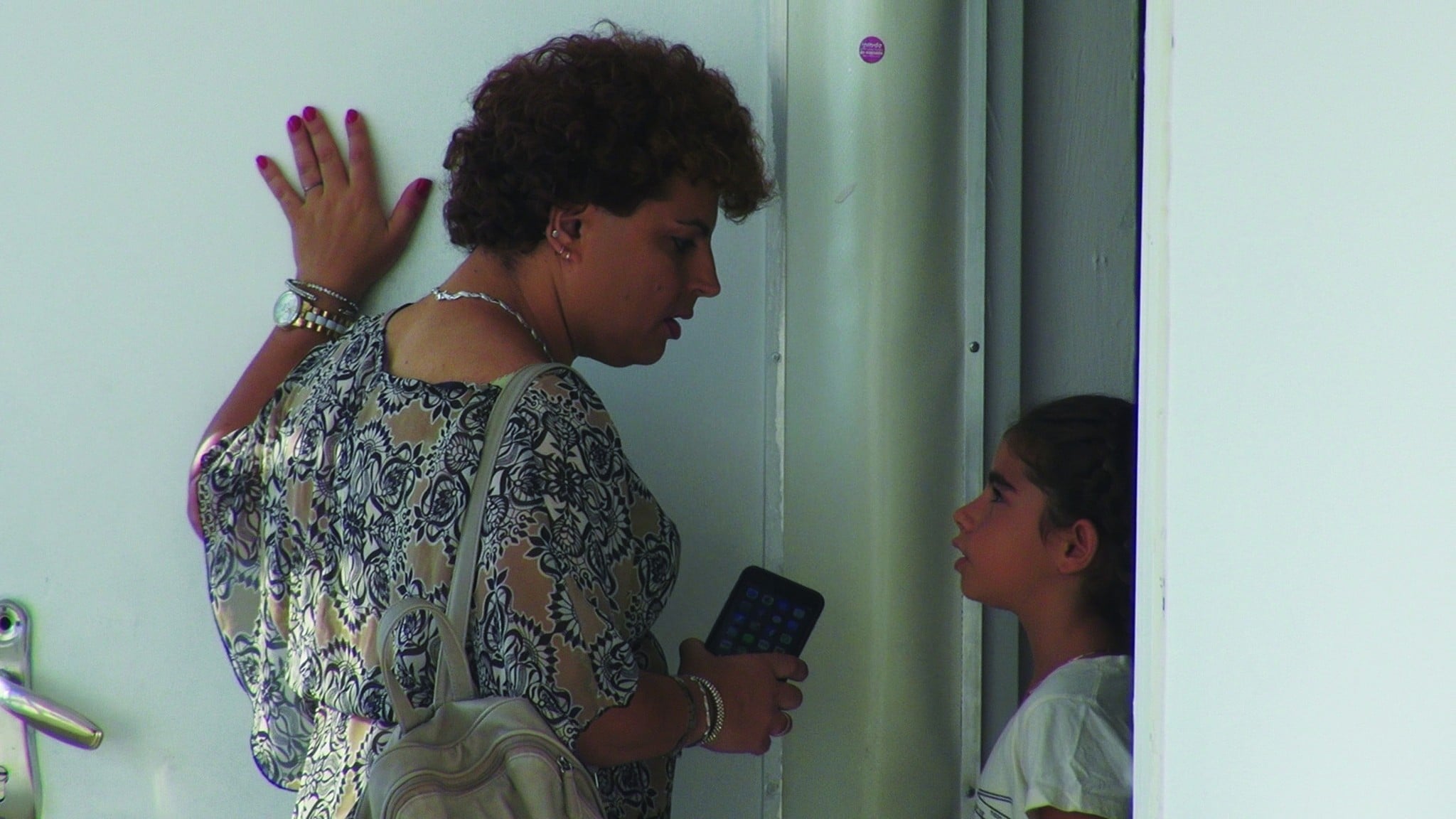
Some friends and members of the extended family are accepting, others are not. (One local parent refuses to let their kids play at the Tsuk house, as if catching transgenderism were some sort of communicable disease.)
The six Tsuks are nothing if not communicative, and the first half of the film is something of an idealized vision of family unit overcoming any obstacle.
Amit’s hormone medications play havoc with her emotions as the preparation for gender correction surgery in Thailand looms. Then: a twist.
Once Amit convalesces and the parents stage a second wedding ceremony, the air is out of the balloon. Galit, the rock of the relationship, makes new female friends, gets a funky haircut, and it soon becomes evident she wants to see other people. (A woman, specifically.) The pair plan for a divorce, but securing a get, or Jewish divorce, which only a “man” can sign off on, becomes difficult when neither party identifies as such.
This is, to a viewer, all fascinating stuff. But watching a drama is one thing; asking nosy questions is another. I was, I confess, nervous about pestering Amit Tsuk about her personal life after the premiere of “Family in Transition” at the DOC NYC festival — especially when I learned that her college-aged daughter Yuval would be there, too.
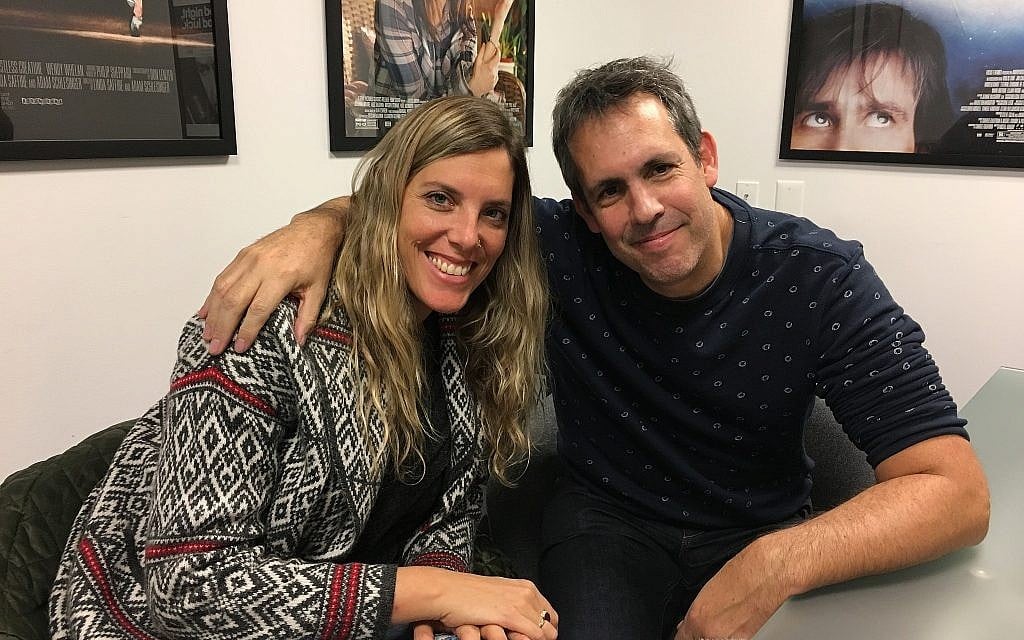
“You can ask any questions, just don’t ask boring questions!” Amit welcomes me with a big smile. While the setting of our chat is a bland Manhattan conference room, her exuberance and warmth is palpable. There was a bit of a language barrier, but below is an edited glimpse at my conversation with her, her daughter, her director and producer.
So, who got this movie going?
Ofir Trainin (director): I heard about the story. I had made some short films about LGBT parents, and when I heard about this I made a phone call, met Galit and suddenly I was with the family for three years.
During three years of turmoil did you, Amit, ever say “enough with your cameras, go away?”
Amit Tsuk: The opposite. We would wait for him. We needed him there as our psychologist. We told him about all our problems, sometimes without any connection to the transition process, just “yeah, yeah, yeah.”
Did knowing in the back of your mind that you were creating “a show” force the family to be a little more up front about feelings than would normally be the case?
Yuval Tsuk: During “the process,” you can’t talk about things so easily with the family. You can’t talk to her [Amit] because she is doing the process. We had so much to say, but friends don’t understand. Ofir was there for us the whole time.

So, Ofir, you are making a documentary where you subjects trust you like this. Then you see the marriage is falling apart, and you feel badly, but part of you must be thinking, “Aha, now this project is getting juicy.”
Ofir: When you are a documentary filmmaker you always have moral issues. Bad things happening to your subjects sometimes are not good for their lives, but it is good for the film. Emotions are complicated, but I prefer to be a human being. I prefer for things to be all right, it’s more important to me than the film.
Tal Barda (producer): Here I expect him to say as a filmmaker he is looking for drama, not moral issues.
Ofir: Well, it’s the truth.
Amit: He began making a love story. And he thought it would end as a love story. But things got complicated, and when the marriage was crushed, I often thought of Ofir as a National Geographic photographer. You watch these shows where a small animal is chased and eaten by a lion or something and you think, “Where is the photographer? Please help her! Help her!” But the photographer is thinking “Good, he is killing her, I have a great scene.”
Sometimes, yes, I was angry he didn’t help me. At the beginning of “the crash” I think he didn’t believe we would divorce. He even told me that if he were to bet on a screenplay version, Galit would be coming back in one month. That was the Hollywood version.
At what point do you think Galit knew your true identity? Is it possible she knew early on? Because when she leaves, she leaves for a woman. Is it possible she somehow sensed you identified as a woman, even though you hadn’t yet told her?
Ofir: This is what I think, too. It’s not a coincidence.
Amit: Maybe. I think Galit was always bisexual. But she didn’t know.
Tal: He means subconsciously.
Amit: Subconsciously?
Ofir: They got married so young, in their 20s, then the children came, then just after the process it was the first time Galit had time to discover herself. Amit’s process helped Galit, I think, start her own process.
Amit: Yes, but she lost her trust in men. She is with someone she loves now, without regard for gender. In the rabbinical court she said that she would be coming back with a man. But she married a woman, and the rabbi is still waiting.
How do you feel about this, Yuval, us psychoanalyzing your parents like they are fictional characters?
Yuval: It’s actually okay, we all already know everything.
Amit: And I have a wife now, too.
And everyone gets along when the whole gang gets together?
Amit: Well, we aren’t together.
I mean when there are occasional large meet-ups.
Amit: Uhhhhhh. Well… It is a small town, we have four kids. We speak. We spoke for half an hour this morning, so, we are trying to get things better.
Israel seems to me to be one of the more accepting countries of transgender people.
Amit: When politicians or religious people get involved it becomes a problem. It’s difficult, as it is in the United States, how some politicians are working to erase identities. We are in a religious country, and getting more so. Our town Nahariya gets more religious each year.
Tal: And they are the only transgender family in that town. Like in many countries, there are some areas, like Tel Aviv in Israel, that are open toward the LGBT community, but what happens is there is a bigger gap growing between Tel Aviv and the rest of the country. And it is getting more extreme.
Amit: Plus the transgender community is in the bottom rung of acceptance. You have gays and lesbians in political life in the Knesset and courts and the media, but the transgender community is where the gay community was 30 years ago.
Where would you like to see this movie play?
Amit: At the Oscars!
So you are committed to being an ambassador for the transgender community.
Amit: Yes, there is a big problem in this community. People are getting out of the closet. They are making their “process.” But then they are going back to the closet. As a woman, now, but back to the closet. “I did my process, I want to be treated as a woman, but I don’t want anyone to know about my past.” Few transgender women are willing to sacrifice their private life to say “this is my past, my present and my future.”
Some transgender people burn all their old photos.
Amit: And they shouldn’t do this. I teach people what the full process is about. It’s one of the most painful and difficult things you can accomplish. If you go to Israel today and say “transgender woman,” 90 percent of the people will think “whore.” They don’t think about lawyers and professors who are transgender women.
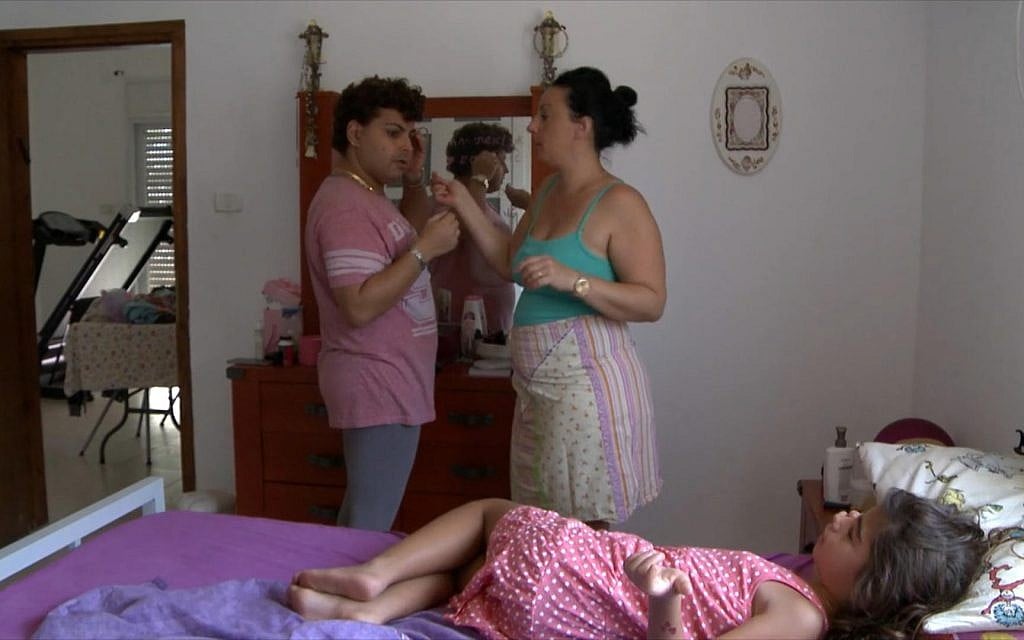
And also ex-soldiers; you were in the army, right?
Amit: Yes, I was wounded in the army.
The story told in the film was that because of your wound, a doctor suggested you wear Galit’s tights and this was your “Aha!” moment?
Amit: I had worn those tights dozens of times before Galit’s knowledge. But that was the first time she knew about it and said I could wear them, and I started to cry. She didn’t know why, but that’s where I told myself “Enough with the mask. Put down the mask.”
Okay, so now you are here in New York for a few days, your first time here, what are you up to?
Amit: Shopping!
Yuval: We need to get another suitcase.
Tal: I brought an empty suitcase.
Amit: Why didn’t you tell me?!
Yuval: I love it here.
Amit: Yes, she wants to stay. I think I may be going back alone!
“Family in Transition” opens in Los Angeles on November 16, in New York City on November 23, then expands wider in North America.







The Times of Israel Community.