

In rare Likud vote, stalwarts seize first chance in years to steer party machine
In south Tel Aviv stronghold, first internal ballot in 13 years pits new generation against old guard. PM visits Jerusalem poll to extol Israel’s ‘only truly democratic party’


 Add ToI as a Preferred Source on Google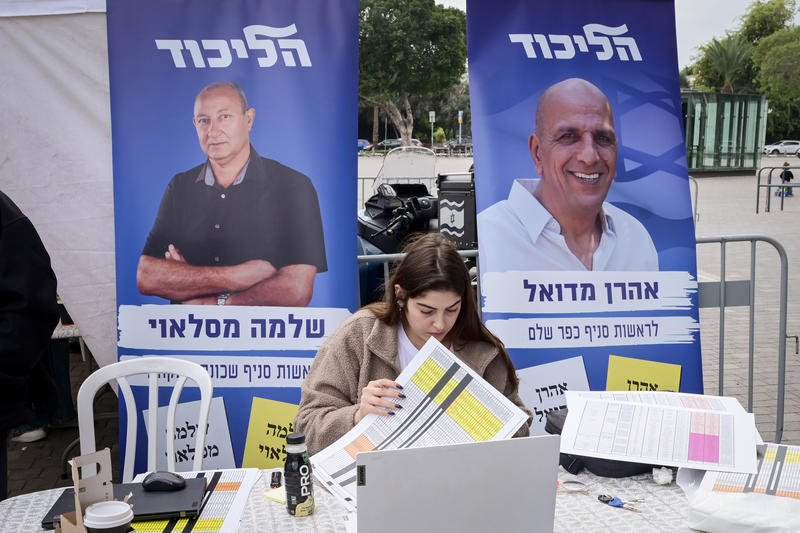
The polling station in the south Tel Aviv neighborhood of Yad Eliyahu opened at 7 a.m., but by mid-morning the location still had the unhurried rhythm of a neighborhood waking up slowly. About fifty people milled around a large plaza in front of Menora Mivtachim Arena — a mix of candidates, volunteers and a slow stream of voters for the first internal Likud elections held in 13 years.
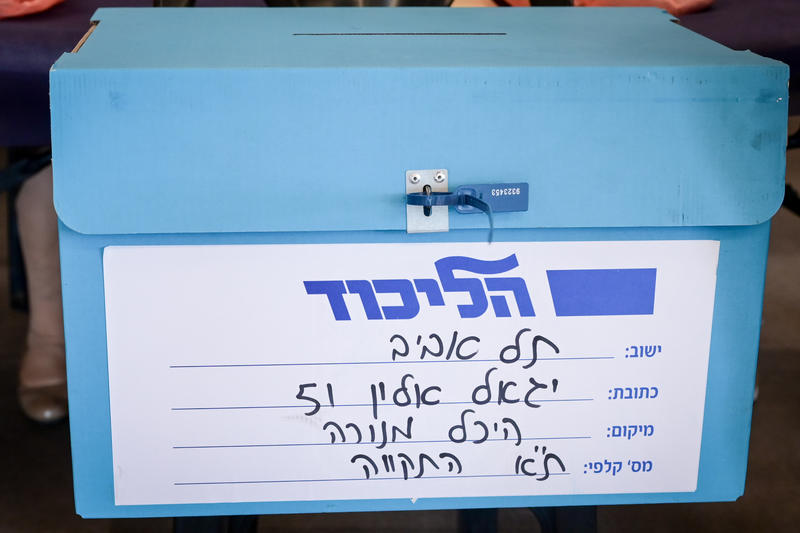
The elections in Yad Eliyahu, one of dozens of polling stations across the country that opened Monday for Likud members, will decide the composition of both local chapter councils and delegates to the party’s Central Committee, a powerful body that selects Likud’s internal leadership.
Four local Likud branches were voting in Yad Eliyahu — Kfar Shalem, Hatikvah, Yad Eliyahu and South Tel Aviv — representing roughly 2,500 registered members, out of approximately 150,000 eligible voters estimated nationwide.
Yad Eliyahu, a working-class neighborhood east of the Ayalon highway, is itself a longstanding Likud stronghold, historically home to some of the party’s most influential leaders, making it both a symbolic and practical site for the vote.
Mostly older men populated the plaza, the habitual loyalists of Likud’s internal politics. They lounged on plastic chairs, reminiscing about past party struggles or greeting neighbors with practiced familiarity. Around them were arrays of tents and folding tables manned by volunteers for specific candidates. Women were rare, and the median age seemed to sit firmly in the mid-60s.
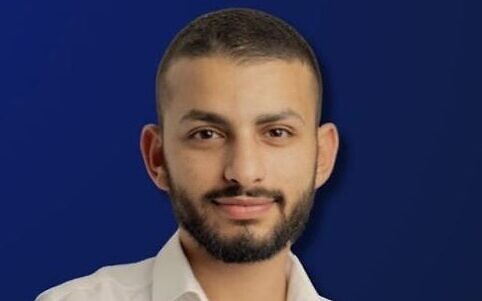
One volunteer tent stood out: a cluster of younger activists, all there on behalf of 26-year-old Mori Orkabi, one of the few young contenders in this election cycle and an unmistakable outlier amid the gray-haired loyalists.
An activist and former deputy chair of Likud Youth, Orkabi’s day job is as an adviser to a politician he preferred not to name. He had the restless, alert posture of someone who’d been preparing for this day far longer than his age might suggest.
“I’ve been getting ready for this conference for several years,” he said. “I’ve visited hundreds of people in south Tel Aviv.”
For Orkabi, these internal elections, choosing local council members and delegates to the Likud Central Committee, are not a minor procedural exercise. To him, they are a gateway into the party’s most powerful organs.
“The Central Committee elects everything,” he explained. “The court, the secretariat, the constitution committee and if [Prime Minister Benjamin] Netanyahu were to end his term, they’d elect the next prime minister.”
Orkabi was seeking a seat on the Kfar Shalem chapter council and a coveted spot in the Central Committee. The stakes, he said, are high, since opportunities to run aren’t regularly held. The last time elections were held, Orkabi was 12 years old.
“This is a chance for a lot of young people to compete. Anyone who doesn’t run or doesn’t win now is out of the game by the time they’re about 40,” he said.
For Orkabi, being part of the Likud is in his blood. He grew up in Yad Eliyahu, where his parents and grandparents were also born. Loyalty to Likud often runs in the blood in south Tel Aviv, which can feel ideologically and socioeconomically divorced from the richer and more liberal parts of the city to the north. Families vote together, sometimes across three or four generations, and party affiliation is as much a part of local identity as a family name.
“My whole family, all of my cousins and relatives, are party members. It’s my hamoulah,” he added, using the Arabic word for clan. His great-grandfather, he noted with pride, fought in the Irgun and helped found Herut, the ideological progenitor of today’s Likud.
The party’s enduring dominance in Israeli politics over the past three decades stems not only from the cult of personality around Netanyahu, who has been in power for 16 of the last 17 years, but also from its deep grassroots networks, multi-generational loyalty and a disciplined, highly organized structure that channels local engagement into national influence.
Yad Eliyahu is just one of dozens of polling stations across the country that together make up the vast political machine that is Likud. There is nothing comparable in any other Israeli party.
Orkabi cast his run as the culmination of years of grassroots work, growing through the party, mobilizing youth activists, knocking on doors and showing up.
“You can’t run just like that,” he said, snapping his fingers. “You’ll lose.”
He quickly darted off to greet another cluster of voters.
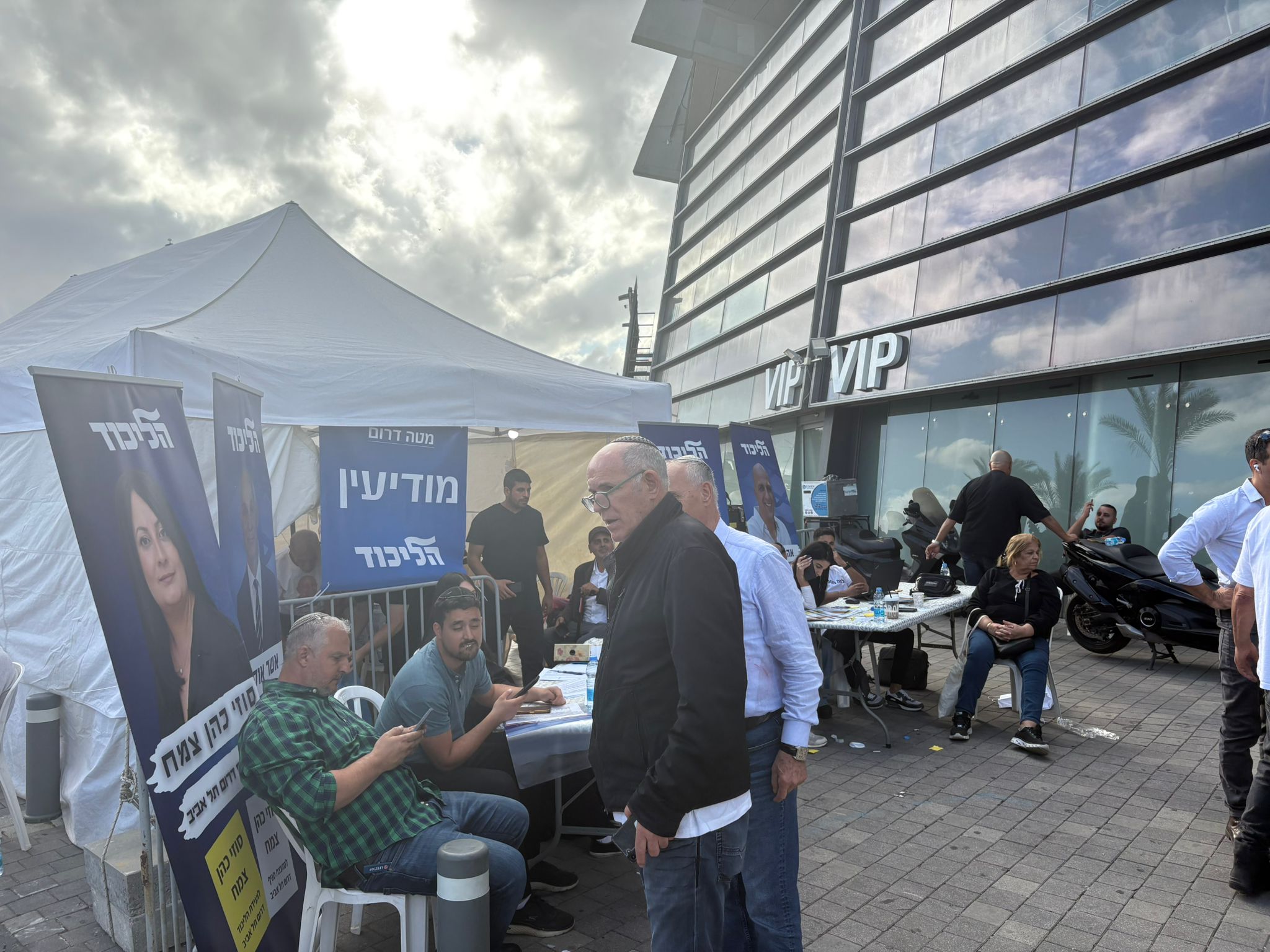
And yet, the scene around him — sleepy, familiar, anchored by generations of Likud stalwarts — made clear how steep his challenge remains. For all the talk of renewal, the party machinery here in Yad Eliyahu still appears to mostly run on the muscle memory of its elders.
Among those elders is David Laniado, who is running to keep his role as chair of the Kfar Shalem branch, which he has led for the past four years.
“My vision for all of Tel Aviv is to reduce the gaps between south Tel Aviv and the center and north Tel Aviv, because the gaps are there,” he said.
Laniado was convicted in 2011 for a series of burglaries and assaults and sentenced to four and a half months in prison and six months’ probation.
More than a decade later, in 2022, the party’s internal court disqualified him from running for the Knesset, though the Tel Aviv District Court overturned the ruling. In 2024, Laniado was elected to the Tel Aviv City Council on the Likud list.
Asked what he hoped for on election day, Laniado said, “First of all, that it be a democratic contest. And second, that it be fair and not defamatory. In the end, we are all supposed to be in the same party, and we need to maintain the purity of the elections.”
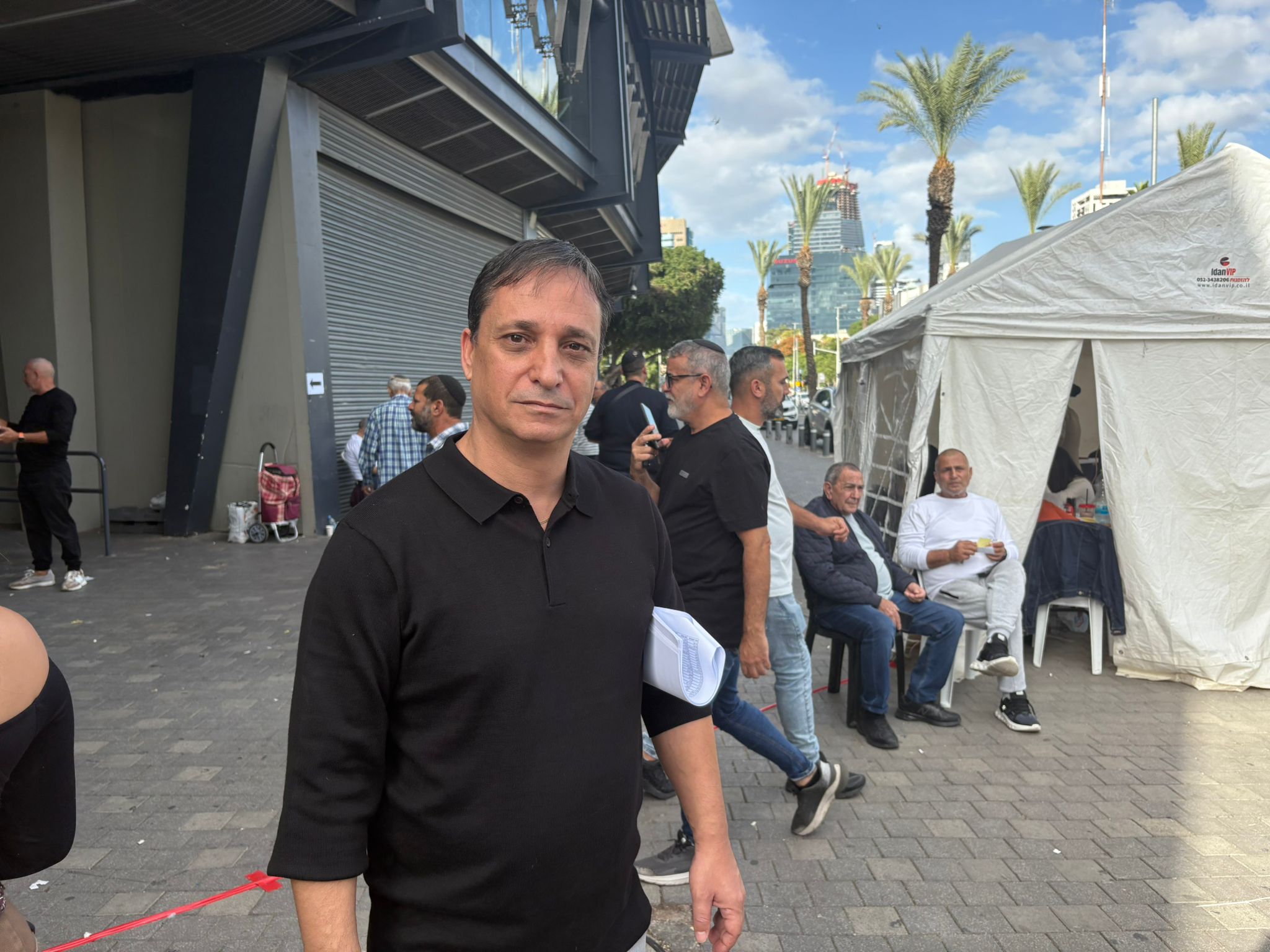
As Orkabi sprinted between voters and Laniado circulated among longtime supporters, their movements reflected more than personal campaigning — they embodied a wider struggle within Likud between entrenched power and the push for renewal.
“The nation of Israel deserves people like [Orkabi]. We need new energy and younger people to run,” said D., one of Orkabi’s volunteers who preferred to remain anonymous. “I promise you he’ll be in the Knesset soon. I’m willing to bet money on it.”
New blood in Jerusalem
Initial results in the vote are expected Wednesday, paving the way for the Central Committee to hold its first conference since January 2012.
The Central Committee, which has approximately 4,500 members, is led by Tourism Minister Haim Katz. It serves as the party’s main representative body, responsible for approving major policy decisions and internal rules, and selecting candidates for certain slots on the party’s Knesset slates.
It also elects the party’s 50-member Secretariat, currently led by Defense Minister Israel Katz, which acts as the party’s executive body responsible for party operations, including staff, budget, regional offices, campaigns and selecting candidates for the party’s Knesset slate in a handful of other reserved slots.
While the new members of the Central Committee will be picked on Tuesday, the heads of the Central Committee, as well as the Secretariat members and head, will be selected via a 90-day voting period.
Energy Minister Eli Cohen and Culture Minister Miki Zohar are reportedly seeking the spot held by Israel Katz, while Regional Cooperation Minister David Amsalem is challenging Haim Katz.
The vote was called in response to mounting internal pressure, after years in which those holding key positions saw no reason to call a convention and risk their roles.
Primaries are expected to be called in the coming months, with elections scheduled for no later than October 2026.
In Jerusalem, a polling station at the International Convention Center had a very different vibe from Yad Eliyahu on Tuesday evening, with Prime Minister Netanyahu showing up with his wife Sara to cast their ballots.
“As we came in here, we met some longtime Likud members and some younger Likud members, and it warms the heart to see the turnout, the enthusiasm. This is the only truly democratic party… Maybe there’s one more, barely a small one, but this is democracy at its best, and this is the Likud at its best,” Netanyahu told reporters after voting.
Addressing the press after casting his vote for the Likud central committee, Bibi says that Likud is the "only truly democratic party" left in Israel. pic.twitter.com/73rkplgofE
— Sam Sokol (@SamuelSokol) November 25, 2025
Outside, past a cordon of security, hundreds of party faithful mingled, a mix of young and old, secular and religious. Many of the attendees were ultra-Orthodox Jews sporting long black coats and skullcaps, a testament to what has been described as a significant increase in Haredi membership at the expense of the party’s liberal wing.
Greeting party members as they arrived was MK Amit Halevi, representing the Likud’s so-called “victory forum.”
Halevi told The Times of Israel that he was hoping to elect Central Committee members who support more aggressive stances vis-à-vis overhauling the judiciary, and in defense and foreign policy, what he termed “the voice of victory, the values of victory.”
“They will push the ministers and the Knesset members to translate these values to policy,” he said.
Likud MK Amit Halevi greets Likud voters, many of them Haredim, at a polling station in Jerusalem during the election for the party central committee pic.twitter.com/piilaLywRO
— Sam Sokol (@SamuelSokol) November 25, 2025
Economy Minister Nir Barkat said the vote was proof that “the Likud is by far the most democratic party in the country,” touting the single-minded nature of its discourse.
“We’ve… put all disagreements aside [to] focus on the common denominator, which is Jerusalem and Likud,” he said.
Asked if, in light of rhetoric from MKs like Nissim Vaturi — who recently praised late extremist Rabbi Meir Kahane — he believed the party had shifted to the far right, Barkat replied in the negative.
“I know that the majority of people in the Israeli public moved from the left to the right, and that’s where Likud is waiting for them,” he said. “We have a really clear understanding of how we see the future, and more and more people are joining Likud.”





The Times of Israel Community.