

Iran the instigator and beneficiary of new Israel-Syria escalation
With its largest attack since 1973, in response to Golan rocket fire, Israel is directing a message more to Tehran than Damascus

 Add ToI as a Preferred Source on Google
Avi Issacharoff, The Times of Israel's Middle East analyst, fills the same role for Walla, the leading portal in Israel. He is also a guest commentator on many different radio shows and current affairs programs on television. Until 2012, he was a reporter and commentator on Arab affairs for the Haaretz newspaper. He also lectures on modern Palestinian history at Tel Aviv University, and is currently writing a script for an action-drama series for the Israeli satellite Television "YES." Born in Jerusalem, he graduated cum laude from Ben Gurion University with a B.A. in Middle Eastern studies and then earned his M.A. from Tel Aviv University on the same subject, also cum laude. A fluent Arabic speaker, Avi was the Middle East Affairs correspondent for Israeli Public Radio covering the Israeli-Palestinian conflict, the war in Iraq and the Arab countries between the years 2003-2006. Avi directed and edited short documentary films on Israeli television programs dealing with the Middle East. In 2002 he won the "best reporter" award for the "Israel Radio” for his coverage of the second intifada. In 2004, together with Amos Harel, he wrote "The Seventh War - How we won and why we lost the war with the Palestinians." A year later the book won an award from the Institute for Strategic Studies for containing the best research on security affairs in Israel. In 2008, Issacharoff and Harel published their second book, entitled "34 Days - The Story of the Second Lebanon War," which won the same prize.
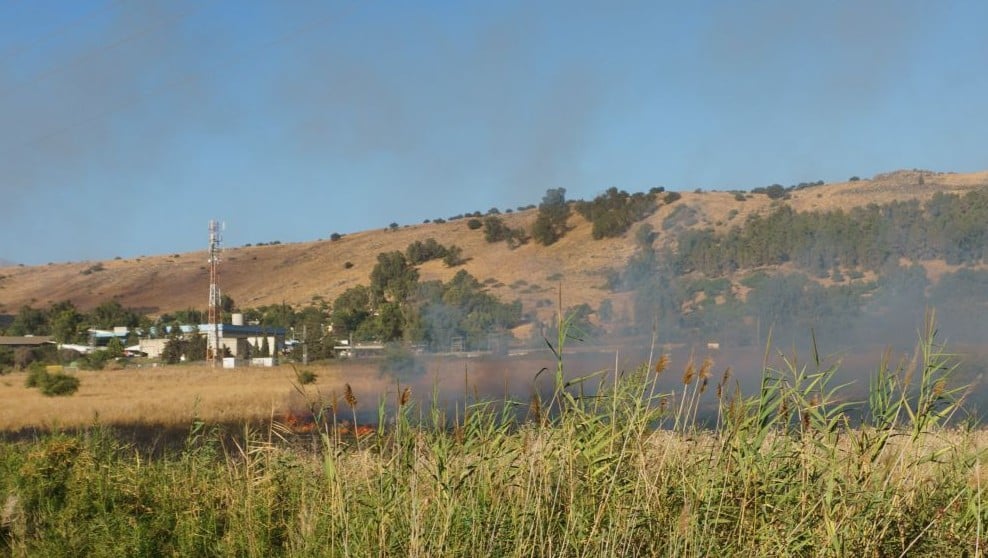
Israel’s attack in Syria overnight Thursday was the largest of its kind since the Yom Kippur War in 1973.
No fewer than 14 targets were struck by Israeli Air Force jets, attacks in which Syrian Army soldiers – their real number as yet unknown – were killed. The Syrian regime acknowledged the death of only one soldier, but the number is probably higher.
The air raids came in response to rocket attacks on northern Israel on Thursday afternoon, apparently launched at the behest of the Iranian Revolutionary Guard Corps by a local contractor in the Syrian Golan Heights.
In this case, according to Military Intelligence, the contractor — Islamic Jihad –was Palestinian. That is to say: The Iranians, closely watching the anti-Israeli activity on the Syrian side of the border, occasionally change their “laborers.” One time they may be men from the organization of Samir Kuntar, a Druze terrorist released from an Israeli prison in 2008 after serving 29 years, and another time they may be Islamic Jihad men, who mainly operate in the refugee camps around Damascus but were apparently transported to the Golan Heights in this case to irritate Israel from across the border.
Israel is facing a danger of violence spiraling out of control. On Friday morning, the IDF targeted and killed at least five men it said were members of the cell that fired the rockets on Thursday. Syrian media claimed they were civilians.
These incidents do not necessarily mean a war is on the horizon but they do show how fragile and dangerous reality on the northern border has become. Such instability is beneficial for one regional player — Iran.
For Bashar Assad, Syria’s president by title but a puppet of Tehran and Hezbollah in every other aspect, this is not good news.
Assad must accept the fact that the Iranians can do as they will on his turf. He is no longer the boss and his control of what’s not in the hands of Islamic State is dependent on Iran’s goodwill.
This is not only Assad’s problem but also Israel’s. What Iran is effectively trying to achieve is to draw Israel into a ground incursion deep inside Syrian territory.
All the various Islamist groups currently fighting one another will rush to point their guns at Israel if the IDF were to actually invade Syria. Thus one can assume that attacks such as the rocket fire Israelis witnessed on Thursday will not subside any time soon. It may come to an end only if or when Assad feels his grasp on the Golan Heights is so weakened that he might lose control there.
Israel was one of the key players in halting the Syrian opposition’s offensive in the Golan Heights last spring. When fighters from the al-Nusra Front were closing in on Hader, a Druze town considered Assad’s last stronghold in the Syrian Golan Heights, the outcry by the Druze in Israel prompted Israel to intervene on behalf of the Druze community and the assault on Hader ended.
In short: Israel helped preserve the Golan Heights status quo which now enables Iran to act against Israel’s national interests. But how many more rocket salvoes will that status quo survive?






The Times of Israel Community.