

Hamas and Israel amped up violence, but flareup stuck to a well-worn script
Both sides intensified their attacks in this weekend’s bloody battle, but ultimately kept to the same strategy, ending up more or less back where they started

 Add ToI as a Preferred Source on Google
Judah Ari Gross is The Times of Israel's religions and Diaspora affairs correspondent.
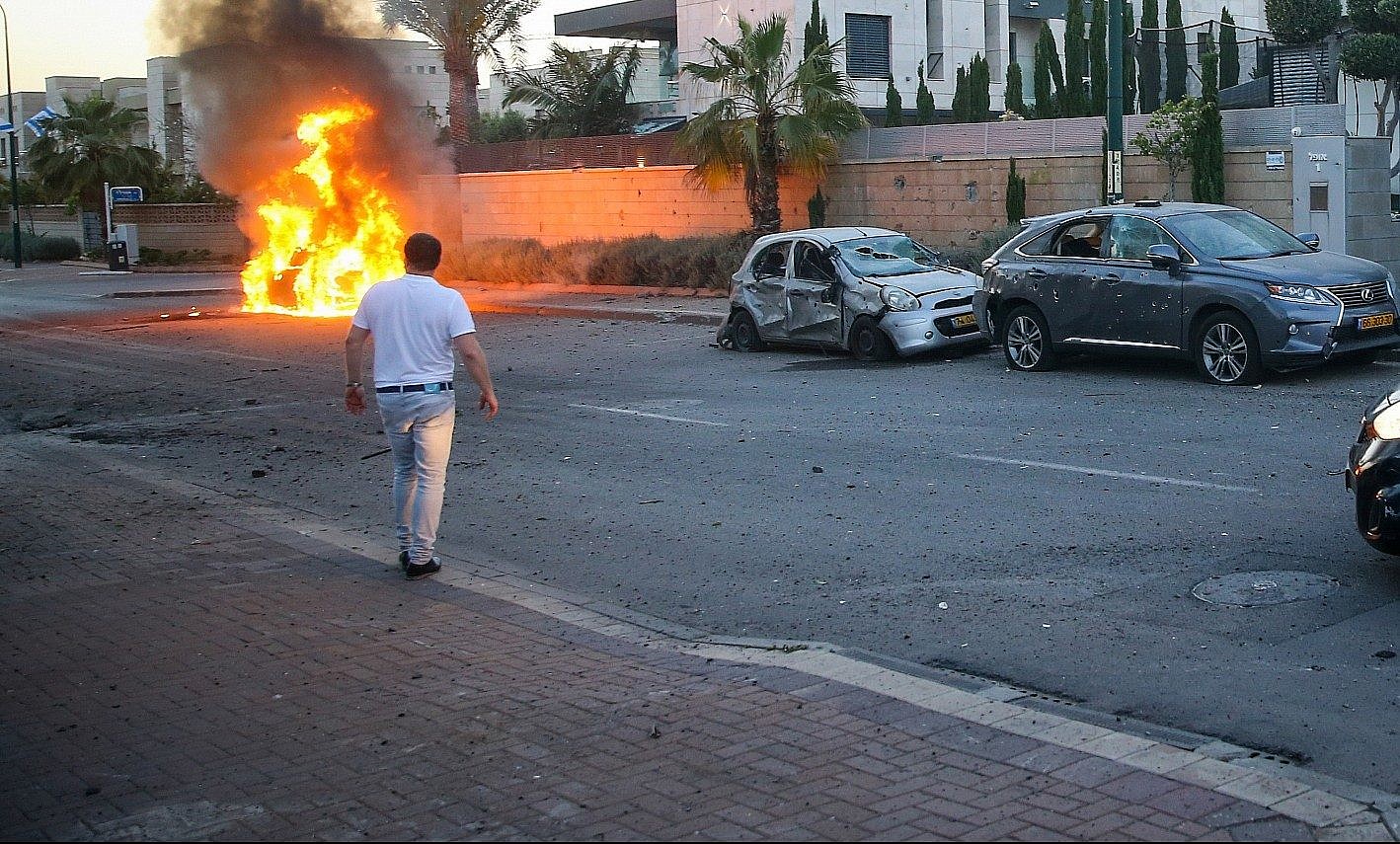
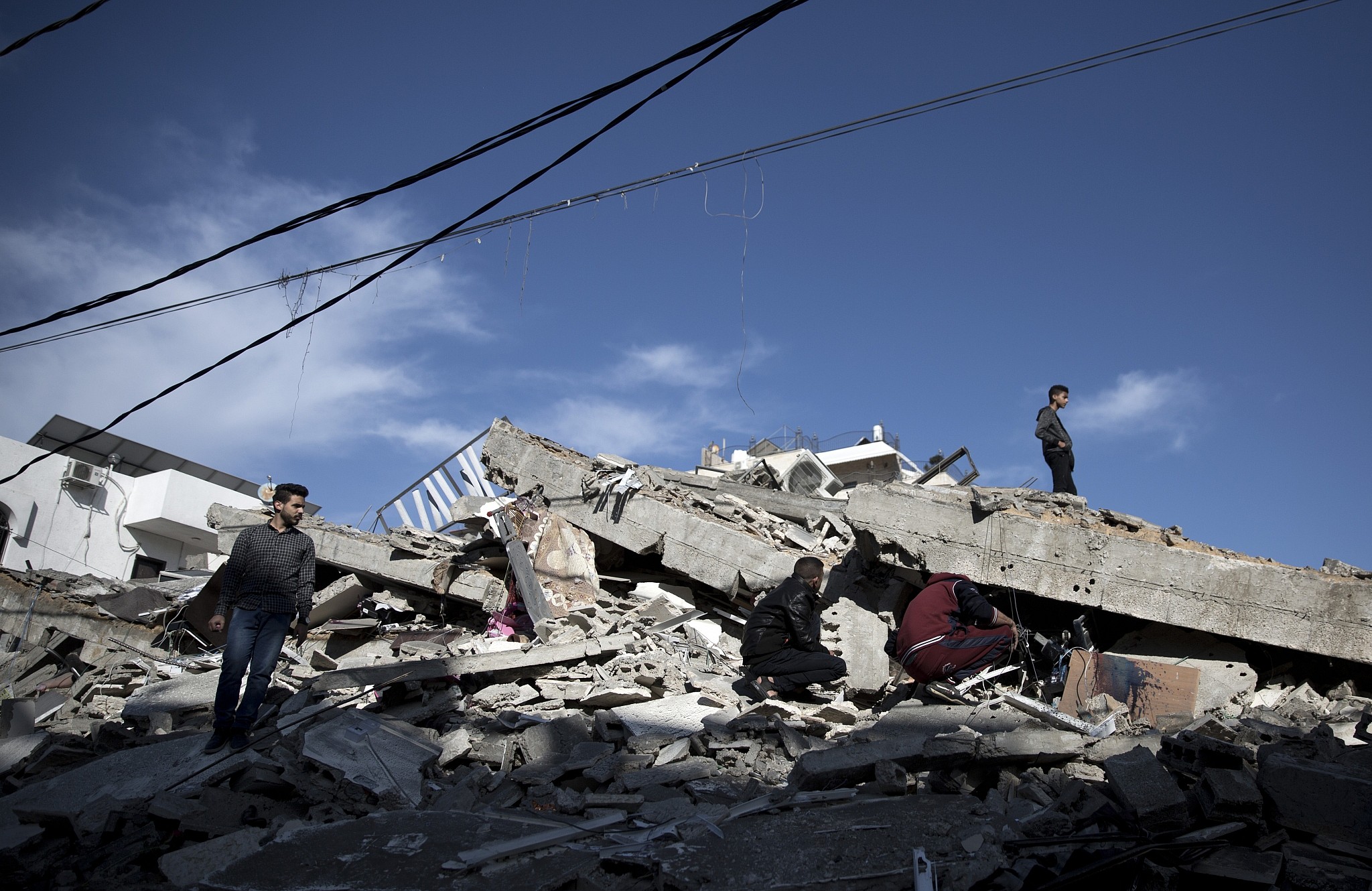
With four Israeli civilians killed and dozens injured, the past two days saw some of the fiercest fighting between the Israel Defense Forces and terror groups in the Gaza Strip since the 2014 war — far fiercer than the war, even, by some metrics. Yet, for all its ferocity and all the blood that was shed, the battle resulted in no significant changes on the ground.
The Hamas terror group, sworn to the destruction of the State of Israel, remains in power in the Gaza Strip with a still well-stocked arsenal, despite having fired hundreds of rocket and mortar shells at Israel, and despite the IDF’s strikes on its weapons caches over Saturday and Sunday.
Israel and Egypt maintain their blockade of the beleaguered coastal enclave, believing that to remove it would allow advanced weaponry and munitions to pour into the hands of terrorists.
For now, Israel, it seems, can keep its citizens out of bomb shelters for the upcoming Memorial Day commemorations and Independence Day celebrations. Prime Minister Benjamin Netanyahu can get back to trying to build a governing coalition.
The Eurovision Song Contest can proceed as planned in Tel Aviv next week. (While a music competition may seem a trivial matter, an inability to safely hold such an international event in Israel’s most populous city would have been a grave signal to the rest of the world about the Jewish state’s stability.)
As many commentators noted throughout Saturday and Sunday, the “script” of the fighting was well-known, if more intense than usual, being nearly identical to the bouts between Israel and Gaza terror groups in May, June, July, August, October, November and March:
- Amid high tensions, an act of violence triggers an initial exchange of fire between the two sides. Often it is a Palestinian attack on the border — though in November it was a failed Israeli special forces raid inside Gaza — followed by Israeli retaliatory strikes on military targets in Gaza.
- Terror groups in the Strip respond with rocket and mortar fire at the Israeli home front, leading to more raids by the Israeli Air Force. This back-and-forth continues for several hours until reports emerge that Egypt and the United Nations appear close to negotiating a ceasefire between the two sides.
- The two sides trade more blows as the reported truce comes into effect, followed by a few smaller shots in the hour or so afterward in an apparent bid to get in the final word. Israel, as is its wont, refuses to acknowledge the clearly evident ceasefire so as to avoid publicly admitting to negotiating with terrorist groups.
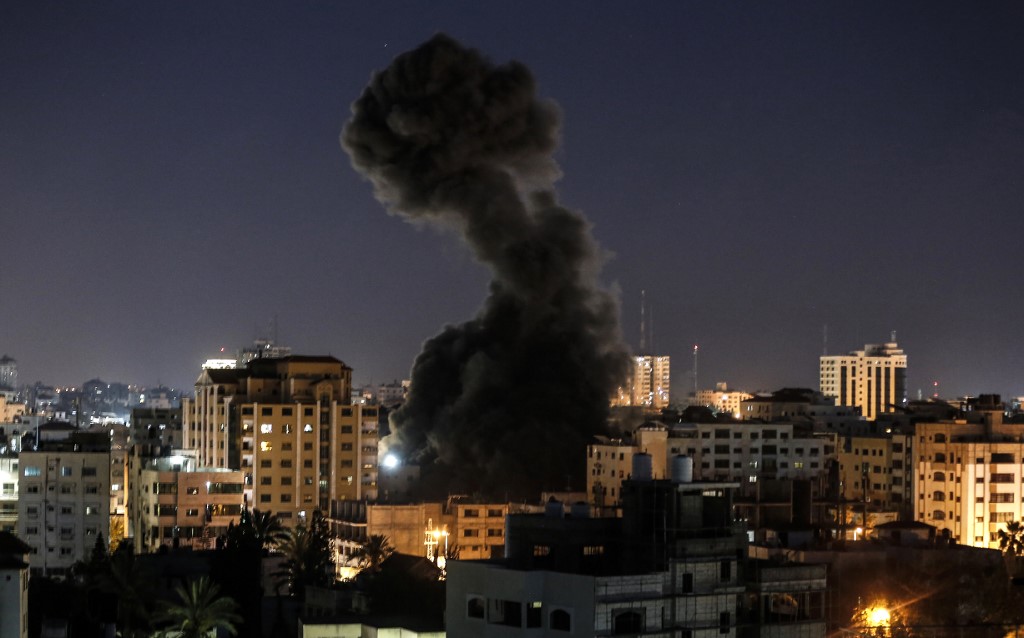
In this week’s case, the fighting was sparked by a sniper attack by the Palestinian Islamic Jihad terror group that injured two IDF soldiers on Friday evening, leading to an Israeli tank shelling a manned Hamas observation post.
While ultimately similar to the types of fighting seen in the past year, both the IDF and terror groups in the Strip were far more aggressive than in previous rounds.
Hamas and its partner Islamic Jihad launched over 700 rockets and mortar shells at southern and central Israel over the course of two days — the largest-ever number of projectiles fired from the Strip in a 48-hour period.
While most of these were launched toward southern Israel, several volleys targeted the farther away and more populous cities of Ashdod, Yavne and Rehovot, forcing hundreds of thousands of Israelis into bomb shelters.
Both Hamas and Islamic Jihad boasted of using new and more advanced rockets, with greater ranges and more explosive payloads, in these attacks.
The terror groups also repeatedly fired massive fusillades at specific targets in apparent efforts to overwhelm the Iron Dome missile defense system. The Israeli military is still investigating the efficacy of its air defense batteries, but based on initial assessments said they worked well against this new challenge, with an 86 percent success rate, which is on par with its past performances.
Still, this was not enough to prevent the deaths of three Israeli men in rocket attacks.
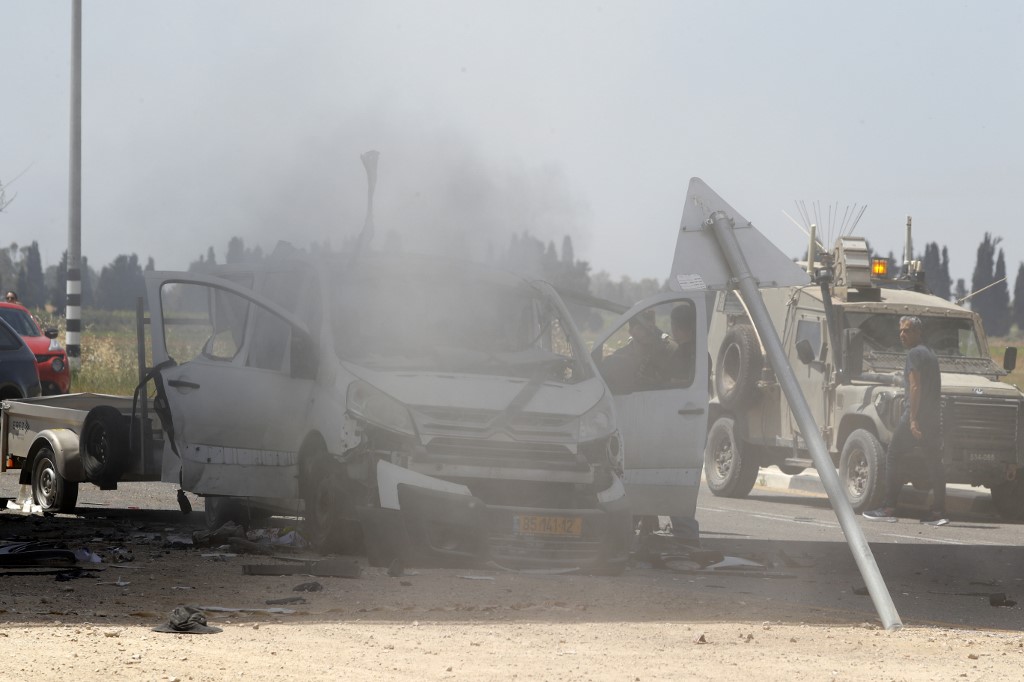
In addition, a Hamas team fired a Kornet anti-tank guided missile at an Israeli man’s car just north of the Gaza border, killing him. While such attacks are not unheard of, the high cost of such a missile generally means that terror groups use them against higher profile military targets, rather than civilians.
Though less deadly than its aforementioned efforts, the IDF also said Hamas attempted to conduct a cyberattack during the fighting, making this one of the first times Israel has simultaneously faced a physical and digital offensive from the same source. The military said the cyberattack was easily defeated and then the air force bombed Hamas’s cyber unit headquarters for good measure.
“Hamas no longer has cyber capabilities after our strike,” IDF spokesperson Ronen Manelis told reporters.
Meanwhile, the Israeli military showed a far greater readiness to strike not only terrorist infrastructure — as it has mostly bombed in previous bouts — but also terrorist operatives.
Though it remained largely restrained, dedicating most of its attacks to Hamas and Islamic Jihad tunnels, bases and weapons, the higher death toll of Palestinian terrorists clearly shows the IDF’s more aggressive tactics in this round.
“We attacked cells that were launching rockets, cells that were preparing to launch anti-tank guided missiles, cells that were preparing to snipe our troops. The number of operatives killed in the Gaza Strip will increase,” the head of the IDF Southern Command, Maj. Gen. Herzi Halevi, said in a filmed statement.
According to the Hamas-run Gaza health ministry, 31 Palestinians were killed in the Israeli strikes, at least 11 of them terrorists.
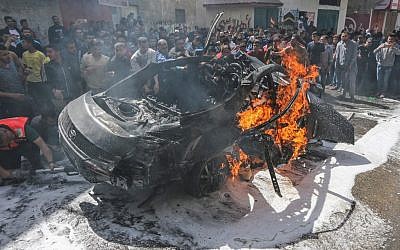
In addition, for the first time in some five years, the Israeli military carried out a targeted killing on a terrorist operative in the Gaza Strip, bombing the car of a money-changer, Hamed al-Khudari, who the IDF said funneled large amounts of cash from Iran to terror groups in the coastal enclave.
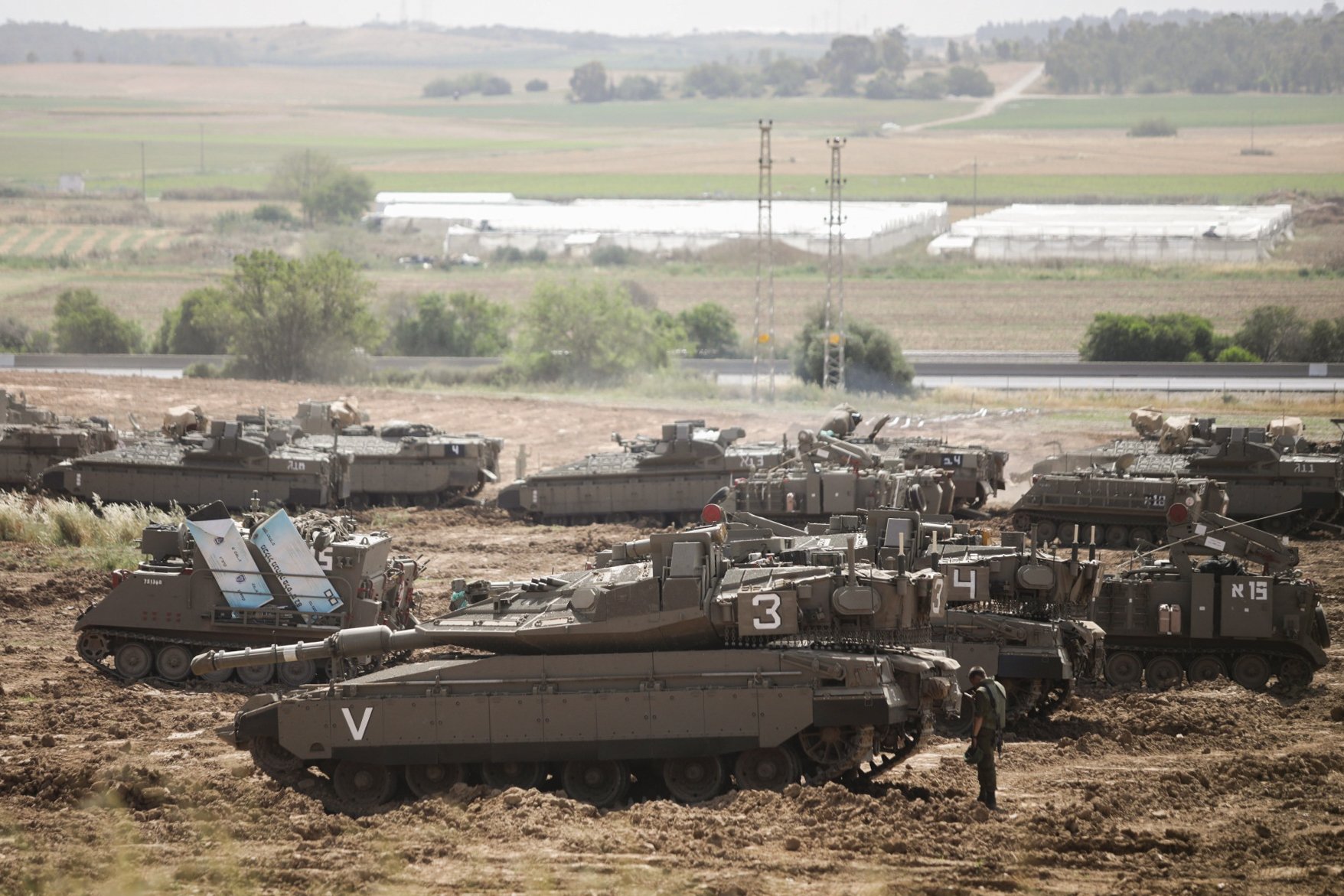
Throughout the fighting, the Israeli military was also far more overt in its threats to launch a ground war in Gaza.
“We have held many exercises. The troops are in a good state of preparedness and are well-versed in the plans. We are putting together a fighting force that, depending on how things develop, can carry out different actions that will intensify the strikes on Hamas and the Islamic Jihad in Gaza,” Halevi said.
For now, a full-scale war between Israel and terror groups in Gaza appears to have been averted. But that could change.
The underlying issues appear no closer to being resolved. Hamas remains bent on extracting concessions out of Israel by force, and Jerusalem is equally determined to not give in to the terror group’s demands.
Once the new government in Jerusalem is formed, the Independence Day barbecues are extinguished and a new Eurovision winner is chosen, Israel and Hamas may be right back to running through the same deadly script again.






The Times of Israel Community.