

Israel bombs 2 IRGC-linked steel plants, 2 nuclear facilities as Iran vows revenge
Israeli security source says damage to steel plants partially owned by IRGC expected to cost billions, ‘paralyze’ industry; IDF: separate strikes hit Yazd yellowcake facility, Arak heavy water reactor
 Add ToI as a Preferred Source on Google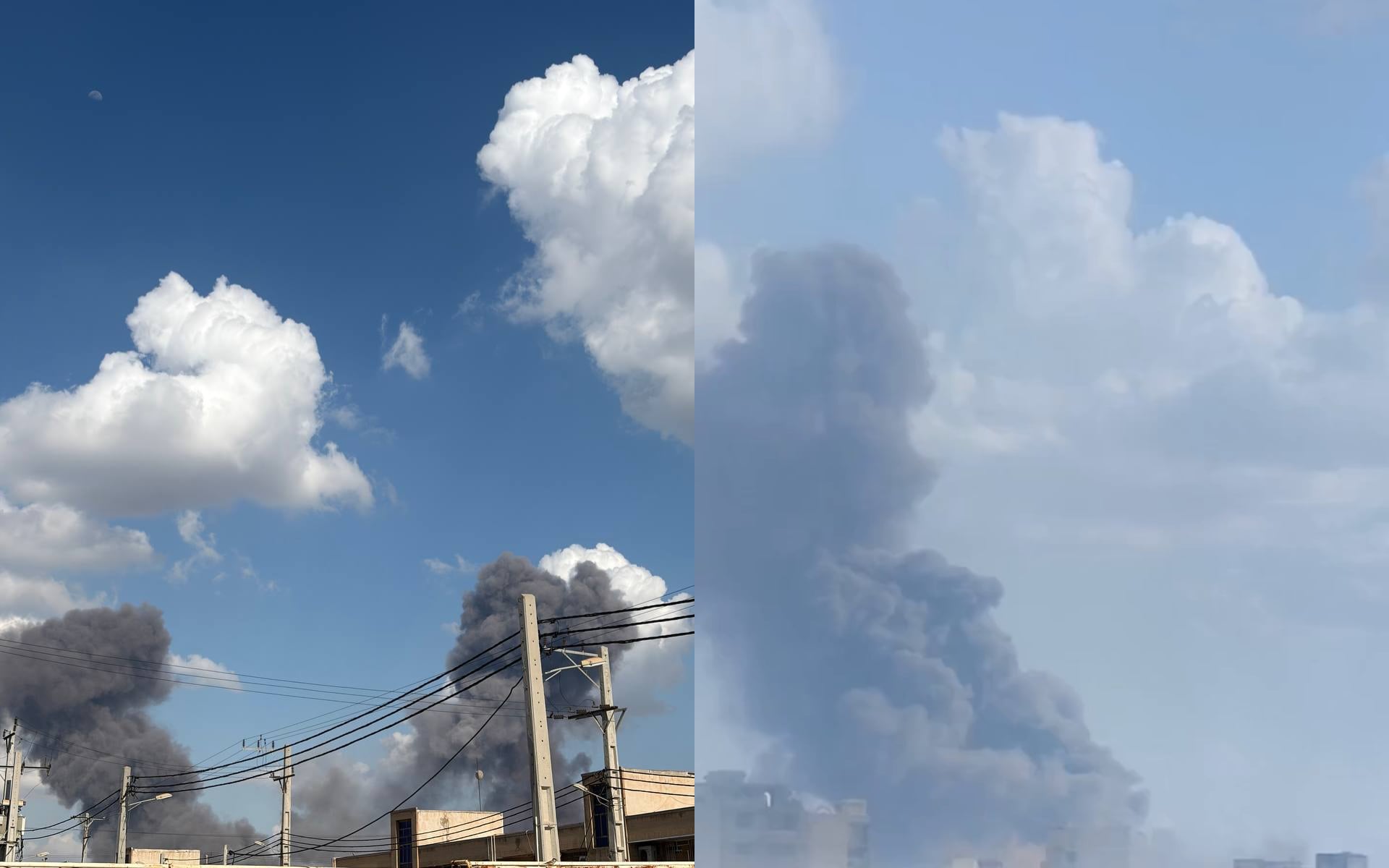
The Israeli Air Force on Friday bombed two of Iran’s largest steel factories, according to Iranian media and Israeli security sources, as well as two facilities linked to Iran’s nuclear program, in moves that sparked vows of retaliation from Tehran.
The Fars news agency reported that Israeli strikes hit Khuzestan Steel near Ahvaz and Mobarakeh Steel in Isfahan, two major production facilities.
The strikes on the plants, which an Israeli security source briefing reporters said were partially owned by the Islamic Revolutionary Guard Corps, were expected to cause billions of dollars in damage to the Iranian economy, as well as “paralyze” Iran’s steel industry.
It marked the first apparent instance of Israel targeting Iranian industrial facilities not directly linked to its defense or oil and gas industries. US President Donald Trump indicated earlier this week that energy sites would not be hit for the time being, as Washington has sought to avoid turning Iran into a failed state, while Jerusalem has indicated such a result is still preferable to the current regime’s continued rule.
An Israeli security source told reporters that Prime Minister Benjamin Netanyahu and Defense Minister Israel Katz ordered the Friday strikes, with the latter publicly vowing separately that Israel would intensify its strikes against Iran.
For its part, the IDF did not issue a statement confirming the targeting of the steel plants.
عکس دریافتی با شرح: #اهواز، صنایع فولاد'
بنا بر پیامهای سایر شهروندان: حدود ساعت ۱۵:۴۵ جمعه ۷ فروردین#Iran https://t.co/0LZDlfjrdb pic.twitter.com/4GocaVwC0Y— Vahid Online (@Vahid) March 27, 2026
The strikes sparked a sharp rebuke from Iran, with Iran’s Foreign Minister Abbas Araghchi also vowing that Tehran would exact a “HEAVY price.”
“Israel has hit two of Iran’s largest steel factories, a power plant and civilian nuclear sites among other infrastructure. Israel claims it acted in coordination with the US,” Araghchi said in a social media post.
The IRGC also vowed to target industrial sites in Israel and in the Gulf states in response, warning employees of the region’s industrial sites “that have American shareholders as well as heavy industries allied with the Zionist regime… to leave their workplaces immediately” as they vowed to carry out retaliatory attacks.
Iran published a list of Steel manufacturing facilities in Israel (Yehuda Steel), Saudi Arabia (Hadeed), UAE (Emirates Steel Arkan), Kuwait (KWT Steel), Qatar (Qatar Steel) and Bahrain (Foulath) as their new target list in retaliation to air strikes to Iranian Steel factories in… pic.twitter.com/7QkI5Gf1Ox
— Mehdi H. (@mhmiranusa) March 27, 2026
Yellowcake and heavy water
Also on Friday, the Israeli Air Force bombed two Iranian nuclear sites, with the military saying the strikes targeted a yellowcake production plant near the central Iranian city of Yazd and a heavy water reactor in Arak.
The IDF described the Yazd site as a “uranium extraction facility,” and said it was the “only one of its kind in Iran.”
“This facility is the only one of its kind in Iran, where raw materials mined from the ground undergo mechanical and chemical processing so that they can later be used as precursor materials for uranium enrichment,” the military said, adding that it is a “highly important process for the nuclear weapons program advanced by the regime.”
The strikes hit the “central infrastructure used in the site’s unique production processes,” the military said.
Iranian media reported earlier that the yellowcake production plant was hit in strikes, and the Fars news agency cited the Atomic Energy Organization of Iran as saying that the strike on the plant “has not resulted in any release of radioactive materials outside the facility, and therefore, there is no concern for citizens or surrounding areas.”
Yellowcake is a uranium concentrate in powder form and an early step in uranium processing. It is produced by mining uranium ore from rocks and separating the uranium from the rocks by bathing them in acid. The yellowcake can then be converted, enriched to raise its purity, and then used for weapons or energy production.
The IDF also bombed a heavy water reactor in the city of Arak, saying it targeted the “key infrastructure for producing plutonium for nuclear weapons” after Iran worked to restore the site.
جمعه ۷ فروردین ساعت ۱۷:۵۰
حمله به نیروگاه خنداب
تقریبا ده بار زد
از نیروگاه داره دود سیاه میاد
یه چیزی زد که داره میسوزه pic.twitter.com/SzdpXVNe9G— مملکته (@mamlekate) March 27, 2026
The Israeli Air Force had bombed the partially built complex, officially known as the Khondab Heavy Water Research Reactor, in central Iran during the June 2025 war.
“Repeated reconstruction attempts by the Iranian terror regime at the site were later identified. Therefore, the IDF has struck the facility once again,” the military said.
The IDF had issued a warning ahead of Friday’s strike on the Arak reactor and urged residents in nearby areas to flee, and the Fars news agency reported that the strikes “did not result in any human casualties, and due to prior safety measures, there is no danger threatening the local people.”
The Arak site was originally designed in a way that would make it capable of easily producing plutonium, which could be used to produce nuclear arms.
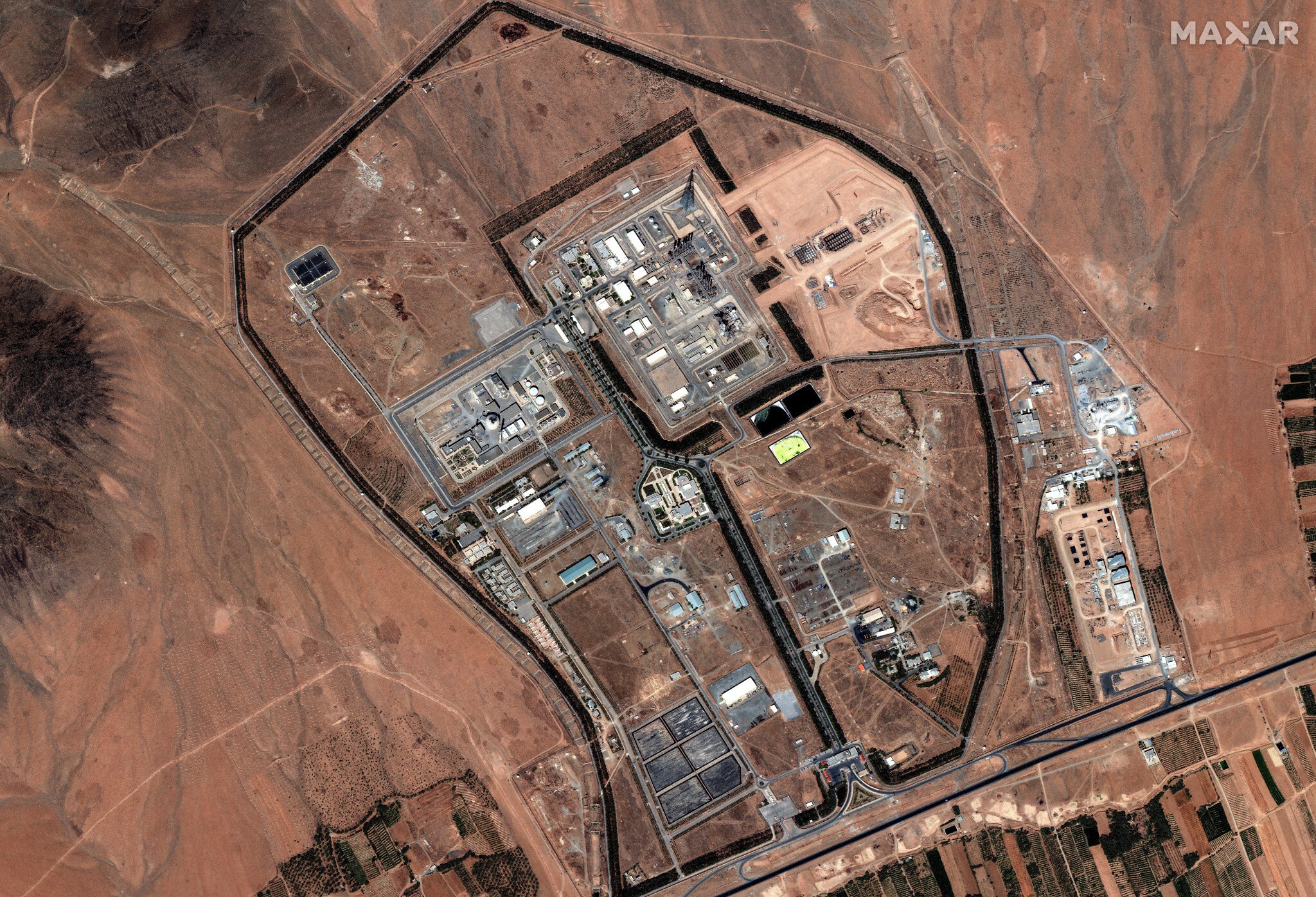
Under the 2015 agreement on Iran’s nuclear program, the heavy water plant was redesigned to reduce the nuclear weaponization risk, and its core was removed and filled with concrete.
The IDF said in a statement that even in its current state the heavy water “can also be used as a neutron source for nuclear weapons” and that “despite explicit international commitments, foremost among them the nuclear agreement, the Iranian terror regime has systematically avoided converting the reactor so that it would not enable the production of weapons-grade plutonium, and even deliberately ordered that the conversion not be completed.”
The IDF said the plant was also a “significant economic asset for the terror regime and served as a source of income for the Iranian Atomic Energy Organization, generating tens of millions of dollars for the regime each year.”
Following Friday’s strikes in Arak, the International Atomic Energy Agency reported that there was “no radiation risk seen as installation contains no declared nuclear material.” The IAEA added that there was no off-site radiation release from the Khuzestan steel production factory, which uses radioactive sources.
Iran continues firing missiles at Israel
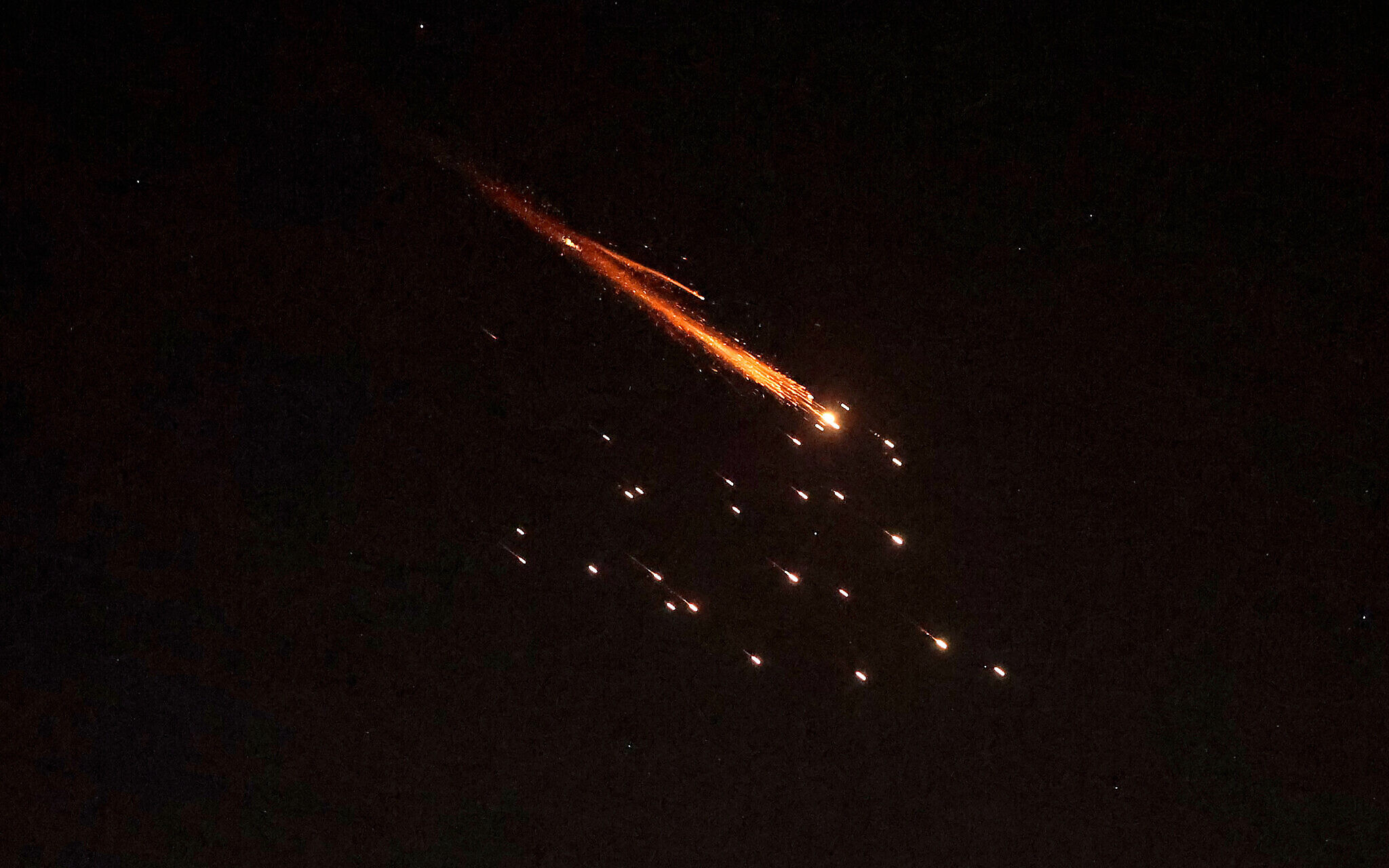
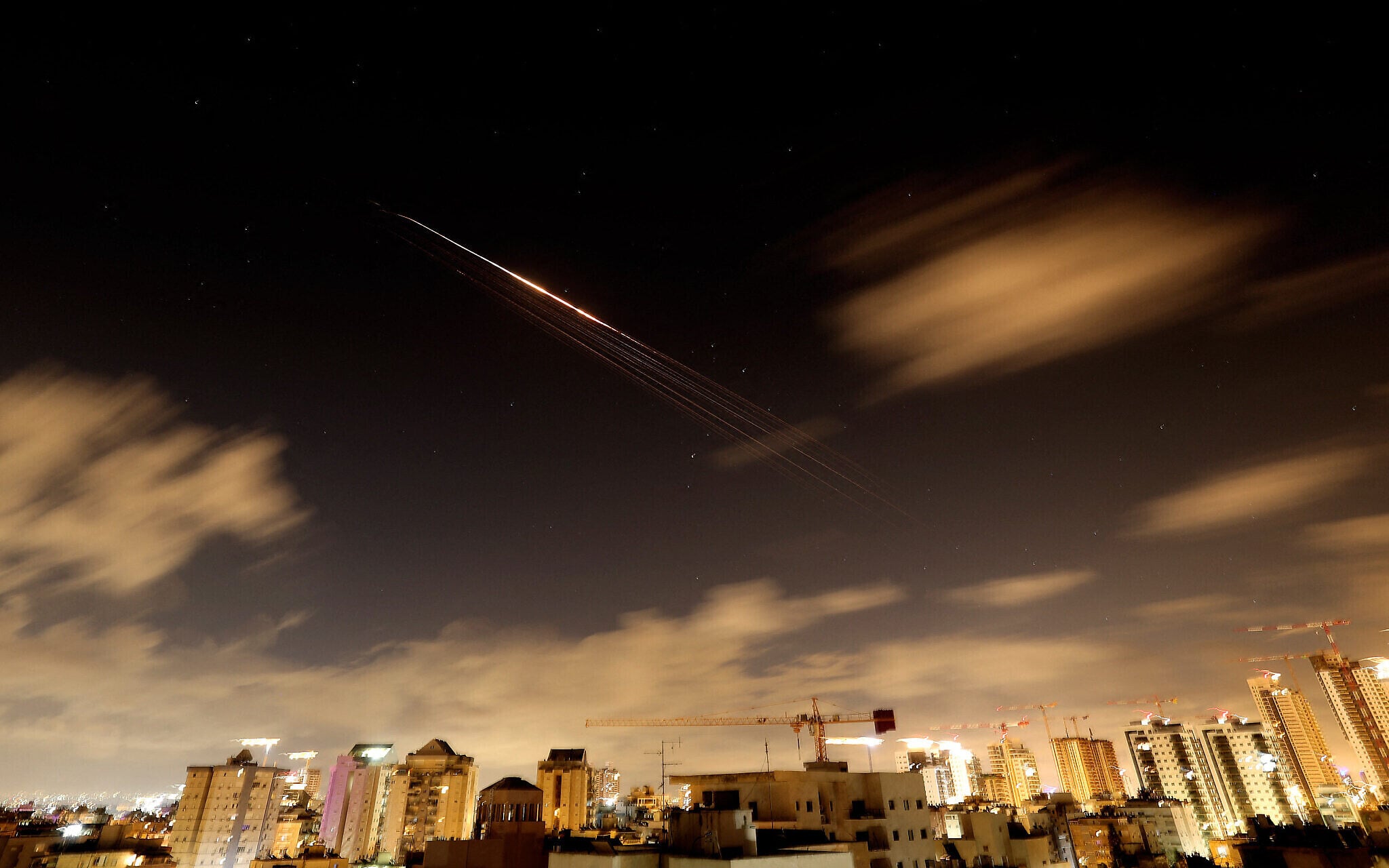
Meanwhile, Iran continued its daily ballistic missile fire at Israel, including several carrying cluster bomb warheads, in five salvos since midnight Thursday.
The missile fire triggered sirens in both southern and central Israel throughout the day.
Several missiles fired at the south were intercepted by air defenses, according to the IDF. One missile fired at the center apparently carried a cluster bomb warhead, which spread bomblets over a wide area — damaging a hotel — while one missile hit an open area.
No injuries were reported.
According to a tally on Channel 12 Friday, a total of 78,109 sirens warning of missile, rocket and drone attacks from Iran and Hezbollah have sounded across Israel since the start of the war with Iran nearly a month ago on February 28.
Kiryat Shmona, the embattled city close to the Lebanese border, has had the most warning sirens, with 154. The city has been attacked frequently by Hezbollah both during the current fighting and in Israel’s previous conflict with the Iran-backed Lebanese terror group, from 2023-2024
The second-most sirens, 146, have sounded in the northern border town of Misgav Am, the Tel Aviv-area Ariel Sharon Park and eastern Ramat Gan in central Israel, the network says. And 145 have sounded in the central city of Holon and its surrounding area.
By contrast, several locations in the south, including the town of Mitzpe Ramon, have had only one siren during the war.
The most common time for sirens to sound is at 10 a.m., the report says, with 7,122 sirens going off at that time. But one hour earlier, at 9 a.m., only 1,404 sirens had sounded.
Missile launches from Iran typically come with early warnings, giving residents a few minutes to head to shelters. Sirens warning of salvos from Hezbollah, by contrast, give residents a matter of seconds to head to shelter.
More than 450 ballistic missiles have been launched from Iran at Israel since the start of the war, with the military reporting an interception rate of 92 percent of attacks heading for populated areas and key infrastructure.
In all, nine missiles carrying conventional warheads with hundreds of kilograms of explosives have struck populated areas in Israel, causing extensive damage in at least six cases. There have also been more than 30 incidents of missiles carrying cluster bomb warheads hitting populated areas, with over 150 separate impact sites.
Since the war began, 15 Israeli civilians and foreign nationals have been killed in Israel in Iranian ballistic missile attacks, along with four Palestinians in the West Bank.









The Times of Israel Community.