

Jerusalem residents mourn Arab parkgoer killed in ramming, demand police action
Family of deceased say Fouad Alian was killed in nationalist murder, his ‘only crime’ was being Arab; custody of prime suspect in hit-and-run extended until Tuesday
 Add ToI as a Preferred Source on Google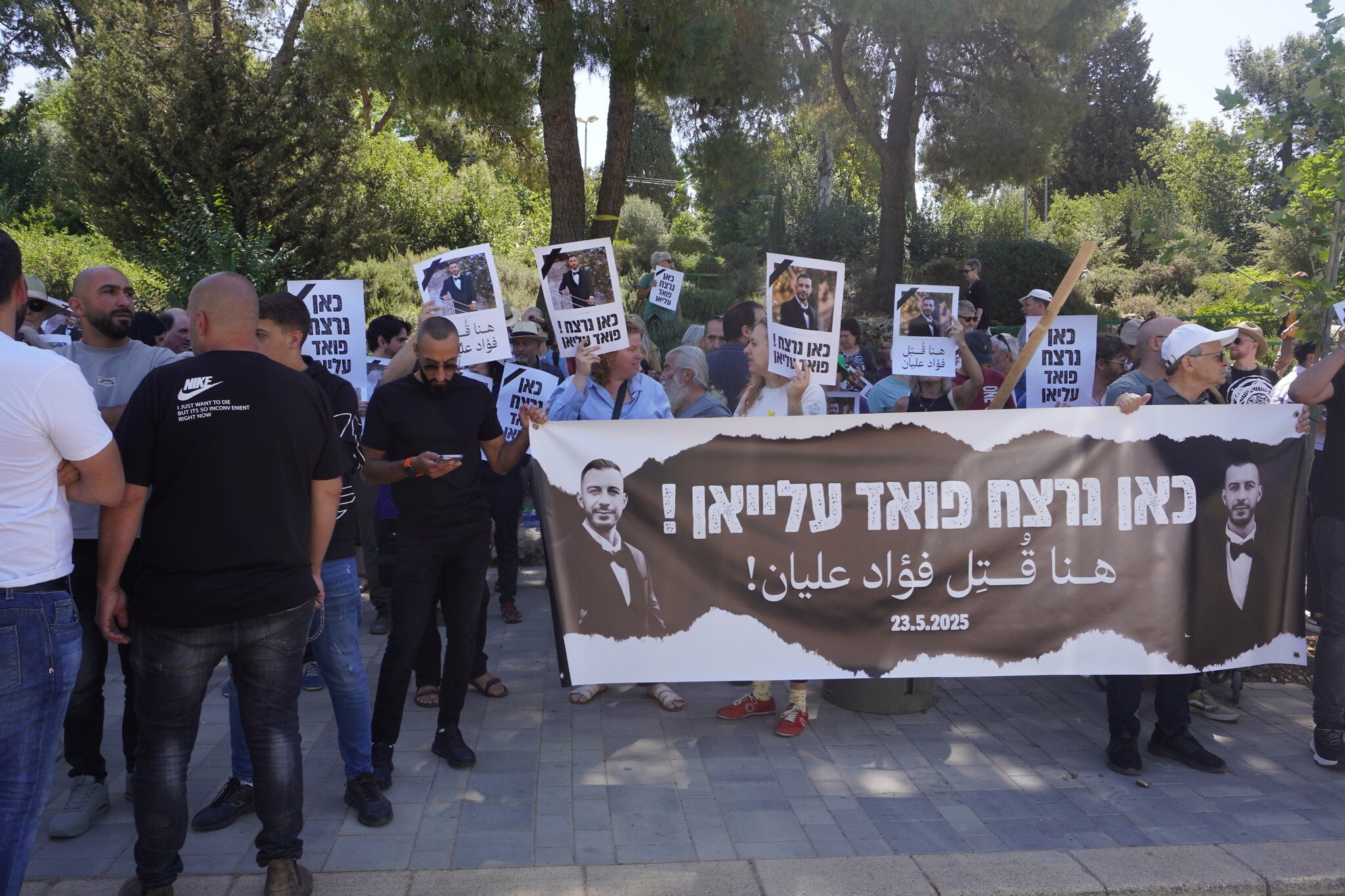
Several hundred people gathered near Jerusalem’s San Simon Park on Friday morning to mourn Fouad Alian, an Arab resident of Beit Safafa who was killed at the site in a hit-and-run incident a week ago, which his family calls a nationalist murder.
Distressed Jewish residents of the neighborhood, activists and Alian’s family stood quietly in the beating sun while holding signs that read “Fouad Alian was murdered here,” in Hebrew and Arabic.
The 32-year-old was killed last Thursday in a hit-and-run adjacent to the park by two young Jewish men, one armed with a knife, who chased Alian and his cousin Bara’a down in a car, said his family members.
Minutes prior, the men had threatened Alian and Bara’a as they sat smoking on a bench. They reportedly told them to get out of the West Jerusalem park because they were Arab.
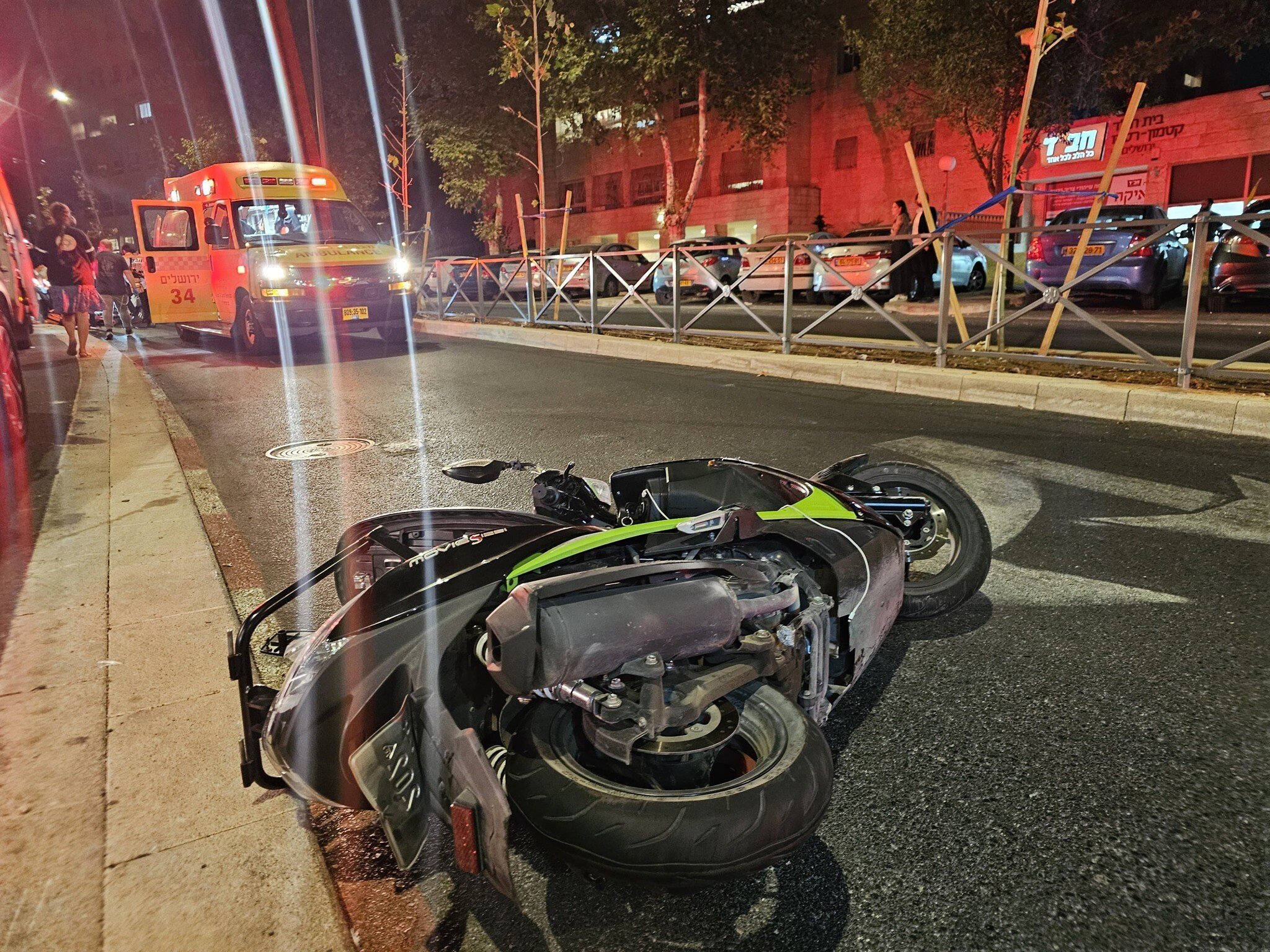
The situation then escalated. The two cousins climbed onto Fouad’s motorcycle near the park to escape the men, who drove after them in their car. The driver rammed into them at high speed, killing Fouad and injuring his cousin.
“It was murder, plain and simple,” said Nabil Alian, a close relative of the deceased, to the group gathered on the sidewalk. “The only crime he committed was being an Arab from Beit Safafa. He came here to sit in the park, and didn’t come home.”

The Jerusalem Magistrate’s Court earlier this week extended the detention of one of the suspects, the driver who rammed Alian. The other suspect, who had been in the passenger’s seat at the time, was released to house arrest.
The two assailants are being investigated on suspicion of premeditated murder and neglect after injury, causing serious injury or death.
Riyad, the father of the injured cousin, told The Times of Israel that the two men had harassed the cousins two days prior to Fouad’s killing as well.
When his son called the police, Riyad said, officers declined to deal with their tormentors and instead searched him and his cousin.
The father complained that law enforcement was still not dealing properly with the incident. According to him, police initially investigated the killing as a car accident, and then began to treat it as a criminal dispute unrelated to nationalist sentiments.
But after hearing his injured son’s version of events, Riyad said he was certain, alongside other Beit Safafa residents, that the culprits acted out of hatred against Arabs.
“If, God forbid, the inverse were to occur… they would close Beit Safafa, they would arrest half the neighborhood,” said Nabil Alian to the crowd.
City councilmember Laura Wharton also attended the event, and gave a brief speech expressing her hope that Fouad’s death would be “the last racist incident to take place in this city, and that we will be able to defeat violence.”
Many residents of Beit Safafa who came to the park that day expressed shock that someone from the neighborhood — a relatively peaceful neighborhood had been killed violently.
Muhammad Alian, Beit Safafa’s mukhtar (community leader), called the neighborhood a “special village in the city of Jerusalem” for its openness to Jewish residents.

“It is open to everyone, at night, during the day, all of the world passes through there peacefully,’ he said proudly. “But unfortunately, a young man from Beit Safafa comes to this place, and is murdered. Why? Because he is from Beit Safafa.”
Later in the day, after Friday prayers, a few dozen residents of Beit Safafa gathered outside Alian’s home along Park HaMesila, a well-trod walking and cycling path that runs through the southern Arab neighborhood.
Hadash-Ta’al MK Ahmad Tibi, a leading Arab lawmaker, gave a brief speech criticizing the police’s response to the incident.
Fouad “was killed by racist criminals in a deliberate car-ramming attack,” Tibi said, recounting the testimony of the surviving cousin. He promised residents his help in drawing attention to the case.






The Times of Israel Community.