

Lebanon says next phase of Hezbollah disarmament to take around 4 months
Minister says timeframe is extendable, depending on available capabilities, hindrances on the ground and attacks from Israel, which rejects that 1st phase has been fully completed
 Add ToI as a Preferred Source on Google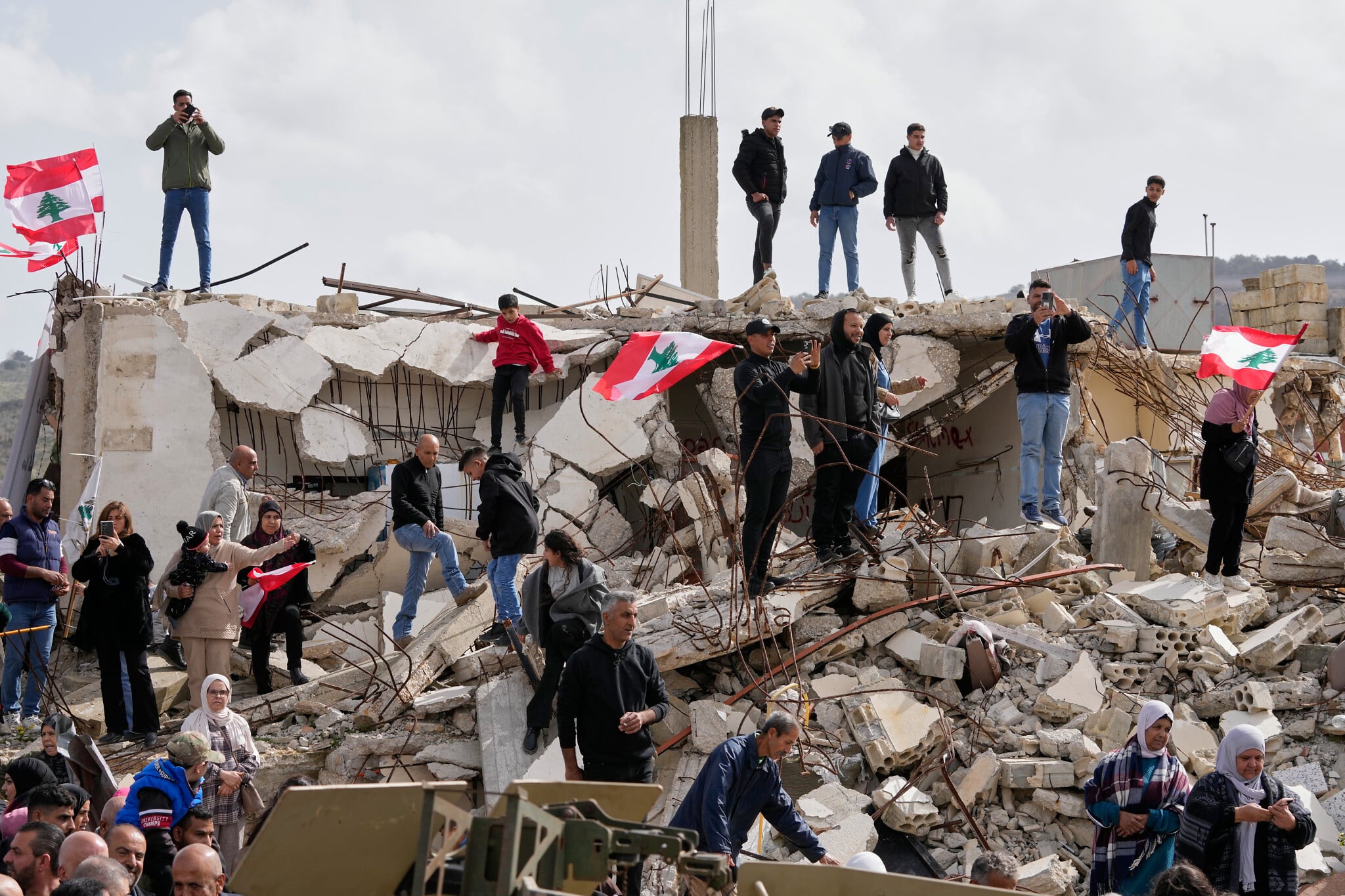
Lebanon’s government said Monday that the army would need at least four months to implement the second phase of the military’s plan to disarm the Hezbollah terror group.
Lebanon’s government last year committed to disarming Hezbollah, which was badly weakened in a recent war with Israel, and tasked the army with drawing up a plan to do so.
The military announced last month that it had completed the first phase of the plan, covering the area between the Litani River and the Israeli border, about 30 kilometers (20 miles) farther south.
The second phase concerns the area between the Litani and the Awali rivers, around 40 kilometers (25 miles) south of Beirut.
Information Minister Paul Morcos told a news conference after a cabinet session that the government “took note of the army leadership’s presentation” on the second stage of the plan.
“There is a timeframe of four months, extendable depending on available capabilities, Israeli attacks and hindrances on the ground,” he said.
Israel, which accuses Hezbollah of rearming, has criticized the army’s progress as insufficient, and has kept up regular strikes on Lebanon despite a November 2024 ceasefire that sought to end more than a year of hostilities with the Iran-backed group.
Israel has also kept troops in five south Lebanon areas it deems strategic, while Hezbollah has rejected calls to surrender its weapons north of the Litani.
Lebanon’s health ministry said Israeli strikes on Monday on the country’s south killed two people, while the Israeli army said it struck and killed a Hezbollah operative involved in restoring the terror group’s infrastructure in the southern Lebanon town of Tallouseh.
The IDF said the operative served “as a local representative of the Hezbollah terror organization in the village,” and was actively “engaged in attempts to restore military infrastructure.”
חיסול נוסף ב-12 שעות: צה"ל חיסל מחבל מארגון הטרור חיזבאללה שפעל לשיקום תשתיות בדרום לבנון
צה"ל תקף מוקדם יותר היום וחיסל מחבל שעסק בניסיון שיקום תשתיות צבאיות של ארגון הטרור חיזבאללה במרחב טלוסה שבדרום לבנון.
המחבל פעל כנציג מקומי של ארגון הטרור חיזבאללה במרחב כפר טלוסה שבדרום… pic.twitter.com/trwZmOSXya
— צבא ההגנה לישראל (@idfonline) February 16, 2026
As part of his role, he was responsible for liaising between the terror group and the residents of Tallouseh “on economic and military matters,” according to the military.
The IDF said the operative also “acted to seize private property for terror purposes.”
His actions were a violation of the November 2024 ceasefire between Israel and Lebanon, the military added, without commenting on the second individual killed in the strike.
Visiting German president urges Lebanon to keep up disarmament of Hezbollah
Visiting Beirut on Monday, German President Frank-Walter Steinmeier urged Lebanon to keep Hezbollah, saying it would help ensure the withdrawal of the IDF from Lebanese territory.
Steinmeier said his visit is about “the demand that both sides fulfill their obligations under the November 2024 ceasefire agreement and that the disarmament of Hezbollah here in Lebanon continues, thereby creating the conditions for the Israeli army to withdraw from southern Lebanon.”
“Both sides are obliged to fulfill the ceasefire agreement — I say this in Israel as well as in Lebanon,” he tells a press conference with his Lebanese counterpart Joseph Aoun, calling the deal “an opportunity.”
Aoun says Lebanon has asked Germany to “demand the Israeli side implement the ceasefire agreement and withdraw from the territories it occupies.”
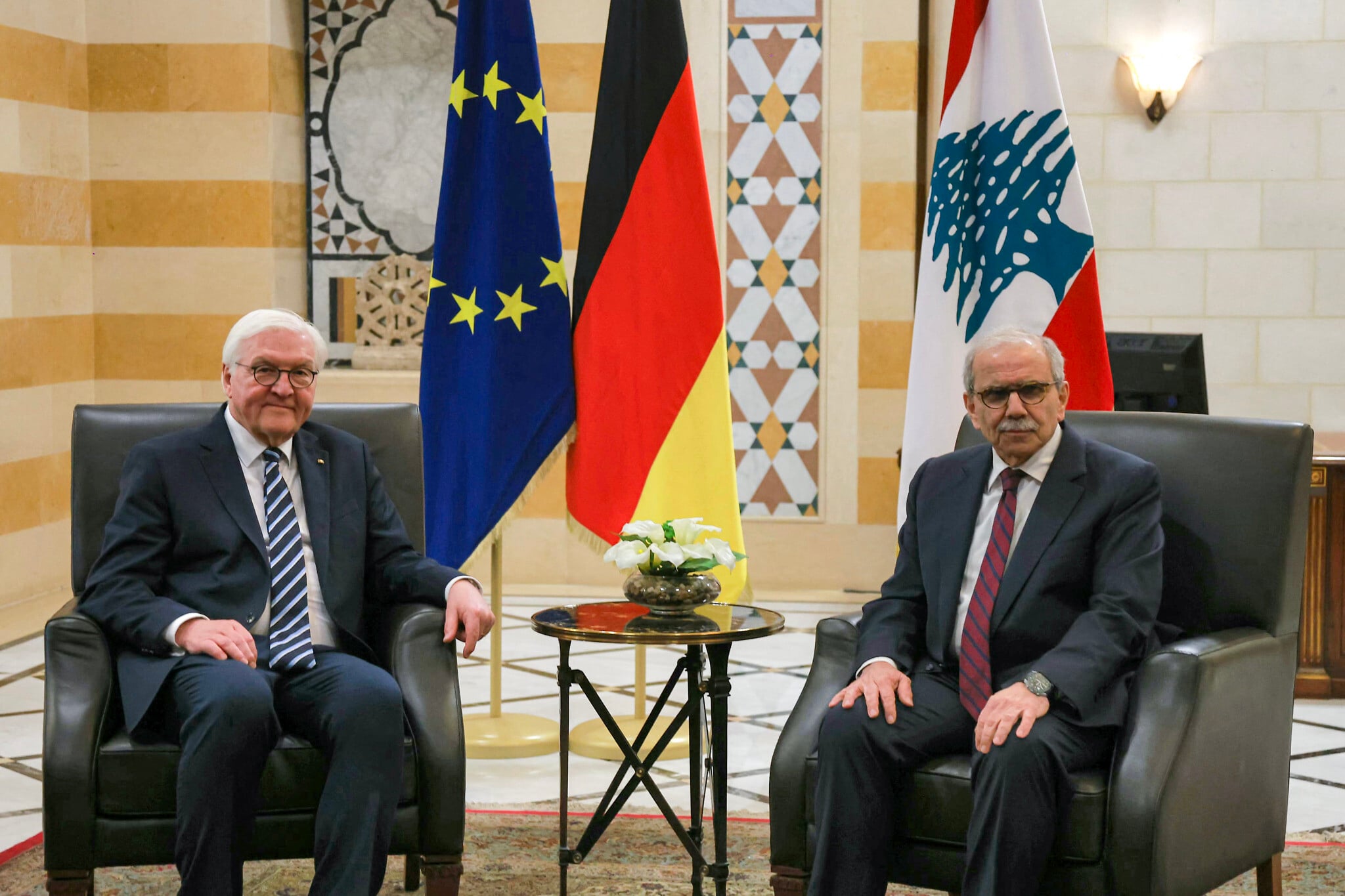
He also asked Germany to assist the Lebanese army and to play a “key role” after the departure of United Nations peacekeepers, whose mandate expires this year.
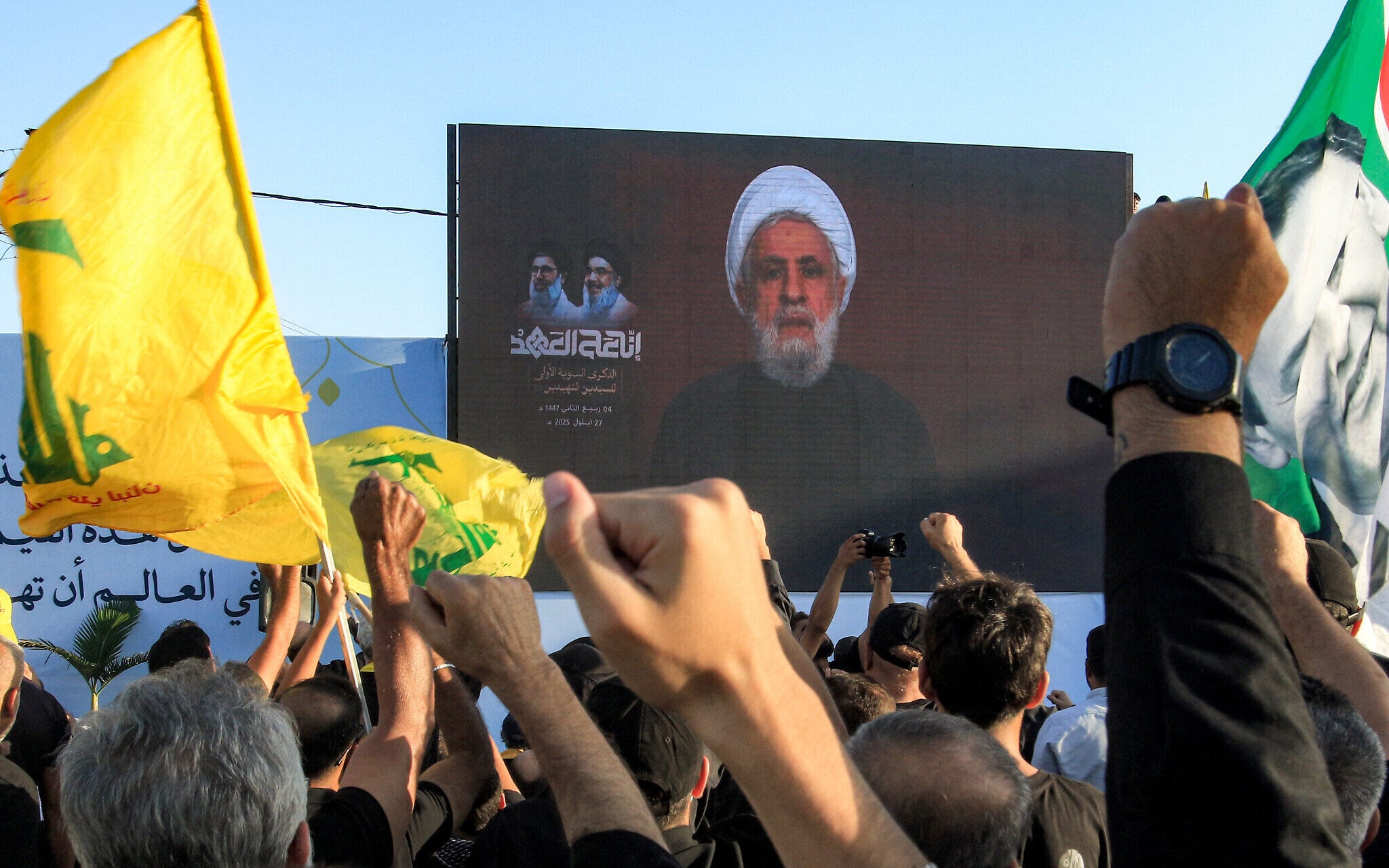
Also on Monday, before the cabinet session, Hezbollah chief Naim Qassem said that “what the Lebanese government is doing in focusing on disarmament is a grave sin, because this issue serves the goals of the Israeli aggression.”
“Stop all action to restrict weapons,” he added in a televised address, saying the government’s “successive concessions” were partly to blame for Israel’s persistent attacks.






The Times of Israel Community.