

 From the Liveblog of
Thursday, December 25, 2025
From the Liveblog of
Thursday, December 25, 2025
1,400-year-old gold coins found at Christian monastery in Judean Desert
 Add ToI as a Preferred Source on Google
Rossella Tercatin is The Times of Israel's archaeology and religions reporter.
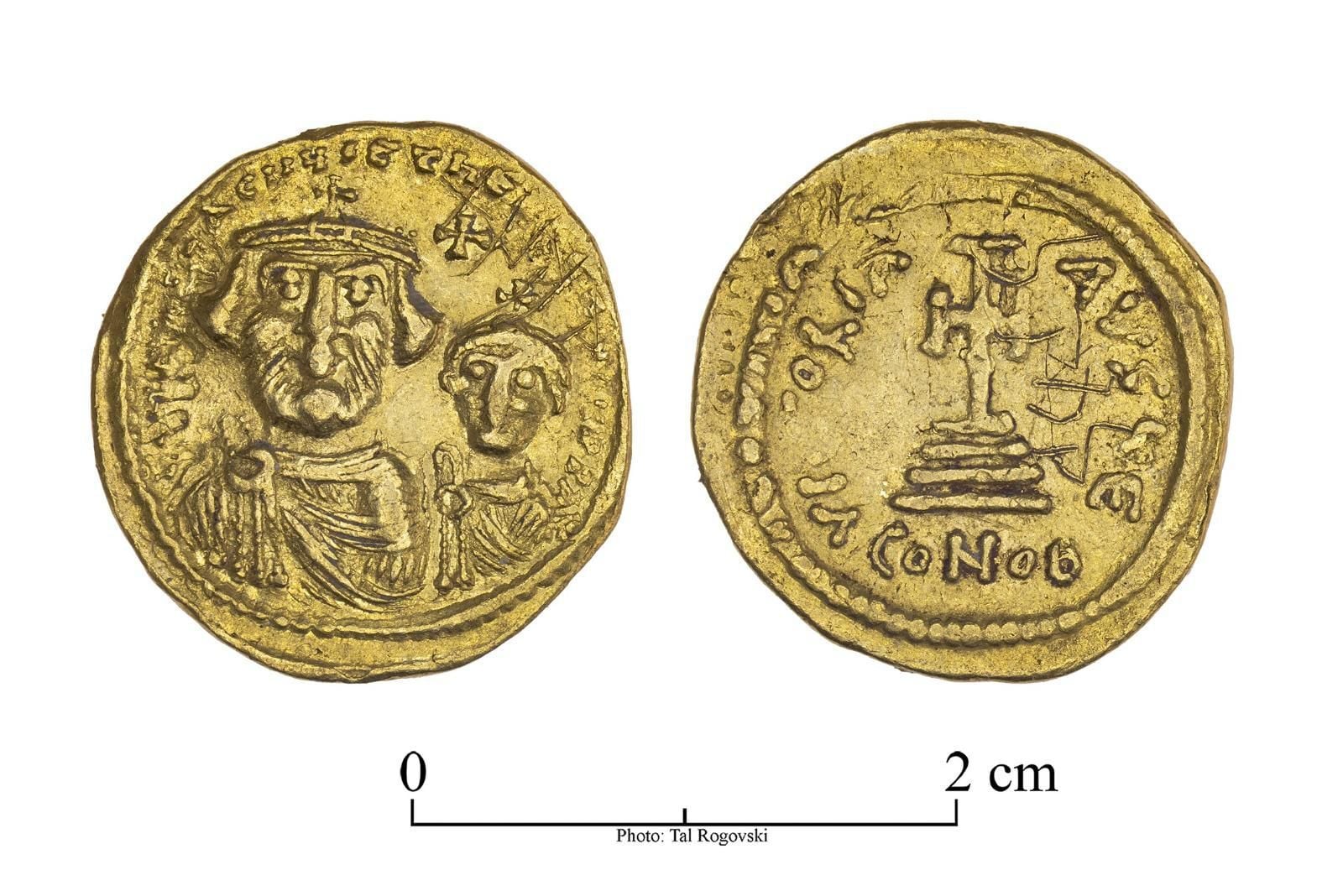
Two gold coins and a ring from the Byzantine period (4th-7th centuries CE) have been uncovered at the Hyrcania archaeological site in the Judean desert about 17 kilometers southeast of Jerusalem, in today’s West Bank, according to a statement by the Archaeology Unit at the Civil Administration, a branch of the Defense Ministry’s Coordinator for Government Affairs in the Territories (COGAT) unit that manages civilian affairs in the West Bank.
The coins feature crosses on one side and the portrait of Byzantine Emperor Heraclius, who reigned between 610 and 641 CE, on the other.
The discovery was announced yesterday, on Christmas Eve, but the statement did not specify when the artifacts were first discovered.
Hyrcania was initially built by Hasmonean rulers between the end of the 2nd and the beginning of the 1st centuries BCE, as one of several desert fortress palaces intended to guard the eastern border of Judaea. Destroyed by the Romans a few decades later, it was then rebuilt by Jewish-Roman King Herod the Great and abandoned after his death at the very end of the 1st century BCE.
In the 5th century CE, the site was resettled by Christian monks. In 492 CE, historical sources document that Holy Sabas, a leader of Judean Desert monasticism, ascended what he described as a “terrifying mountain” and established the monastery as a dependence of the Great Laura of Saint Sabas, a monastery overlooking the Kidron Valley that is still used to this day, currently affiliated with the Greek Orthodox Church.
The Hyrcania monastery fell into disuse in the late 8th or early 9th century CE.
The current excavation is led by the Archaeology Unit in cooperation with the Hebrew University of Jerusalem.
“The finds uncovered at Khirbet Hyrcania reflect an important chapter from the Byzantine period and the early Christian tradition in the region,” says Binyamin Har-Even, head of the Archaeology Unit at the Civil Administration.







The Times of Israel Community.