

 From the Liveblog of
Tuesday, June 2, 2026
From the Liveblog of
Tuesday, June 2, 2026
Israel begins seizing 320 dunams of West Bank land to develop Herodium archaeological site
 Add ToI as a Preferred Source on Google
Rossella Tercatin is The Times of Israel's archaeology and religions reporter.
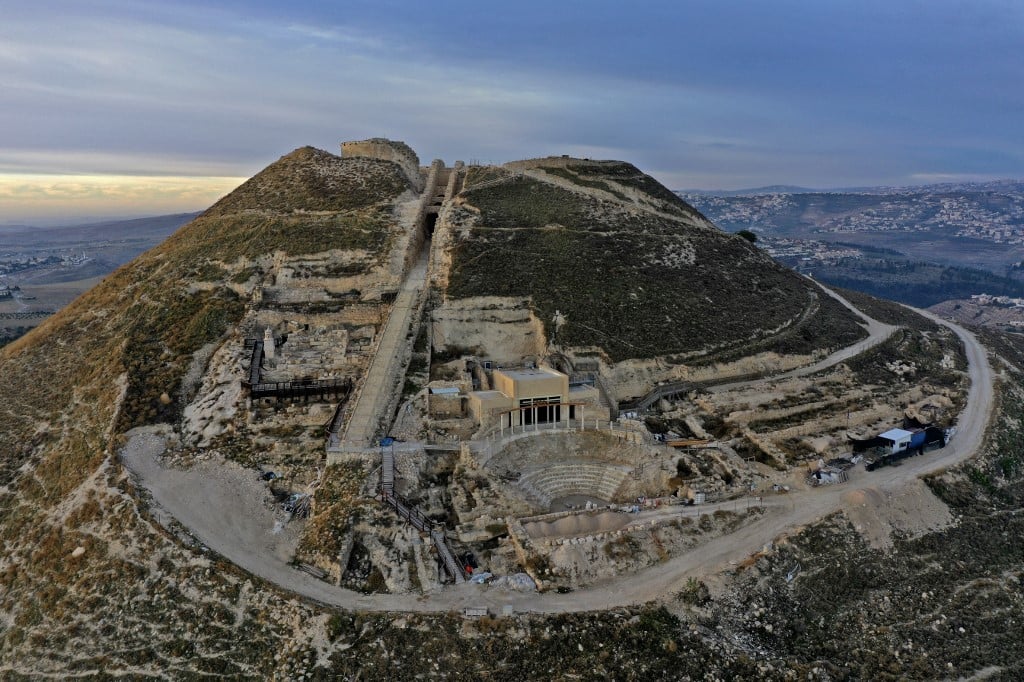
The Civil Administration, which manages civilian affairs in the West Bank, says it has begun to expropriate 320 dunams (approximately 80 acres) of land for the “preservation and development” of the Herodium archaeological site.
The Herodium, an iconic palace built by Jewish-Roman vassal king Herod in the first half of the 1st century CE, is southeast of the Palestinian city of Bethlehem, but is located in Area C, where Israel maintains full civilian and military control. The ancient remains, standing on top of a hill, are encapsulated in a national park.
“[The expropriation] is being advanced in accordance with the law, following comprehensive professional assessments conducted by the Civil Administration’s Staff Officer for Archaeology and Staff Officer for Nature Reserves,” the Civil Administration says in a statement. “Their findings pointed to an urgent need to regulate the area and promote preservation efforts at the site in order to prevent damage to archaeological remains of unique historical and cultural significance.”
In November, the Civil Administration announced it would expropriate 1,800 dunams (445 acres) of land surrounding the archaeological site of Sebastia, near Nablus, which is thought to have been the capital of the northern Israelite kingdom in the 9th and 8th centuries BCE, in addition to a significant center across history, with remains from the Roman, Crusader, and Ottoman periods.
The latest move comes amid a push by coalition lawmakers to pass a controversial bill extending direct Israeli civilian control over antiquities in the West Bank and Gaza, which is widely viewed as a step toward annexation.
The Knesset Education, Culture and Sports Committee had scheduled a vote to advance the bill to the plenum for its final readings today, but the meeting was canceled after yesterday’s meeting to discuss amendments to the bill’s language was cut short, as the coalition did not have enough MKs attending the meeting to secure a majority.








The Times of Israel Community.