

 From
From Knesset advances bill stripping Supreme Court chief of authority to staff judicial panels
 Add ToI as a Preferred Source on Google
Sam Sokol is a former political correspondent at The Times of Israel. He was previously a reporter for the Jerusalem Post, Jewish Telegraphic Agency and Haaretz. He is the author of "Putin’s Hybrid War and the Jews"
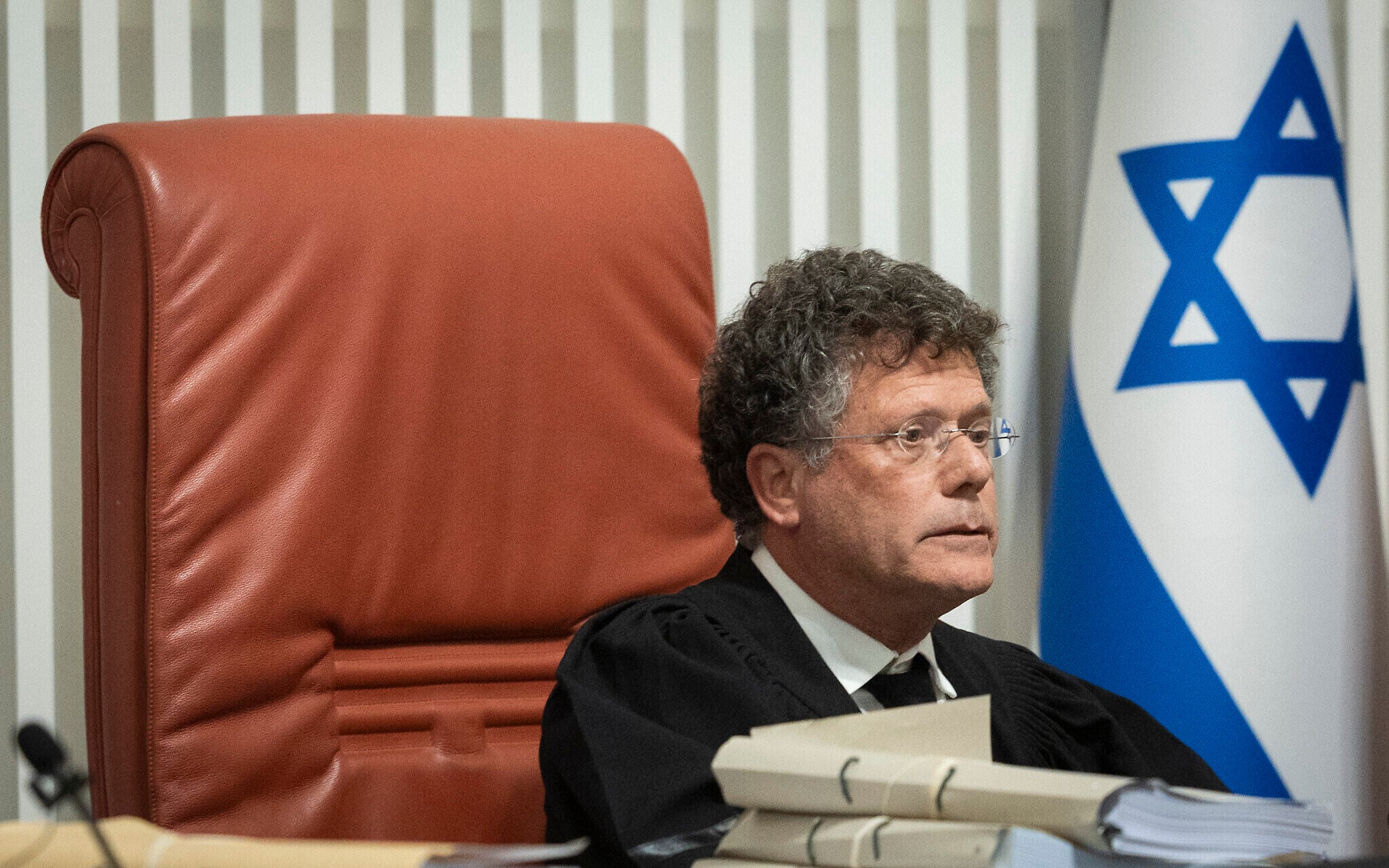
The Knesset votes 48-37 to advance in a preliminary reading a bill proposed by Religious Zionism MK Simcha Rothman that aims to strip the Supreme Court president of the authority to determine which justices hear each case.
Instead, judicial panels would be determined by an automated computerized system.
The bill will now be sent to the Knesset Constitution, Law and Justice Committee for preparation for the first of three readings needed for it to pass into law.
Rothman, one of the key architects of the government’s judicial overhaul agenda, argued in the explanatory notes to his bill that the legislation is necessary because the makeup of a judicial panel can purportedly predetermine the outcome of an appeal or petition.
Under the current system, the overwhelming majority of judicial panels established for Supreme Court appeals and High Court petitions are already formed by random assignment via computer through the court secretariat, although the Supreme Court president can, and on occasion does, choose individual judges for cases of particular importance.
The bill, if passed into law, would amend the Courts Law of 1984 and remove the clause authorizing the Supreme Court president to determine which judges preside over which cases. Instead, the law would state that the composition of judicial panels will be determined in “a computerized way without human involvement.”
According to the Haaretz daily, the Courts Administration came out against the legislation, warning that the change it seeks to implement would hinder the efficiency of the judicial system.
According to Guy Lurie, a researcher at the Israel Democracy Institute’s legal department, there are only a handful of cases every year in which the Supreme Court president decides who will sit on a judicial panel.
Such cases often involve matters of significant importance to the public, but even in such situations, the Supreme Court president does not handpick judges for the panel but rather makes appointments based on seniority.
In other circumstances, the Supreme Court president can also assign judges to a case based on the workloads facing the different judges at the time the case is brought to the court.










The Times of Israel Community.