

 From the Liveblog of
Tuesday, November 10, 2026
Netanyahu accuses Ra’am and Joint List of seeking Israel’s ‘destruction,’ repeats call for unity government
 Add ToI as a Preferred Source on Google
Ariela Karmel is a political correspondent at The Times of Israel. She previously reported for Calcalist and Haaretz. She holds an MA in Middle Eastern and African History from Tel Aviv University and a BA in Political Science from the University of British Columbia.
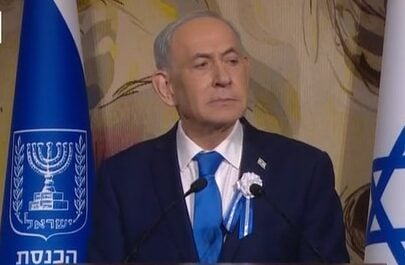
Prime Minister Benjamin Netanyahu once again calls for the establishment of a national unity government in an address to the newly sworn-in Knesset, while launching a fierce attack on the Arab parties Ra’am and the Joint List, accusing both of seeking Israel’s destruction and warning his political rivals against relying on their support to form a government.
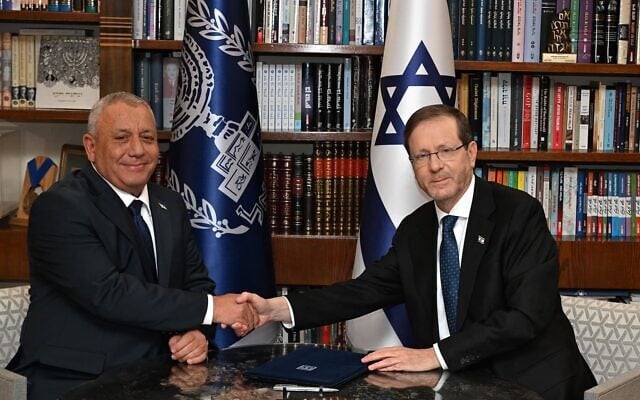
Having lost his parliamentary majority in last month’s elections, and after President Isaac Herzog handed Yashar leader Gadi Eisenkot the mandate to form a government, Netanyahu has continued a campaign he pursued throughout the election season to delegitimize the Arab parties and portray them as supporters of terrorism, in an apparent effort to undermine the ability of Eisenkot and his allies to form a government with their backing.
“Iran is working to revive the nuclear threat. The only way to permanently eliminate this existential threat is to overthrow the ayatollahs’ regime,” Netanyahu declares in a speech following the swearing-in of the new Knesset.
“In the face of these threats, we must do one thing in this house: put aside every other consideration and establish a national unity government,” he continues.
But he then attacks his opponents for considering forming a coalition with the support of Arab lawmakers, whom he brands “supporters of terrorism who hate Israel.”
“Are you prepared to depend on people whose goal is the destruction of the Jewish state?” he asks. “Are these the people in whose hands you would entrust the fate of our country? Do you prefer them over Zionist parties that represent an enormous Zionist public? A public of soldiers, heroes, wounded IDF veterans and bereaved families.”
Netanyahu goes on to reject the distinction between Ra’am, which has expressed willingness to join an Eisenkot-led coalition, and the Joint List, accusing both parties of opposing Israel’s existence as a Jewish state.
“The only difference is that they disagree over what kind of state should be established here on the ruins of the Jewish state,” he claims.
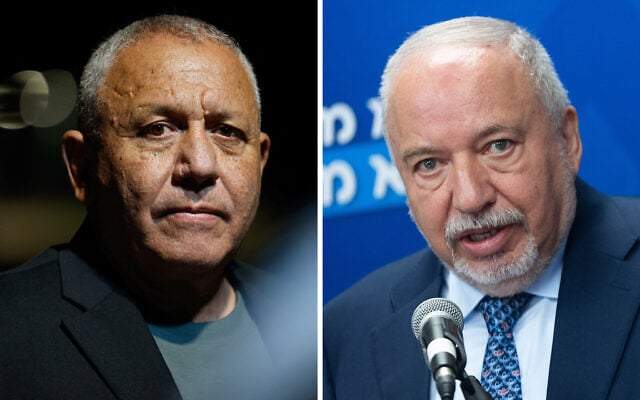
The accusations come as Eisenkot seeks to translate the anti-Netanyahu bloc’s 67-seat parliamentary majority into a governing coalition, with the question of cooperation with Arab parties emerging as a central point of contention among his prospective partners.






The Times of Israel Community.