

 From the Liveblog of
Wednesday, April 20, 2016
From the Liveblog of
Wednesday, April 20, 2016
Norway killer Breivik wins case against ‘inhuman’ prison conditions
 Add ToI as a Preferred Source on Google
A Norwegian court rules in favor of mass murderer Anders Behring Breivik in his lawsuit against the Norwegian state over his “inhuman” prison conditions.
“The court… has concluded that the prison conditions constitute inhuman treatment,” the Oslo district court says, noting that the right-wing extremist has been held in isolation for almost five years. The judge rules however that his right to correspondence had not been violated.
“The prohibition of inhuman and degrading treatment represents a fundamental value in a democratic society,” the court says. “This applies no matter what — also in the treatment of terrorists and killers.”
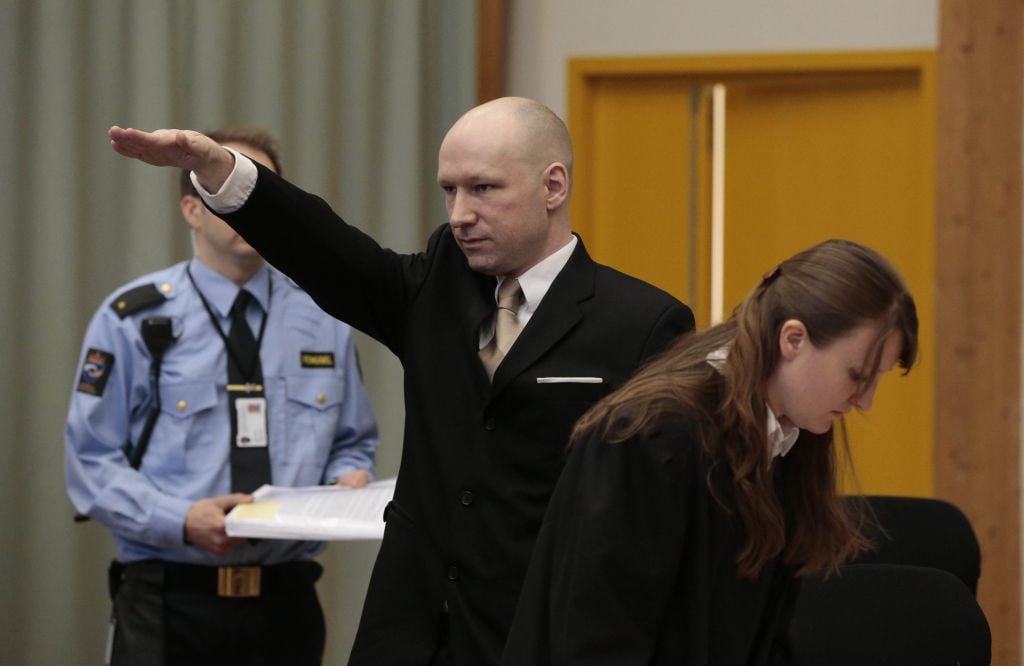
Breivik is serving a maximum 21-year sentence — which can be extended if he is still considered dangerous — for killing eight people in a bombing outside a government building in Oslo and then shooting dead another 69, mostly teenagers, at a Labour Youth camp on the island of Utoya on July 22, 2011.
The ruling specifically cites Breivik’s isolation in two different prisons since his arrest. It also said authorities hadn’t given enough attention to his mental health when determining his conditions in prison.
The court dismissed Breivik’s claim that the government had also violated his right to respect for private and family life. It ordered the government to pay Breivik’s legal costs of 331,000 kroner — about $41,000.
The 37-year-old claimed at the March hearing into his lawsuit that his solitary confinement violated the European Convention on Human Rights.
But the state’s lawyers argued that his isolation was necessary because Breivik is “extremely dangerous,” and said his conditions — which include games consoles, workout machines and three cells at his disposal for his various activities — fall “well within the limits of what is permitted” under the European convention.
— Agencies










The Times of Israel Community.