

 From the Liveblog of
Sunday, November 30, 2025
From the Liveblog of
Sunday, November 30, 2025
OECD economist: Israel needs to cut carbon emissions by 40% if it hopes to reach net zero by 2050
 Add ToI as a Preferred Source on Google
Sue Surkes is The Times of Israel's environment reporter
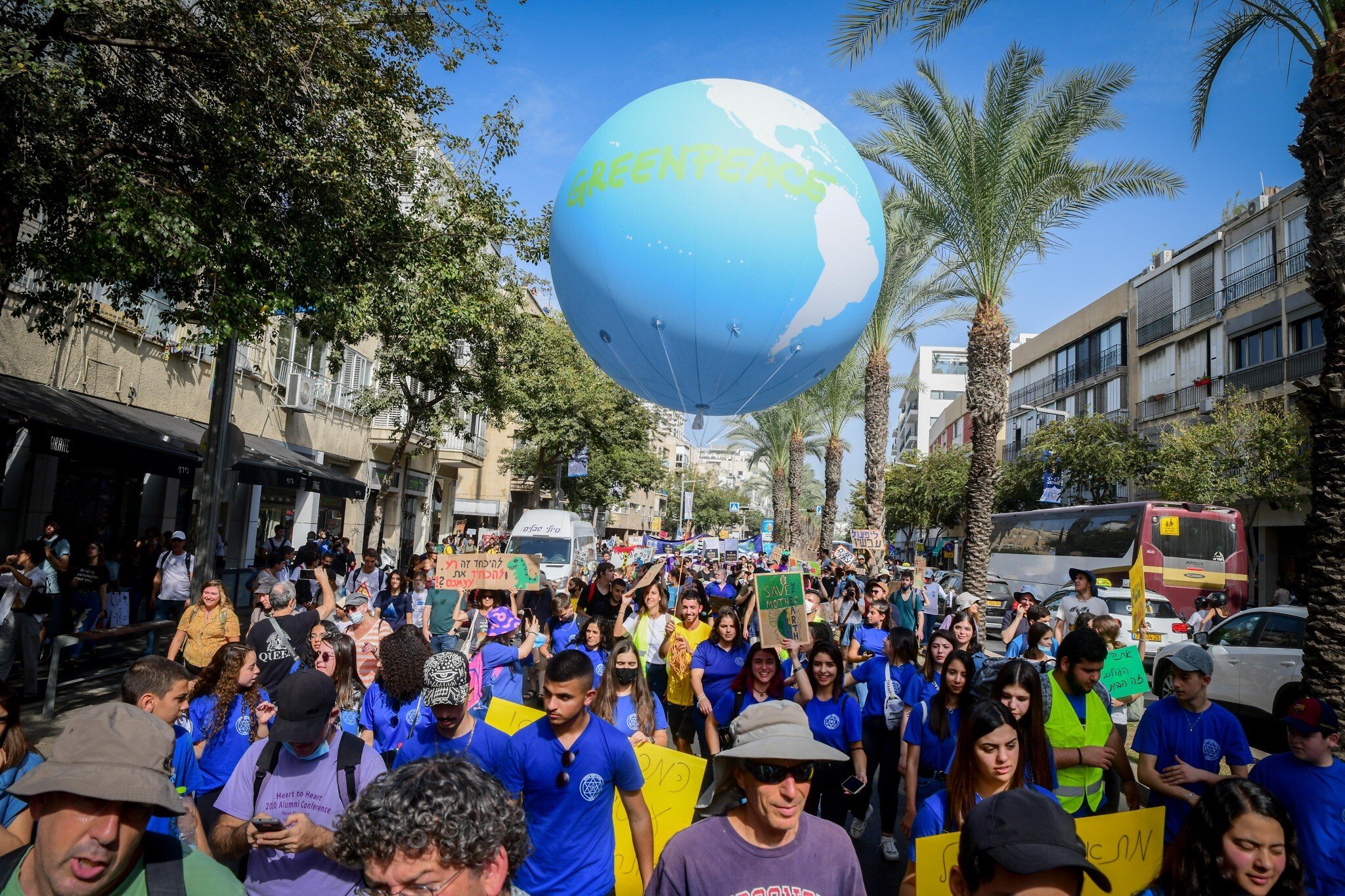
Israel needs to cut its global warming gas emissions by 40 percent to have any hope of reaching its target of net zero by 2050, a senior OECD economist tells the annual meeting of the President’s Climate Forum at the President’s Residence in Jerusalem.
Daniel Nachtigall, who is responsible at the OECD’s Environment Directorate for a database on the carbon emission reduction policies of 50 countries, says that these emissions, which drive climate change, are still rising.
The 50 nations, including Israel, are behind the carbon-cutting targets they themselves set for 2030 and submitted to the United Nations, he explains.
Net zero is achieved when actual emissions are offset by the amount of gases removed from the atmosphere.
Nachtigall says that between 2010 and 2021, the adoption and stringency of climate policies rose across the 50 nations responsible for some 80% of global emissions, but then slowed down.
While climate action in Israel increased between 2010 and 2023, it has always been below the OECD average, he says, and the gap has increased under the current Netanyahu-led government, especially in the areas of decarbonizing electricity and transportation.
Of all the policies Israel should be enacting, he singles out two: a climate law with legally binding targets for reducing emissions and increasing renewable energy, and a carbon tax on natural gas that matches those set for oil, diesel, and other fuels.
Several attempts to pass a climate law have failed in recent years as the Finance Ministry has attempted to avoid any obligation and retain flexibility over targets.
Israel’s carbon tax is being collected in a staged manner through excise taxes. But while the tax framework for fuels such as oil and diesel will increase to around 70 Euros per ton of CO2 equivalent by 2030, the government has capped it at 18 Euros per ton for natural gas by the end of the decade.
A carbon dioxide equivalent is a metric used to compare emissions from various greenhouse gases based on their global warming potential compared to CO2.
Nachtigall says that, contrary to popular perception, research shows that carbon taxes bring emissions down without negatively affecting jobs or the economy.










The Times of Israel Community.