

 From the Liveblog of
Monday, October 5, 2026
From the Liveblog of
Monday, October 5, 2026
Spanish PM Sanchez calls snap election for November 29
 Add ToI as a Preferred Source on Google
Spanish Prime Minister Pedro Sanchez calls an early election for November 29, in a bid to strengthen his mandate after a fragmented parliament rejected the government’s key housing decrees last week amid widespread protests.
“We need to renew people’s support,” Sanchez says in a televised address. “We need to mobilize and win a much larger progressive majority in parliament, one that will allow us to overcome vested interests, deliver new social advances and continue transforming Spain.”
The premier also acknowledges having made mistakes and falling short of campaign promises.
“I also know that part of that social majority is dissatisfied today,” he says.
Sanchez has been one of Israel’s greatest critics on the global stage, accusing it of carrying out a genocide in Gaza.
Facing the electorate now is a risky move as Sanchez’s Socialist Party is trailing in opinion polls. However, he has been boosted by proposals to tackle a mounting housing crisis that were well received but were struck down by right-wing MPs on Friday, leading to planned new public protests about housing.
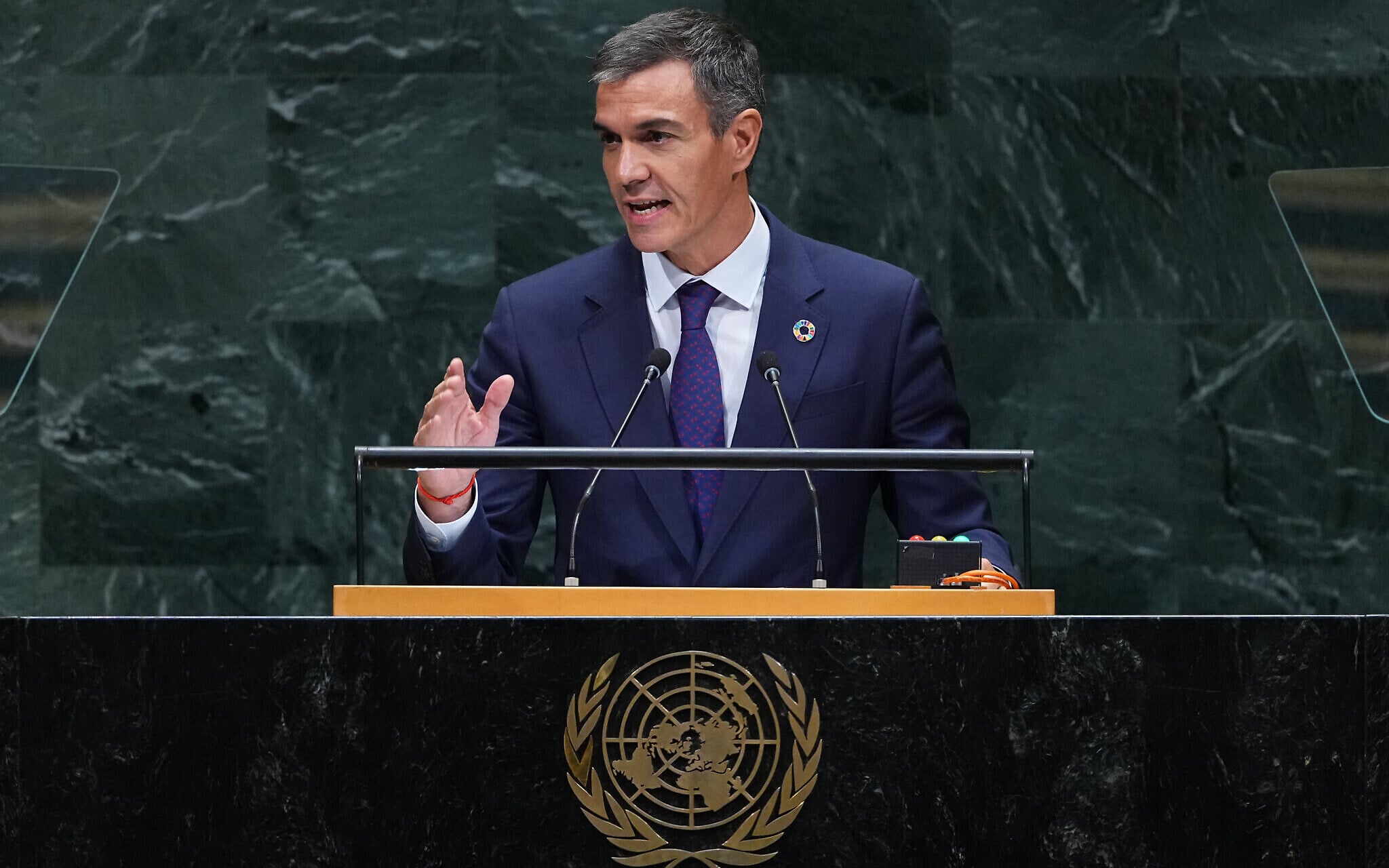
An election defeat would spell the end of one of Europe’s last few left-leaning governments at a time when the far-right is making unprecedented gains across the region as a growing swath of European voters desert the center ground.
Opinion polls suggest a coalition led by the conservative People’s Party (PP) with the support of Vox is the most likely outcome in Spain, ushering a far-right party into central government for the first time since the return of democracy after the death of dictator Francisco Franco.
Still, Sanchez, a wily political operator, has proven time and again his ability to surprise those who had long written him off.
Despite never winning enough votes to form a majority government, he has cobbled together a series of fragile and seemingly impossible coalitions, including voices from the far-left to the separatist right, to remain in power for three successive terms lasting eight years.
But growing fragmentation among his partners has meant the government has passed little in the way of legislation in its third term and failed to pass a budget since 2023, even as Spain’s economy has continued to be one of the best-performing in the developed world.










The Times of Israel Community.