

Mecca defense pact isn’t meant to challenge Israel, at least not on the battlefield
Saudi Arabia, Pakistan, and Turkey aren’t going to go to war for each other. But they do want to show the US and Iran that they are ready to lead in a region they see as destabilized by Jerusalem

 Add ToI as a Preferred Source on Google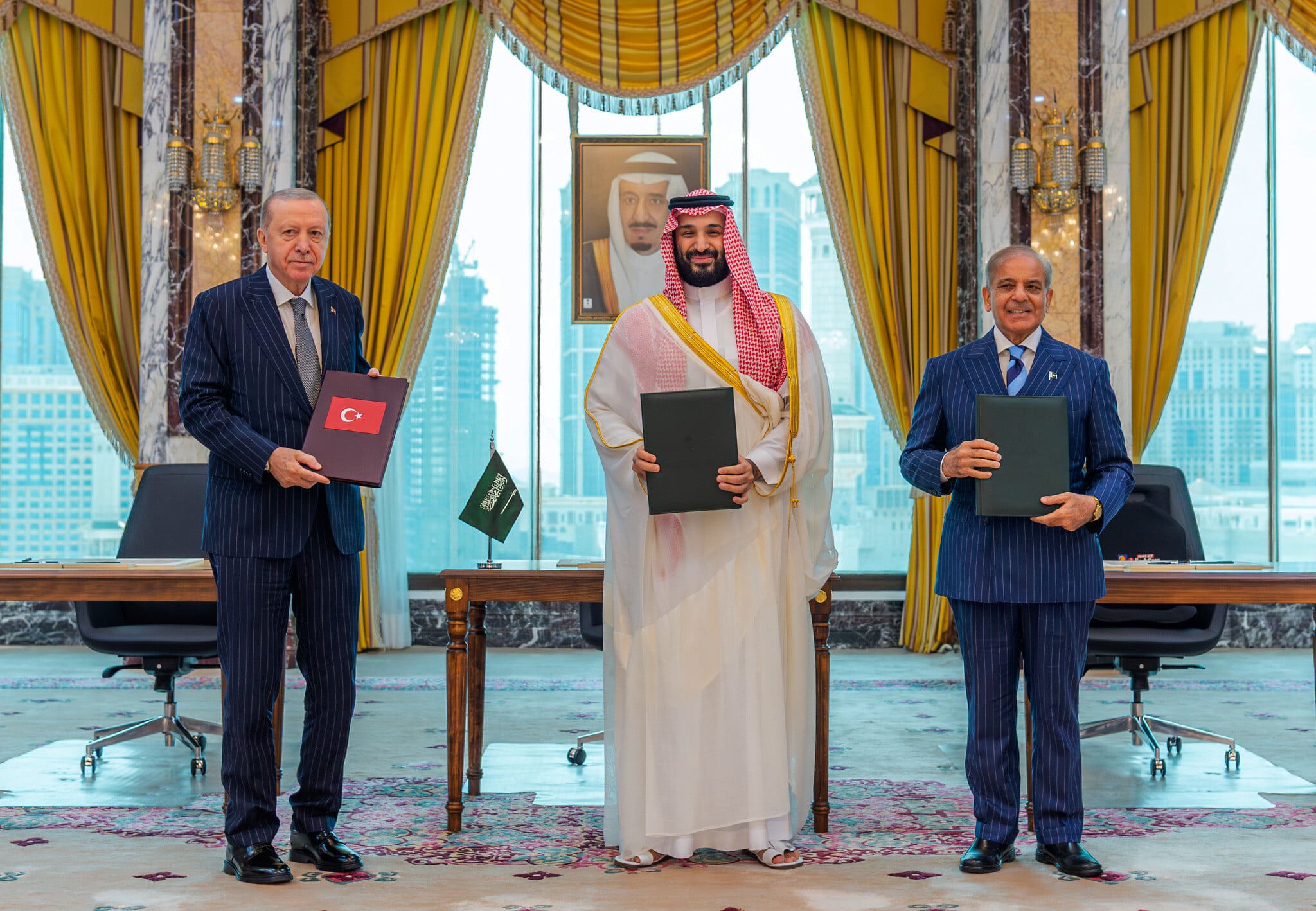
After Saudi Arabia, Turkey, and Pakistan signed a mutual defense treaty in Mecca last week, a senior Israeli official sounded the alarm.
“The agreement worries us,” the official told the Ynet news outlet. “It is a pact aimed at Israel.”
“We wouldn’t be surprised if Egypt joins the Mecca Agreement,” continued the official, expressing worries that it could bring hostile forces to Israel’s doorstep.
That interpretation fundamentally misreads both the target of the tripartite pact and Cairo’s relevance to it.
It was actually a reading offered by Iran’s Foreign Ministry spokesman that got closer to the heart of the agreement.
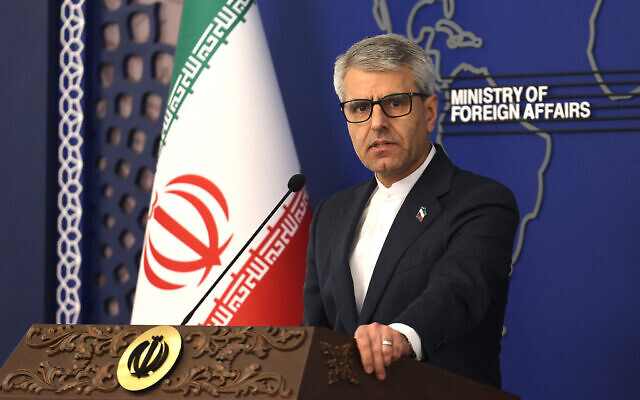
“Countries in the region cannot rely on the claim of security provided by the US as in the past,” said Esmaeil Baghaei.
Indeed, the failure of the US to effectively confront Iran and sustain pressure on Tehran is at the center of the agreement. “These countries are showing frustration with the lack of success and the muddle of US diplomacy,” said Simon Henderson, Baker senior fellow at The Washington Institute for Near East Policy.
The three Sunni powers are not about to go to war for each other, and they know it. The pact is about signaling leadership, joint action, and diplomatic power, not about creating a unified military force.
Worthless agreements
The Middle East is littered with a litany of defense pacts that amounted to nothing.
The Arab League established its Joint Defense Council in 1950 after being defeated by the fledgling IDF. That council then created the Egypt-led United Arab Command in 1964.
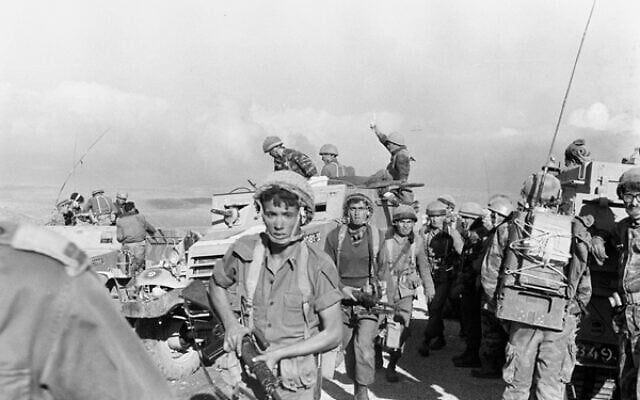
Its chance to prove its effectiveness as a joint bulwark came a few years later, as Israel carried out Operation Shredder in the Jordanian-held West Bank in 1966 and then took on four Arab armies in the Six Day War the next year.
The UAC did nothing, and fell apart shortly thereafter.
Today, regional defense pacts still don’t mean much.
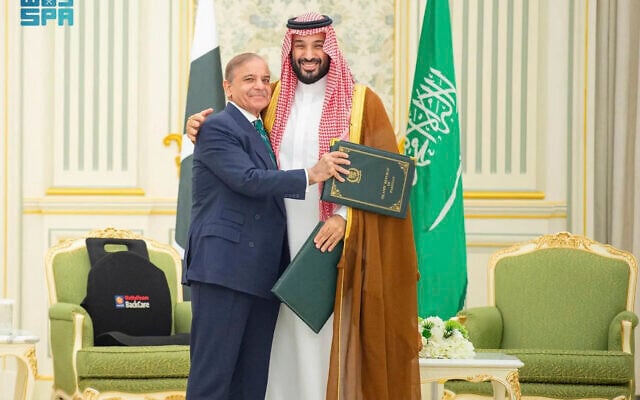
After Israel’s failed 2025 strike on Hamas leaders in Doha sent jitters through the region with the signal that nowhere was off limits, Saudi Arabia signed a mutual defense treaty with nuclear-armed Pakistan that officially regards any attack on either nation as an attack on both. A decade earlier, Pakistan had turned down a request from Saudi Crown Prince Mohammed Bin Salman to join its war against the Houthis in Yemen.
This year’s Iran war gave the countries a chance to see if things would change under the alliance. Saudi Arabia was hit repeatedly by Iran, and Pakistan did indeed send thousands of troops, a squadron of fighter jets and an air defense system to Saudi Arabia — after a ceasefire was in effect, and only after the Saudis forked over $3 billion to help Islamabad pay off debts to the UAE.
Even more feebly, the Pakistani troops were deployed in an “advisory and training role.”
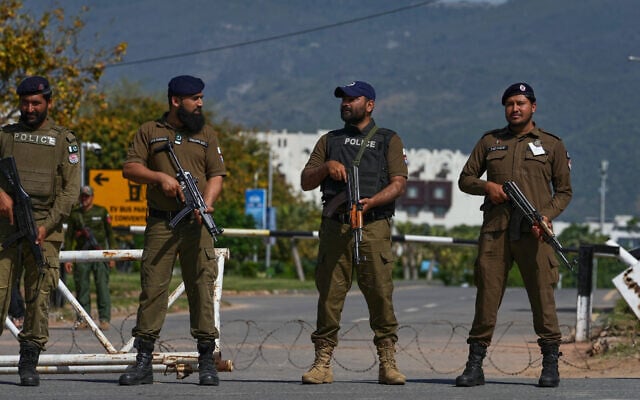
Turkey, for its part, has had 3,000 troops in Qatar for almost a decade and a number of defense pacts with the country. But they did nothing to stop Iranian strikes in 2025 and 2026, or the Israeli attack on Hamas leaders in Doha.
Further weakening the potential for any joint action in the newest defense agreement, the three countries are facing very different military threats.
To institutionalize an alliance is therefore to settle, or at least freeze, the struggle for primacy among states that have rarely accepted one another’s primacy.
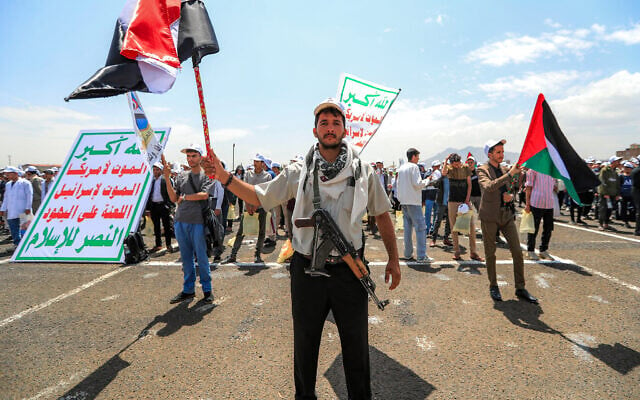
The Saudis are under attack by Iran, the Houthis, and other proxies in Tehran’s axis.
Pakistan’s bitter enemy is India, while Turkey is focused on the Kurdish threat and its role as a NATO member facing down Russia.
The Saudis and Turks aren’t about to jump into war against the massive nuclear-armed India, nor are Turkey or Pakistan going to attack Iran over strikes on Saudi oil infrastructure and ships.
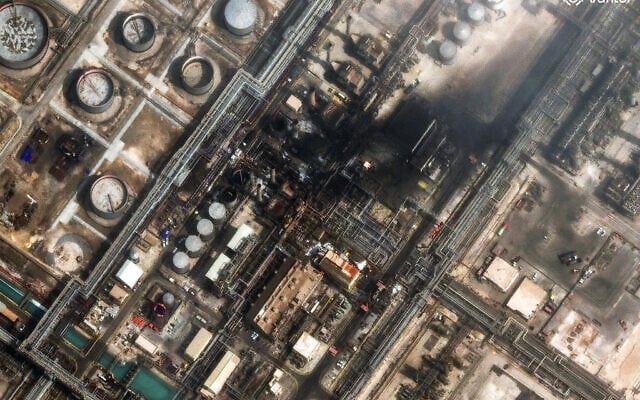
“The Saudis were attacked this week,” said Yoel Guzansky, senior fellow at the Institute for National Security Studies “I didn’t see a Turkish declaration of war against the Houthis.”
Ankara and Islamabad are well aware that the Saudis will continue to be attacked by the Houthis, and signed the agreement anyway. It won’t take long before the military aspects of the deal are proven meaningless.
Moreover, none of these countries want to make the concessions that a real military alliance demands.
“To determine the supreme commander is to determine hierarchy,” according to Hussein Aboubakr Mansour of the Jewish Institute for National Security of America.
“To place forces permanently in another regional country is to create political leverage inside it,” Mansour continued. “To decide which threat activates the common force is to decide whose definition of regional order prevails. To institutionalize an alliance is therefore to settle, or at least freeze, the struggle for primacy among states that have rarely accepted one another’s primacy.”
Only one leader
The logic of the agreement, then, is diplomatic, not joint defense.
“I wouldn’t call it an alliance,” said Guzansky. “I’d call it an alignment, perhaps. It has goals, but not necessarily military ones.”
And even those nonmilitary goals diverge beyond the common desire to show diplomatic might in the wake of the US-Iran war.
Turkey is trying to show through the agreement that it is a regional power.
Pakistan wants to take advantage of its newfound role as a key mediator between the US and Iran to strengthen itself against India.
Saudi Arabia, for its part, wants to signal its ability to create an independent security architecture that doesn’t depend on either Iran or the US, and can help it stay out of future conflicts.
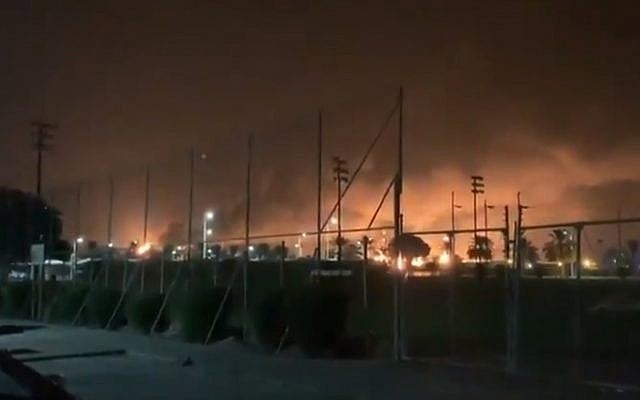
The Saudis, who initiated the pact, have lost trust in the US security umbrella since US President Donald Trump’s non-response to the 2019 drone-and-cruise-missile attacks on its oil sites that it blames on Iran.
That feeling has only gotten worse given Trump’s desperation for a deal with Iran while Tehran openly mocks the US president and keeps raising its demands.
“It’s a message to Iran that [Saudi Arabia] has regional backing,” said Guzansky. “It’s also a message to the US that it has alternatives. It isn’t trying to replace the US, but is showing that the Saudis aren’t waiting around.”
The fundamental flaw of the agreement, said Blaise Misztal, vice president for policy for the Jewish Institute for National Security of America, is “that while there are overlapping reasons for which the three countries joined it, the only strategic rationale that unites them all is an incompatible one.”
“Each of the three countries thinks that this pact will give it greater power, prestige, influence, and claims to leadership,” he continued, “but there can be only one leader.”
Egypt stays away
According to Turkish Foreign Minister Hakan Fidan, Egypt should be part of the pact as well.
“I believe that, in the next stage, Egypt will also be part of the alliance,” said Fidan. “There are a few technical issues. Once they’re resolved, there is no reason why Egypt should not be there.”
Though Egypt participated in a series of meetings with the three countries amid mediation attempts between Iran and US, Fidan’s prediction is highly unlikely to happen.
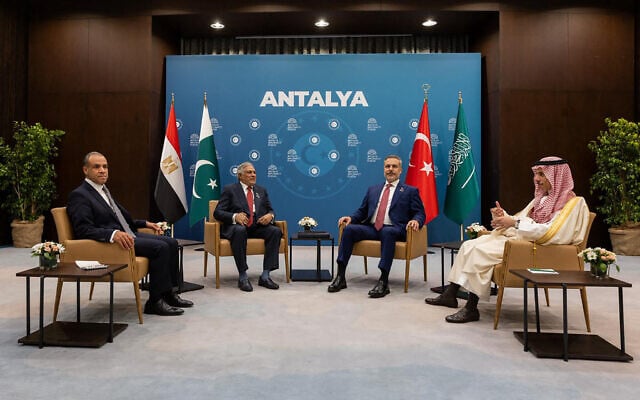
Egypt remains highly suspicious of Turkey, a country against which it fought a proxy war in Libya and a backer of the Muslim Brotherhood that Egyptian leader Abdel-Fattah el-Sissi toppled in 2013.
Cairo is also uninterested in joining a pact carrying the religious overtones of the agreement signed in Mecca, though it shares the other members’ Sunni identity.
“The symbolic effect of announcing this pact in Mecca is to suggest that the Sunni Muslim character of the countries involved is a feature, not a coincidence,” said Misztal. “This is further reinforced by the absence of Egypt, which had been discussed as a fourth member of the group but whose government is avowedly anti-Islamist.”
“Egypt probably wants to sit this one out,” added Henderson. “Turkey and Pakistan have land borders with Iran, and Saudi Arabia is just across the Gulf. Egypt’s away from all that.”
Balancing against Israel
For some Israelis, the prospect of Egypt joining the alliance had augmented worries that the countries joining forces would constitute a powerful new threat to the Jewish state.
A day after the pact was signed, Pakistan’s Defense Minister Khawaja Asif told a local news outlet that “Israel is a threat to the entire Muslim world,” and called for “a united military front” against it.
Asif’s comments, while alarming, have little actual bite. Made to an Urdu-language outlet, his words were seemingly intended more toward local consumption than as actual saber-rattling toward Israel.
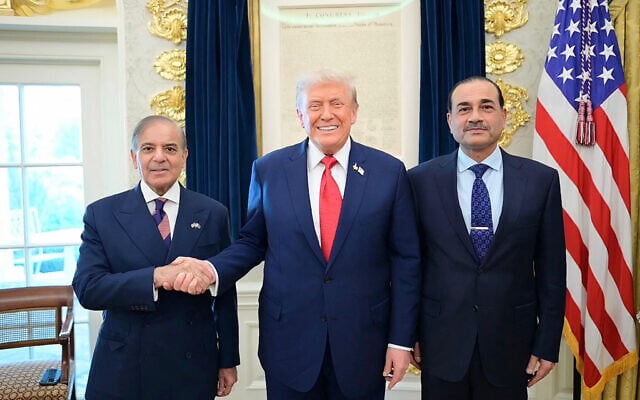
Nor is Asif the real power broker in Pakistan. That title belongs to Pakistani military chief Asim Munir and Prime Minister Shehbaz Sharif, both publicly praised by Trump for their efforts to broker ceasefires in Gaza, between Pakistan and India, and between the US and Iran.
That is not to say there is not serious friction between Israel and the Mecca signatories, who are all keen to increase their diplomatic clout while challenging Jerusalem’s.
With Iran and its network weakened, Israel is seen regionally as an aggressive actor causing instability.
The agreement creates an Islamic alliance that, it hopes, can balance against Israel if needed.
Notably, the UAE, a close Israeli partner, has not been asked to join, and isn’t expected to. The UAE is locked in a growing rivalry with Saudi Arabia, and is furious with Pakistan over its neutral stance while Iran was hammering the Emirates. It now adds the defense pact with Riyadh to that list.
While the Mecca Agreement was supposed to project a sense of unity, it is largely doing the opposite, especially as it relates to Arab countries.
“It shows that the Arab world,” said Guzansky, “even when it is attacked by Iran, is more divided than ever.”






The Times of Israel Community.