

‘My Salinger Year’ catches a woman — and world — on the cusp of metamorphosis
New film adaptation of successful coming-of-age memoir by Joanna Rakoff set in storied NY literary agency features sparkling performances by Margaret Qualley and Sigourney Weaver
 Add ToI as a Preferred Source on Google
Renee Ghert-Zand is the health reporter and a feature writer for The Times of Israel.
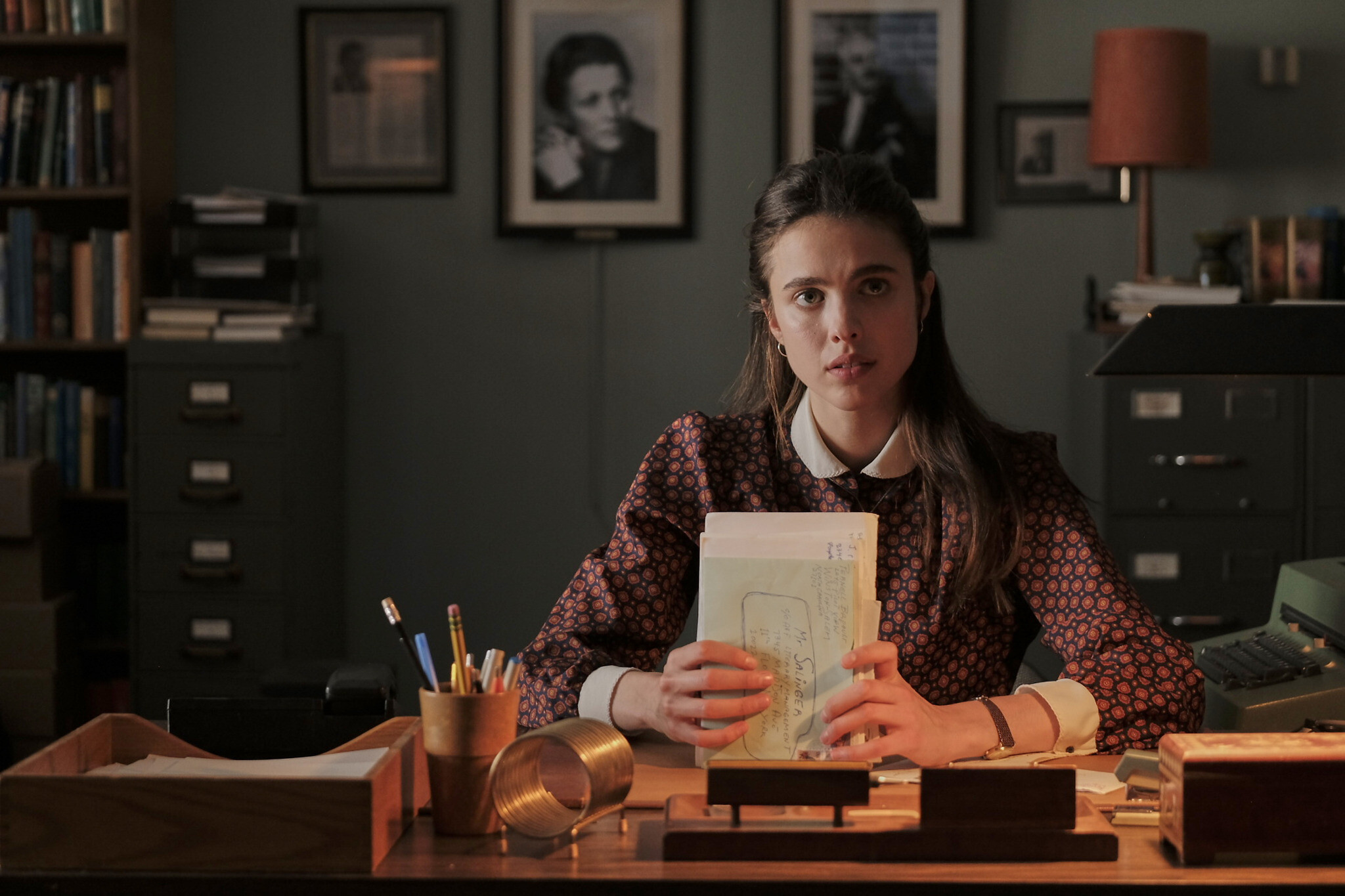
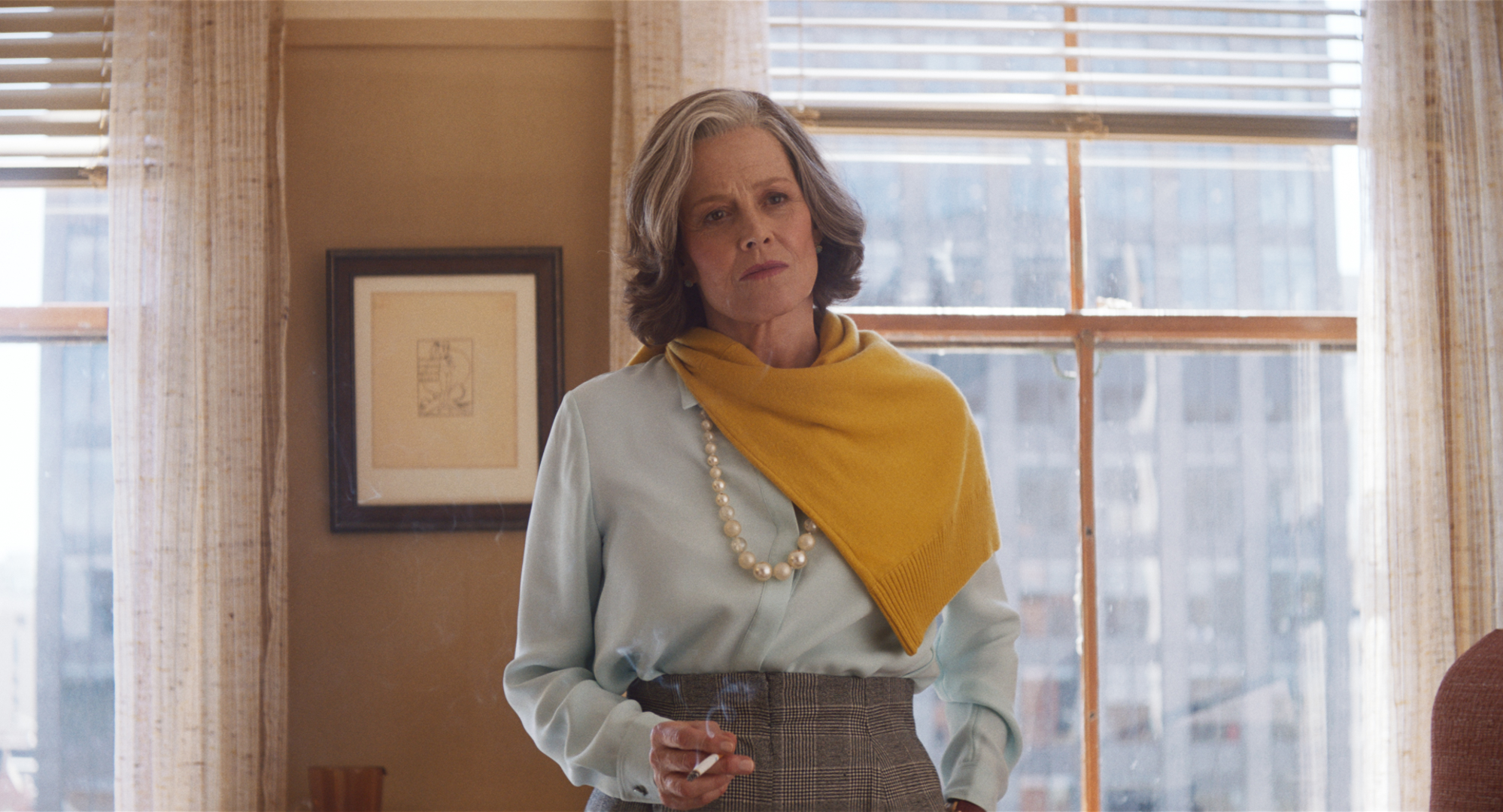
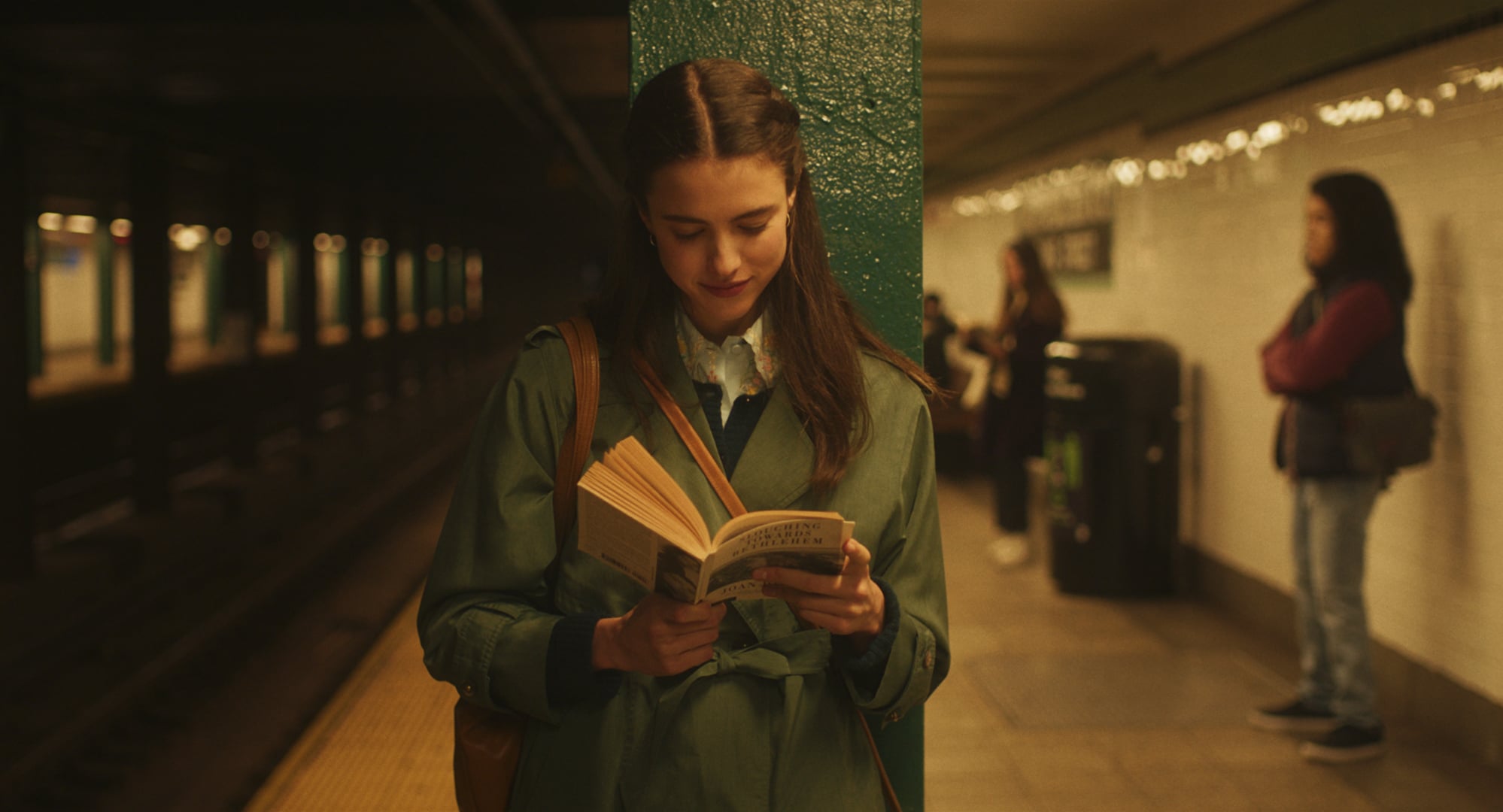
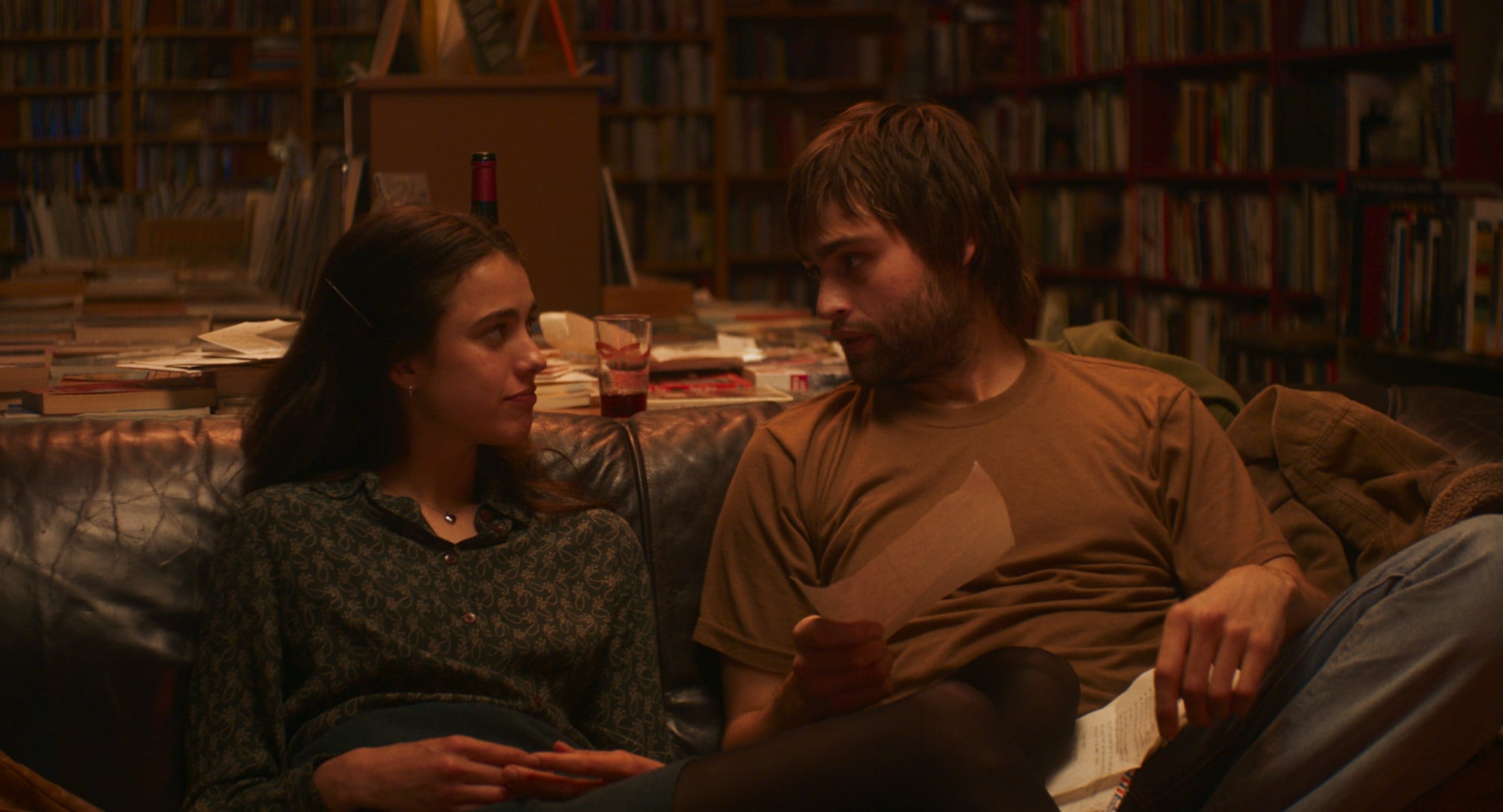
In 1996, Joanna Rakoff was among hundreds of recent university graduates working as assistants at New York publishing companies and literary agencies.
However, Rakoff was uniquely tasked with answering the fan mail of J.D. Salinger, one of the greatest American authors of the post-WWII era. Technically speaking, answering meant sending a form letter — but Rakoff riskily decided to personally respond under her own name to many from around the world who expressed how much Salinger’s books meant to them.
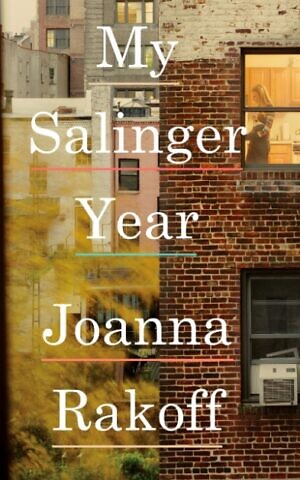
Initially, it did not occur to Rakoff, 48, to write about her stint at the prestigious Harold Ober Associates literary agency, or about her unauthorized gig responding on behalf of the notoriously reclusive Salinger. It was only in the years after the “The Catcher in the Rye” author’s death in 2010, that Rakoff produced “My Salinger Year,” an acclaimed coming-of-age memoir reflecting on that year so pivotal to the direction of her life and career.
“With time, I realized there was something universal here, that it was a story larger than just my own. I realized a memoir doesn’t have to be about a grand person reflecting on their life, or about an enormous trauma. It can be about small moments and be shaped like a novel,” Rakoff told The Times of Israel in a video interview from her home in Cambridge, Massachusetts.

Now, Academy Award-nominated director Philippe Falardeau has turned Rakoff’s 2014 memoir into a film of the same name. It opens in United States theaters and on-demand on March 5 and in the United Kingdom on March 17.
The film version of “My Salinger Year” stars Margaret Qualley as Joanna, and Golden Globe Award-winner Sigourney Weaver as her boss, Margaret. The supporting cast includes British actor Douglas Booth as Joanna’s socialist boyfriend Don, and the excellent Irish actor Brian F. O’Byrne as sympathetic older colleague Hugh.
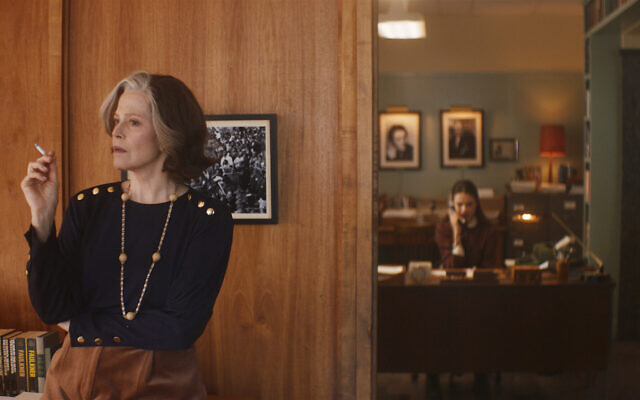
The 24-year-old Qualley, one of today’s leading young actors, holds her own against veteran Weaver. Touching and humorous, Weaver is spot on as Margaret, who is modeled on Rakoff’s real boss, the legendary agent Phyllis Westberg.
There are no spoilers involved in divulging that the film provides no clear glimpse of the actor playing Salinger. As in the book, the revered author remains in the shadows and on the sidelines.
Speaking from his home in Montreal, director Falardeau, 52, explained, “Salinger is a myth almost. I wanted to make sure that he didn’t gobble up the film. I kept the focus on what Joanna and others think of him.”

The director took an interest in Rakoff’s memoir for reasons other than the famous name in its title. Although Falardeau had heard of Salinger, he hadn’t yet read any of his books.
“The story of the fan letters captivated me. When I was younger I wrote to some people whose work I admired, and I got responses. It made a difference in my life,” Falardeau said.
“I was touched by how Joanna couldn’t bear to send a form letter to people who were pouring their hearts out, and that she was willing to breach protocol and risk her job. I would have done the same thing — only I would have been worse. I would have written the letters and signed Salinger’s name,” he said.
Falardeau was also impressed by Rakoff’s voice, which worked for the kind of film he wanted to make next.
“I picked up Joanna’s memoir at the bookstore in December 2014 on the way to my parent’s cottage, and I read it over the holidays. I was unconsciously looking for something from a woman’s perspective to adapt because until then all my work was from a male point of view,” he said.
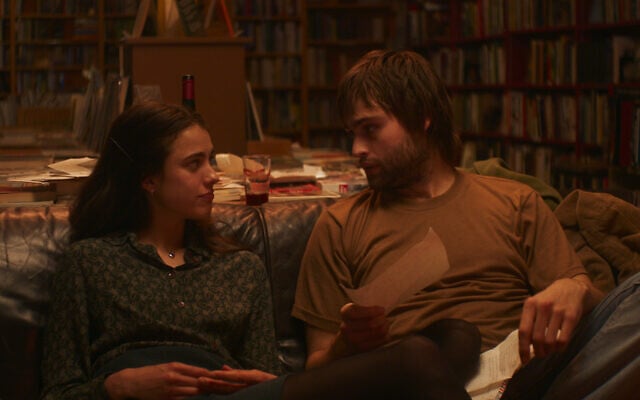
Falardeau said he could relate to the predicaments of young adulthood central to Rakoff’s memoir. Throughout the book, she struggles with how and if to pursue her dream of being a writer. She doesn’t plan on remaining a secretary, but she is unsure of herself and her literary abilities. By contrast, her boyfriend Don is typically more confident in his writing, regardless of whether he has actual promise or not.
She also struggles with the choices she makes with regard to her personal relationships. She chooses to move in with Don, who is clearly not suitable, after practically ghosting her loving longtime college boyfriend, called Karl in the film.
Karl is actually musical composer Keeril Makan, who eventually became Rakoff’s second husband.
“Part of my resistance to writing the memoir was having to expose my decision to leave Keeril, which was the biggest mistake of my life,” Rakoff shared.
Adapting a memoir for film can be difficult because of the interior and self-reflective nature of the genre. As a result, Falardeau made several changes and additions to streamline or flesh out the narrative where necessary.
Rakoff, who has an executive producer credit and consulted on the screenplay, said she was on board with this.
“My dad was a former actor and I watched a lot of films with him. Consequently, I knew that the best film adaptations are not slavishly loyal to the book,” Rakoff said. “You can’t explore the interior self in a film in the same way. You need to externalize some of the drama.”
This externalization is done in several ways, including a fantasy dance scene that viewers may find jarringly out of place. Rakoff, however, said she supported the director’s choice and agreed it was an appropriate means for the Joanna character to express feelings and thoughts she had heretofore been unable to.
This dance scene lent itself to the casting of Qualley as the film’s lead. In addition to acting, Qualley is also a trained dancer. (Director Spike Jonze showcased her talents in his out-there 2017 ad for Kenzo.)
Most of all, Qualley brought the qualities both Rakoff and Falardeau sought for Joanna.
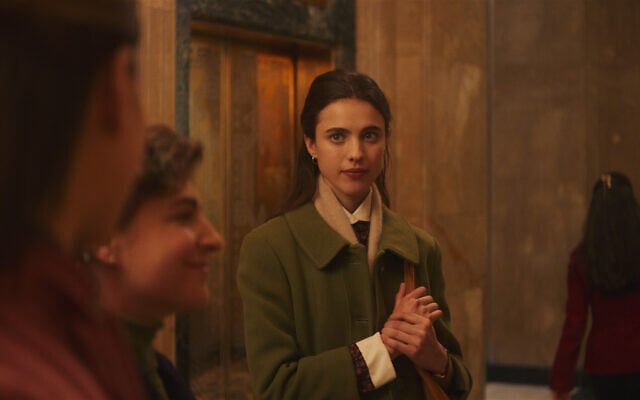
“Margaret radiates intelligence and warmth, but she has this sense of privacy and reserve, of keeping things underneath the surface,” Rakoff said.
“She has this innocent look in her eyes and a sort of quirkiness that works. She’s eager to learn and doesn’t presume to be overly confident,” Falardeau said.
Shot in Montreal, the film’s design deliberately melds the styles of the 1990s with the 1950s. The Harold Ober Associates office was notorious for being stuck in the past (when Rakoff worked there, she was expected to use a typewriter and dictaphone rather than a computer). It’s a successful visual metaphor for the intersection of the lives of the young Rakoff and the elderly Salinger.
For those of us old enough to clearly remember the 1990s and what it was like to be a young woman then, “My Salinger Year,” is a trip down memory lane. For Salinger fans, it’s a movie that shouldn’t be missed.
And for those who have grown up in the digital age, there is something to be said for watching a film that emphasizes the value of reading printed books, and of unmitigated experiences.
“When I think back on that year, I feel incredible nostalgia for being alone with one’s thoughts. We lived our lives in the moment. We didn’t think about how our lives would be refracted through social media,” Rakoff said.
Rakoff loved reading Salinger’s fan mail. She was compelled by the mystery of who these people were who wrote the letters, and the desire to learn their stories.
“Today everyone knows everything about everyone,” she said.









The Times of Israel Community.