

Netanyahu says Negev is ‘out of control’ while touring south amid Jewish-Arab tensions
As PM dashes Bedouin leaders’ hopes by backing police crackdown, Herzog holds ’emergency meeting’ with Jewish and Arab mayors to urge calm after Bedouin man shot dead by officer
 Add ToI as a Preferred Source on Google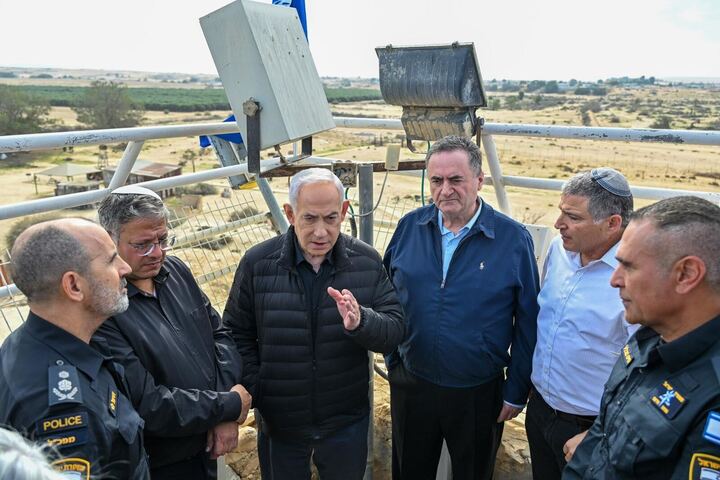
While touring southern Israel on Wednesday, Prime Minister Benjamin Netanyahu declared the Negev region is “out of control” and promised to “rein it in” amid intensive police operations in Bedouin locales and simmering Jewish-Arab tensions.
“The Negev is out of control,” he said in a video. “We will rein it in, and an important operation by the Israel Police has already begun, in conjunction with other forces.”
Netanyahu’s support for the operation, spearheaded by National Security Minister Itamar Ben Gvir, came as a blow to Bedouin leaders, who have been urging the premier to intervene in what they characterize as collective punishment spurred on by the far-right police minister.
The prime minister was joined by Ben Gvir and Defense Minister Israel Katz on his visit to Revivim, a Jewish locale that overlooks the Bedouin town of Bir Hadaj, alongside other army and law enforcement officials.
“Despite the efforts of criminal elements to intimidate us we are not flinching,” said Ben Gvir. “We will continue the operation throughout the Negev as long as necessary, with the goal of restoring security to residents.”
From a lookout point, Israel Police Commissioner Danny Levy, Shin Bet head David Zini and deputy IDF chief Maj. Gen. Tamir Yadai briefed Netanyahu on efforts to combat weapons possession and arms smuggling in the area.
“The criminal threat and the security threat blend into one. There are tens of thousands of weapons [in the region], drones crossing borders and other threats,” Netanyahu said.
He vowed to “return the Negev to the State of Israel,” by advancing “settlement on a scale we have never known, including regularization for Bedouin residents,” referring to the settlement of land claims in southern Arab townships.
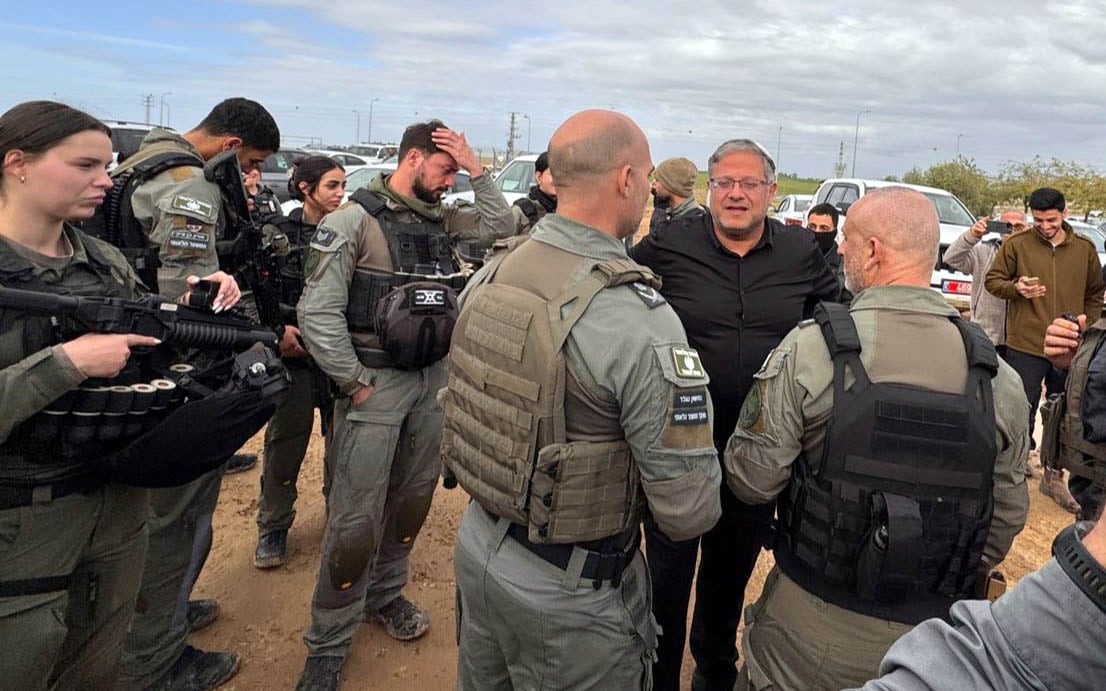
The government in recent months has begun treating gunrunning as not just a criminal matter but a national security threat.
In December, Katz issued an administrative detention order for a Bedouin from Bir Hadaj suspected of arms smuggling. It was a rare instance in which the controversial policy was leveled against someone suspected of committing criminal, rather than security-related, offenses.
Speaking during the tour, Katz said that “strengthening settlement in the Negev strengthens Israel’s security, strengthens sovereignty, and strengthens our hold on the land,” calling it a “strategic defensive line of prime importance for the state’s borders and the civilian home front.”
The group also discussed a five-year plan to expand construction of communities on Israel’s frontiers, with an emphasis on the Nitzana area on the Egyptian border, Netanyahu’s office said in a statement.
‘State of emergency’
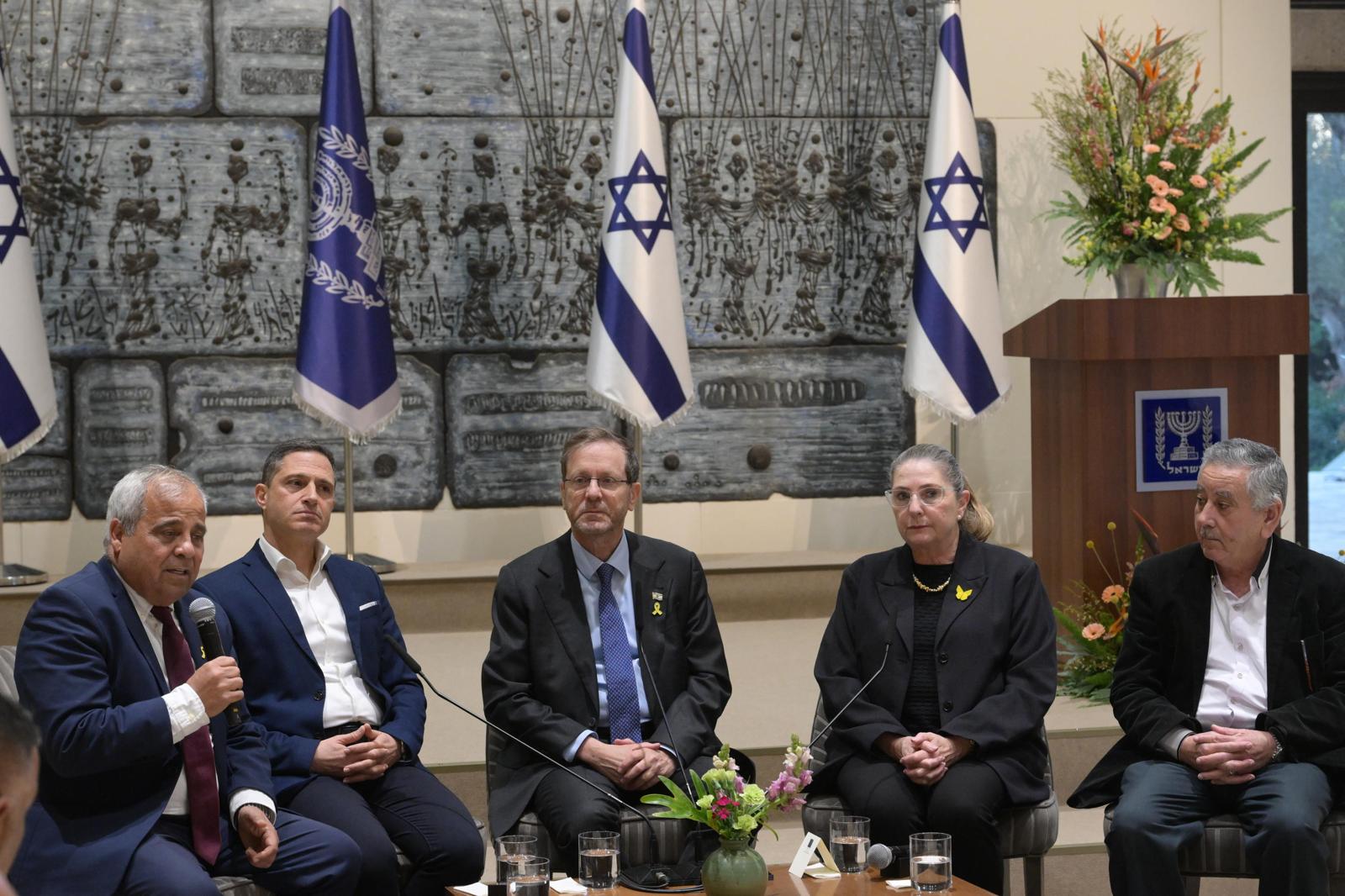
As Netanyahu visited the south, President Isaac Herzog hosted Jewish and Arab mayors at his official residence in a bid to calm the unrest and promote unity between their townships.
He warned that Jewish-Arab relations have reached a “state of emergency” in recent weeks and said residents face the challenge of “living together as children of Abraham in this land.”
Tensions in the Negev reached a fever pitch after an officer shot and killed an Arab man on his doorstep in Tarabin al-Sana, a Bedouin hamlet that has been subject to a police raid for over a week now.
Police claimed he posed a threat to officers and was suspected of torching cars in nearby Jewish towns as revenge for a police operation in Tarabin al-Sana. His family has denied this and insisted he was shot in the chest without provocation.
Addressing the lethal shooting for the first time, Herzog urged investigators in the Department of Internal Police Investigations to see through a probe of the lethal incident.
“I certainly call for the completion of the investigation and examination of everything that happened in Tarabin. I think it’s very important, so that both Bedouin and Jewish citizens know the truth,” he said.
Herzog also exhorted Jewish and Arab politicians to convey a message to residents that “we want to continue to live together and start to change direction.”
The meeting marked the first time in which Jewish and Arab leaders from the south were brought together publicly in recent months.
In November, Bedouin politicians lamented that they were excluded from an emergency meeting on spiraling violence in the region, in which Beersheba Mayor Ruvik Danilovich warned that “the next October 7 is at the doorstep.”
This angered Bedouin leaders, who noted that their community was also hit hard by the October 7, 2023, attack and came to the aid of the towns under attack by Hamas-led terrorists who burst forth across the Gaza border that morning.
Speaking to Herzog, Rahat Mayor Talal Alkernawi said that while he and his constituency “aren’t against the Israel Police” and “want the police to be strong, with means, tools and data in order to fight crime,” they firmly reject the approach taken under Ben Gvir.
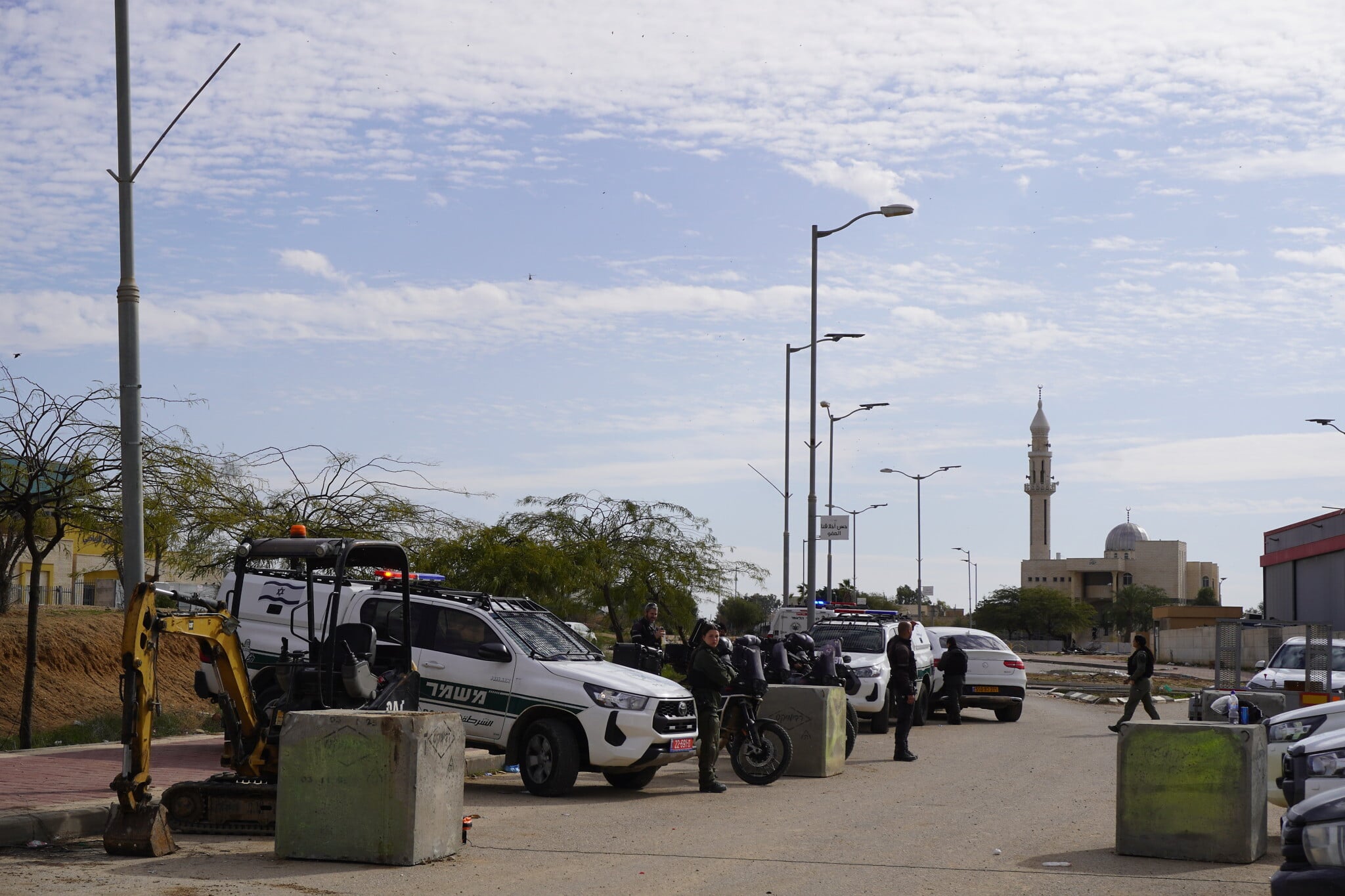
He referenced the concrete blocks placed at the entrances to several Bedouin townships, hampering residents’ freedom of movement since mid-November, when police launched their operation in the south.
“You can’t do collective punishment, you can’t put in a community — whether in Lakiya, Segev Shalom, Tarabin al-Sana — concrete blocks,” Alkernawi said. “Concrete blocks are a symbol of occupation, but I am not in an occupied town, I am an Israeli citizen.”


The Times of Israel Community.