

One month ahead of evacuation, Amona remains a city of two tales
Palestinians recall Jews forcefully taking away the land their families owned for decades, but settlers insist hilltop was empty when they arrived
 Add ToI as a Preferred Source on Google
Raphael Ahren is a former diplomatic correspondent at The Times of Israel.
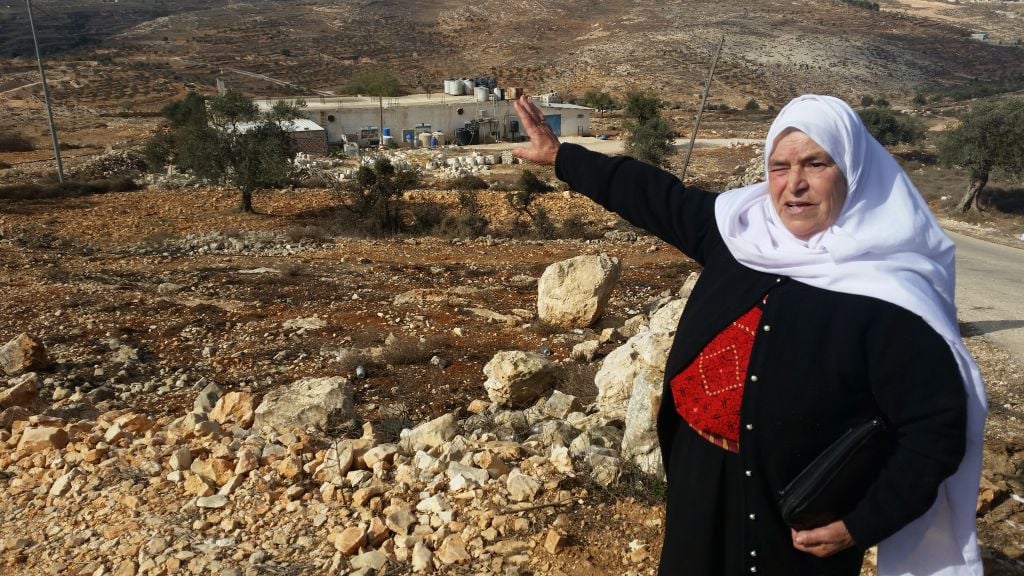
AMONA, West Bank — Mariam Hammad still remembers helping her father harvest the beans and tomatoes on the family plot that once belonged to her grandfather.
“Since I was seven, I spent most of my time in the fields,” said the now 82-year-old woman. “I want my land. I spent my entire childhood there,” she said, referring to one of the most disputed pieces of land in the West Bank.
Today, the Israeli outpost of Amona sits on that contentious hilltop, nestled between the Palestinian city of Silwad and the Jewish settlement of Ofra — and Hammad hopes she may soon get it back.
She is one of the petitioners in a legal case that is currently roiling Israel’s political system, after the High Court of Justice ruled that Amona was built on private Palestinian land and ordered the government to have it evacuated by December 25. If last-gaps legislative efforts fail — as even staunchly right-wing coalition members predict — Amona will no longer exist one month from now.
In some ways, the story of Amona — which was established in 1996 — is a metaphor for the larger Israeli-Palestinian conflict: it’s a clash of narratives impossible to resolve because each side remains utterly convinced that historical truth, justice and practical considerations are on its side.
Amona was the site of violent clashes between settlers and police in 2006, when nine illegal buildings were torn down. Today, it is home to some 40 Jewish families who adamantly refuse to leave.
It’s been more than 20 years since the Israelis came to this windy knoll in the northern West Bank, but Hammad, a feisty grandmother to 30, said she still clearly recalls the day she saw them arriving and realized they intended to stay.
“I saw them taking my land by force,” she told a large group of journalists during a recent visit to the area, organized by MediaCentral, an Israeli nonprofit that regularly facilitates such trips, usually for foreign correspondents. “I was very emotional when I saw them bringing caravans and putting their stuff on my land. I wanted to go to my land, but I was prevented from doing so by Israeli soldiers.”
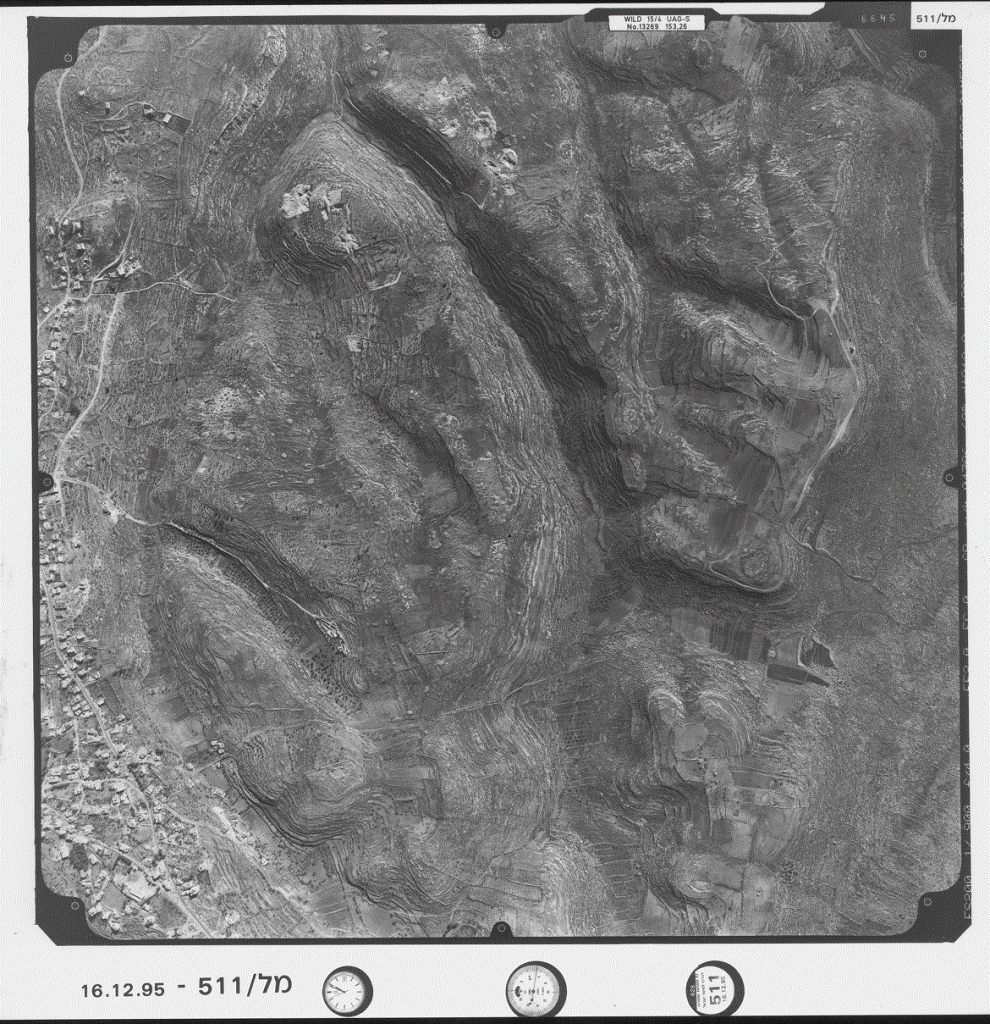
Two Palestinians who tried to approach the budding settlement were shot by troops, and since then she and her fellow petitioners have stayed away from the area.
At first, she and about 40 other local residents who claim to own land where Amona is today complained to the mayor of Silwad. In 2005, armed with documents proving their ownership of the land and the help of Israeli NGOs, they took their case to the Israeli High Court of Justice, which ruled in their favor.
“Our land is more dear to us than our sons. It really means everything to us,” Hammad said, speaking through a translator, explaining why she refused to accept financial compensation instead.
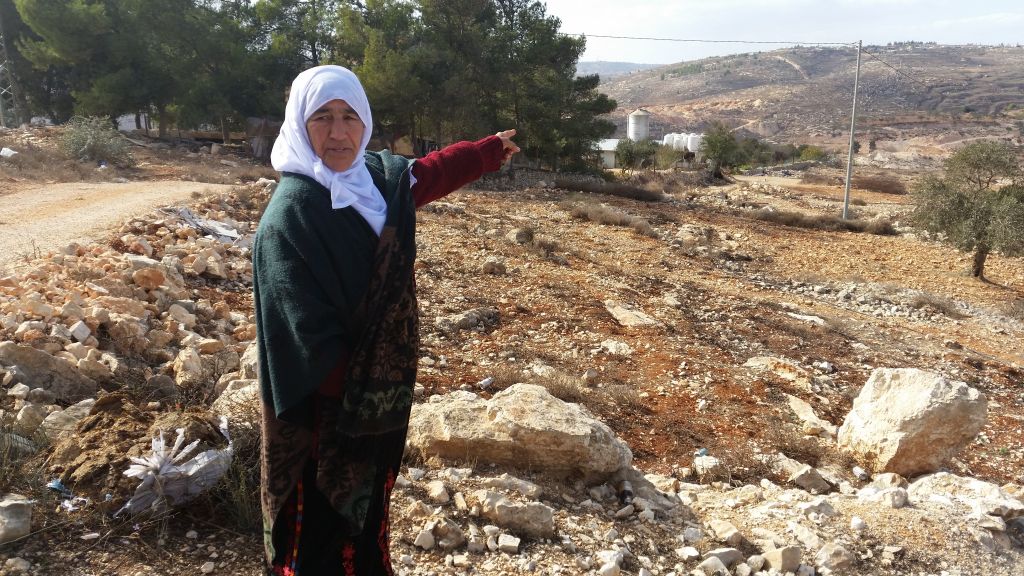
Issa Zayed, another petitioner from nearby Taybeh, agrees. “It was like seeing someone have their children taken away from them,” the 59-year-old farmer said, recalling how as a child, he would eagerly wait for Thursdays, when his grandfather took him to the field to help him plant and harvest figs and olives.
His 40 dunams (10 acres) of land were confiscated by the Israelis in 1998, he said. “It was really hard.”
Both Hammad and Zayed believe that they will once again return to grow fruit and vegetables on the land. “Inshallah [God willing],” Hammad told reporters. “And I hope you come back that day. I’ll bring sweets to celebrate.”
But it is unclear whether Hammad and the other Palestinian landowners will be allowed to return to farm the lands.
On the other side of the divide, Amona resident Eli Greenberg predicts that even if the army bulldozers do level the outpost, no Palestinians will be allowed there.
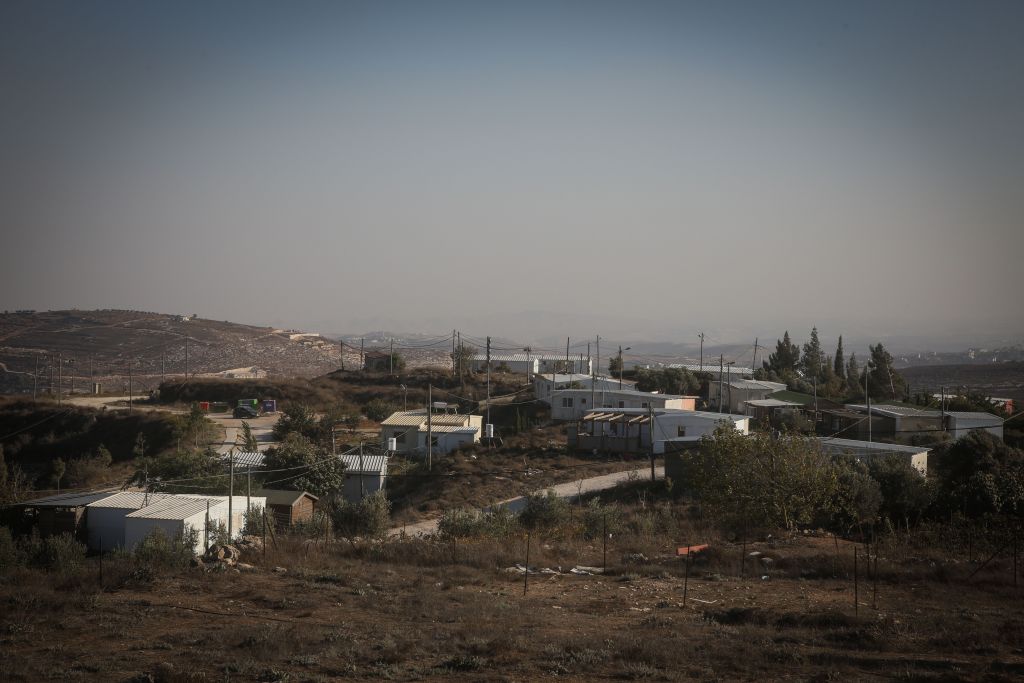
“If Amona will be destroyed, nothing will be here. Arabs will not be able to approach this area,” he said, sitting in the settlement’s wooden synagogue. The outpost is too close to Ofra, Amona’s mother community just a mile down the hill, he argued. “It’s too dangerous.”
Other settlements that were evacuated because they were similarly built on private Palestinian property were either turned into army bases or left barren, and the same would happen to Amona, Greenberg said. “It will become deserted, no man’s land.”
But ultimately Greenberg believes that the settlers will remain and that will be the best result. “In my opinion it [evacuation] is in nobody’s interest… I think a living Amona is better than an army base.”
Originally from the Haifa area, Greenberg, a Bible scholar, and his wife Hana, moved to Amona 13 years ago.
“We are here to stay. This is our position right now. We love this place. We have no intention of going away,” he said calmly, adding that he was putting his faith in the so-called Regulation Bill currently making its way through the Knesset, which aimed to legalize settler outposts.
“I am sure we will be here after the 25th,” he said, then joked that “I’d rather spend this Christmas with my family drinking eggnog.”
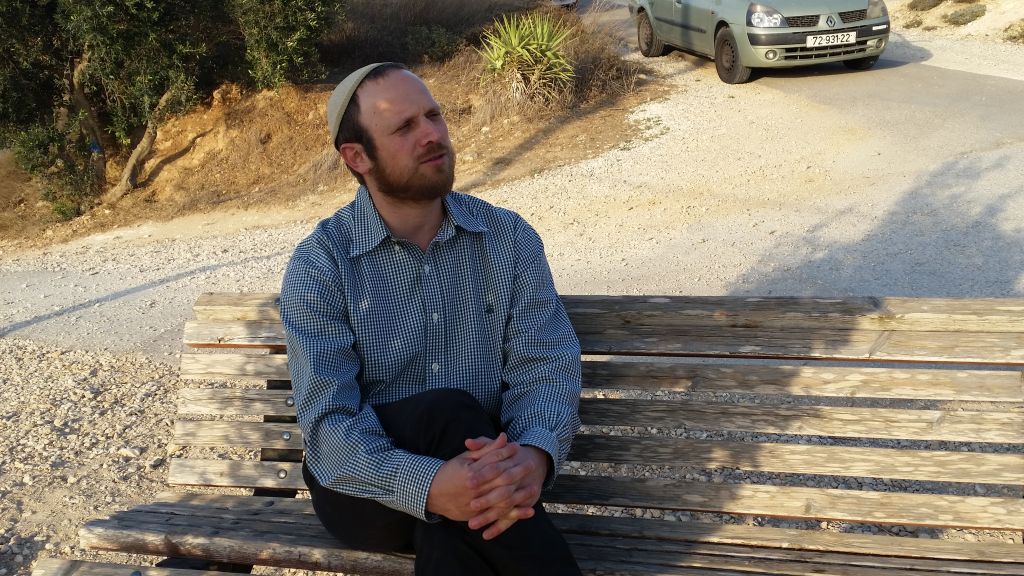
Greenberg, a father of eight, said he tried to engage with the Palestinians who claim Amona, but he couldn’t find them. “I never saw them, here or wherever,” he told reporters. When he arrived here in 2004, the mountains around the outpost were barren, he added. “There was nothing here… Next question.”
Greenberg said the settlers would be able to reach an agreement with the Palestinians if only left-wing Israeli groups would stay out of the conflict.
“I would invite all the Arabs from Silwad: sit down, let’s drink some black coffee together, and negotiate things here on a personal note…. If we are human beings, we have to talk to each other and communicate. I [extend] an open invitation. They can do it here.”
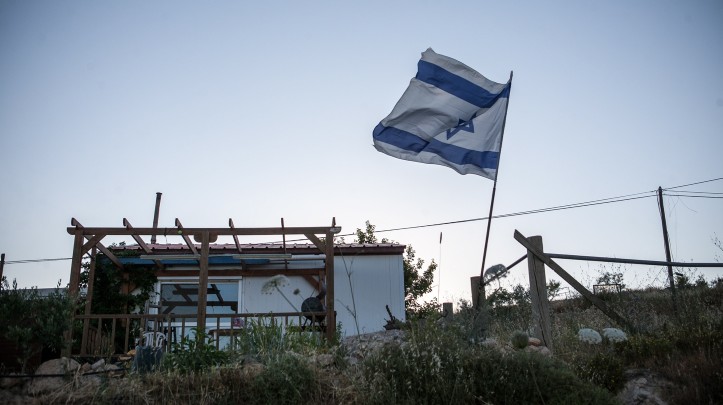
Nachum Schwartz, a farmer who raises sheep and grows raspberries, grew up in Ofra and said as a child he used to play on the nearby hills. After finishing his army service, he moved to Amona in the year of its founding in 1996.
Calling it an “empty mountain,” Schwartz said no Palestinians were removed or prevented from reaching their land and the settlers came with the blessings of the Israeli government.
The Israeli government built roads, a sewage system and an electric grid and provided lots for 40 families to live on, he added. “This is not something that a pirate does.”
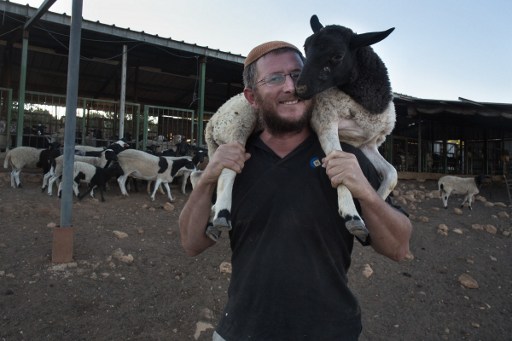
But he does admit that “when Amona was established, the government didn’t look at maps and check who lives where and what’s the exact status of the land.”
[mappress mapid=”5998″]
As a child, Schwartz used the hill where Amona stands today as a “playground,” he recalled. “There wasn’t anything here. There were no people here. I can tell you that it was empty. As a child I played around here. I don’t believe my parents would let an 8-year-old play around in a conflict area.”
Times have changed, but just two decades ago the Israeli government encouraged settlers to spread out and conquer as many barren hilltops as possible, Schwartz, 42, said. Then-housing minister Ariel Sharon visited Ofra in the late 1990s and chided the settlers as “lazy” for not building more outposts, he said.
That was enough to motivate the young men and women of Ofra to choose a nearby hilltop and establish a new community there — and that’s basically how Amona was born, according to Schwartz.
“The mission had to go on. We looked at the closest mountain and we went on with the mission,” he said. “We believe we belong to this land; we believe this land belongs to us.”









The Times of Israel Community.