

Palestinian PM reportedly says Israel’s policies helped prevent 3rd intifada
Unconfirmed TV report quotes Hamdallah telling Moshe Kahlon that the absence of collective punishment ensured tensions did not boil over
 Add ToI as a Preferred Source on Google
Jacob Magid is The Times of Israel's US bureau chief
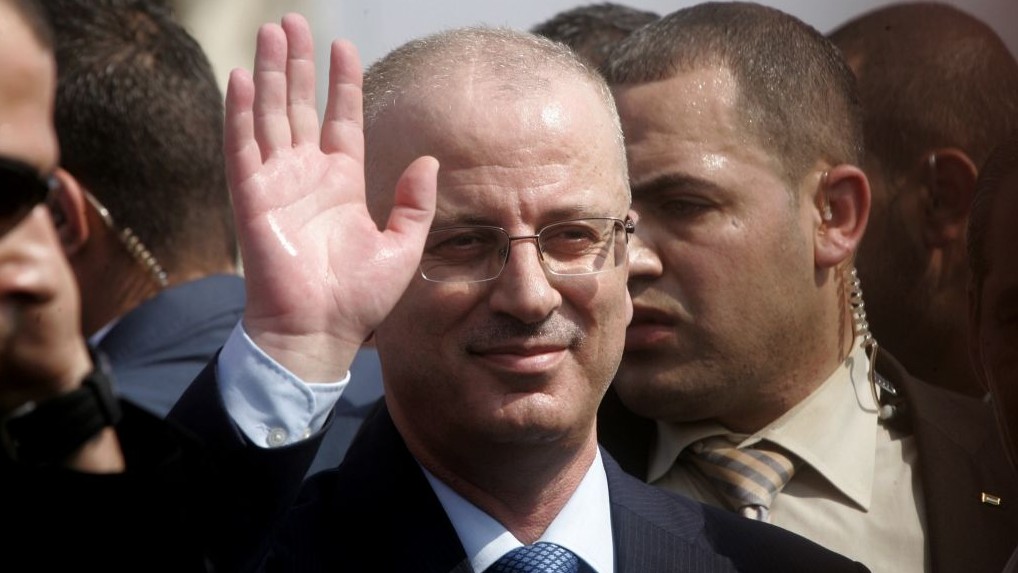
During a closed conversation with Finance Minister Moshe Kahlon, Palestinian Authority Prime Minister Rami Hamdallah said that Israeli policies during the most recent wave of violence helped prevent a third intifada, or uprising, Channel 2 reported Monday.
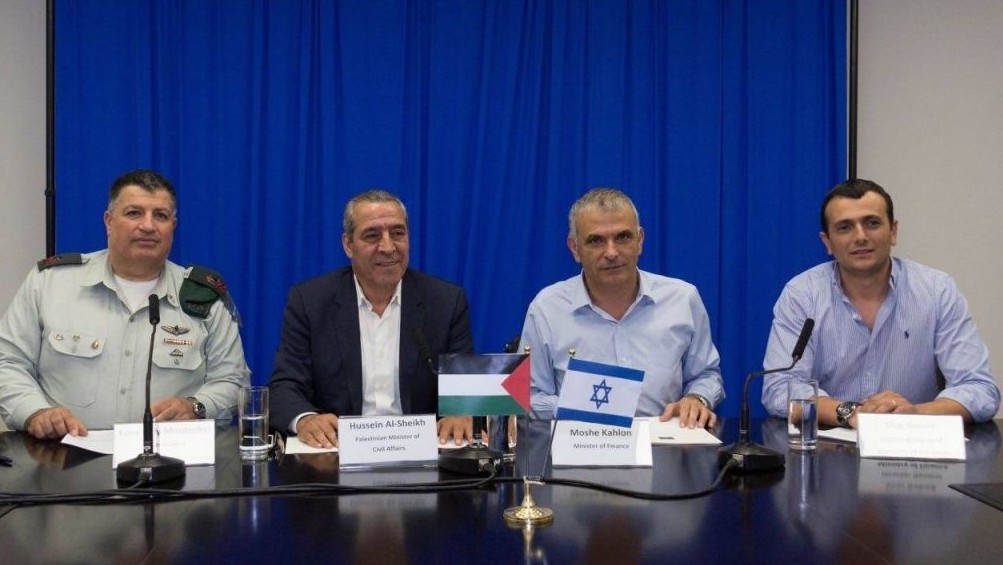
Hamdallah and Kahlon met last Wednesday to discuss steps that the Israeli cabinet approved last month to improve economic ties with the PA and relieve restrictions on Palestinian movement prior to US President Donald Trump’s visit to the region.
Sources who were updated on the details of the meeting told Channel 2 that Hamdallah emphasized that Israel’s policy of containment during the spate of attacks that began in October 2015 helped prevent further deterioration of the situation, specifically the absence of collective punishment.
There was no confirmation of the report from Palestinian officials.
A year and a half of Palestinian terrorism and violence has seen more than 40 Israelis, two Americans, a Briton and an Eritrean national killed in stabbing, car-ramming and shooting attacks. According to AFP figures, some 266 Palestinians, a Jordanian and a Sudanese migrant have also been killed, most of them in the course of carrying out attacks, Israel says, and others in clashes with troops in the West Bank and at the Gaza border, as well as in Israeli airstrikes in the Strip.
But Hamdallah reportedly said it could have been much worse.
The Palestinian prime minister reportedly said that Israel’s ability to not involve the civilian population in its actions targeting perpetrators of terror helped keep events from boiling over. This pleasantly surprised the PA, Hamdallah reportedly added.
Among the measures discussed during the meeting were an expansion of operating hours at key crossings through which large numbers of Palestinians travel; the establishment of an industrial zone near the Tarkumiya crossing in the southern West Bank; and the easing of of construction enforcement in Israeli-controlled areas of the West Bank known as Area C when they border Palestinian population centers in PA-controlled areas A and B.
The Oslo Accords, signed by Israel and the Palestinians in the 1990s, divided the West Bank into three administrative areas — Area A, run exclusively by the Palestinian Authority; Area C, which contains most of the Israeli settlements and is run solely by the Israelis; and Area B, administered jointly, with the PA responsible for civil affairs and the IDF for security.
Kahlon and Hamdallah were joined by Israel’s Coordinator of Government Activities in the Territories Maj. Gen. Yoav Mordechai, and the PA’s Minister of Civilian Affairs Hussein al-Sheikh.









The Times of Israel Community.