

Palestinians in Israeli jails face ‘conditions unfit for human beings,’ state agency says
The Public Defender’s Office finds widespread abuses against Palestinian detainees, including systematic violence, food deprivation, medical neglect, and unsanitary conditions

 Add ToI as a Preferred Source on Google
Jeremy Sharon is The Times of Israel’s legal affairs and settlements reporter
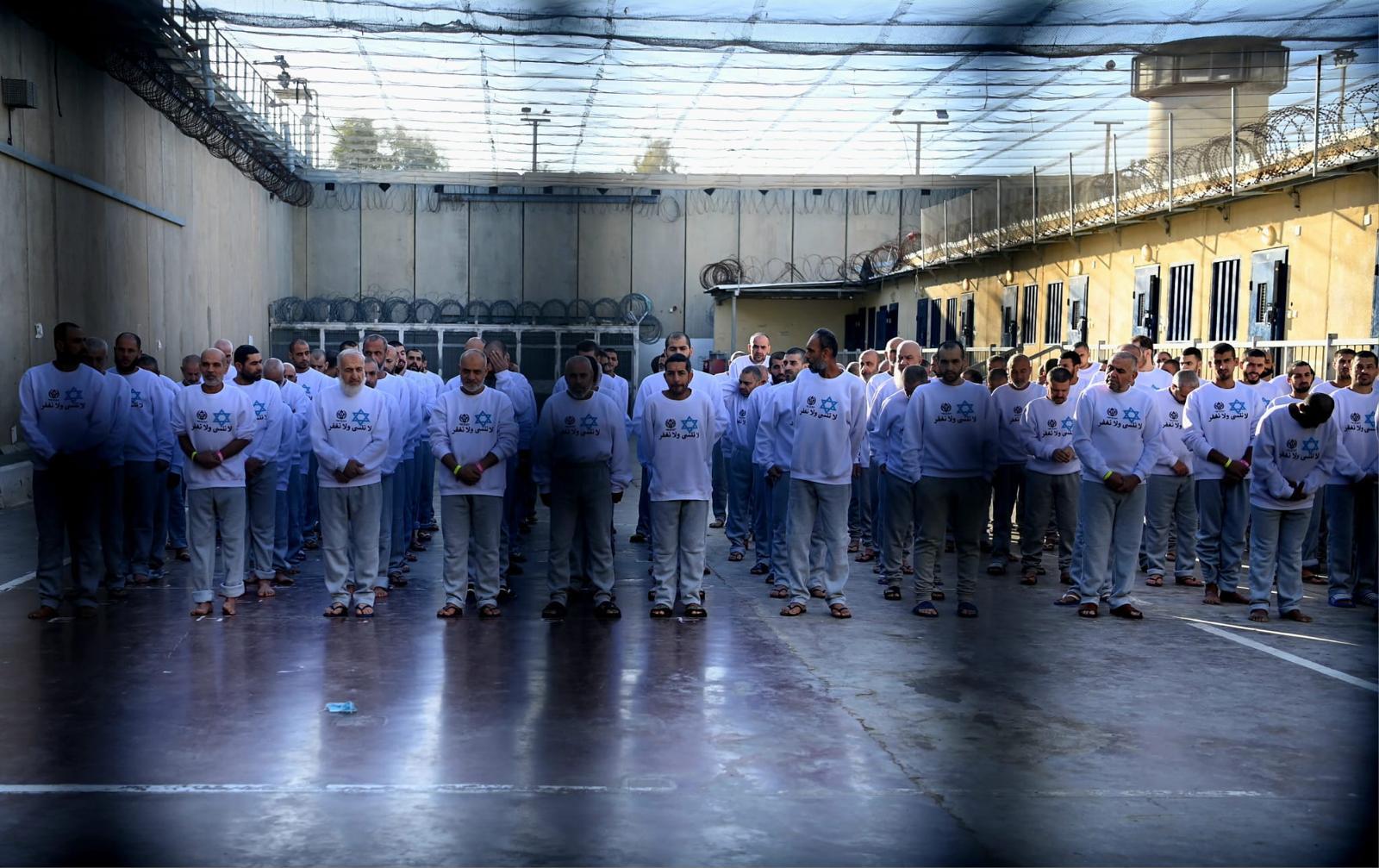
Recently revealed reports from the Public Defender’s Office of the Justice Ministry show that Palestinian security detainees held in Israeli prisons have suffered from severe and systematic violence from prison guards, deprivation of food, and medical neglect, while also having been subjected to unsanitary conditions that caused and exacerbated outbreaks of disease in the prisons.
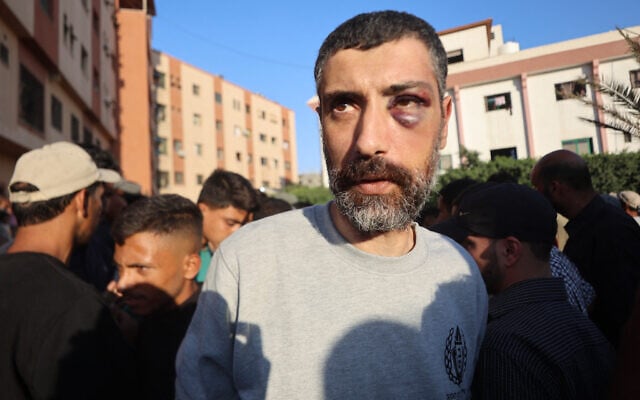
Inspectors from the Public Defense Office who visited four prisons in 2024 documented seeing skeletal prisoners and witnessing physical evidence of beatings and medical neglect on the bodies of prisoners they interviewed.
The reports were made public after a year-long legal battle by the Association for Civil Rights in Israel (ACRI), which filed a freedom of information request to gain access to the documents, after the Justice Ministry refused to release them.
The inspectors described the conditions in one prison they visited as “not fit to hold human beings,” and said of another that their findings showed “unnecessary and unjustified violence against prisoners” carried out “on a regular basis and on numerous occasions.”
Although the public defender’s reports provided a broad picture of the stark conditions for Palestinian detainees and prisoners in Israel’s prisons, they did not include details of specific allegations that could be criminal in nature, since inspectors file such allegations in confidential reports directly to the Attorney General’s Office.
But the reports do corroborate the testimony of numerous Palestinian detainees who have been interviewed by legal aid organizations while in detention, or who have spoken to human rights groups after being released from the prisons during the course of the war with Hamas in Gaza, and who alleged that they had been subject to severe violence and abusive conditions while in prison.
“These reports we received have confirmed the testimony of prisoners and the reports of human rights groups and international organizations about widespread abuses in Israel’s prisons,” said Oded Feller, an attorney with ACRI who worked on obtaining the Public Defender reports.
“They show that these sadistic outrages are indeed taking place in Israeli prisons.”
Feller alleged that similar reports from the same human rights groups and international organizations during 2025 have demonstrated that the abuses have not stopped since the Public Defender’s Office drew up its reports from its visits in 2024.
The commanders of the prisons where the worst abuses were reported denied there was systematic violence towards detainees, and insisted that there were “no gaps” in the provision and availability of hygiene and cleaning products required to maintain sanitary conditions in the facilities.
Far-right National Security Minister Itamar Ben Gvir, who has authority over the Israel Prison Service and its policies, has, however, repeatedly boasted of the harsh conditions he has imposed on Palestinian detainees and prisoners.
And numerous allegations have been made, both by Palestinian detainees speaking to lawyers while in prison and detainees who have been released, of severe mistreatment in Israeli prisons, including beatings, unsanitary conditions, inadequate and insufficient food, and psychological torture.

The High Court of Justice ruled in September last year that the state had failed to fulfill its legal obligations to adequately feed Palestinian security prisoners.
Following the October 7, 2023, Hamas invasion and atrocities, the government barred what had been routine and customary visits by the Red Cross to Palestinian prisoners, something that gave the Public Defender’s reports increased importance in efforts to understand the current conditions in Israel’s prisons.
The Justice Ministry initially refused to comply with ACRI’s freedom of information request, but finally released the reports following court intervention.
Currently, Israel holds some 6,700 Palestinian detainees of different categories, of whom none have yet been charged with a crime. Another 1,200 Palestinians from Gaza who were detained at various stages during the war with Hamas are being held in Israeli prisons and detention facilities as “unlawful combatants,” and they too are yet to be charged with a crime. In addition, there are almost 1,300 Palestinian prisoners in Israeli prisons who have been convicted in a court of law.
Several thousand Palestinian detainees were also released as part of swaps for the Israeli hostages who were held by terror groups in Gaza.
The large majority of detainees have been held for many months without contact with their families, and without being charged in either military or civilian courts.
The Public Defender’s Office, a unit of the Justice Ministry, sent inspectors to several prisons run by the Israel Prison Service during the course of 2024, and to some of them more than once.
Their reports are the first audits of prison conditions authored by a state institution since October 7, 2023.
They are based on reports by attorneys from the Public Defender’s Office who visited the Ketziot, Rimon, Megiddo, and Shita prisons during the course of 2024 to inspect the conditions there.
Although this article concentrates on conditions in Ketziot, many of the same reported abuses were repeated in the public defender’s reports from the Megiddo and Rimon prisons. Shita prison was the only facility reviewed in the reports where conditions were reasonable, according to the Public Defender’s inspectors.
Systematic violence
The inspectors visited Ketziot prison on three separate occasions, on May 19, June 9, and September 26, 2024, On all three visits the prisoners reported severe, systematic, and unnecessary violence against them by prison guards that did not come in response to incidents necessitating the use of force, the inspectors reported.
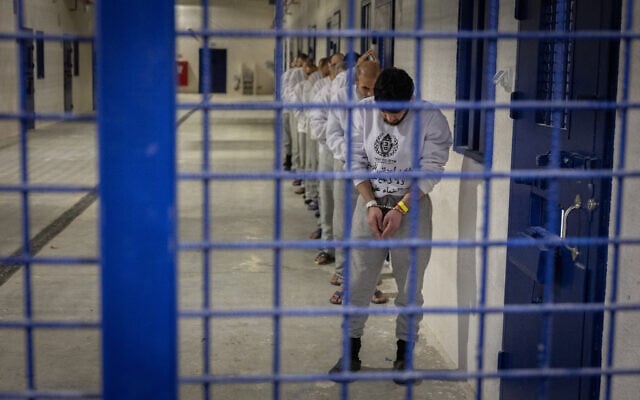
Complaints by the detainees of violence against them demonstrated similar patterns of such abuse. “Numerous” detainees said they were subjected to violence every time they left their prison wing for the purposes of going to the medical clinic, meeting with a lawyer, or going to the video conference room for legal proceedings.
“Prisoners showed us their wrists with red welts, swelling, and scabs,” the inspectors reported, adding that the beatings took place in areas of the prison where there is no CCTV coverage.
Violence was also frequently used during “special” searches of cells, including with the use of clubs, and while the prisoners were in prostrate positions. Some prisoners reported being specifically targeted by prison guards in acts of violence “of a severe character.”
Because of the severity and nature of the violence, the Public Defender’s Office inspectors passed specific reports of such attacks directly to the attorney general for her and her office to examine, likely due to the criminal nature of the allegations.
Prisoners reported a slight improvement in the level of violence they were subjected to during the third visit to Ketziot the report said, but stated that violence against prisoners was still common when they left their prison wing for various purposes.
Stress postures and extreme restraints
The inspectors said that every prisoner they spoke with in Ketziot had been forced to remain in “painful and humiliating stress postures” during roll call, as well as when being taken to the clinic, to meet with a lawyer, and for legal proceedings.
They also reported being restrained with cuffs or ties secured so tightly that they caused physical wounds, and the need to walk in unnatural positions to avoid the worst of the pain.
The inspectors said that the severe pain resultant from these practices meant that some prisoners gave up on their rights to medical treatment and legal consultation to avoid being subjected to such abuse.

Deprivation of food
The prisoners in Ketziot also complained of a severe lack of food, and feelings of hunger and of bodily weakness on all three visits by the inspectors.
During the first visit on May 19, the inspectors found that the prisoners suffered from a severe lack of food, were permanently hungry, showed physical weakness, and complained of dizziness, headaches, and fainting due to the lack of nutrition.
“The prisoners we met were very thin, some extremely and pathologically thin, and they showed us distinctly protruding ribs and pelvises and excessive skin demonstrating drastic weight loss,” the inspectors reported.
They determined that the food provided to the prisoners did not comply with regulations and was insufficient for the prisoners’ basic needs.
On the third visit, the inspectors reported that prisoners had told them that the situation had improved, and that even though they were still hungry the provision of food had increased to the extent that they were no longer fainting from hunger.
“Prisoners continued to complain of ‘unceasing hunger,’ making it hard even to sleep, [causing] physical fatigue from the lack of nutrition,” the inspectors reported, adding prisoners also complained of receiving only partially cooked food.
The inspectors stated that during the first two visits they found that prisoners were given insufficient access to water during the day, and that prisoners said this was sometimes done as a form of collective punishment and sometimes as a standard practice.
By the third visit, however, the restricted access to water had ceased, they said.
Denial of basic means of sanitation and personal hygiene
In terms of sanitation and hygiene, the inspectors said they found the conditions in Ketziot to be “of the utmost severity and gravity” on their first two visits.
The prisoners had no access to cleaning products, no ability to launder their clothes, and lacked the ability to change their clothes with “reasonable regularity.”
The inspectors said that the inability of the prisoners “to observe even minimal personal hygiene,” and the “significant restrictions on access to means of sanitation and showers” meant that “the prisoners were prevented from observing basic personal hygiene.”
They also noted that cell occupancy was twice the limit specified in regulations.
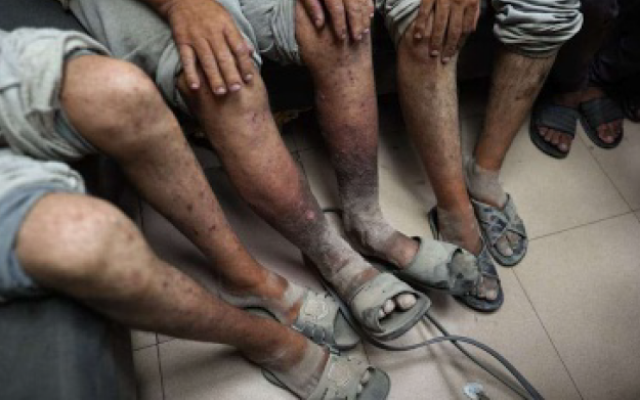
Taken together, these factors “severely harmed basic sanitary standards” in the prisons, and contributed to the spread of diseases, such as scabies, a contagious skin disease caused by mites.
Indeed, the inspectors reported severe outbreaks of scabies in three out of the four prisons they visited, Ketziot, Rimon, and Megiddo, and that the disease caused significant suffering for detainees.
“Prisoners showed us parts of their bodies covered in mite bites, some which were badly infected, and they complained of incessant itching and pain,” the report says of the situation in Ketziot.
Some prisoners said they did not get any treatment at all, while others said they received a one-off treatment that was ineffective.
In response to reports of violence, the commander of Ketziot prisoner, whose name was not given, stated to the Public Defender’s Office that the prison command “totally rejects the claims of unlawful, systematic violence,” and said that any prison guard who deviated from lawful practices would face disciplinary action.
The commander said that sanitation and hygiene products are distributed at the beginning of every month and that more such products are distributed during the month if necessary.

He also claimed that the use of restraints on prisoners was done in accordance with the law and prison regulations and to “protect the safety of the prison and the staff.” He denied that prisoners ceded their rights to legal representation and medical treatment due to the use of painful restraints.
The Israel Prison Service (IPS) stated through the Southern District Attorney General’s Office, in response to the report on Ketziot, that it works to “combat all forms of violence by prison guards,” and says that “all reports of violence will be thoroughly investigated.”
Almost all of the problems regarding frequent or systematic violence towards prisoners, insufficient food, and the deprivation of basic sanitary conditions and means of personal hygiene were repeated in the public defender’s reports on both Megiddo and Rimon prisons.
In Megiddo prison, the inspectors visited twice, once on June 20, 2024, and then again on November 4, 2024. After the first visit, they reported on poor quality and insufficient amounts of food, widespread scabies outbreaks, and frequent violence against prisoners.
During the second visit, the prisoners said that the level of violence had declined significantly, but that they still lacked basic hygiene and cleaning products, lacked sufficient food, stated that scabies was still widespread, and that medical conditions went untreated.
“Our general impression from the visit was that the number of prisoners is very large, the rooms, cells, and [prison] wings are greatly overcrowded, living conditions are harsh, and there is a lack of basic equipment, hygiene, and cleaning products,” the report summarized.
At Rimon prison, inspectors found that prisoners were subjected to repeated violence, humiliation and verbal abuse, the use of harsh restraints, which caused injuries, and unfitting sanitary conditions.
The inspectors said that prisoners were kept in “overcrowded cells for 23 hours a day, without proper ventilation or lighting, without enough food or hygiene products, with reduced access to medical treatment.” They said that the conditions represented an “additional punishment beyond their detention or conviction, “and are not fit for holding human beings.”
Prison commanders at Megiddo and Rimon both denied that violence against prisoners was prevalent. They also claimed that sufficient hygiene and cleaning products were provided, and that, if prisoners needed extra products, they were able request more from the commander of the prison wing.








The Times of Israel Community.