

Palestinians reject presence of Israeli soldiers in future state
Comments from Abbas spokesman come day after Netanyahu says US backs his demand that Israel maintain security control from Jordan to Mediterranean
 Add ToI as a Preferred Source on Google
Adam Rasgon is a former Palestinian affairs reporter at The Times of Israel

The Palestinian Authority on Thursday threw cold water on an Israeli demand that a future Palestinian state contain security zones manned by IDF troops, rejecting the proposal outright and underlining one of several obstacles facing the US administration as it readies to embark on a Mideast peace push.
“We will not accept the presence of an occupation soldier on our Palestinian land,” Nabil Abu Rudeineh, spokesman for Palestinian Authority President Mahmoud Abbas, said in a statement carried by Ramallah’s official Wafa news agency.
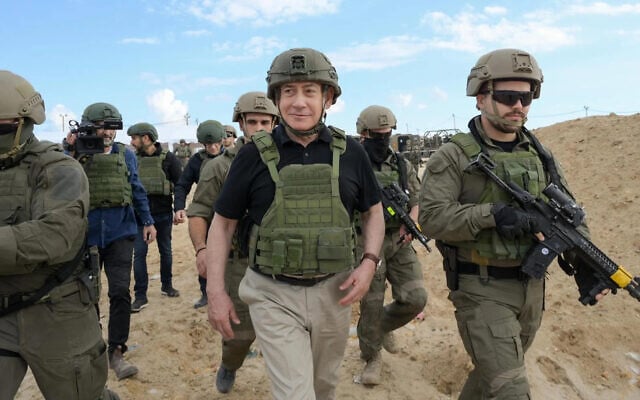
A day earlier, Prime Minister Benjamin Netanyahu told Israeli reporters on the sidelines of the annual meeting of the United Nations General Assembly that under any peace accord with the Palestinians, Israel would retain security control from the Jordan River to the Mediterranean Sea.
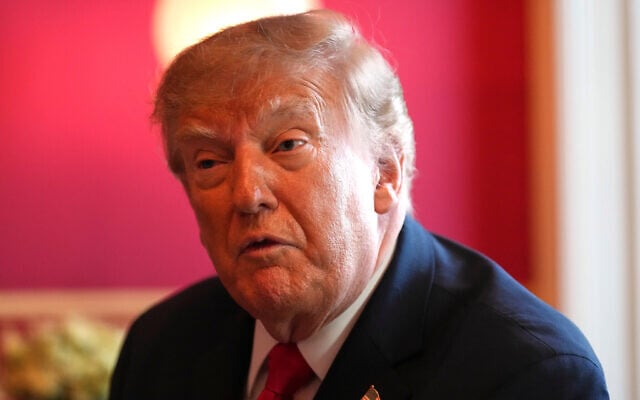
His comments came after US President Donald Trump backed the idea of a Palestinian state for the first time, saying he favored a two-state solution. Netanyahu said Trump supported the Israeli security demands, which he was sure would be included in the peace proposal being prepared by the White House.
“Some things are not to acceptable to us,” Netanyahu said Wednesday. “Make no mistake: Israel will not give up on security control west of the Jordan as long as I am prime minister. I think the Americans accept that principle.”
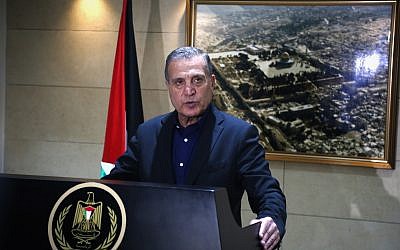
On Thursday, Abu Rudeineh said the Palestinians would only “accept an independent and sovereign Palestinian state along 1967 borders with East Jerusalem as its capital.”
Israel has long sought security guarantees as part of any peace deal to keep the West Bank from becoming a terror haven, including rights to continue policing the Jordan Valley, and has demanded the Palestinian state be demilitarized. Talks in the past have stagnated over that and other key issues.
Abbas has previously said no Israeli soldier can remain in a future Palestinian state. However, he has also stated at least once that, following a peace accord, Israeli soldiers could stay in the West Bank for a maximum of five years.
The PA president has also said a number of times that he would accept the presence of NATO forces in the border regions of a future Palestinian state.
“They can stay to reassure the Israelis, and to protect us,” Abbas told the New York Times in 2014, referring to NATO forces.
The PA president is slated to deliver a speech to the UN General Assembly on Thursday.
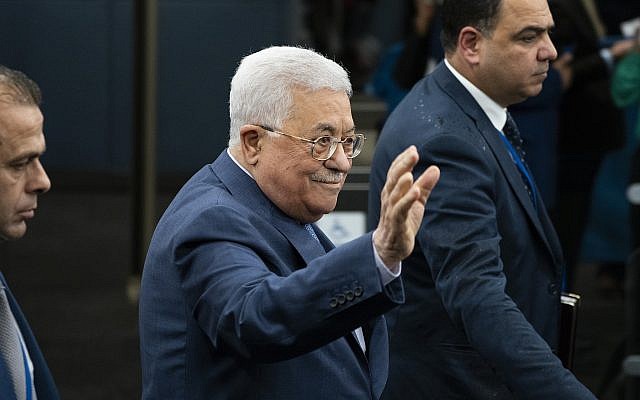
Earlier this week, Abu Rudeineh said Abbas’s speech “will include a comprehensive strategic, national vision.”
The spokesman did not reveal the details of what Abbas intends to say.
Trump said Wednesday that he favors the two-state solution to the Israeli-Palestinian conflict, indicated it will be at the heart of his administration’s peace plan, and insisted the Palestinians were eager to come to the negotiating table.
“I like the two-state solution,” Trump told reporters at a press gaggle with Netanyahu on the sidelines of the UN General Assembly meeting in New York. “That’s what I think works best. I don’t even have to speak to anybody, that’s my feeling.”
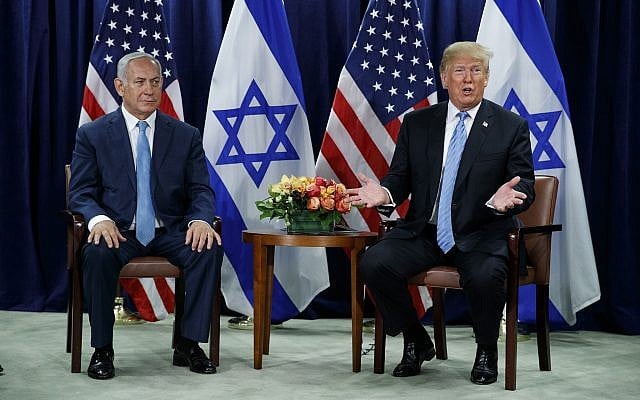
The comments appeared to mark a shift in favor of the two-state option for the US president, who in February 2017, at his first bilateral meeting with Netanyahu at the White House, had said he didn’t mind if there was a one-state or a two-state solution, as long as both sides accepted it. At a press conference later Wednesday, however, Trump appeared to backtrack, saying a two-state deal was more likely but that he was “okay,” too, with a one-state deal.
The Palestinians, who have kept the White House at arm’s length in anger over the US decision to recognize Jerusalem as Israel’s capital, have reacted coolly to Trump’s apparent about-face.
“One-state/two-state/whatever” is not policy! Pandering to extremist Zionist evangelicals, donors (Adelson, et al), lobbyists AIPAC,etc) & Netanyahu is dangerous policy! Illegal unilateral measures against #Palestinians, Jerusalem & refugees destroy peace,” PLO official Hanan Ashrawi wrote on Twitter Thursday.






The Times of Israel Community.