

PM set to defend controversial gas deal in High Court
Netanyahu will testify in effort to stave off opposition petition seeking injunction against the major energy agreement
 Add ToI as a Preferred Source on Google
Tamar Pileggi is a breaking news editor at The Times of Israel.

In an unprecedented move, Prime Minister Benjamin Netanyahu is set to testify Sunday before the High Court of Justice over the legality of a controversial deal on Israel’s offshore gas fields.
Netanyahu will seek to convince the judges to dismiss a petition submitted by opposition parties seeking an injunction against a plan that would see a two-company partnership develop a massive field in the Mediterranean.
In an affidavit submitted to the court last week ahead of his testimony, Netanyahu argued that a failure to implement the deal would negatively impact Israel’s security, economy and foreign relations.
After months of intense debate and numerous bureaucratic and legislative hurdles, the prime minister signed the controversial agreement with gas companies on December 17, but still faces opposition from opposition lawmakers and activists who claim the terms create a de facto monopoly in the gas market and will lead to higher prices for Israeli consumers.
Five separate petitions have been lodged with the High Court, Israel’s constitutional tribunal, urging it to throw out the deal over a range of legal issues.
Netanyahu was able to sign the deal after invoking a never-before-used clause to override an antitrust ruling against it, by declaring it an issue of national security.
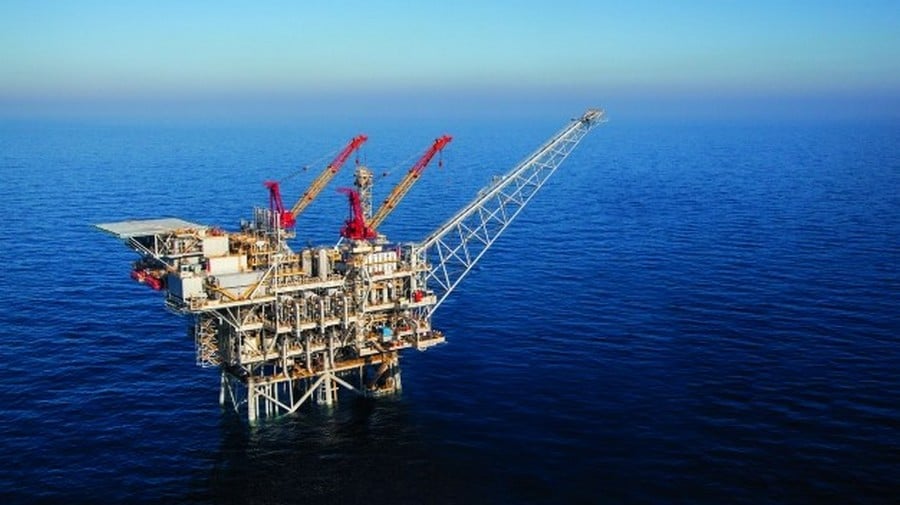
He was forced to pursue the use of “Clause 52” after then-antitrust commissioner David Gilo ruled that the Israeli-American Delek-Noble conglomerate that has been developing the Leviathan gas field may constitute a monopoly, sparking a vociferous national debate on the terms given to the energy companies.
He then went on to resign over the issue, and the authority to approve the deal then passed to then-economy minister Aryeh Deri. But Deri, not wanting to pay a political price for the gas deal but also not wanting to stand in its way, also resigned his post, allowing Netanyahu to take over the ministry and sign the deal himself.
The politicians whose appeal is up for debate Sunday, including the Zionist Union MKs Shelly Yachimovich and Eitan Cabel and Meretz party chairwoman Zehava Galon, have listed a catalog of legal flaws in the management of the deal, as well as “extreme lack of reason” and “disproportionality.” They claim the government neglected basic issues in the natural gas market such as the problems of monopolistic pricing and lack of energy security, and is now “trying to sell an illusion in the guise of a deal” that will not only not solve the problems but will perpetuate them.
Israel has been trying to extract offshore gas since the discovery of the Tamar and Leviathan fields in 2009 and 2010. Production has begun in Tamar, but the far larger Leviathan has been hit by a series of delays.
The size of the Leviathan field is estimated at 18.9 trillion cubic feet (535 billion cubic meters, or bcm) of natural gas, along with 34.1 million barrels of condensate.
Noble and Delek also control the Tamar field, which holds 7.1 trillion cubic feet, and lies 80 kilometers (40 nautical miles) west of the Israeli port of Haifa.
The discoveries were major boosts to Israel’s efforts toward energy independence.
The government intends to export much of the gas from Leviathan to other countries in the region, which could grant Israel strategic leverage. Greece and Cyprus have expressed interest in cooperating with Israel on a gas pipeline.
High Court approval of the deal would allow the consortium to move forward on contracts for gas sales, which could unlock crucial financing needed to develop Leviathan.
Raoul Wootliff contributed to this report.










The Times of Israel Community.